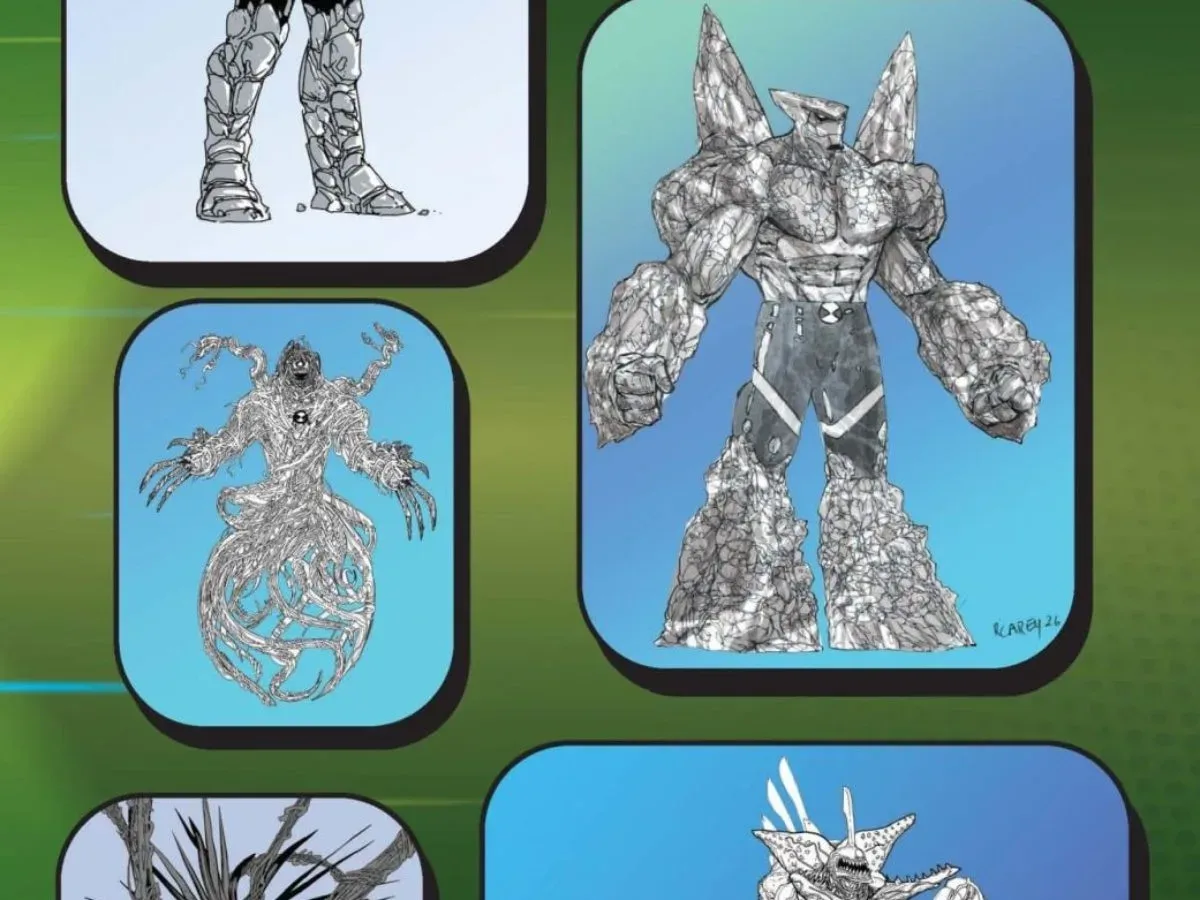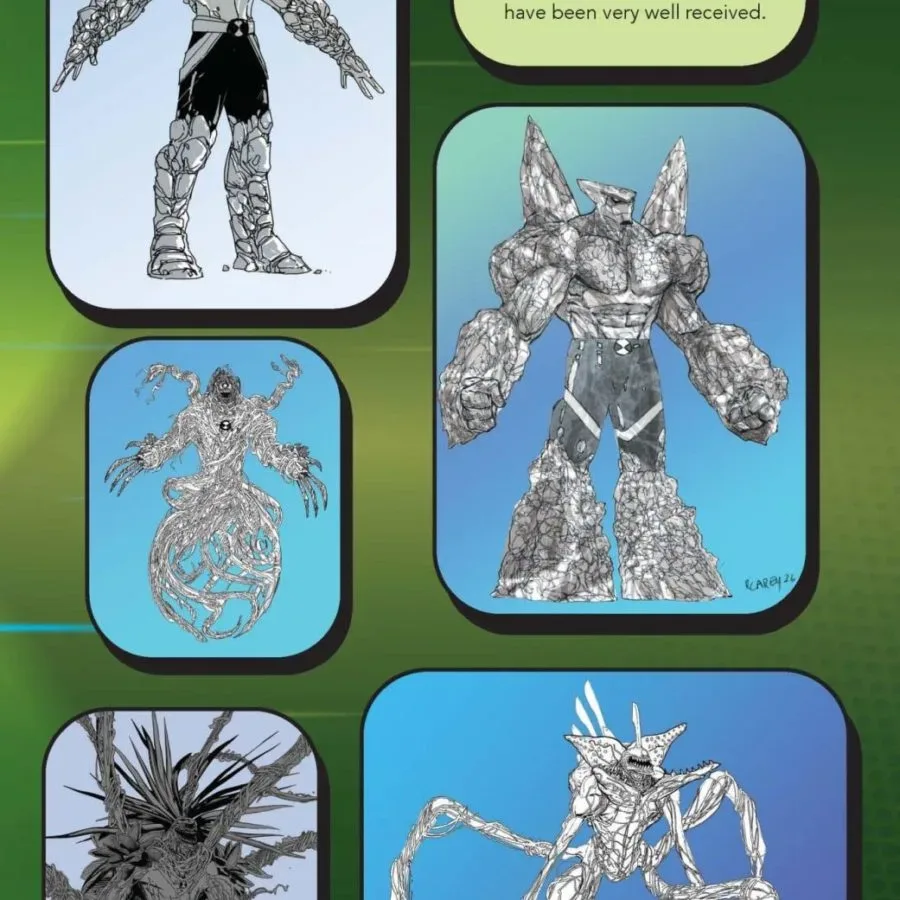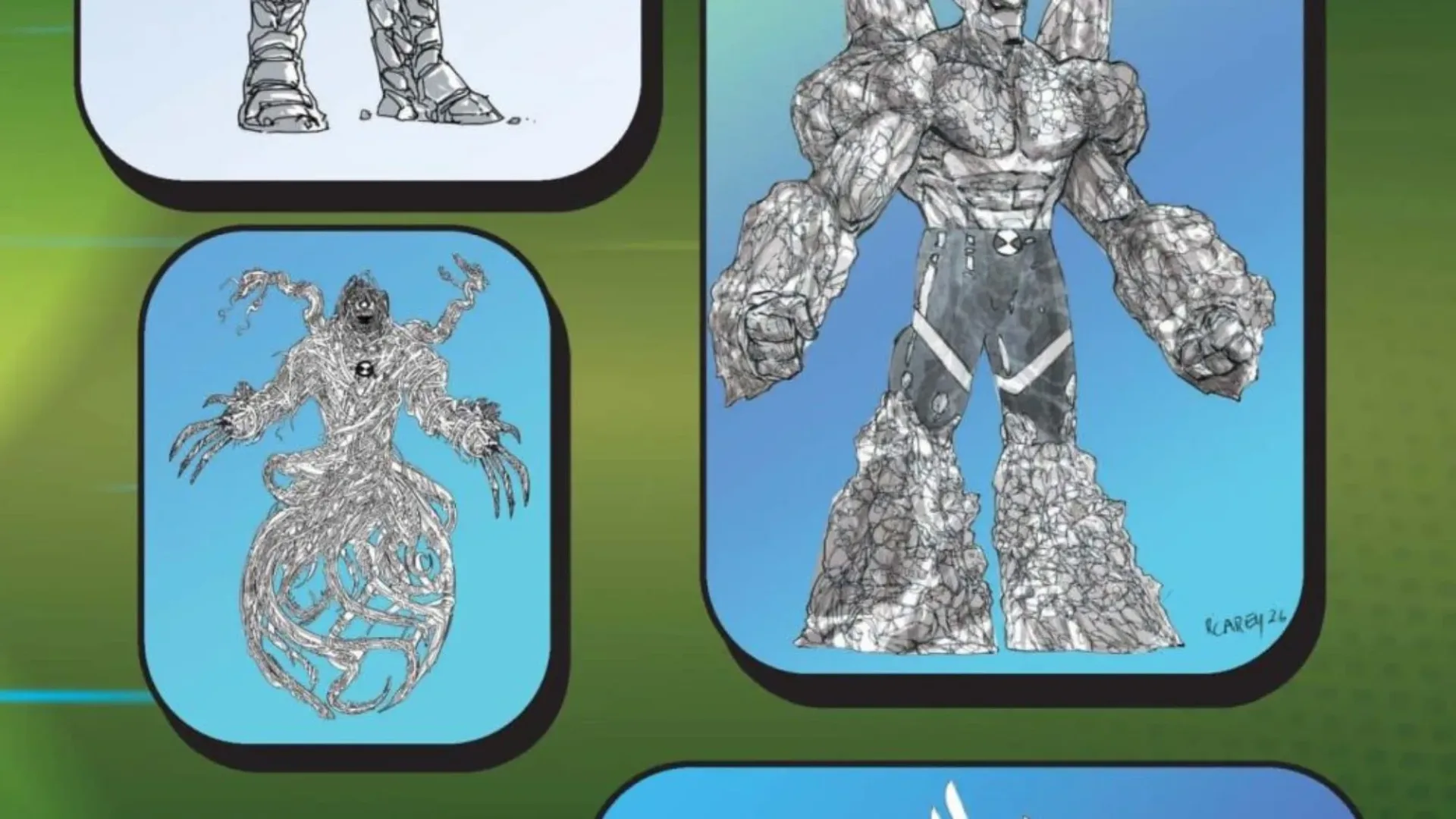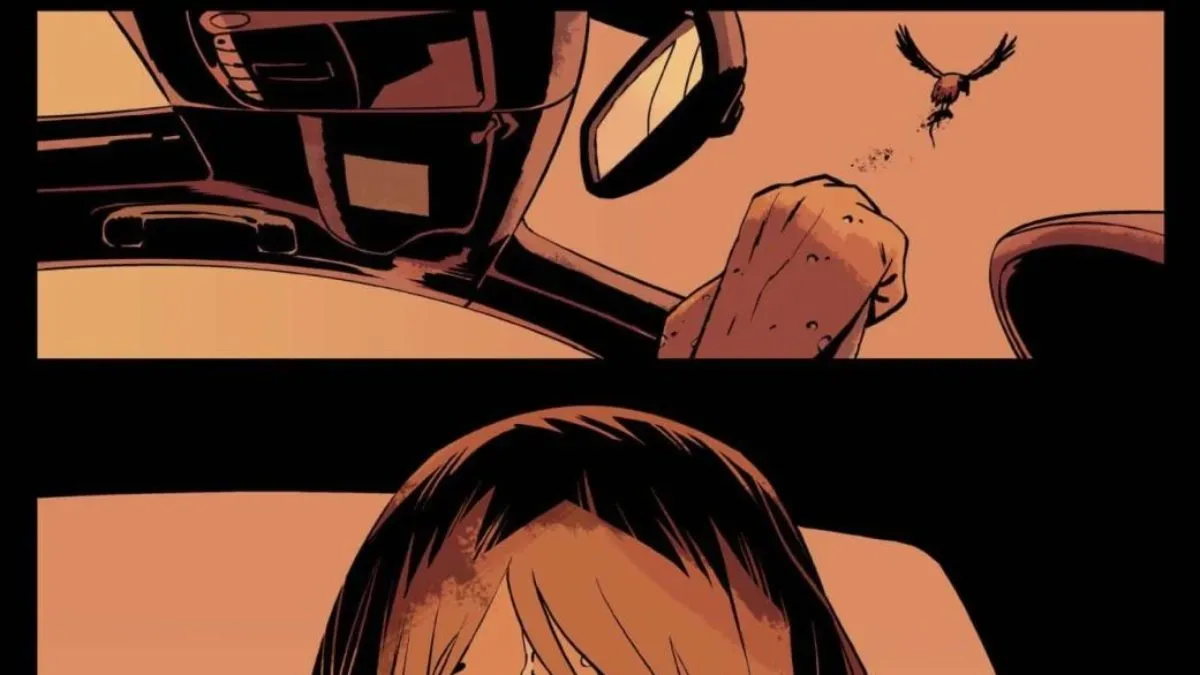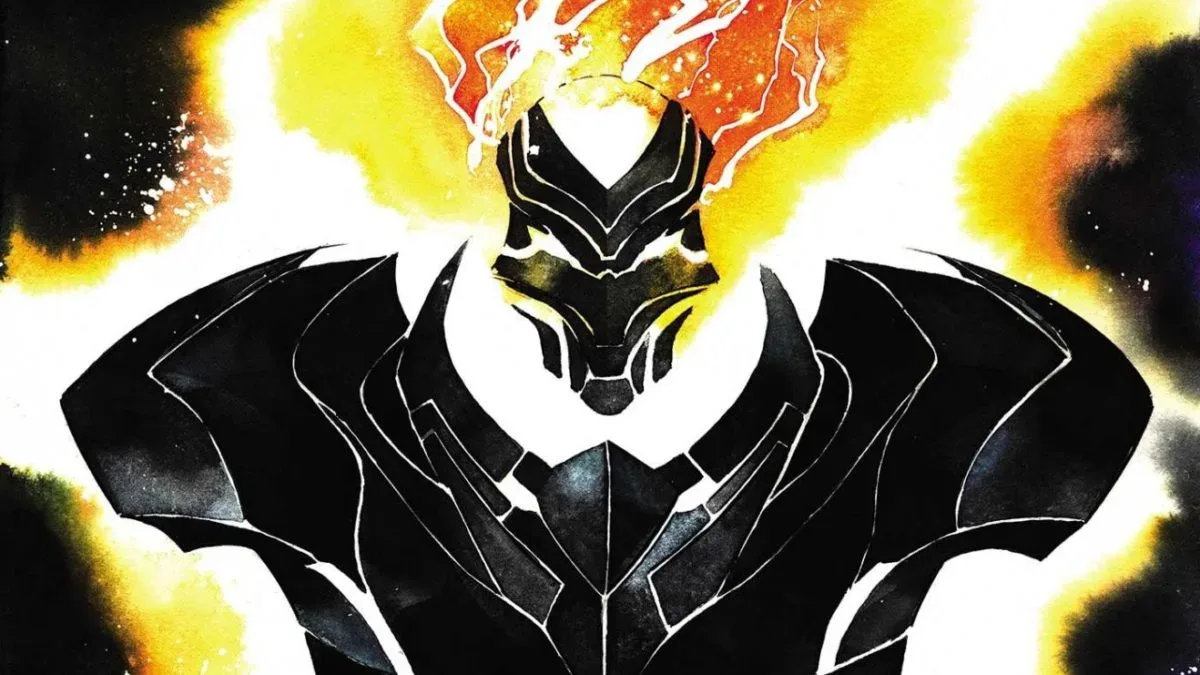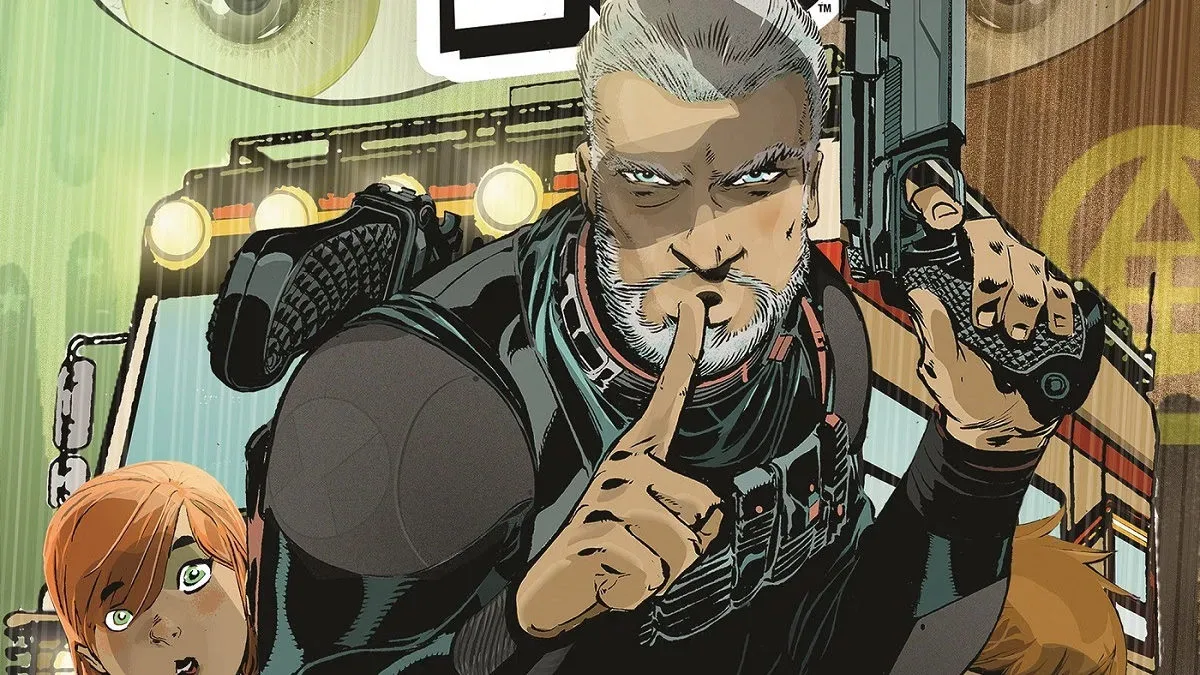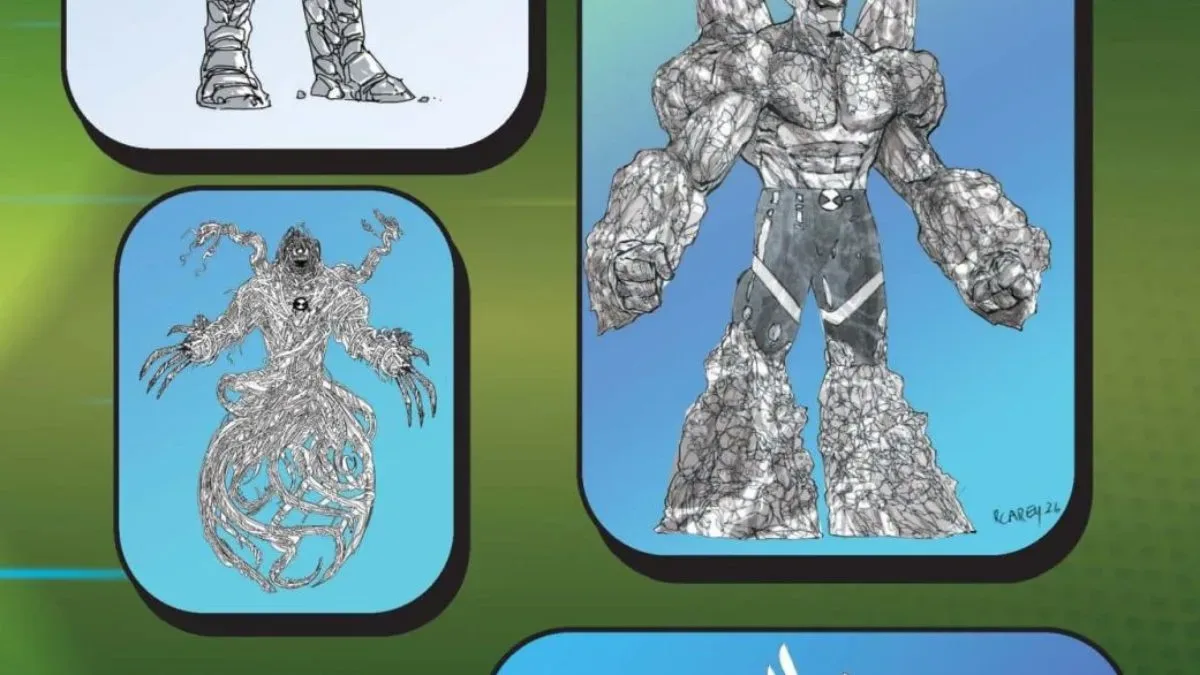
Ben 10 Creator Files #1 is scheduled to arrive in comic shops on October 7, 2026, with a format aimed less at advancing a single chapter of the story and more at opening up the production process behind Dynamite’s new Ben 10 comic series. The $4.99 issue is set to include material from the script stage through sketches, line art and the completed page, alongside new interviews with the creative team and a first look at a classic villain due to be reimagined in a future storyline.
Joe Casey and Steven T. Seagle are credited as writers, while Robert Carey is credited for art and cover art. Duncan Rouleau is also listed for a cover. Rather than simply presenting the finished result readers see on the rack, the issue’s stated purpose is to show the successive decisions that turn an idea into a published comic page.
A production-focused issue for the new Ben 10 series
“Behind the scenes” can mean many things in comics, but the announced structure here is unusually clear: readers will see a path from script to sketches, then line art, and ultimately the finished page. That sequence matters because each stage answers a different creative problem.
A script is the story blueprint. It may establish dialogue, character action, page pacing and panel-by-panel direction, but it is not the visual story itself. In comics, pacing is especially important: a page turn can create a reveal, a quiet panel can slow a moment down, and a crowded sequence can convey urgency. Seeing a script beside later material can illustrate where the written instruction leaves room for an artist’s interpretation.
Sketches are early visual explorations. They can be used to test a character’s pose, an expression, a location, the angle of a scene or how much information will fit inside a panel. A sketch does not need to look polished to be useful. Its job is to solve visual questions early, when changes are less disruptive than they would be after a page has been finalized.
Line art is the stage where the drawing receives its more defined, reproducible visual form. Clean contours, details and shadows shape what will be understood at a glance, including where readers look first and how easily they can distinguish action from background. The final page then brings together the visual components in its publication-ready form.
That progression is valuable even for readers who do not draw. A finished comic page can make its construction feel inevitable, when it is actually the result of numerous choices: how long to hold on a reaction, what to leave off-panel, which design detail makes a character readable, and how to guide the eye across the page. Creator Files is positioned to make those choices visible without asking fans to infer everything from the completed art alone.
Why the before-and-after material could be the draw
The announced cover approach itself reflects the issue’s central idea, separating a rough pencil image from inked and fully colored versions. It is a simple visual shorthand for a larger point: a page is not created in one pass.
For fans of character-driven adventure comics, process pages can be particularly revealing because a familiar concept must remain immediately recognizable while still working in a new serial format. The supplied details do not identify which characters, scenes or pages will appear in the process material, so it would be premature to predict the exact creative questions the issue will address. Still, a start-to-finish presentation creates an opportunity to compare planning with execution rather than treating either stage as a replacement for the other.
This sort of material also offers a more concrete way to appreciate collaboration. The credited writers and artist have distinct roles in the listed creative team, but sequential art is built from connected handoffs and responses. A line in a script might suggest the dramatic intent of a scene; composition and character acting give that intent a visual rhythm; later finishing stages make the reading experience clear and cohesive. The interest lies in the changes and continuities between those points.
Useful terms for readers approaching the issue
- Script: The written plan for a comic. It can include dialogue, narration, action and page or panel guidance.
- Sketch: An early drawing used to establish ideas, composition or character movement before a page is fully rendered.
- Line art: The defined drawing stage that establishes forms and details before a page reaches its final presentation.
- Finished page: The completed version prepared for publication, bringing the creative stages together into the form readers encounter in the comic.
- Reimagined villain: In this case, an existing “classic” antagonist being presented in a new form for an upcoming story. No identity or redesign details have been disclosed in the available description.
Interviews promise a look beyond issue one
The issue is also set to feature new interviews with the creative team about the series’ future. That makes the book more than a gallery of work-in-progress images. It may provide context for the direction of the ongoing comic, although the information currently available does not specify what future stories, characters or creative plans will be discussed.
For readers deciding whether to pick it up, that distinction is worth keeping in mind. Ben 10 Creator Files #1 is described as a companion-oriented publication: it is for people interested in the making of the series as well as the series itself. The interviews and process elements could help readers understand how its creators approach the property, while the promised look ahead gives the issue a direct connection to forthcoming narrative material.
That approach is different from a conventional preview because it places the craft of comics at the center. It can be useful for aspiring artists and writers, certainly, but it also speaks to anyone curious about the practical translation from words to images. A comic is often discussed as though it is only writing or only art. A step-by-step feature can show why it is neither: it is a sequence of decisions where storytelling, design and readability have to work together on every page.
A first look at a returning threat, with details held back
The most forward-looking element is the promise of an exclusive first look at the next classic villain to be reimagined for an upcoming storyline. The description does not name the character, explain the new interpretation or establish when that storyline will begin. Those omissions are significant. At present, the confirmed point is the existence of the preview, not the villain’s identity or role.
For longtime fans, that restraint is likely part of the hook. A reimagining does not automatically mean a complete replacement of the original concept. It can refer to visual design, characterization, narrative function or the way a familiar adversary is introduced to a different comic continuity. Until more is revealed, readers should view the issue as a tease rather than a full announcement of the next arc.
The format gives that tease an added layer of interest. If the villain preview is accompanied by developmental art or discussion from the creative team, it could frame the redesign as a creative process rather than only a surprise reveal. The precise contents have not been detailed, however, and that remains an expectation rather than a confirmed feature.
What is confirmed before release
- Title: Ben 10 Creator Files #1
- Publisher: Dynamite Entertainment
- Scheduled shop date: October 7, 2026
- Suggested retail price: $4.99
- Writers: Joe Casey and Steven T. Seagle
- Artist and cover artist: Robert Carey
- Additional listed cover: Duncan Rouleau
- Announced contents: Script-to-finished-page process material, creative-team interviews and a first look at a reimagined classic villain.
The book’s appeal will come down to how deeply it lets readers examine those materials, rather than merely reproducing them. The announced script, sketch, line-art and finished-page route offers a sensible framework for that examination, while the interviews and villain preview give it a reason to matter to readers following the new series. For another look at how current comic releases can be framed around story developments, see this update on Of the Earth #6.
With no further specifics on page count, the exact interview subjects or the unnamed villain, the clearest expectation is a process-driven one: Ben 10 Creator Files #1 is being presented as a guided look at how a comic is built, with a limited but potentially meaningful glimpse of where its larger story is going next.