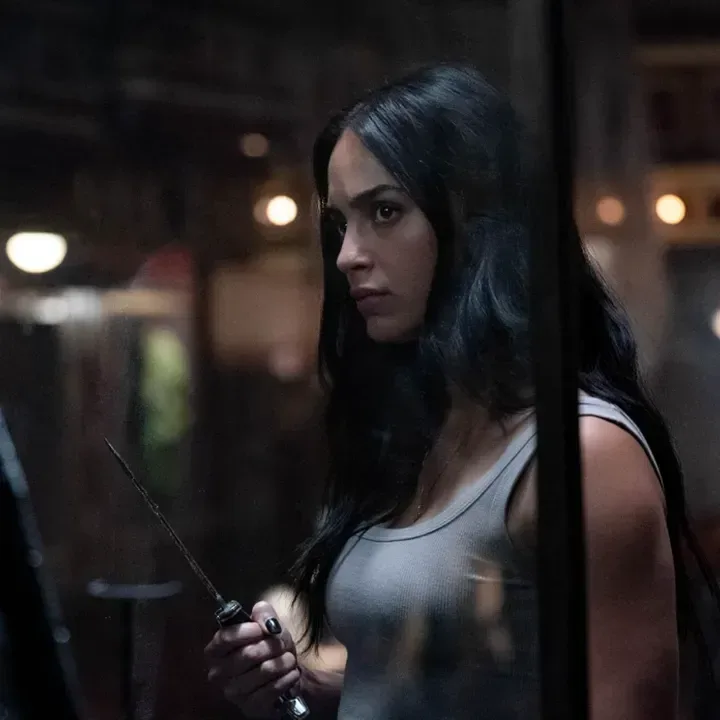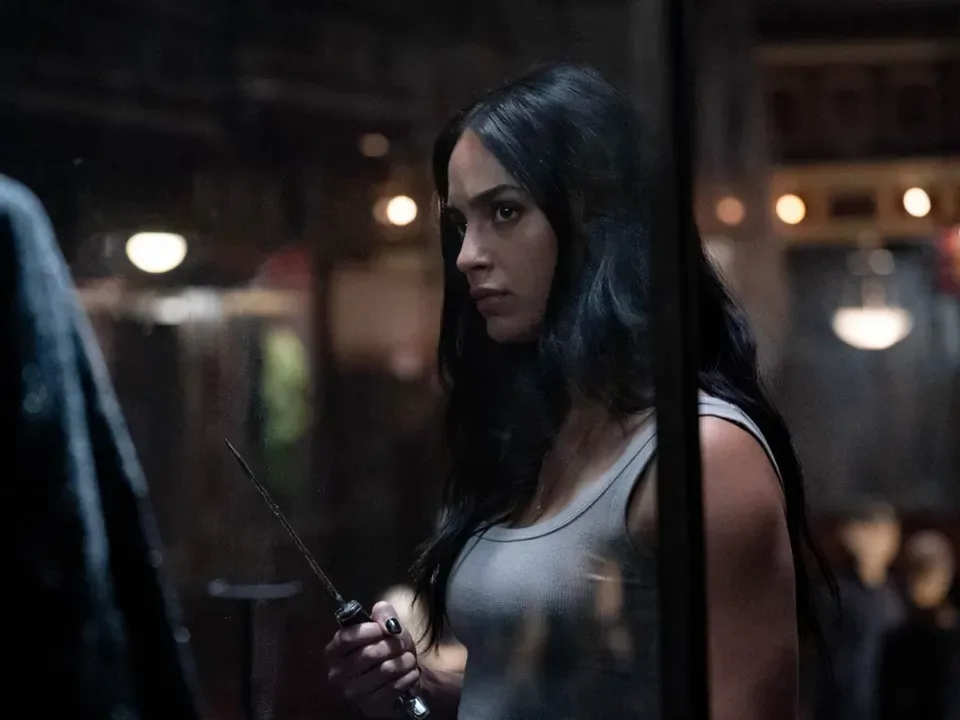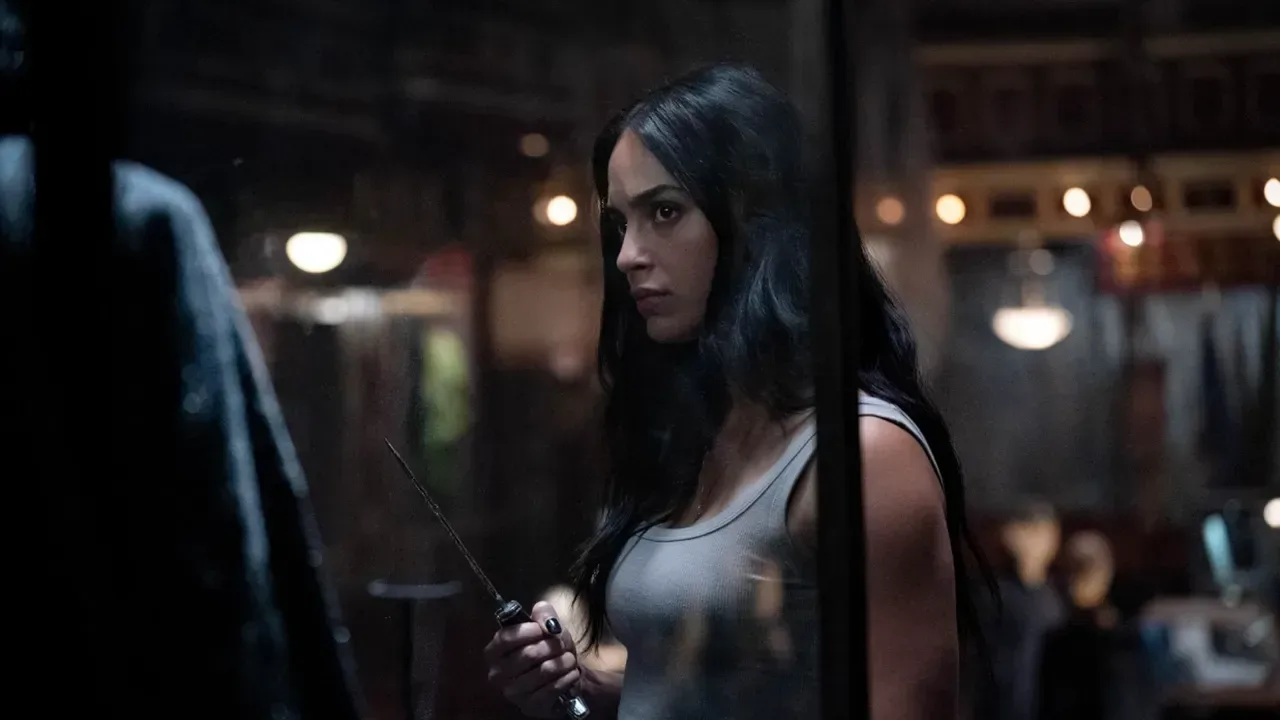
Melissa Barrera has left a narrow but meaningful door open for Sam Carpenter’s return to Scream. The actor, who led the franchise’s fifth and sixth films, says she still cares deeply about the series and enjoyed making those movies. But she has made clear that a return is not on the table while Spyglass Media remains the company holding the rights.
That distinction matters. Barrera is not describing a simple scheduling conflict, a dispute over creative direction, or a standard “never say never” answer intended to keep fan speculation alive. Her position is tied to the 2023 controversy that ended her planned involvement in Scream 7, and to her stated lack of confidence in the current leadership’s ability to repair the relationship.
In short: Barrera has not closed the book on Sam Carpenter, but she has set a condition that is outside the control of a single film’s producers, cast, or writers. It would require a change in who controls the franchise itself.
What Barrera’s condition actually means
Barrera played Sam Carpenter in Scream and Scream VI, helping anchor the series’ return to theaters after a decade without a new entry. Sam was positioned as the central figure of that revival, a character whose story connected directly to the original Ghostface mythology while carrying the newer films’ emotional stakes.
She was expected to return for a third installment alongside Jenna Ortega, who played Sam’s sister, Tara. That plan changed in late 2023, when Spyglass fired Barrera following pro-Palestine posts she made on social media. At the time, the company said it had “zero tolerance for antisemitism or the incitement of hate.” Barrera subsequently said that she wanted peace, safety, human rights, freedom, and an end to deaths and violence.
Asked whether she would come back if approached to play Sam again, Barrera said she would not do so with the current rights holder in place. She said she loves the franchise and had an amazing experience making the prior films, but argued that the company’s leadership had labeled her as something she is not. She also said there had been no apology and that an apology would not, by itself, persuade her to work with the company again.
Her more conditional answer concerned a future in which the franchise were to move into different hands—ones she believes would better honor the legacy of Scream creator Wes Craven. Under that hypothetical, Barrera indicated that a return could be possible.
That is a much higher bar than a creative reconciliation. A rights holder is the entity that controls the ability to develop, authorize, and license work based on an intellectual property. In practical terms, a change of writers, a new director, or a revised pitch for Scream 8 would not meet the condition Barrera described if the ownership and leadership structure remained the same.
Why the Sam Carpenter question remains central
Scream has always been comfortable rearranging its pieces. The franchise is built around a masked killer identity, a rotating group of suspects, and stories that regularly interrogate sequels, reboots, legacy characters, and audience expectations. That format gives it flexibility that many horror series do not have.
Yet flexibility is not the same as indifference. Sam and Tara were the core of the two most recent films featuring Barrera, and the storyline developed around their relationship gave the revived series a clear emotional center. Removing Sam from the next planned chapter was therefore not merely a casting alteration. It redirected a continuation that had been structured around her.
The fallout made that redirection more visible. Ortega departed Scream 7 weeks after Barrera’s removal. Christopher Landon, who had been attached to direct, later confirmed that he had also exited the project. Those departures did not establish why any individual decision was made beyond what each person publicly communicated, but collectively they showed how quickly the previously planned version of the film had changed.
Scream 7 ultimately arrived as a substantially different vision for the franchise. It featured familiar faces and set box-office records, but its critical reception was reported as the lowest in the series on Rotten Tomatoes. That split is important: commercial performance and critical reception measure different things. A strong box office reflects ticket demand and revenue, while review aggregation tracks the critical response collected by a particular service. Neither metric alone settles whether a creative direction will satisfy every audience segment or preserve long-term goodwill.
For fans who followed the Sam-and-Tara era, Barrera’s answer will naturally revive the question of whether the franchise can ever reconnect its newer continuity to the path abandoned in 2023. Her comments say that she has not ruled it out in principle. They do not say that discussions are occurring, that a deal is near, or that a rights transfer is expected.
There is no announced path back
The key word in Barrera’s remarks is “if.” Nothing in her position indicates an active plan to move the franchise, bring Sam back, or revisit the abandoned direction. A transfer of rights can involve business decisions far beyond the wishes of performers and fans. Until an actual change occurs, her stated condition means she remains uninvolved.
That leaves a significant gap between possibility and probability. Possibility is simply the fact that Barrera is willing to imagine a return under a specific ownership scenario. Probability would require evidence about negotiations, ownership changes, development commitments, or casting conversations—none of which has been provided.
This is especially relevant because Scream 8 has been reported as being worked on behind the scenes, but it has no release date and no confirmed cast. Reports that ideas are in development should not be treated as a finished production plan. In franchise filmmaking, early concepts can change substantially before a film receives formal details such as a release window, director, screenplay team, or ensemble announcement.
For now, the safest reading is also the simplest: Barrera’s openness is conditional, not imminent.
Wes Craven’s legacy is part of the disagreement
Barrera framed a hypothetical return not only as a matter of new leadership, but as a matter of stewardship. Her reference to Craven’s legacy speaks to the broader question of what it means to continue a long-running property after its foundational creator is gone.
“Stewardship” is not a legal term in this context. It is a useful critical term for the responsibility audiences often expect from the people managing an enduring creative work: respect for its tone, themes, characters, and cultural history while still allowing it to evolve. Fans can disagree sharply on what good stewardship looks like, especially with a series as self-aware as Scream. But Barrera’s comments establish her own standard: she would need to believe the franchise had entered hands that would honor Craven more fully.
That sentiment also helps explain why a personal apology, in her telling, would not resolve the issue. Her objection is not presented as a misunderstanding between two individuals that could be fixed by a single conversation. It is about institutional leadership, public labeling, and the environment in which she would be asked to work again.
“If the franchise were ever to leave those hands and go into hands that would, I think, honor Wes Craven’s legacy more… I think, yeah,” Barrera said when considering whether she could return.
The phrasing remains deliberately hypothetical, but it is more open than a categorical refusal. That nuance is likely to keep Sam Carpenter in the conversation whenever the next Scream film takes shape.
A franchise still dealing with public fallout
Barrera is not the only member of the wider Scream circle to publicly address the controversy. Matthew Lillard, who made a surprise return in Scream 7, said during a recent Q&A that he felt embarrassed to have reprised his role. He criticized the lack of broader public support for Barrera and said she had been right to speak up earlier than others.
Those remarks are Lillard’s view, not a resolution of the underlying dispute. They do, however, illustrate why the episode has remained part of the franchise’s public conversation long after casting and production plans moved forward. Scream is not only a set of films; it is a legacy series with a highly engaged audience that pays close attention to its performers, continuity, and the decisions made around both.
The controversy also lands in an era when social-media statements can rapidly become central to corporate decisions, audience reactions, and talent relationships. That does not make every dispute identical, nor does it predict a uniform result. It does mean that the public record surrounding a franchise can become inseparable from how viewers interpret later casting choices and new installments.
For readers tracking broader entertainment coverage, public statements and the context audiences bring to them remain an increasingly visible part of pop-culture news. In Barrera’s case, the lasting practical result is unmistakable: any conceivable Sam Carpenter comeback is tied to a corporate change that has not happened.
What fans can reasonably take from this
- Barrera still values the franchise. She spoke positively about making the two films and did not reject the character or the series outright.
- She would not return under the present rights holder. Her condition is specifically linked to the company that currently controls the property.
- A new creative team alone would not appear to be enough. Her remarks point to a change in franchise control and leadership, rather than an ordinary production reshuffle.
- There is no confirmation of a return. No transfer, negotiation, casting agreement, or story plan involving Sam has been announced.
- Scream 8 remains undefined publicly. It has no release date, and there is no information about who may appear.
As things stand, the next chapter of Scream may continue without Barrera, while the possibility of Sam Carpenter’s return exists only in a different future arrangement. It is a notable shift from “never,” but it is not a signal that Ghostface is about to receive a familiar call back.