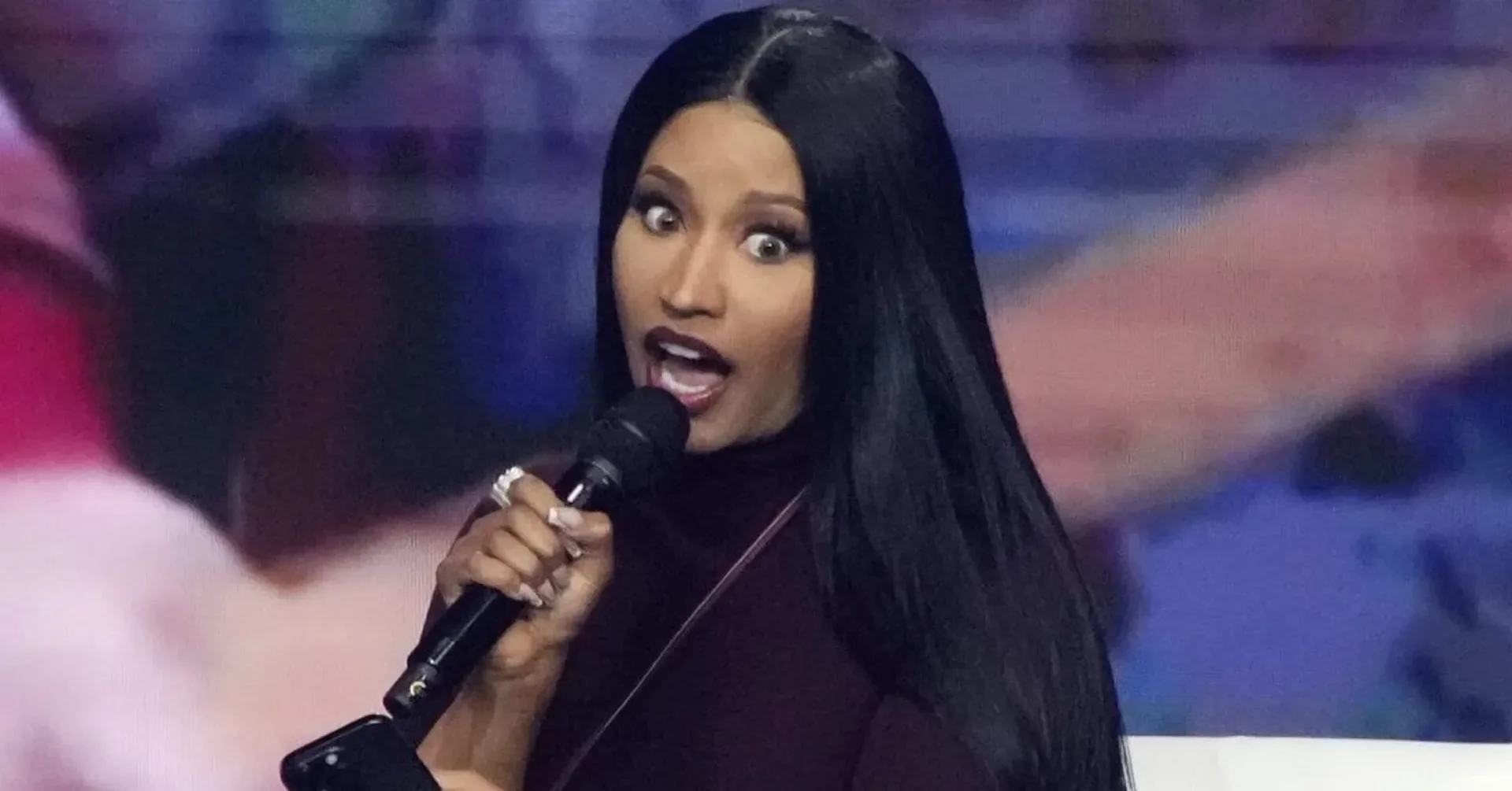
Nicki Minaj is encouraging young people to participate in U.S. elections in a newly circulated preview of her interview with Lara Trump, ending her appeal with the partisan instruction to “Vote red.” The moment is straightforwardly political, but it has also renewed attention on something Minaj has previously discussed herself: she said in a 2024 livestream that she was not a U.S. citizen, and there has been no public confirmation that her status has since changed.
That distinction matters because U.S. citizenship is required to vote in federal elections. An entertainer can advocate, campaign, appear in political media, endorse candidates, and urge others to vote without being eligible to cast a ballot. But Minaj’s own prior description of her status makes the message an unusual one—not because she cannot express a political preference, but because the audience being asked to act may have a right she has publicly said she does not.
The available preview is promoting Minaj’s scheduled appearance on My View with Lara Trump, set for Saturday, September 26, at 9 p.m. ET. The short clip shows Minaj telling viewers that their voices are necessary for the country and the world before making her “Vote red” appeal. It does not establish the scope of the full interview, so any additional remarks and context will depend on the complete broadcast.
What Minaj has said about citizenship
In 2024, Minaj told viewers during a livestream that she was not a U.S. citizen despite having lived in the country for many years. In January, she said she was completing citizenship paperwork after showing what she called a Trump Gold Card. However, she has not publicly confirmed that she completed the citizenship process.
That leaves an important factual boundary around the discussion: public statements indicate that Minaj was not a citizen at the time of the earlier livestream, while her current status is unconfirmed publicly. It would be inaccurate to state definitively that she remains ineligible to vote, just as it would be inaccurate to state she has become a citizen without confirmation.
For the purposes of voting law, citizenship and residency are not interchangeable terms. Residency describes where a person lives; citizenship is a legal status. The supplied information says federal elections require voters to be U.S. citizens. Whether someone is a prominent performer, a longtime resident, or an outspoken supporter of a candidate does not alter that basic eligibility requirement.
Political advocacy is not the same as casting a ballot
The apparent contradiction has a simple legal explanation. A person does not need to be eligible to vote in order to publicly encourage others to do so. Political speech, celebrity endorsements, interviews, and advocacy are different from registering and voting.
Minaj’s message is therefore best understood as an endorsement directed at people who are eligible to participate. Her status is still relevant, though, because “vote” rhetoric often blurs the difference between influencing an election and being legally permitted to take part in it as a voter. The clip brings that distinction to the surface.
Related coverage includes Nicki Minaj’s ‘Vote Red’ Preview Arrives as Her Citizenship Status Remains Unconfirmed.
The episode also illustrates why political messaging from celebrities can attract more scrutiny than an ordinary endorsement. A slogan is brief; the underlying issues are not. Viewers will reasonably ask whether a public figure urging turnout is eligible to vote, whether that person is speaking from direct experience, and what policy context surrounds the appeal. The answer here is limited by the available record: Minaj has made prior statements about not being a citizen, said she was finalizing paperwork this year, and has not publicly verified a completed change in status.
Her support for Trump has become more explicit
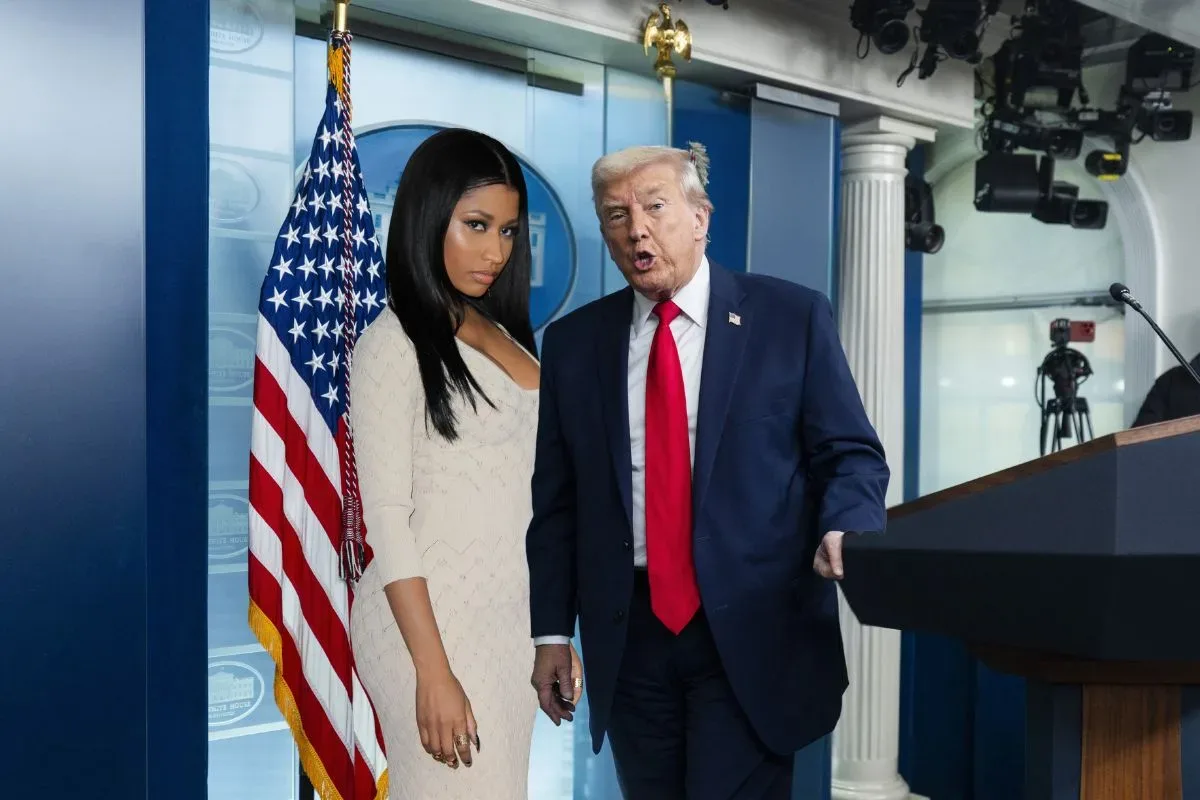
Minaj’s partisan appeal follows a series of visible connections to Donald Trump’s administration. During a recent appearance with Laura Ingraham, Minaj said she was honored to work with the administration and with Trump. She also described feeling heard by him and rejected the idea that she needed to defend that support to critics.
She has additionally joined the administration’s Million Dollar Pitch Competition as a judge alongside investor Grant Cardone and Airbnb co-founder Joe Gebbia. Those appearances place her involvement beyond a one-off endorsement: Minaj has publicly embraced working with the administration and has said that criticism makes her more determined to continue that support.
That makes the Lara Trump preview less surprising than it might have been earlier in Minaj’s career. What is new is the directness of the electoral language. Saying “Vote red” is not simply a statement of personal admiration or a general call for civic participation. It explicitly points viewers toward a Republican voting choice.
Celebrity political alignment is not new, of course, but its practical effect is difficult to measure from a single preview. Minaj has a substantial audience, and a message from a recognizable artist can broaden the reach of campaign-era language. Still, the clip itself does not demonstrate how viewers will respond, whether it will affect turnout, or whether it represents a larger formal campaign role. Those claims would go beyond the evidence currently available.
For more on the collision of music celebrity and large-scale sports-event speculation, see this report on Cam’ron’s Jay-Z Super Bowl halftime show theory.
The voter-verification backdrop
Minaj’s comments are also arriving amid a live dispute over citizenship checks in election administration. A Supreme Court order, decided 6–3, allowed the Trump administration to resume an expanded use of the Systematic Alien Verification for Entitlements program, generally known as SAVE, while litigation continues.
SAVE was originally used to help determine eligibility for public benefits. Under the expanded approach described in the available information, the system incorporates Social Security records and permits officials to conduct bulk searches of voter information. The administration’s stated objective is to help state and local officials identify people who are not eligible to vote.
Bulk searches refers to checking a large number of records at once rather than examining a single person’s file after a specific question or issue arises. Advocates of the expanded system say that can give election officials a more efficient way to find potential noncitizen registrations. But scale is also at the center of the criticism: a system that reviews many voters at once can create consequences for eligible citizens if the underlying data are incomplete, mismatched, or interpreted incorrectly.
Voting-rights groups have argued that the expanded program could expose private information and mistakenly flag people who are eligible. Justice Ketanji Brown Jackson, writing in dissent and joined by Justices Sonia Sotomayor and Elena Kagan, said the majority did not adequately account for the potential harm to lawful voters.
Jackson referenced findings involving Texas voters, including one person who lost registration without realizing it and two others who had to show proof of citizenship to remain registered. These examples do not establish that every check is erroneous. They do explain the concern that voter-list maintenance can produce real barriers even where the stated goal—ensuring only eligible people vote—is broadly understood.
What the Supreme Court order does and does not do
The order pauses a lower-court ruling that had blocked the administration’s expanded version of SAVE while the appeal proceeds. In plain terms, it allows the expanded checks to continue during the litigation; it is not the same thing as a final resolution of every legal question surrounding the program.
The order also does not erase federal limits on broad voter-roll removals close to Election Day. Officials may still conduct individual checks, but the supplied information makes clear that protections against sweeping late voter-list removals remain in place. That distinction is essential. Verification activity and mass removal are not identical actions, and the timing of any registration action can matter just as much as the review itself.
This wider context sharpens the attention on Minaj’s citizenship remarks. A celebrity’s vote-focused endorsement normally fits into the familiar rhythm of election-season media. Here, it intersects with a national argument over how government agencies and election officials verify citizenship, how errors affect lawful voters, and where courts should draw limits while those systems are being challenged.
Why precision matters in this story
There are three separate issues that should not be flattened into one headline-sized claim. First, Minaj has urged viewers to vote Republican. Second, she previously said she was not a U.S. citizen. Third, she later said she was finalizing citizenship paperwork but has not publicly confirmed completion. Each point is supported by her public-facing comments described here; none alone fills in the gap left by the absence of a current confirmation.
There is also a separate policy argument concerning voter verification. The Trump administration says expanded SAVE use will help identify people who cannot legally vote. Critics say the system can create privacy problems and improperly burden eligible voters. The Supreme Court’s order lets the expansion proceed for now while the appeal continues, but does not settle the underlying policy dispute in public debate.
For viewers, the practical takeaway is modest but important: political endorsements should be read closely, especially when they invoke voting rights and citizenship. Minaj can openly support Trump and encourage eligible Americans to vote red. At the same time, the public record described here does not confirm whether she is currently able to vote herself.
The complete Lara Trump interview may provide more context about Minaj’s views or her personal status. Until then, the preview’s central message is clear, while the question of her current citizenship remains unresolved in public.