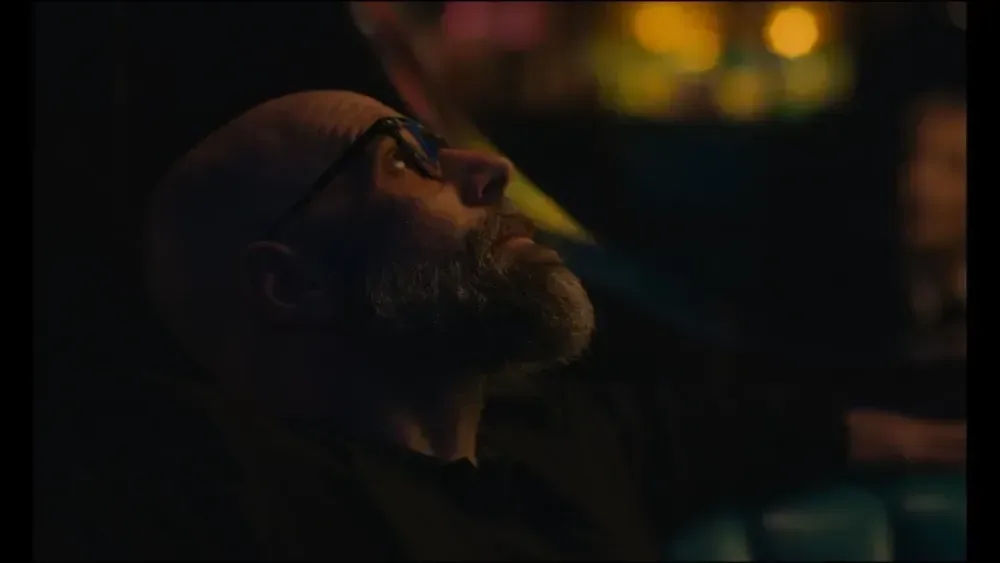
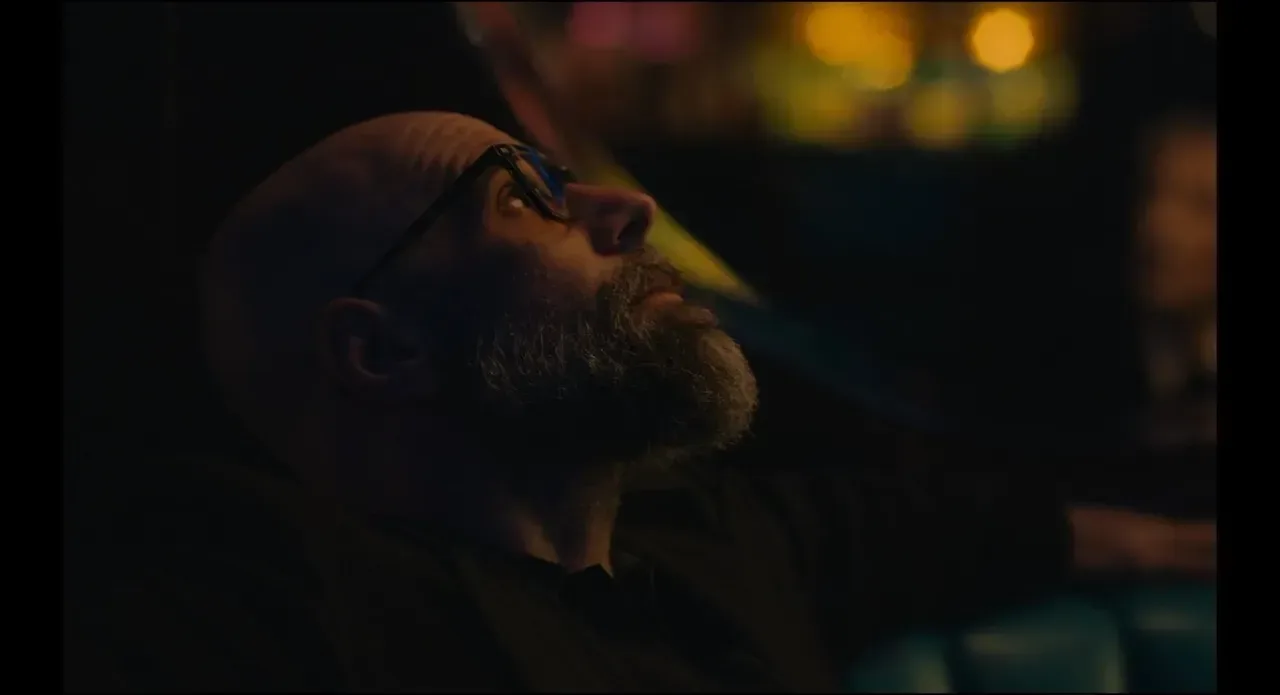
Situations is built around a recognizably unpleasant modern problem: a relationship ends, but the administrative and emotional loose ends keep making it feel alive. Greg Vrotsos’ feature directing debut follows Nick, a Los Angeles photographer in his forties, after his girlfriend Jessica, played by Katie Parker, breaks up with him. The premise may sound familiar, but its details are pointed. Jessica has calculated their shared expenses in a spreadsheet, turning the wreckage of cohabitation into a bill Nick cannot simply ignore.
That tension gives the film a practical, funny and quietly bruising starting point. Nick does not merely miss someone; he is stuck in a limbo where money, friendship expectations and the prospect of reconciliation all collide. Situations is interested in the uncomfortable gap between knowing a relationship is over and actually behaving like it is over.
Vrotsos co-wrote the screenplay with Daniel Hartigan, and the film’s strongest choice is its refusal to treat Nick’s pain as a blanket excuse for everything he does next. He is sympathetic without being spotless. He is thoughtful, but that self-awareness does not automatically make him considerate. The result is a romantic comedy that finds humor in social errors while still acknowledging the people who must deal with them.
A breakup comedy for people tired of starting over
Nick’s dating problem is not portrayed as a lack of options. His career is going well, and his manager Brianne, played by Melora Walters, presents possibilities that he cannot bring himself to pursue. The obstacle is readiness. Nick knows broadly what he wants from a partner, but the process of meeting strangers and repeating introductory conversation has become exhausting rather than exciting.
That is an important distinction in a story about dating in one’s forties. Situations does not frame its central character as a novice overwhelmed by romance for the first time. He has history, habits and enough experience to see how much effort a new connection requires. The film locates its comedy in that reluctance: the temptation to return to a known, imperfect relationship partly because the alternative involves beginning again.
Nick’s married friend Paul, played by P.J. Byrne, presses him to get back out there. Paul can be a loud advocate for nightlife and impulsive action, but he is not presented as merely a married man dispensing carefree advice to a single friend. The character has his own failures and vulnerability, a choice that gives the friendship more texture than a standard “reckless wingman” setup.
Nick also agrees to a double date with Mario, whose enthusiasm for the Los Angeles social scene far exceeds Nick’s appetite for casual encounters. Then Paul pushes him toward a blind date with florist Gabrielle, played by Fernanda Andrade. As Nick tries to resume dating, Jessica reappears and suggests that reconnecting might be possible—though she still expects him to settle his part of their old shared costs.
The screenplay draws its momentum from that push-pull. Nick wants the clean emotional closure that would let him move forward, but he is also susceptible to any sign that the old relationship can be revived. The film makes room for the awkwardness that follows when those competing desires affect other people.
Awkwardness with consequences
One of the film’s more revealing turns comes after Nick and Gabrielle’s blind-date encounter goes badly. He finds temporary comfort with another disillusioned woman, played by Fiona Dourif, after they leave the situation together. Their exchange of dating horror stories offers a sense of shared relief, but the movie does not pretend that relief resolves what Nick has done.
Instead, Nick eventually has to face Gabrielle after ghosting her. This is where Situations appears especially attuned to scale. Rather than relying on an outsized public humiliation designed to force a tidy romantic-comedy redemption, the film lets the confrontation be awkward, funny and plausibly human. A smaller reckoning can be more uncomfortable because it feels like something that could happen offscreen, after the supposedly cinematic moment has passed.
Ghosting, in this context, means abruptly cutting off communication with someone without an explanation. It is a familiar term, but the film’s treatment matters because it does not use the act only as a punchline. Nick’s evasiveness is part of the larger story of someone who is trying to avoid pain and uncertainty, then discovering that avoidance transfers the discomfort to someone else.
That accountability keeps Vrotsos’ performance from becoming a plea for the audience to forgive Nick automatically. He gives Nick enough charm and sensitivity to hold the center of the film, while allowing his thoughtless choices to land. The character can be introspective without the movie confusing introspection for maturity.
Los Angeles is more than a dating backdrop
The film’s Los Angeles setting is specific rather than decorative. Real locations on the city’s east side give the story a lived-in sense of place, connecting bars, dates and everyday travel to the emotional rhythms of the characters’ lives. It recalls earlier L.A.-set relationship comedies in which neighborhoods and hangouts helped define the people moving through them, while keeping its attention on a different stage of adulthood.
Comparisons to Swingers and High Fidelity make sense as points of reference, not because Situations simply repeats either film’s formula. Like those movies, it is driven by neurosis, friendships and romantic self-sabotage more than conventional plot machinery. But Nick is older than the young men often associated with this kind of comedy. He is less interested in pursuit for its own sake, and more conscious of how hard it is to begin a relationship after one has acquired emotional baggage.
The film also evokes the deliberate discomfort of Larry David-style comedy: characters make choices that are understandable in the instant but increasingly difficult to defend once the social consequences arrive. The difference is tonal. Situations aims for tenderness alongside cringe, and Nick’s mistakes are rooted in grief and indecision rather than pure contrarianism.
For viewers interested in how familiar fictional Los Angeles can shape a story’s tone, the city’s role here is usefully modest. It is not transformed into a glossy fantasy or reduced to a generic dating-app battleground. It remains a collection of specific places where people run into one another, make plans, delay difficult conversations and carry their unfinished feelings from one stop to the next.
A modest production with a confident visual identity
Reportedly made for about $130,000, Situations demonstrates how a small budget can support rather than obscure a character-driven premise. Cinematographer Trevor Wineman works with straightforward staging, but the camera placement reportedly finds fresh angles on commonplace interactions. That approach suits a film whose pleasures depend on observing how people occupy rooms, bars and dates when they would rather be anywhere else.
Camera placement refers to where the camera sits in relation to actors and action. It may sound purely technical, but it strongly affects a scene’s emotional read. A conversational scene can feel intimate, exposing or tense depending on the distance, angle and framing. In a movie focused on social unease, simple setups can be effective when they give performers room to show hesitation or discomfort without announcing the technique.
Ben Romans’ music is similarly described as restrained but emotionally alert. Rather than treating every scene as an invitation for a big romantic cue, the score supports Nick’s spare, unsettled inner world. Alexis Evelyn edited the film, which runs 102 minutes.
The production’s small scale matters because Situations is not trying to win viewers through extravagant set pieces or artificial stakes. Its stakes are a breakup, a repayment dispute, a blind date, a missed connection and the decision to stop leaving an old relationship half-open. Those are ordinary problems, but they are not minor to the people inside them.
Vrotsos steps forward on both sides of the camera
Vrotsos arrives at this debut with prior character-acting credits including Parks and Recreation, Orange Is the New Black and the 2017 return of Twin Peaks. In Situations, he has the more demanding task of serving as the story’s romantic lead while directing himself from a screenplay he co-wrote.
That combination may explain some of the film’s confidence about Nick’s contradictions. The performance does not ask the audience to see him as a romantic ideal. It asks them to recognize a person who can articulate what he ought to do, then fail to do it when the moment arrives. Opposite Parker, Vrotsos gets a potentially cathartic exchange out of Nick’s realization that an ex assuming they will remain friends can feel less like generosity than being kept available for emergencies.
It is a bracing insight, although the film does not turn it into a universal rule. Friendship after a breakup can mean many things; this particular realization belongs to Nick’s situation, in which unresolved feelings and ambiguous contact are stopping him from moving on. The distinction is one of the script’s mature touches. Boundaries are not presented as punishment. They are portrayed as a way to stop living inside a relationship that no longer functions.
That makes Situations a welcome counterpoint to romance stories that mistake reunion for growth. Its clearest emotional argument is simpler: moving forward may require admitting that familiar misery is not the same as love, and that reluctance to date again is not a reason to keep another person on hold.
What to know about Situations
- Director: Greg Vrotsos
- Screenplay: Greg Vrotsos and Daniel Hartigan
- Cast: Greg Vrotsos, P.J. Byrne, Melora Walters, Fiona Dourif, Katie Parker, Fernanda Andrade, Gino Vento and Tony Kanal
- Cinematography: Trevor Wineman
- Editor: Alexis Evelyn
- Music: Ben Romans
- Runtime: 102 minutes
Following a 2025 festival run, the film was presented through road-show engagements and is due on physical media in 2027. Its intimate scale and character-first approach give it the kind of qualities that can build appreciation over time. For more recent film conversation, see our coverage of Coleman Domingo’s response to criticism of his performance in Michael.