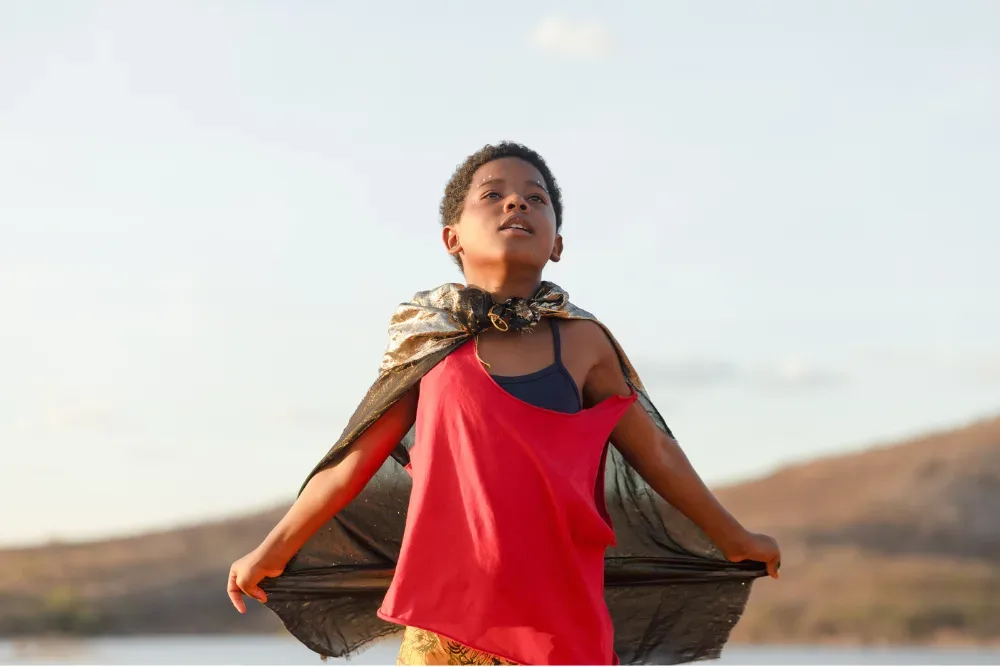
Gugu’s World is built around movement. Its young title character plays football across a dirt field, dances to Brazilian brega music and appears determined to meet the world without asking it for permission first. That expressive energy is at the heart of Allan Deberton’s film, which has opened in Brazil after premiering in Berlin nine months earlier.
Yuri Gomes plays Gugu, a boy living in a small town in Ceará with his grandmother Dilma, portrayed by Teca Pereira. Their home is a place of affection and protection, especially when Gugu faces judgment from others, including his father Batista, played by Lázaro Ramos. But the family’s foundation is threatened when Dilma develops a rapidly advancing case of Alzheimer’s disease.
The premise gives the film substantial emotional territory. It concerns a child’s freedom of expression and young queerness, but it also deals with caregiving and a progressive disorder. Deberton, who previously directed Pacarrete, reunites here with screenwriter André Araújo, who originated the story. The filmmakers’ central challenge was not merely to present these subjects, but to make the family at the center feel specific, lived-in and human.
Finding an actor with Gugu’s spirit
The production considered more than 700 children before choosing Gomes. Producer Karen Castanho said the team needed a performer who possessed the character’s particular spirit, and identified spontaneity as a major consideration in casting children. Gomes ultimately became the film’s essential element: a young actor capable of making Gugu’s exuberance feel natural rather than carefully performed.
That distinction matters. A child character who dances, plays and pushes against the expectations around him can easily be reduced to a symbol of innocence or rebellion. The approach described by the production instead emphasizes behavior: children should look like children, not like young performers visibly executing a grown-up idea of childhood.
Deberton worked with casting director and assistant director Luciana Vieira toward that goal across the younger ensemble. In practical filmmaking terms, a naturalistic child performance does not mean a production simply turns on a camera and hopes for the best. It requires casting, preparation, directing and an environment where the child can respond in the moment. The reported aim was to protect the individual qualities the children brought to the screen rather than iron them out.
Deberton described working with children as transformative and said that experience has informed his next project, Adoption, which draws on his own experience adopting his son. The connection between the films is not simply demographic. It reflects a creative interest in the directness and emotional truth that children can bring to a story when their perspective is taken seriously.
A family drama without easy villains
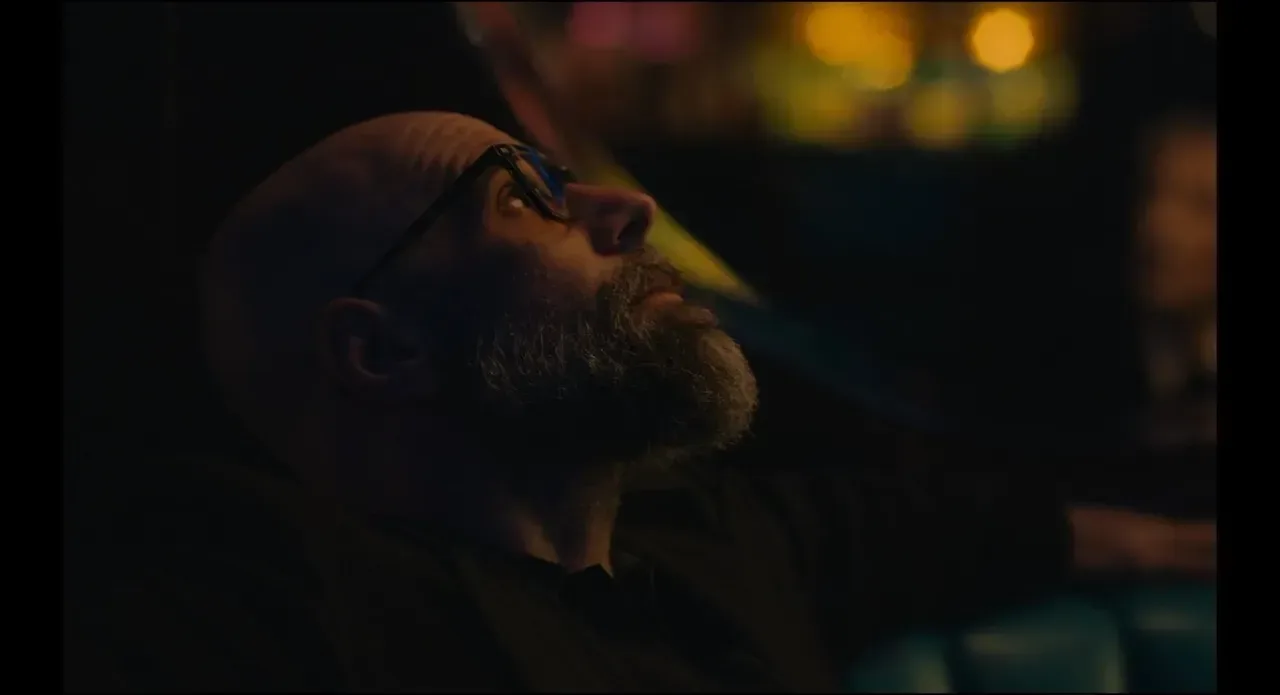
Gugu’s father Batista is initially an imposing contrast to his son. Gugu’s physical freedom and openness meet Batista’s restraint, while the father struggles with internalized homophobia and an inability to accept his child. Yet Ramos resisted settling for a one-note antagonist.
His first reading of Batista leaned toward villainizing him, Ramos explained, because the character’s flaws seemed like an urgent warning. Rehearsals complicated that interpretation. Batista became a father who cares about his son and wants closeness, but lacks the emotional means and understanding to create it. That does not erase the harm in the character’s behavior. It does, however, make the family conflict more recognizable and more difficult.
Internalized homophobia describes prejudice against LGBTQ+ people that an individual absorbs from the wider culture and may direct toward themselves or others. In a family story, it can manifest as fear, disapproval, emotional withdrawal or attempts to police a child’s self-expression. Ramos’ description suggests the film treats Batista’s behavior as rooted in limitation rather than presenting it as an abstract evil detached from the person experiencing it.
Ramos also found the role through physical contrast. He and Gomes would dance or move together away from the camera, but when filming began, Ramos returned to Batista’s inward, contained manner. The resulting opposition is clear even at the level of body language: Gugu is kinetic, while Batista holds himself back. This is a useful example of how performance can communicate a character’s emotional state without dialogue spelling everything out.
Pereira’s Dilma provides another counterweight. The actor connected the character to her own joy for life and her caring relationship with Gugu, while also stressing that the part differed from previous work. Vieira used exercises to help Pereira and Gomes build a bond. That preparation is especially meaningful in a story where the grandmother-grandson relationship is not background texture; it is the emotional shelter around which the film’s stakes are organized.
Why the Ceará setting is more than scenery
The film was shot in and around Quixadá, a city in Ceará’s interior. The team used the city as a base but deliberately looked beyond familiar locations. Many sets were within an hour’s travel and had no infrastructure for a full production, meaning the crew had to transport what was needed to work there each day.
That is a reminder that “shooting on location” is not shorthand for an uncomplicated authenticity boost. It can mean managing travel, equipment, crew needs and a large ensemble in places not designed to operate as film sets. Castanho identified logistics as the production’s greatest challenge. The crew included professionals from across Brazil, while background performers came from the region.
The effort nonetheless aligns with a larger creative purpose. A story anchored in Ceará can allow a film to represent a part of Brazil without filtering it through the visual habits of major urban centers. The local population embraced the project, and the team worked with background actors so they felt comfortable with the costumes and production design and integrated into the filmmaking process.
Ramos said remaining in Quixadá longer than originally planned affected him. He contrasted the pace of a smaller city, where people know one another and have time to talk, with his rushed life in an urban center. That does not turn location into a magical shortcut to meaning, but it does illustrate what a sustained shoot can offer actors: a chance to absorb rhythms and social textures relevant to the story they are telling.
Regional specificity and broad audiences
For the team behind Gugu’s World, regionality is not a limit on the film’s reach. It is part of what gives the work its voice. Castanho characterized the project as a small film with a big heart, while Deberton challenged the idea that Brazilian films rooted in local experience are destined only for specialized audiences.
That argument rests on a straightforward proposition: audiences connect with vivid characters and meaningful change, not with a presumed absence of cultural specificity. Gugu’s circumstances, family and music are particular to the film’s world. Its tensions—being accepted, caring for family, confronting fear and trying to communicate across emotional distance—are legible far beyond it.
Pereira likewise framed Brazil’s screen culture as diverse and still underrepresented, emphasizing that opportunities must extend beyond major urban centers. Her point concerns employment as well as visibility. Film production involves far more than its stars and director: crews, performers, regional workers and communities all form part of the ecosystem. A geographically wider industry creates more possibilities for stories and for the people capable of making them.
That belief in a range of stories is relevant to conversations across film and television. For another recent example of how quickly the streaming landscape can shift, see the cancellation of Netflix’s Will Ferrell golf comedy The Hawk. The cases are not equivalent, but they underline why the questions raised by Ramos about platforms, partnerships and which projects are supported remain consequential.
Ramos’ warning about identity and algorithms
Ramos used the conversation around Gugu’s World to raise a broader issue: the regulation of streaming services in Brazil, the terms under which independent productions work with major companies, and whether local filmmaking receives a fair share of a market it helped develop. He argued that, after the pandemic, market pressures led to concessions and deals that produced films without a strong identity.
His concern about algorithm-led storytelling is not a rejection of technology itself. An algorithm, in this context, is a system used to organize recommendations, visibility or content decisions based on data and modeled preferences. The concern is what can happen when presumed audience behavior becomes the primary creative compass: projects may become overly similar, or shaped toward the expectations of markets elsewhere rather than the cultural context from which the story emerges.
Ramos’ other point is about authorship. “Respect the storyteller” is a compact way of arguing that financing and distribution should not flatten the perspectives of the writers, directors and communities whose work is being produced. The film itself reportedly took a long time to find partners and financiers, making the remark more than an abstract industry complaint. Its journey becomes part of the case for backing works that may not fit a narrow, pre-approved template.
Gugu’s World therefore arrives as both an intimate family drama and an example of the kind of filmmaking its team wants to see protected: independent, regionally grounded and centered on characters allowed to be complicated. Gomes’ Gugu gives that ambition a face. His freedom is not presented as a problem to solve, even when the people around him struggle to understand it. The film’s real question is whether the adults and institutions around a child can make room for that life to be lived fully.