
Netflix has canceled The Hawk after one season, ending Will Ferrell’s golf-comedy series before Lonnie Hawkins could play out the comeback at the center of its premise.
The show debuted in July and placed in Netflix’s global Top 10 for three weeks following release. That visibility was not enough to secure another season. The series’ costs reportedly set a higher threshold for renewal, with Ferrell’s compensation as both its star and co-creator among the factors that raised the bar.
It is an outcome that can sound counterintuitive from the outside: a program can appear on a widely watched chart and still not receive a follow-up. A Top 10 placement communicates that a title reached a sizable audience relative to other titles on the service during that period. It does not, by itself, establish the complete business case for a new season. In this instance, the reported calculation involved the scale of the show’s costs as well as its audience performance.
Lonnie Hawkins’ comeback stops on the first nine
Ferrell played Lonnie Hawkins, a former top golfer whose defining competitive success came in 2004. Hawkins is trying to extend a career his body is urging him to leave behind. His personal stakes are deliberately close to the sporting ones: his ex-wife and his son, Lance—now golf’s rising star—believe the veteran’s moment has passed, while Lonnie remains certain he is close to recapturing it.
The character’s target was one more major victory, which would complete golf’s Grand Slam in the show’s fictional sporting narrative. A “major” is presented here as the pinnacle-level win Lonnie still needs; the Grand Slam is the career-spanning set of those biggest victories. It gives the comedy a very direct engine. Rather than merely asking whether an aging athlete can still compete, The Hawk gave its lead an all-or-nothing milestone to chase.
That setup also frames the series’ title as more than a golf reference. Lonnie is not simply attempting a respectable late-career season. He is treating every remaining opportunity as a potential route to the greatest comeback of his sport. The tension between that unshakable self-belief and the skepticism of the people closest to him was built into the show from the start.
A notable regular television role for Ferrell
The Hawk marked Ferrell’s first regular television role since Saturday Night Live. He was not only the face of the series but one of its creators, sharing that credit with Harper Steele and Chris Hency. The arrangement made the cancellation especially consequential for the project: Ferrell had a creative role in shaping the show as well as its central performance.
The broader ensemble included Molly Shannon, Jimmy Tatro, Fortune Feimster, Luke Wilson, Chris Parnell, Katelyn Tarver and David Hornsby. That cast placed Ferrell’s worn-down sports champion amid a sizable comedy lineup rather than presenting the series solely as a one-person vehicle.
Steele and Hency were executive producers alongside Ferrell. Jessica Elbaum and Alix Taylor also executive produced for Gloria Sanchez Productions. The executive-producer group further included Rian Johnson, Ram Bergman and Nena Rodrigue for T-Street, along with David Gordon Green and Andrew Guest.
Those names describe the team behind the series, but they should not be confused with a promise of future episodes. Netflix’s decision closes The Hawk as a one-season show. No continuation, revival, or alternate release plan has been indicated in the available information.
Why a Top 10 run did not guarantee season two
The key detail in the cancellation is the difference between chart presence and a renewal threshold. The show’s three-week global Top 10 appearance is a concrete sign that it broke through during its release window. Yet streaming renewals are not governed by a single public score, and a placement on a weekly ranking is not a universal renewal rule.
For The Hawk, the reported issue was that the expense of making the series elevated what success needed to look like. Ferrell’s deal as lead actor and co-creator reportedly contributed to that expense. Put simply, the series did not merely need to attract viewers; it needed to perform strongly enough to justify the spending level associated with a second season.
That distinction matters for viewers trying to read streaming charts. Rankings are comparative snapshots: they show which programs were prominent against other titles at a given time. A renewal decision can also weigh factors not fully expressed in a ranking, including the ongoing cost of a production. The available details support one clear takeaway in this case: three weeks in the global Top 10 did not meet the required standard for another round of The Hawk.
There is no supplied evidence that the series was canceled because of a specific creative issue, audience reaction, or a single episode’s performance. The reported explanation is financial relative to the level of performance required. Keeping that boundary clear is important, particularly when a cancellation can easily lead to broader speculation that the known facts do not establish.
Ferrell still has Netflix projects in development
The end of The Hawk does not end Ferrell’s work with Netflix. He has produced several series for the service in recent years and remains attached as an executive producer to multiple upcoming projects through Gloria Sanchez Productions.
Those projects include All the Rage, Prep, and Nikki Glaser’s first scripted series under her Netflix Is a Joke Studios agreement. Their existence means the cancellation is best understood as the conclusion of this particular series, not as a complete departure from the streamer by Ferrell or Gloria Sanchez.
Still, the loss is specific for fans of this version of Ferrell on television. A regular series offered room for Lonnie Hawkins’ sports mythology, family pressure, aging-body reality and impossible-sounding ambition to develop over time. With the show ending after its first season, that trajectory remains contained to the episodes already made.
Television cancellations regularly leave viewers looking for patterns, especially when a recognizable star and a charting debut are involved. The more useful reading here is the narrower one: The Hawk had early global-chart visibility, but its reported cost structure required more for a renewal. The club is back in the bag after one season.
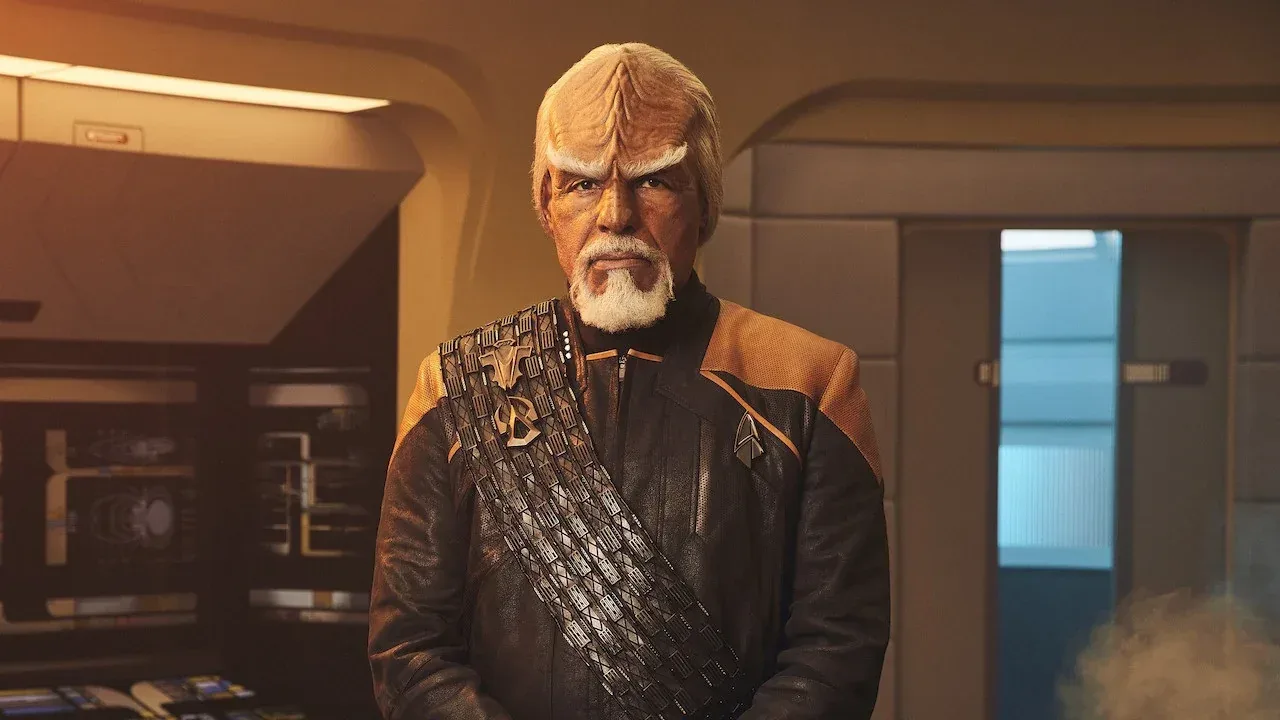
For another recent example of a television project that did not move forward, see the report on the Worf series that had six episodes written before it was dropped.