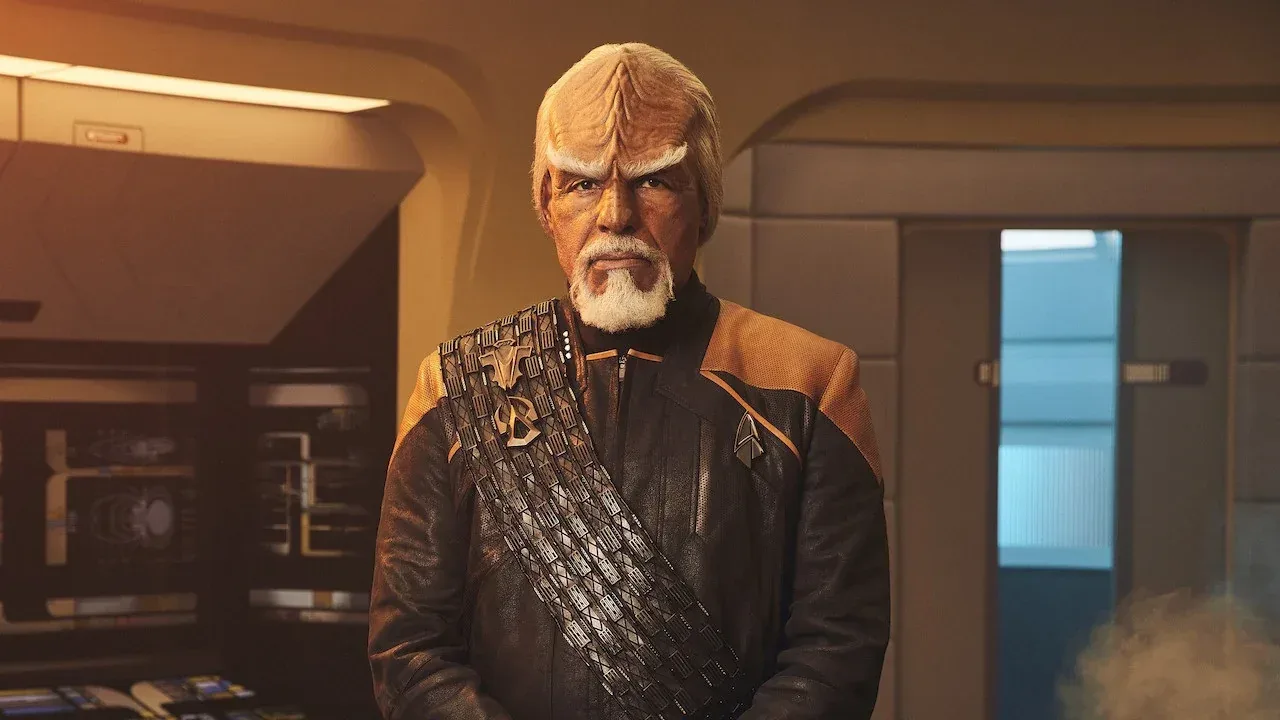
Michael Dorn says a television spin-off centered on Worf had progressed beyond the hypothetical stage before it was stopped. In a recent podcast appearance, the actor explained that he had separately pitched a Worf-led series to Alex Kurtzman, only to be told that six episodes for a show built around the Klingon officer had already been written.
The project apparently did not survive a change in leadership at CBS/Paramount. Dorn’s account is a valuable but necessarily limited window into an unmade series: six written episodes do not mean a show was greenlit, cast, filmed, or scheduled. Still, it suggests that Worf was considered a substantial enough anchor for a contemporary Star Trek story—and that the idea reached a more concrete stage than a casual fan wish list.
The Worf show Dorn described
Dorn’s own proposal was not simply “Worf becomes captain and gets a bridge.” His version would have put the character in the middle of efforts to keep the Klingon Empire together, while still sending him into space aboard a ship. That premise matters because it places Worf between two defining identities: the Federation officer audiences met in Star Trek: The Next Generation and the Klingon figure whose relationship to his heritage developed across later stories.
In franchise terms, the idea has an immediately understandable engine. A story engine is the recurring conflict or situation that can generate episodes without solving the central premise in the first hour. Political strain within the Empire supplies ongoing stakes; a starship supplies a mobile setting, new worlds, and room for smaller adventures. It is a framework that could accommodate diplomacy, espionage, combat, and questions of loyalty without requiring Worf to be a standard Federation captain.
Dorn also said the existing project was called Star Trek: Worf and was intended to get back to the character’s essence. He recalled being told the production was already “down the road” creatively, before the incoming regime decided it did not want to continue. The details of those scripts, their intended cast, and their relationship to Dorn’s separate pitch have not been established here. Treating the reported six scripts as proof of a finished, ready-to-shoot season would go further than the available information supports.
Why Worf remained a logical character to revisit
Worf has had unusually durable narrative mileage within the franchise. He was a central character in The Next Generation, then continued through major arcs in Deep Space Nine. More recently, Dorn returned in season three of Star Trek: Picard, where the older Worf was depicted as a spy who had been working on himself. The version of the character combined a more reflective outlook with formidable combat ability.
That evolution is precisely why a Worf show would not have needed to replay his earliest conflicts. An older protagonist with a long, complicated history can arrive with established relationships and scars, while a fresh setting can test whether his old code still works. A Klingon political crisis, in particular, could turn Worf’s personal connection to the Empire into a practical leadership problem rather than another nostalgia cameo.
There is also a difference between a familiar face returning and a character having enough unresolved material to carry a series. Worf’s long path through the franchise gives writers several possible pressures to explore: his Federation service, his connection to Klingon identity, the consequences of violence, and the responsibilities of influence. Dorn’s description of a protagonist trying to hold the Empire together suggests the show may have leaned toward the last of those concerns.
None of that guarantees that the series would have worked. A spin-off needs a clear point of view, a supporting ensemble, and a format that does more than put a recognizable character on a new ship. But the basic pitch described by Dorn contains a meaningful distinction: Worf would have been at the center of a problem that is specifically his, rather than merely visiting someone else’s adventure.
What “six episodes written” does—and does not—tell fans
Television development has many stages, and terminology can create false certainty. A pitch is an argument for making a show, often built around a concept, characters, tone, and potential stories. A script is a written episode, but its existence does not necessarily mean it is final or has been approved for production. A greenlight, by contrast, is the decision to move ahead with making the program.
On the evidence available, the Worf project had scripts but did not ultimately reach viewers. It is not clear whether those scripts constituted an ordered season, a development batch, or material that would have required substantial revision. Nor is it clear whether any of the written material could ever be repurposed. The practical takeaway is simpler: there was creative work underway, but there is no indication that the canceled project is active again.
That distinction is worth keeping in mind whenever abandoned franchise projects re-emerge through comments from actors or creators. Unmade television has a way of becoming more complete in fandom memory than it was in production. Dorn’s comments are still notable because they identify a specific project, a specific amount of written material, and a reported reason it stopped. They are not, however, a new announcement.
A narrower future for new Trek television, for now
The reported shelving lands during a period in which the wider television future of Star Trek appears constrained. Strange New Worlds is set to end with a fifth season. Starfleet Academy is set to debut its second and final season in 2027. Beyond those two series, there is no new Trek television project described as moving forward in the supplied information.
Other ideas have apparently failed to advance as well. A younger-Picard prequel proposal associated with James McAvoy and focused on the captain’s years aboard the Stargazer reportedly went nowhere. Star Trek: Legacy, conceived as a modern continuation of the Next Generation lineage after the final season of Picard, also appears to have been caught up in the transition around David Ellison’s takeover of Paramount.
It is easy to group every one of these concepts into a single story of cancellation, but they were not necessarily at the same stage. The Worf project reportedly had six scripts; the other concepts are described as pitches or prospective continuations. What they share is that none currently represents a confirmed next step for the franchise’s streaming slate.
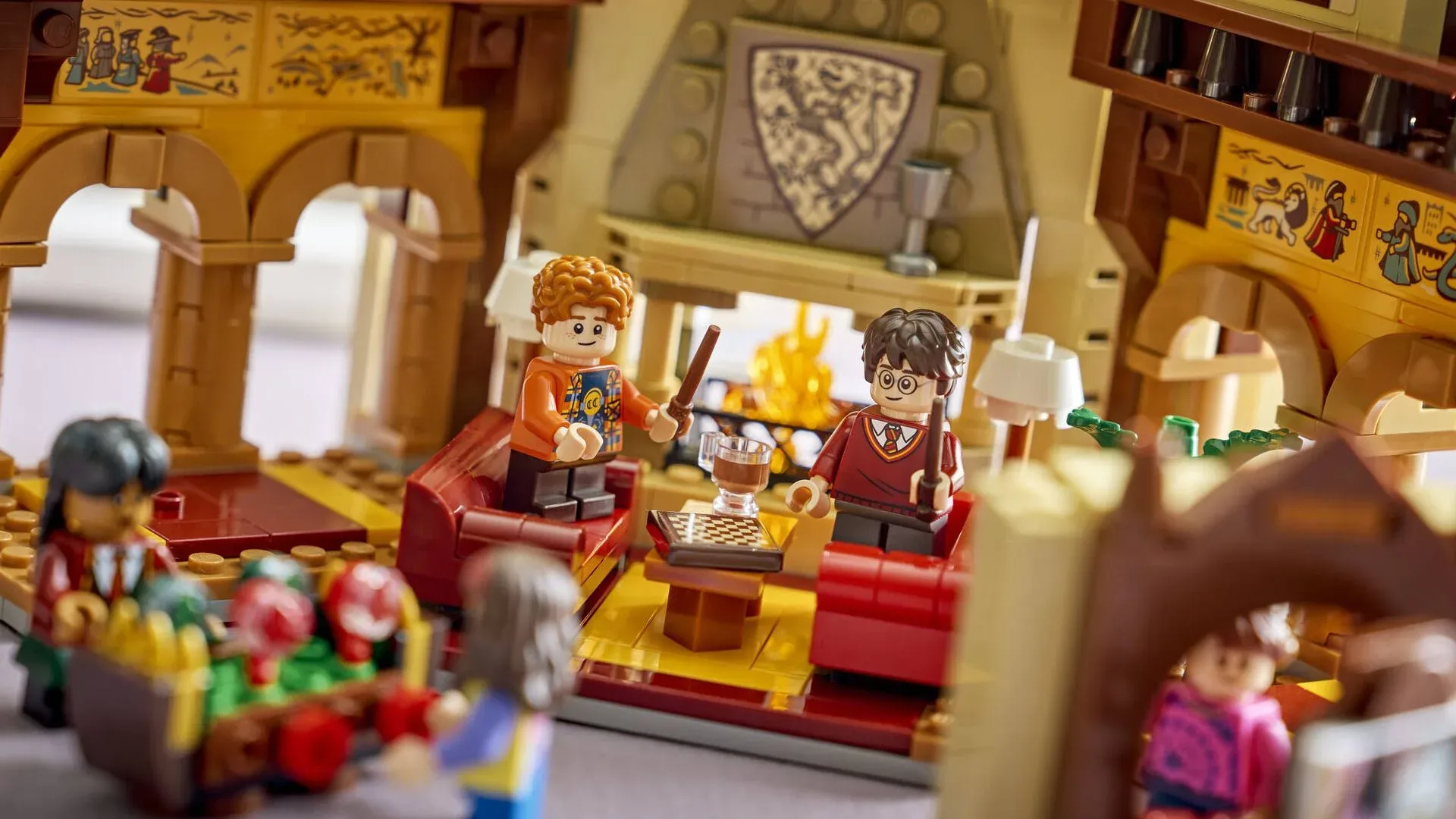
That leaves a peculiar gap between the franchise’s ongoing cultural reach and its immediate TV pipeline. Star Trek has continued to appear in games and in crossover products, including the Magic: The Gathering Universes Beyond set. Those projects can celebrate recognizable eras and characters, but they cannot replace a serial drama’s ability to develop a new status quo over time. The same broad franchise logic is visible in other screen properties trying to extend themselves through products and multiple media; HBO’s Harry Potter LEGO range, for example, shows how a returning TV world can carry a substantial merchandise conversation before viewers have seen the new adaptation.
The missed opportunity is in the premise, not just the name
The most intriguing part of Dorn’s account is not that a legacy character almost received another vehicle. It is the type of vehicle he describes. A series concerned with a fragile Klingon Empire could have broadened the political and cultural side of Star Trek while retaining the exploratory freedom implied by a ship-based format. It could also have met Worf where Picard left him: older, more self-aware, and still exceptionally dangerous when a situation demanded it.
For now, though, that remains an outline of what might have been. There is no confirmed revival, production timetable, or release path for Star Trek: Worf. Dorn’s recollection does establish that the character was once at the heart of a more developed television plan. In a period when multiple possible continuations appear to have stalled, that is enough to make the absent series feel less like fantasy casting and more like a genuine road not taken.