The first LEGO Harry Potter range connected to HBO’s new series is taking an immediately recognisable route: Gryffindor Common Room, Privet Drive, the Hogwarts Express and the Forbidden Forest are all part of the revealed selection. It is a sensible way to introduce a new screen interpretation of Harry Potter in brick form. These places are foundational to the story, and each offers a clear display or play premise without requiring buyers to learn a new corner of the wizarding world.
Yet the familiarity is also where the reaction has caught. Online discussion includes enthusiasm for particular details—especially Privet Drive’s faux-Tudor exterior—but also criticism that the models sit too close to earlier LEGO Harry Potter concepts. One widely repeated response framed the concern bluntly: the sets look like “bootlegs of the originals.” That is not an allegation about authenticity. It is a criticism of visual identity: some fans feel the new interpretations do not look sufficiently distinct from models they already associate with the franchise.
That tension is important because these are not merely repeat releases of a single scene. They are presented as designs based on the HBO version, with new minifigures and revised builds. The question now is whether those changes feel meaningful enough for collectors who have seen several LEGO takes on the same locations, particularly the train.
A first wave built around Harry Potter’s most enduring settings
The revealed line-up has four very different formats, from an interior-heavy common room to a stylised character set. Together, it suggests an opening assortment that prioritises instantly readable Harry Potter iconography rather than obscure deep cuts.
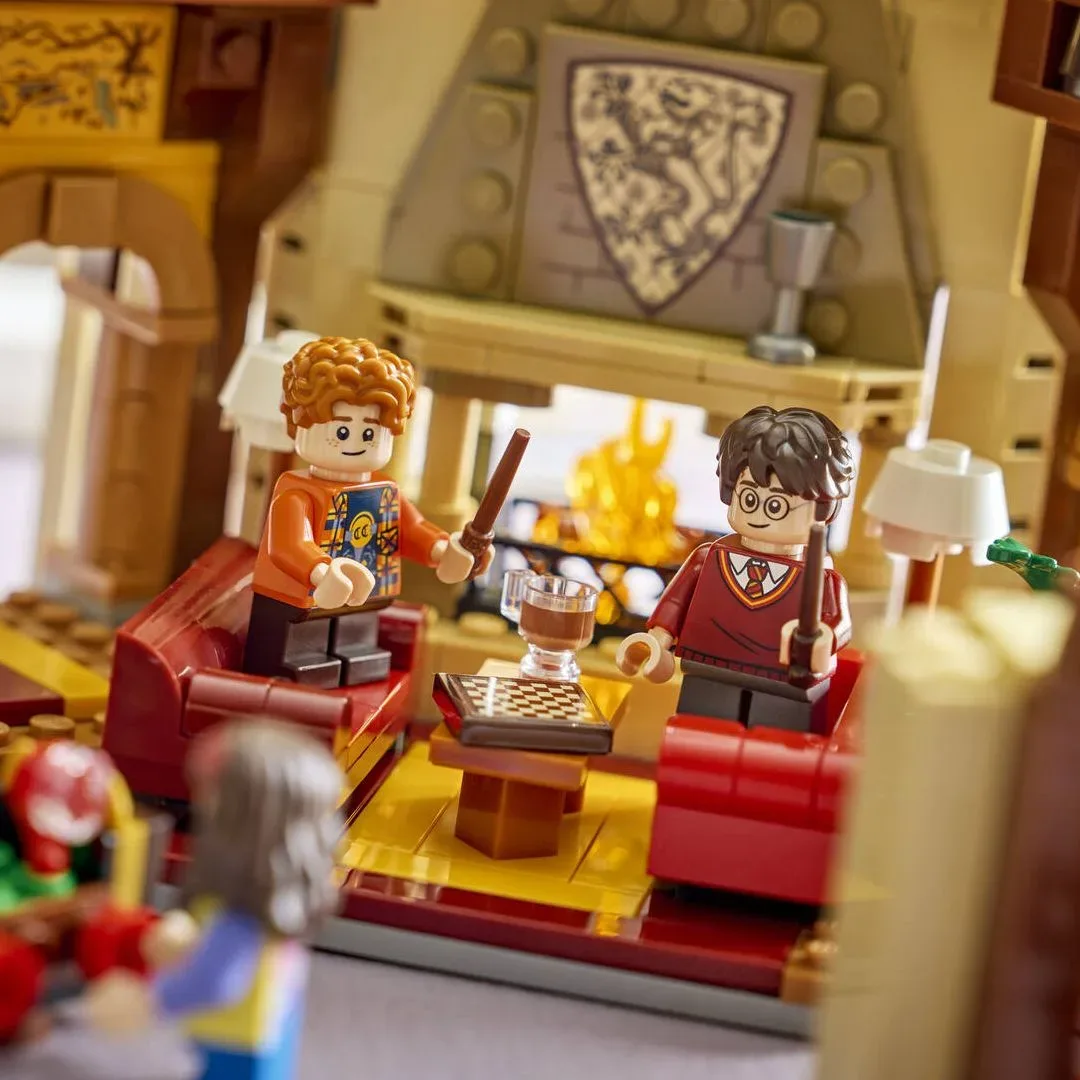
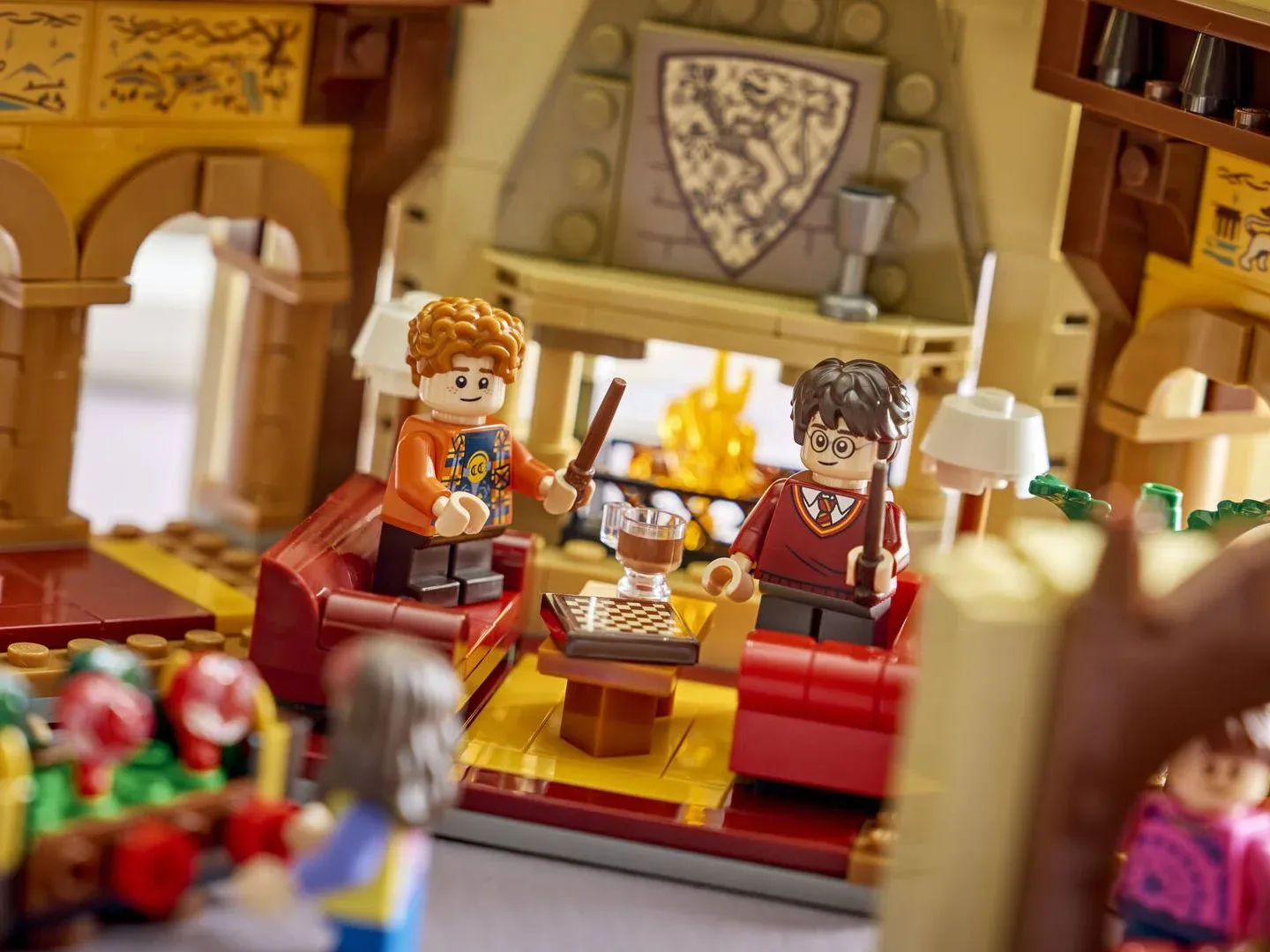
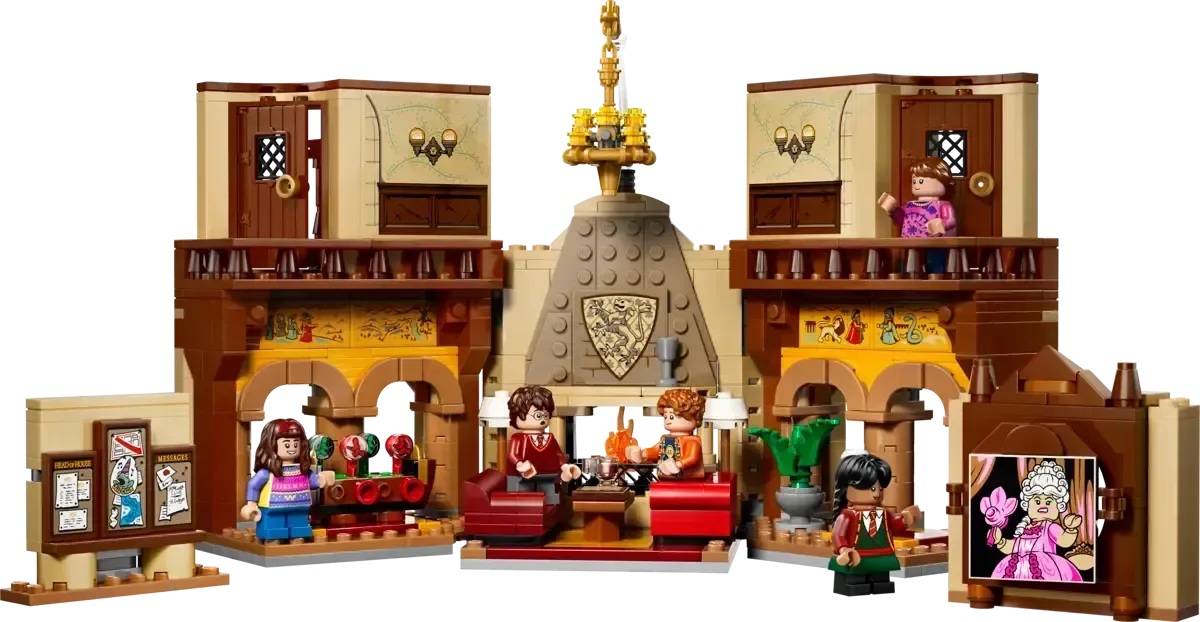
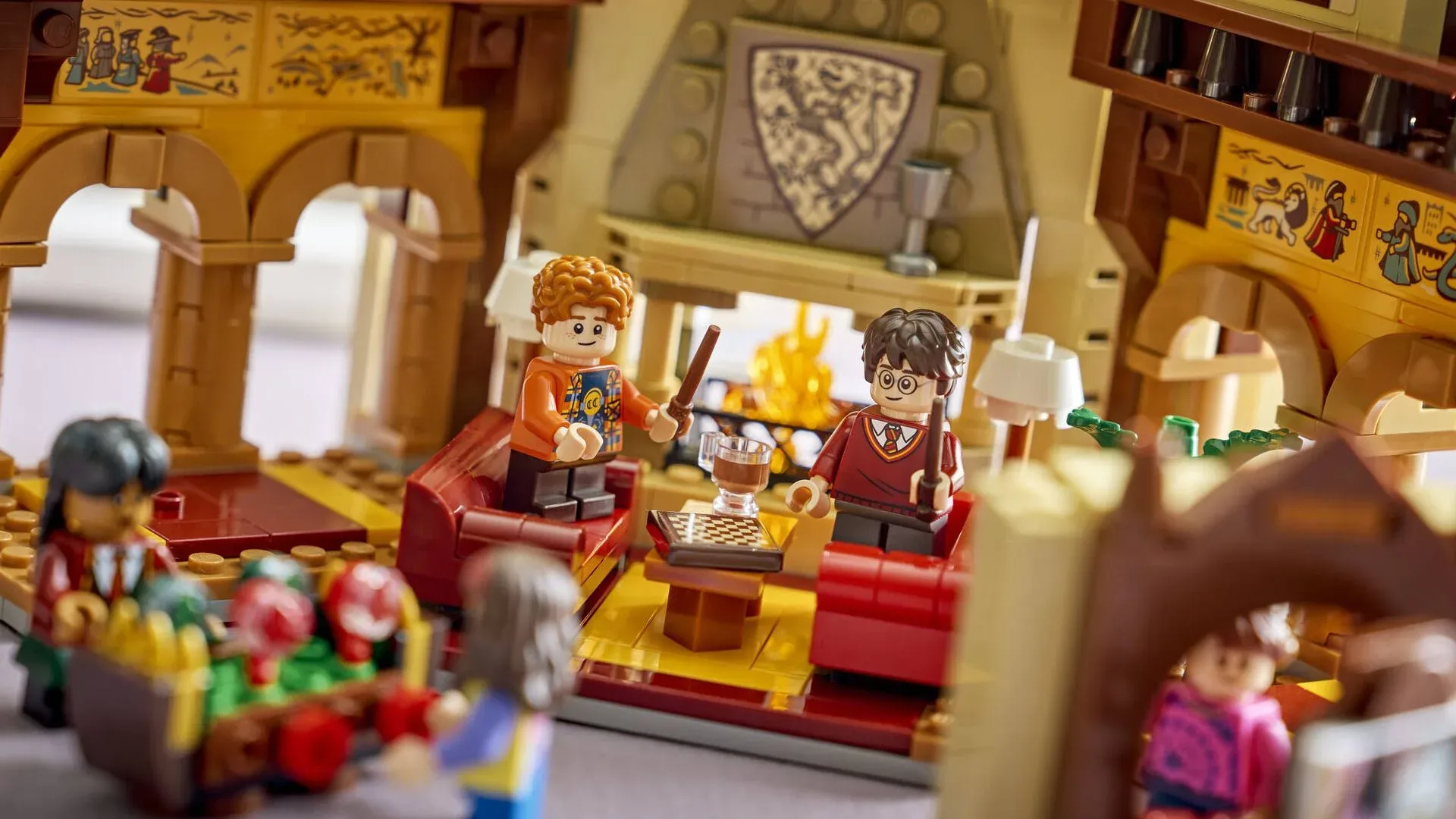
- Gryffindor Common Room: 738 pieces; five minifigures—Harry, Ron, Hermione, Parvati and Lavender; UK price of £79.99.
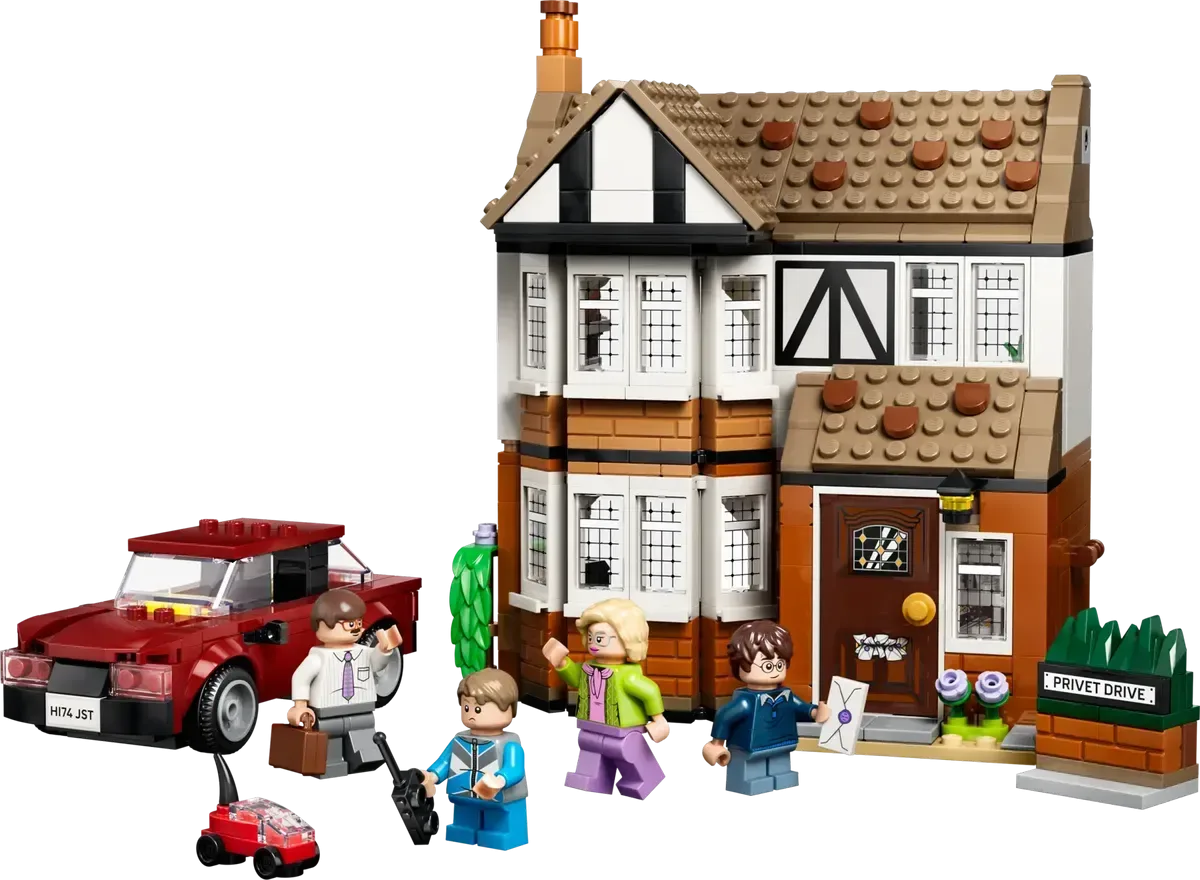
- Privet Drive: 545 pieces; four minifigures—Harry, Uncle Vernon, Aunt Petunia and Dudley—plus a brick-built 1990s car; UK price of £54.99.
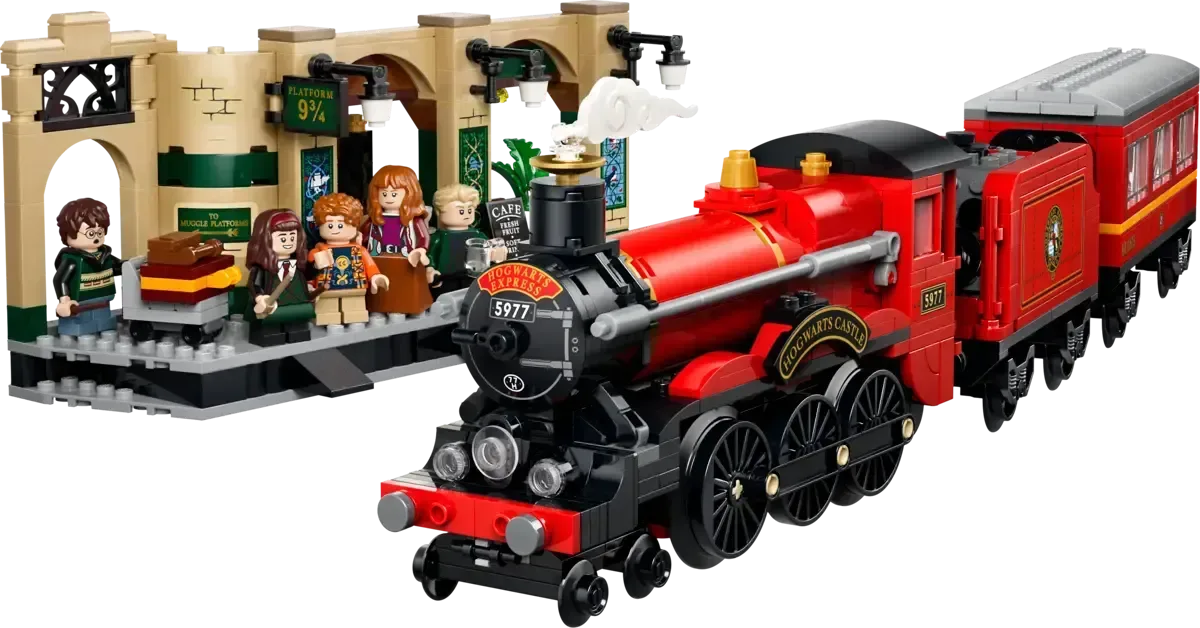
- Hogwarts Express: UK price of £89.99; the platform appears to include a café-style waiting area not noted in the earlier train interpretation being compared.
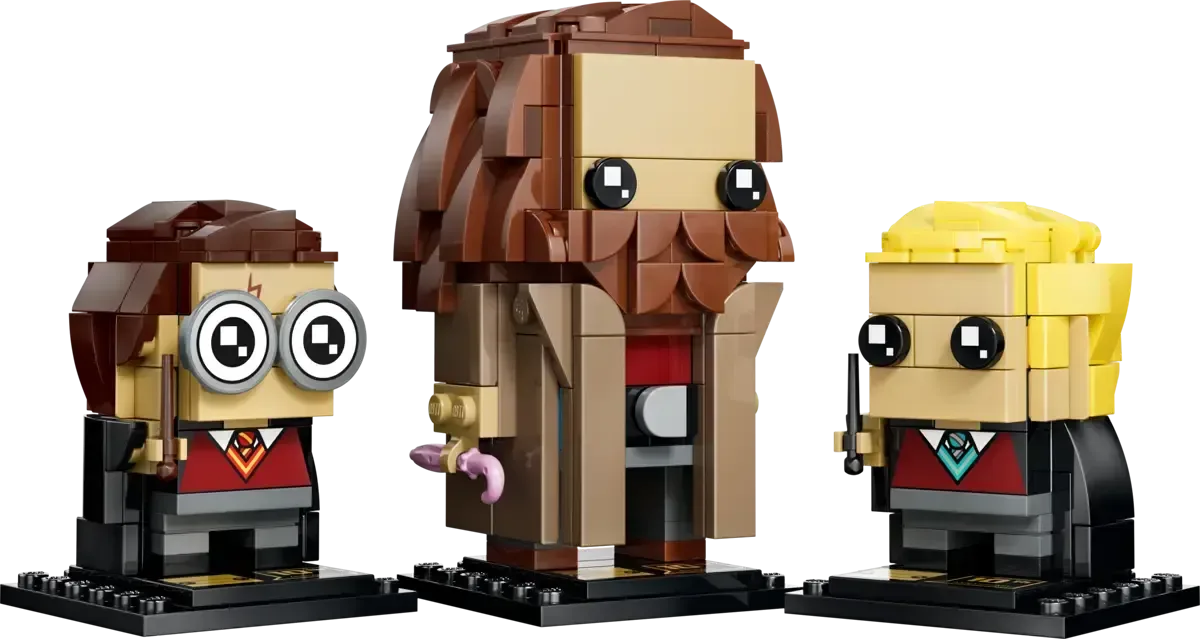
- BrickHeadz Forbidden Forest set: 380 pieces; Harry, Malfoy and Hagrid in a larger-scale, stylised character format; UK price of £22.99.
Piece counts are supplied for the Common Room, Privet Drive and BrickHeadz model, but not for the Hogwarts Express in the information available so far. It is worth resisting the temptation to treat price-per-piece as a complete value verdict, even where counts are known. A set’s character selection, size of its enclosed spaces, number of accessories and importance as a display subject can matter just as much to someone choosing between these four models. The available details do not establish which model has the strongest value proposition; they do show that the range is designed for several different budgets and display preferences.
Gryffindor Common Room: dense interior detail, familiar premise
The 738-piece Gryffindor Common Room leans into a location that recurs across the Harry Potter story. Its main appeal appears to be density. The build is described as carrying small details over almost every surface, while its five-person minifigure roster puts Harry, Ron and Hermione alongside Parvati and Lavender. For collectors who focus on character combinations rather than building type alone, that selection may be one of the set’s most consequential differences.
In LEGO terms, a minifigure is the small articulated character figure packaged with many sets. On a licensed range, minifigures often do more than populate a model: they communicate which version of a scene or property a set is intended to represent. The new figures are therefore central to the HBO connection, even if the common-room idea itself is extremely familiar.
The potential criticism is equally easy to understand. A common room is not a one-off action set with a singular silhouette; it is an interior of fireplaces, furniture and wall dressing. That gives designers plenty of opportunity for detail, but it can make major changes harder to see at a glance. Fans expecting a dramatic visual break from preceding Harry Potter LEGO interiors may see a new common room and first register the shared concept instead of the new treatment.
Related coverage includes New LEGO Harry Potter HBO Sets Revisit Hogwarts Express, Privet Drive and More.
Privet Drive is the clearest visual departure
Among the early models, Privet Drive seems best positioned to persuade people looking for an obvious new design language. Its faux-Tudor exterior differs substantially from the older movie-oriented version, and that exterior has already drawn positive attention. “Faux-Tudor” here describes an architectural styling that evokes Tudor-era timber framing rather than a claim that the building is a historical reconstruction. It gives the suburban home a more decorative visual character and a silhouette that can distinguish it on a shelf.
At 545 pieces and £54.99 in the UK, Privet Drive includes Harry with Uncle Vernon, Aunt Petunia and Dudley, plus a brick-built 1990s car. The character grouping keeps the focus on the Dursley household, which makes sense for a build centered on the family home. Unlike a large Hogwarts display, the set’s identity is concentrated: a house, a car and the people associated with that address.
That clarity may be why it has found a warmer pocket of feedback. When a property is revisited, the most persuasive update is often one a viewer can recognise instantly. The faux-Tudor façade supplies that distinction without abandoning the location’s core purpose in the story. It does not settle the broader concern over the wave’s reliance on familiar places, but it demonstrates that a remake can look new when the exterior treatment changes enough.
The Hogwarts Express faces the heaviest remake expectations
The Hogwarts Express is perhaps the toughest sell in the group simply because it has such a long history as a LEGO subject. Harry’s first journey to Hogwarts is a pivotal sequence, so its return is unsurprising. It is also an obvious focal point for a new Harry Potter screen range. But a model can be narratively essential and still invite the most demanding comparisons.
The supplied description says the engine is practically identical to an earlier model, while the HBO version’s platform appears to add a small café waiting area. That is a potentially useful differentiator. A platform scene can broaden the sense of place beyond the locomotive itself, giving the build a pre-departure setting rather than presenting the train as an isolated vehicle. Still, whether that alteration is enough will depend on what an individual buyer wants from another Hogwarts Express.
For someone who has never owned a LEGO Hogwarts Express, the familiar engine may be a feature rather than a flaw: it delivers the expected image of the train. For a collector with previous versions, visual repetition is more likely to dominate the decision. The £89.99 UK price makes that comparison especially direct. The issue is not that the train should never be made again; it is that repeated flagship subjects are judged against their predecessors as much as on their own merits.
A smaller BrickHeadz option changes the format, not the setting
The 380-piece BrickHeadz set offers the most distinct format of the four. BrickHeadz are larger-scale, stylised brick-built versions of characters, rather than conventional minifigures placed inside a location build. This release depicts Harry, Malfoy and Hagrid, apparently in the Forbidden Forest during detention. At £22.99 in the UK, it is also the least expensive revealed entry.
Format matters here. A BrickHeadz set is unlikely to appeal to a buyer seeking an environment full of play-scale details, but it may work well for a display collection built around recognisable faces and simplified shapes. It also avoids the direct engineering comparison that follows a vehicle such as the Hogwarts Express. The characters and their forest framing may still be familiar, but the product’s purpose is different.
The use of Harry, Malfoy and Hagrid also shows how the range is balancing the central cast with a scene-specific trio. That does not prove anything about future sets, but it gives the first wave a mixture of the franchise’s most visible names and setting-led storytelling.
Why the response is divided
The split is not hard to decode. LEGO is adapting a new television version of Harry Potter, but it is doing so through places that many fans already know in both story and brick form. The models need to look recognisably like their subjects; if they changed beyond recognition, they would risk losing the very appeal that makes Gryffindor Common Room, Privet Drive and the Hogwarts Express useful launch choices. At the same time, a new adaptation creates an expectation of a fresh visual identity.
That leaves the line walking a narrow path between continuity and differentiation. New minifigures, updated exterior styling and platform details are concrete points of distinction. They may be enough for buyers who want HBO-linked versions of core locations. They may be less persuasive to collectors whose shelves already hold earlier iterations and who want larger structural changes before revisiting the same scenes.
It is also a reminder that “remake” is not a single thing in collecting. A remake can mean a new scale, a new façade, a new cast selection, a revised play environment or simply a new product tied to a different screen interpretation. These four sets use more than one of those approaches. Privet Drive looks to be the clearest redesign; the Hogwarts Express seems to invite the closest old-versus-new scrutiny; the Common Room emphasizes figures and surface detail; and BrickHeadz shifts the proposition into a character-display format.
What buyers can reasonably compare before choosing
Without release dates, full build details or broader range information, there are limits to any buying verdict. But the revealed specifications give prospective collectors a practical way to sort the options.
- Start with the subject, not the headline. If a collector already owns multiple trains, even a new platform detail may not outweigh the overlap. Someone without a Hogwarts Express could reach the opposite conclusion.
- Look closely at the character lineup. The Common Room’s five minifigures and Privet Drive’s Dursley-family grouping serve different collecting goals. The relevant question is not which roster is objectively better, but which scene or people a buyer wants represented.
- Separate silhouette from detail. Privet Drive’s faux-Tudor exterior is visible from a distance. The Common Room’s appeal is more likely to come from interior density. Both are valid design priorities, but they reward different display habits.
- Do not confuse a stylised format with a smaller version of a play set. The BrickHeadz option is a different kind of object. Its character-focused construction makes it a compact display choice, not a substitute for a location build.
The debate also lands in a wider moment for licensed pop-culture projects, where nostalgia and returning audiences can be as important as novelty. That balance is visible in other entertainment-driven initiatives, including recent projects built around community and nostalgia. For the HBO Harry Potter LEGO range, the early reaction indicates that recognisability alone will not silence comparisons to what came before.
For now, the first revealed sets establish a clear proposition: familiar Harry Potter landmarks, refreshed for the HBO era through new designs and figures. Privet Drive has the strongest early case for looking materially different, while the Hogwarts Express will likely remain the key test of how much reinvention longtime collectors expect. The divided response is not necessarily a rejection of the range. It is evidence that, with a franchise this frequently revisited, every new brick-built version has to answer a straightforward question: what makes this one worth making again?