Spoiler warning: This article discusses major story details from Shaun the Sheep: The Beast of Mossy Bottom.
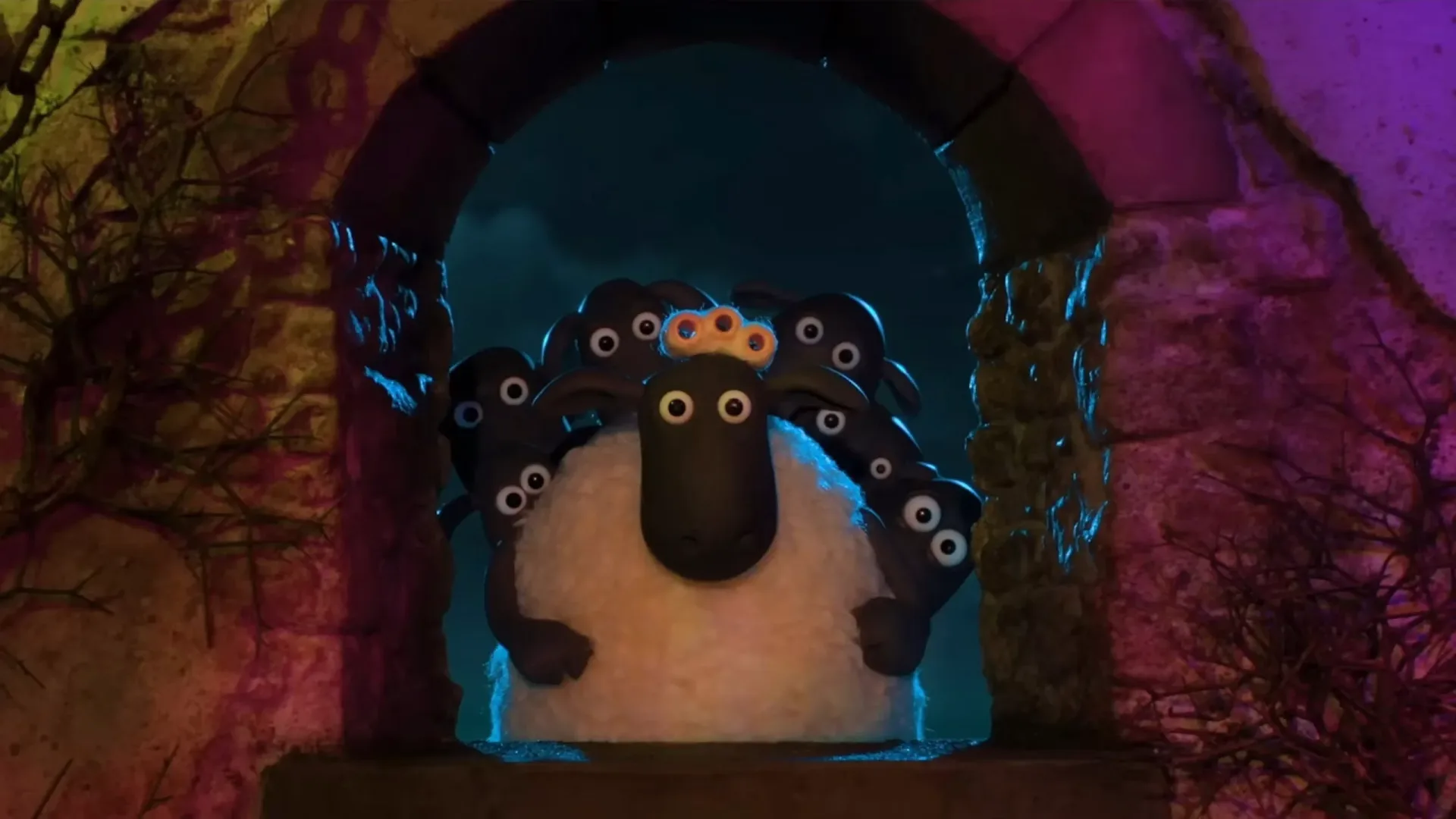
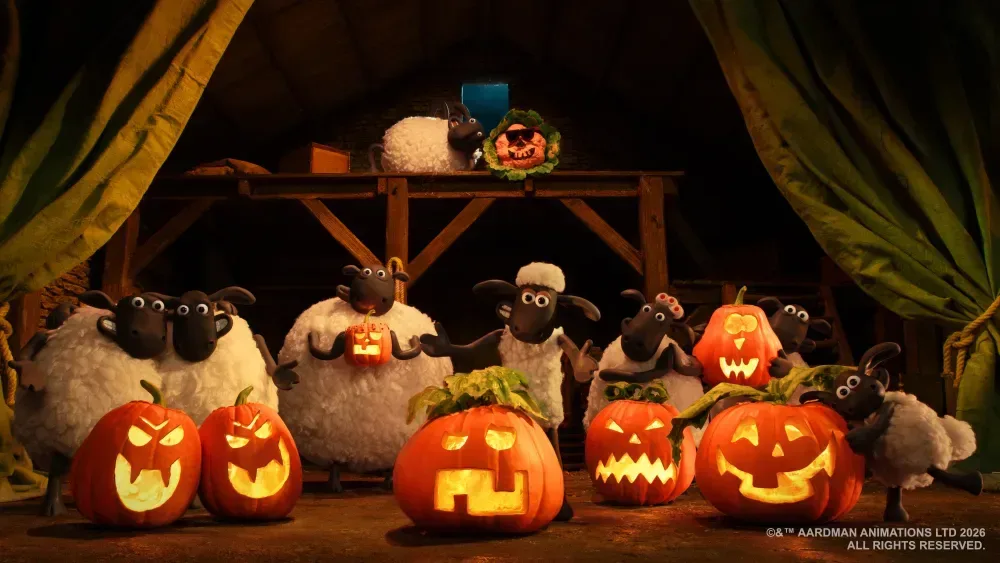
Shaun the Sheep’s third feature-length outing sends Mossy Bottom toward Halloween, then lets a simple farm problem mutate into a monster-movie premise. A troubled pumpkin patch prompts Shaun to attempt a fix with a growth formula. The experiment goes wrong, transforming the Farmer into a towering, hair-covered terror and putting the flock in the path of a homemade horror show.
The resulting film draws its core storytelling energy from classic Universal monster pictures and Hammer horror, while filtering that material through Aardman’s tactile stop-motion style and broadly accessible visual comedy. Directors Steve Cox and Matthew Walker also point to the pop-culture vocabulary of films they grew up with in the 1980s, including Ghostbusters, Indiana Jones and The Goonies. The references are not merely set dressing: they establish a recognizable language of ominous silhouettes, spooky settings, pursuit scenes and comic scares.
That approach makes The Beast of Mossy Bottom less about turning Shaun into a straight horror hero than about finding the comic potential inside horror’s most familiar shapes. A mad-scientist accident, a transformed figure looming over a hill, fog and shadow, creaking branches, and a nervous search for a hiding place are all genre tools. The key creative task was converting them into suspense that stays playful rather than punishing for a family audience.
A Halloween story that began with romance
The path to the Halloween setting was not the initial plan. The concept began as a Valentine’s Day special centered on the Farmer having a relationship. A monster idea eventually entered the process, and the two ideas merged. Once a transformation story and a romantic thread shared the same plot, Halloween became the natural destination.
That evolution matters because it explains why the Farmer’s monster condition is not just a device for chase scenes. The film includes a love-story subplot involving the Farmer and the vet, with the growth potion complicating his attempts at connection. In a dialogue-light series, this puts pressure on character animation to make viewers understand both the absurdity and the emotion of the situation.
Shaun’s role also came into focus early: he becomes a kind of mad scientist. It is an especially useful fit for the character because the premise creates a chain of visible cause and effect. Shaun tries to solve a practical problem; a formula produces an unintended result; that result has to be contained. This is the clean, visual logic a near-silent comedy can use without extensive explanation.
Aardman had previously explored monster territory with Wallace & Gromit: The Curse of the Were-Rabbit, but the team did not want this new monster movie to simply repeat that look. The Farmer’s altered form therefore had to function as its own character, not only as an extension of an earlier Aardman creature feature.
Why silhouette is the monster’s most important special effect
Cox identified a distinctive silhouette as central to the Beast’s design. The transformed Farmer is built from hair: growth surges from his sides and beard and rises into large, bushy forms at the top of his head. Seen coming over a hill, those shapes read almost like horns.
Silhouette is the instantly recognizable outer shape of a character or object. In visual storytelling, it allows an audience to identify something before it sees fine details. A monster framed against the sky can become legible in a second if its outline is bold enough. That makes silhouette particularly valuable in a film that frequently relies on visual communication rather than dialogue.
The Farmer’s existing ginger hair also supports the film’s color design. It lets the Beast sit naturally within a Halloween palette of orange pumpkins and blood-red sunsets, allowing the filmmakers to push saturation. Saturation describes the intensity or purity of a color: a more saturated orange appears richer and more vivid than a muted orange. Here, heightened color helps the movie present fright in a stylized, storybook-like register instead of aiming for realism.
The combined effect is a monster that can evoke the Wolfman and Frankenstein traditions without becoming a copy of either. The hair, the broad outline and the seasonal colors are doing narrative work. They say “monster” immediately, but they also keep the Farmer’s identity embedded in the design. The audience is not asked to meet an unrelated creature; it is asked to see a familiar figure distorted by Shaun’s experiment.
Building scares that do not shut younger viewers out
Classic horror supplies many of the film’s basic ingredients: spooky woods, misty docks, shadows and creaky branches. Each can prime an audience for a jump scare, a sudden moment designed to startle through timing and surprise. But the directors’ stated aim was to adapt those tools into a gentler kind of fright, rather than alienate the franchise’s family audience.
This is a meaningful distinction. Family-friendly horror does not necessarily remove fear-shaped scenes; it changes how those scenes are framed, paced and resolved. A threatening silhouette might be scary for a beat but remain exaggerated enough to be funny. A chase can create urgency, yet lead to a ridiculous hiding choice rather than a genuinely distressing outcome. The genre grammar stays in place, while its emotional ceiling is carefully controlled.
One example is a sequence in which the flock is chased inside a house and must decide where to hide. They end up in the bathroom, creating a gag linked to Psycho. Elsewhere, the movie includes nods to Star Wars and The Shining; the latter is echoed in a pub named The Shine Inn. These references add another layer for adults and older viewers, but the scene has to work even if a viewer does not recognize the film being referenced. The immediate joke, danger or composition must carry it.
That is a useful way to understand the film’s use of homage. An homage is a deliberate creative nod to an earlier work or tradition. It works best when recognition is a bonus rather than a requirement. In The Beast of Mossy Bottom, the monster framework and individual visual gags are grounded in the plot and character choices, which keeps the references from becoming a checklist of winks.
Stop-motion remains physical, even as the cameras change
The film continues Aardman’s use of stop-motion, the animation method in which physical models are moved in tiny increments and photographed frame by frame. When the individual images are played in sequence, those small changes create the illusion of movement. Its distinctive appeal comes from the visible materiality of the world: characters, props and sets have actual dimensional presence rather than being solely digital objects.
Walker says much of the studio’s production pipeline remains familiar, though one important component has changed: the filmmakers now use digital still cameras rather than film. That is a technical evolution without an abandonment of the practical process. The team still tries to achieve as much as possible in camera, even as digital effects have become more common.
In camera means creating an effect physically during shooting rather than adding it later through digital compositing or other post-production techniques. For stop-motion, that preference reinforces the handcrafted quality associated with the form. It also means creative choices about a shot can be rooted in actual lighting, models and set pieces, instead of being deferred entirely to a digital effects stage.
The supplied details do not specify which individual effects were practical or digital in this feature, so it would be wrong to draw a line around particular shots. What is clear is the broader philosophy: digital cameras are part of the workflow, but the production seeks to retain as much physical image-making as it can. That balance is likely essential to making a hair-driven monster, pumpkin patch and autumnal farm setting feel like they belong in the same handmade universe.
Acting without dialogue—or even eyeballs
Very little dialogue means The Beast of Mossy Bottom has to communicate plot, comedy and feeling through physical performance. This is not simply a matter of characters moving more. The animators need to establish intention: what a character wants, what they fear, whether they understand the consequences of an action, and how their feelings change from moment to moment.
The sheep present an unusual challenge because their heads are solid, limiting conventional facial expression. Their performances instead depend on body language, eyebrow and eye movement, and mouths. Body language is the meaning conveyed through posture, gesture and movement. A small shift in stance, the angle of a head or the timing of a retreat can deliver an emotion that dialogue would otherwise state outright.
The Farmer is harder still. He has glasses and a mouth but no visible eyeballs, narrowing the usual set of animation tools. Yet he is also central to the film’s emotional stakes because he is both the transformed threat and one half of the romance with the vet. The character therefore needs to be readable in two very different modes: frightening enough to serve the monster premise, but expressive enough for audiences to register the person still caught inside the chaos.
That tension is arguably the film’s most interesting formal challenge. Horror asks viewers to react to the Beast’s presence; comedy asks them to appreciate the escalating mess; the romantic subplot asks them to care about the Farmer’s predicament. The animation has to deliver all three with constrained faces and little spoken clarification. Walker’s confidence rests on the animators’ ability to find those emotions already present in the storyboards and put them on screen through movement.
What the monster influences reveal about the film
The Universal and Hammer inspirations are a foundation, not a claim that the movie is trying to recreate old horror wholesale. Their influence appears in visual language: the way a creature can be announced by shape, color, atmosphere and pursuit before it needs explanation. The additional 1980s adventure references widen that language toward high-energy escapades and gags.
For viewers, the practical implication is that the film’s Halloween identity seems built to operate on several levels at once. Younger audiences can follow Shaun’s mistake and the immediate comic jeopardy. Fans of horror can spot the Wolfman, Frankenstein and Psycho-style ideas. Adults who know the wider reference field may catch details such as The Shine Inn. None of those layers changes the fundamental premise: a farm fix becomes a wildly inconvenient monster problem.
That is also why the concept fits Shaun the Sheep. The franchise’s quiet visual storytelling can make a familiar genre setup unusually flexible. A potion, a looming figure or a bathroom door can convey enough on their own. The filmmaking does not need to explain every monster-movie rule aloud; it can let viewers recognize the shape of the joke. For more coverage of pop-culture projects that use visual presentation as part of the experience, see this look at Jamie xx’s live electronic score for Doug Aitken’s ‘Lightscape’.
Shaun the Sheep: The Beast of Mossy Bottom is now in theaters. Its premise may begin with pumpkins and an overambitious formula, but its creative hook is more specific: a stop-motion monster story designed around a recognizable hairy silhouette, richly autumnal color, visual references and the demanding art of making handmade characters act without saying much at all.