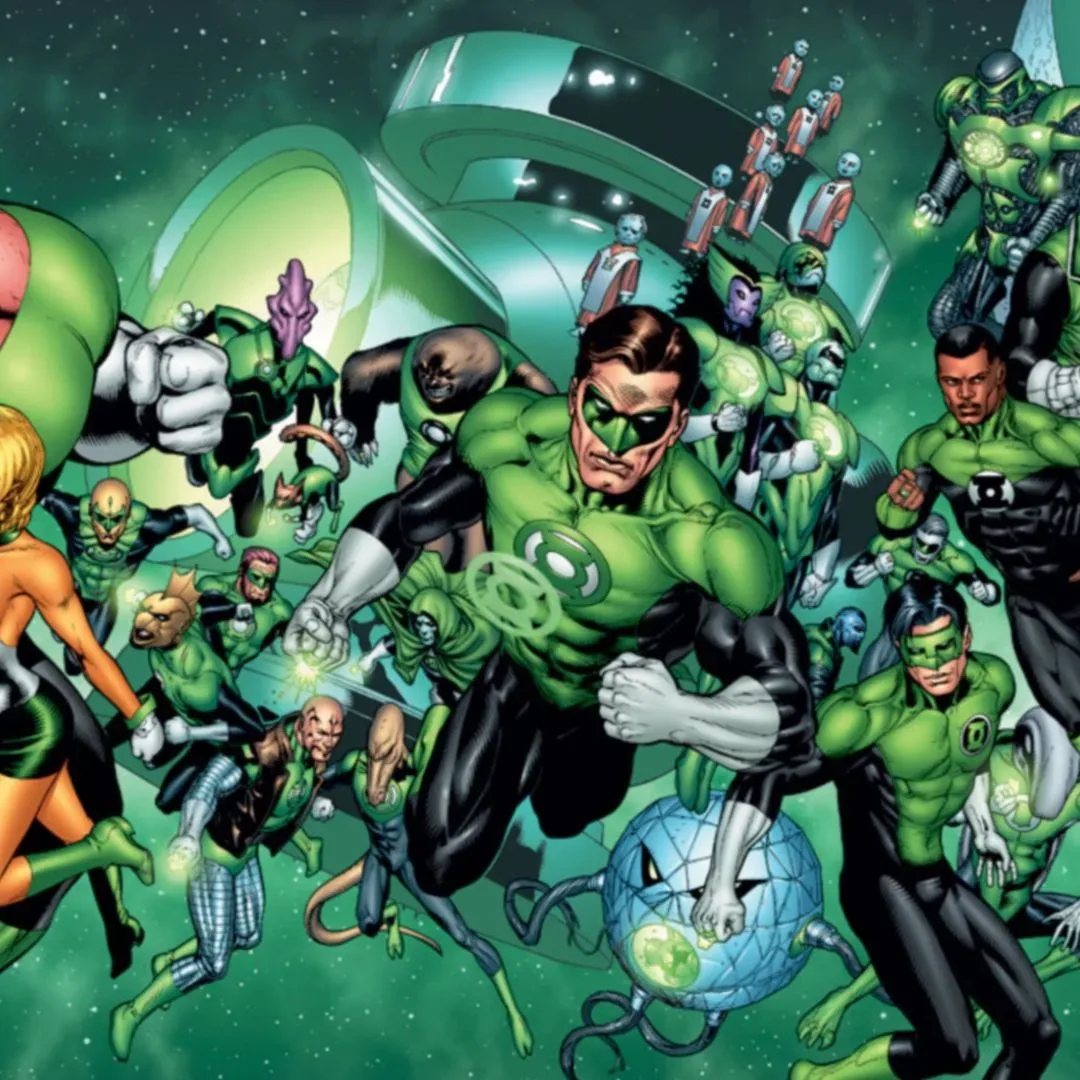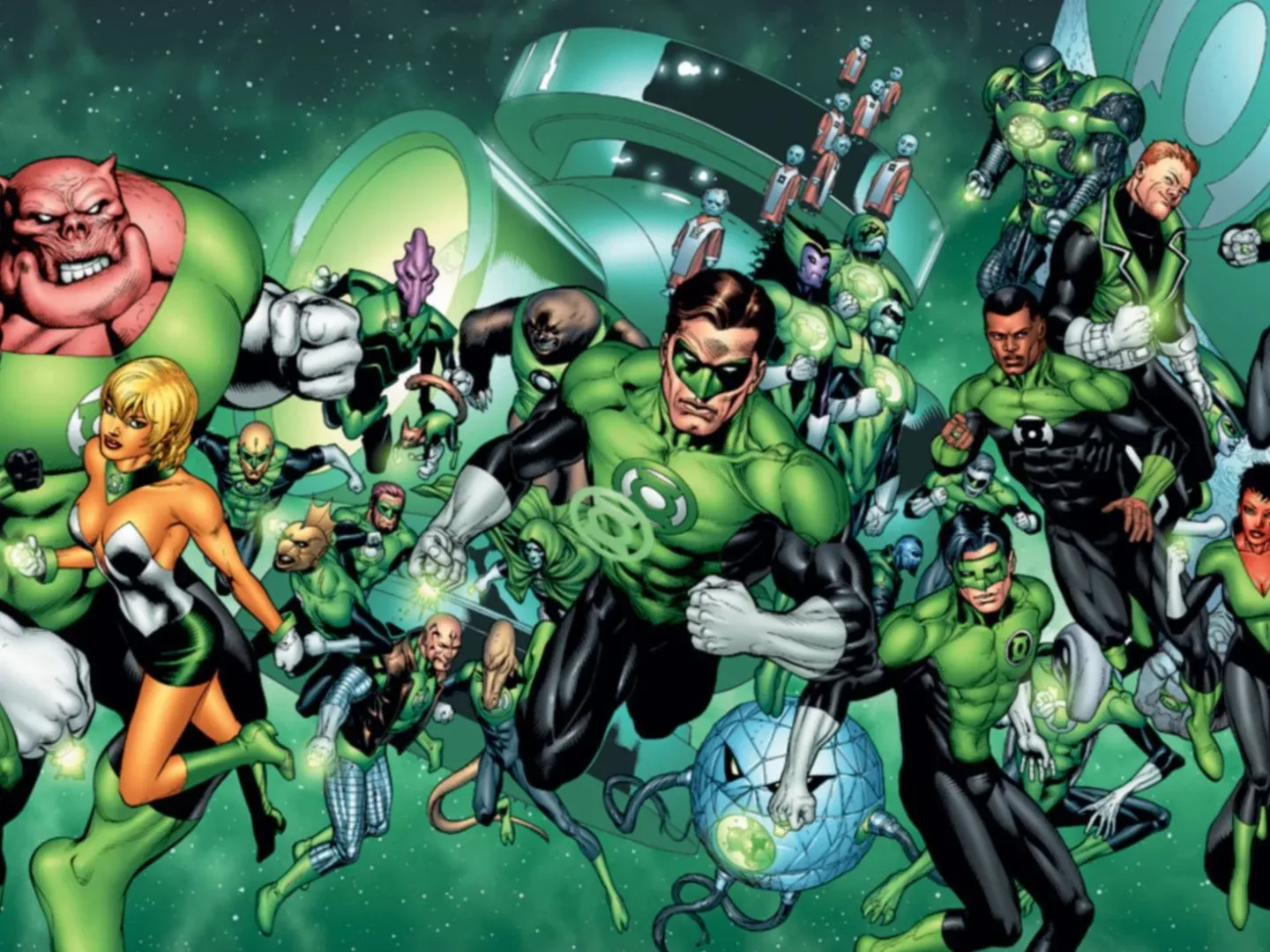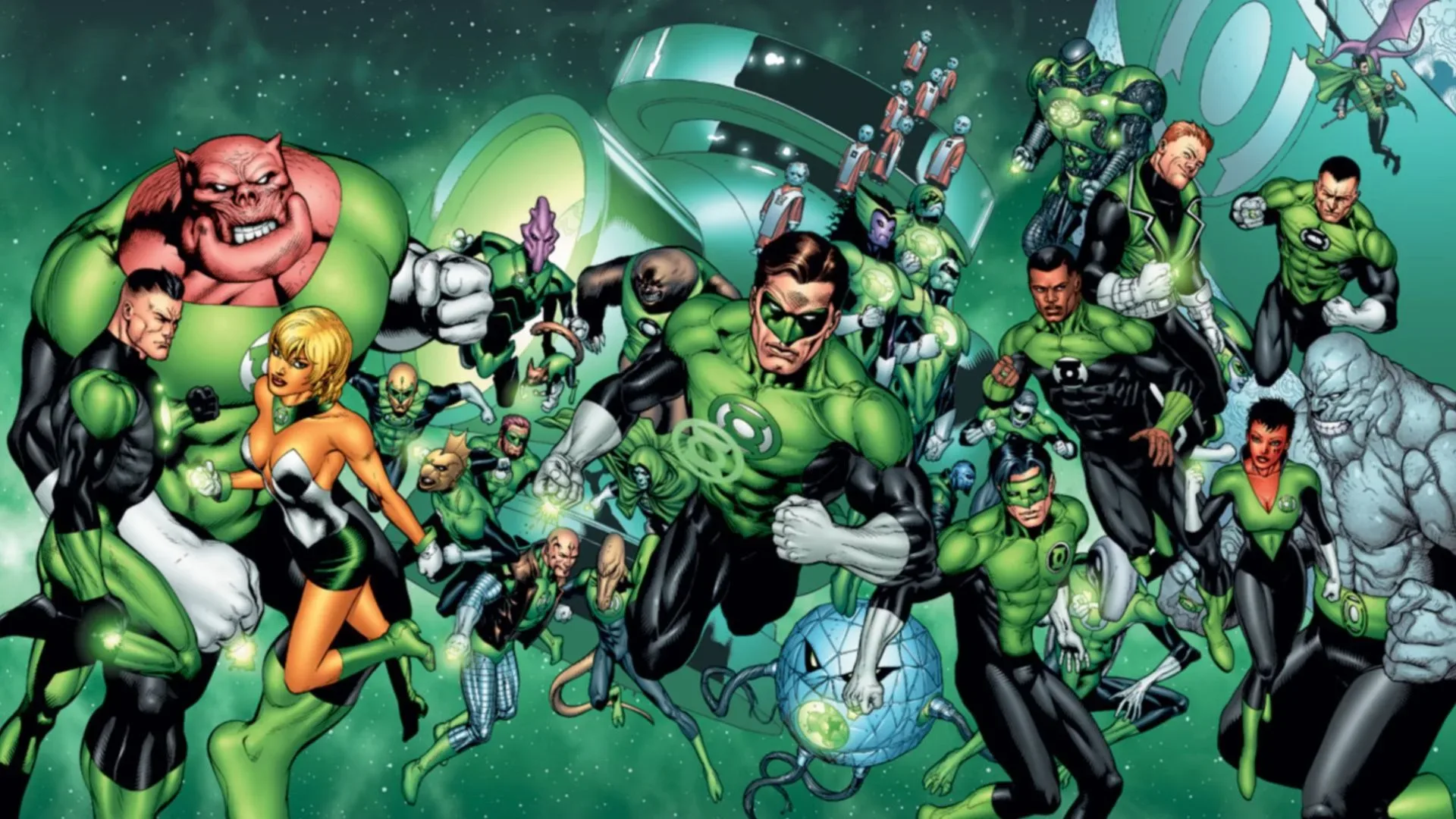
Long before Lanterns reached HBO Max, DC’s Green Lantern plans were headed in a notably different direction. Emerald Knights, a series that was developed for HBO Max and ultimately scrapped, would have paired period-set drama with an overtly cosmic adventure. Newly shared concept artwork from writer Marc Guggenheim makes that contrast especially clear: its proposed opening would have sent a group of Lanterns into an alien conflict in space, with Guy Gardner, Kilowog and Sinestro among the visible characters.
The art is not footage, a completed episode or confirmation that these elements will appear elsewhere. It is development material from a project that never made it to screen. But it provides the clearest available picture of the show’s visual ambitions and of how wide its Green Lantern ensemble was intended to be. Rather than keeping the Corps mostly at the edges of a grounded mystery, Emerald Knights appears to have positioned interstellar scale as part of its first impression.
What the newly shared art shows
The first piece is described as the concept for the opening sequence of episode one. It depicts a group of Green Lanterns fighting an alien species in space. Guy Gardner, Kilowog and Sinestro are part of that team, alongside other Lanterns. In practical storytelling terms, an opening built around that image would have done several jobs at once: establish the Corps as an organization rather than a one-hero operation, introduce the project’s extraterrestrial scope, and immediately signal that multiple familiar Lantern figures mattered to the series.
That approach is significant because the Green Lantern concept naturally supports stories at radically different scales. A Lantern can investigate a problem on Earth, but the Corps also permits stories that involve numerous ring-bearers, alien worlds and conflicts beyond a single city or planet. The space-set image suggests that Emerald Knights wanted viewers to understand that broader canvas from the outset.
A second concept piece presents a new female Lantern whose appearance was based on actor and singer Janelle Monáe. The supplied details identify the design inspiration, not a casting decision. It is important not to collapse those two things: concept art can use a performer’s likeness or visual qualities as a creative reference without that person being attached to the project.
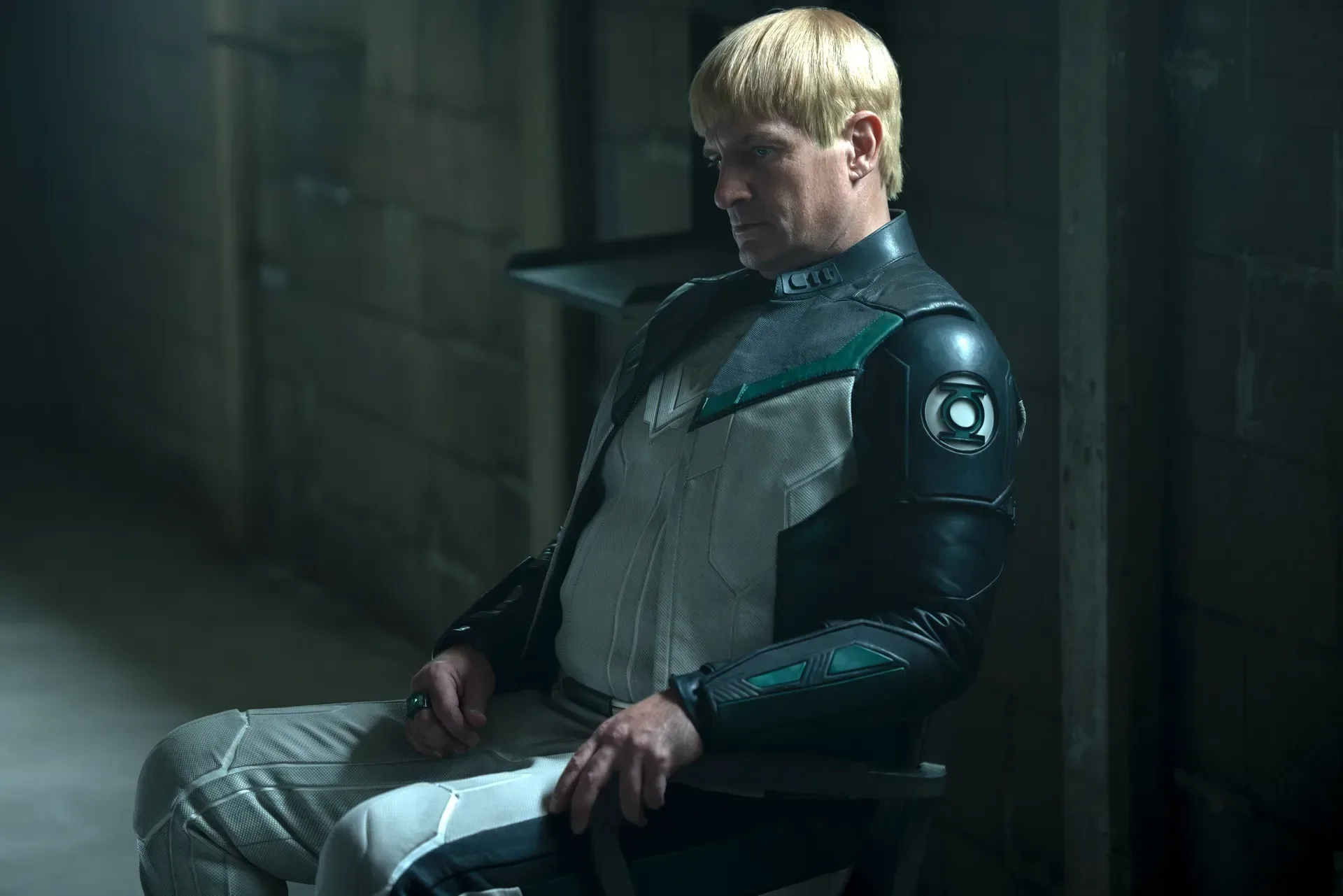
The third image is a closer look at Guy Gardner’s costume. Finn Wittrock had been cast as Guy, and the intended suit would have been adjusted to reflect the character’s Justice League International look. That note gives the artwork more context than a simple costume rendering. The production was not merely placing Guy in a generic Green Lantern uniform; it was trying to connect his screen appearance to a recognizable comic-book presentation.
Guy Gardner was one half of the 1984 story
Emerald Knights was structured around two timelines: 1941 and 1984. The 1984 material would have centered on Guy Gardner and Bree Jarta, a half-alien, half-human Lantern. Wittrock was cast as Guy, while Bree had not yet been cast before the project changed course.
That makes the Guy design more than an isolated piece of character art. It belonged to one of the show’s two principal narrative tracks. The use of 1984 also would have separated Guy and Bree’s material from the 1941 storyline by more than four decades, creating room for distinct settings and potentially distinct concerns within one series.
“Multiple timelines” here means a show divides its story between separate historical periods, rather than simply setting a single plot in the past. The format can create parallels between characters who never meet, reveal how events or institutions evolve, or use one period to reframe another. The supplied development information does not establish exactly how Emerald Knights would have connected its two eras, so any more specific account of its planned structure would be speculation. What is clear is that the split was fundamental to the premise, not a small flashback device.
Alan Scott’s 1941 storyline had a different kind of pressure
The 1941 timeline would have followed Alan Scott, identified as the Golden Age Green Lantern. Jeremy Irvine was cast in the role. Scott was to operate as an FBI agent while concealing his sexuality, giving the period storyline a personal and institutional tension distinct from the 1984 plot’s Guy-and-Bree pairing.
That setup is an important counterpoint to the new cosmic art. The project was not designed as uninterrupted outer-space spectacle. Its premise combined a Corps-scale science-fiction dimension with a grounded character story set in 1941, where Scott’s professional role and private life would have been in conflict. Based on the available details, the series’ identity rested on that juxtaposition: history, secrecy and investigation on one side; alien Lantern mythology and space-set action on the other.
Alan Scott’s “Golden Age” label identifies him as an earlier-generation Green Lantern figure in the project’s framing. It also helped distinguish the 1941 strand from Guy Gardner’s later storyline. The two leads would not simply have occupied separate years; they represented different corners of the property’s wider mythology.
Sinestro, Kilowog and the Manhunters indicate the intended scope
The concept art places Sinestro and Kilowog alongside other Lanterns, while Guggenheim has said the Manhunters were planned as the primary villains. Those details matter because they show that the show’s cosmic material was not restricted to background references. It had a named antagonistic force and recognizable Lantern-related figures in the mix from early on.
“Primary villains” means the Manhunters were intended to serve as the central opposing threat, rather than an incidental obstacle. That does not tell us every plot beat, the nature of individual character alliances, or how the villains would have intersected with the two timelines. It does, however, establish that the series had identified a major source of conflict.
Sinestro’s presence in the opening-sequence concept is particularly notable because he also links the abandoned project with the later Lanterns series. Kilowog is another point of connection in a broader sense: while the new concept art confirms his planned involvement in Emerald Knights, Lanterns showrunner Chris Mundy has teased Kilowog for a potential second season. A teased possibility is not a confirmed season-two appearance, and a potential second season is not a formal guarantee. Still, the overlap illustrates how certain Green Lantern figures and threats can remain compelling across very different screen approaches.
How Emerald Knights changed during development
HBO picked up Emerald Knights for 10 episodes in 2020, before the order was reduced to eight. Seth Grahame-Smith was set as showrunner, with Guggenheim attached as writer. The project then underwent a reworking after Grahame-Smith left in late 2022.
In television, a showrunner is the senior creative leader responsible for guiding a series’ storytelling and production direction. A change in that role can have a substantial effect on a project, especially one still being built. “Reworking” indicates that the series was being reconsidered, but the supplied information does not detail which scripts, designs or plans survived that process. The concept art should therefore be understood as a record of a particular version of Emerald Knights, not a definitive blueprint for every stage it passed through.
James Gunn and Peter Safran later became co-CEOs of DC Studios, and HBO moved forward with Lanterns in 2024. The result was not simply a retitled continuation of the abandoned concept. The available information describes a meaningful creative shift: Emerald Knights was conceived as more space-set and cosmic, while Lanterns is characterized as having a True Detective-style approach.
That comparison is best read as a tonal shorthand, not a claim that the two series share a plot or format beyond what has been specified. Emerald Knights was planned around two time periods, and Lanterns likewise uses two timelines. Both include Sinestro, and the abandoned show’s Manhunter villains suggest mythology that could still resonate with audiences following the newer series. Yet a few shared building blocks do not make the productions interchangeable. One can use a two-period structure and familiar characters while prioritizing cosmic action; another can use overlapping ingredients in a more investigative, grounded style.
Why abandoned-show artwork is still useful
Development art often preserves options rather than finished decisions. A costume design may be revised, an opening sequence may be replaced, and an actor used as a visual model may never join the cast. That is exactly why the images are valuable here: they let fans separate the project’s demonstrated ambitions from the story that ultimately arrived under a different title and creative direction.
For viewers catching up with DC’s current screen slate, the practical takeaway is straightforward. Emerald Knights remains an unrealized branch of Green Lantern television development, while Lanterns season one is streaming in full on HBO Max. The shared elements—two timelines, Sinestro, and the possibility of Kilowog in the newer show’s future—are points of comparison, not proof that unused Emerald Knights material has been transferred wholesale.
Creative pivots are common in franchise adaptations, where a project’s format, leadership and intended scale can change before cameras roll. That broader pattern is also visible in other game-and-screen adaptation development, including the ongoing BioShock film’s continuing script process. In this case, the revealed artwork gives Emerald Knights a more concrete identity: an ambitious, two-era Green Lantern series that would have opened amid a conflict in space and pursued a much more overtly cosmic vision.