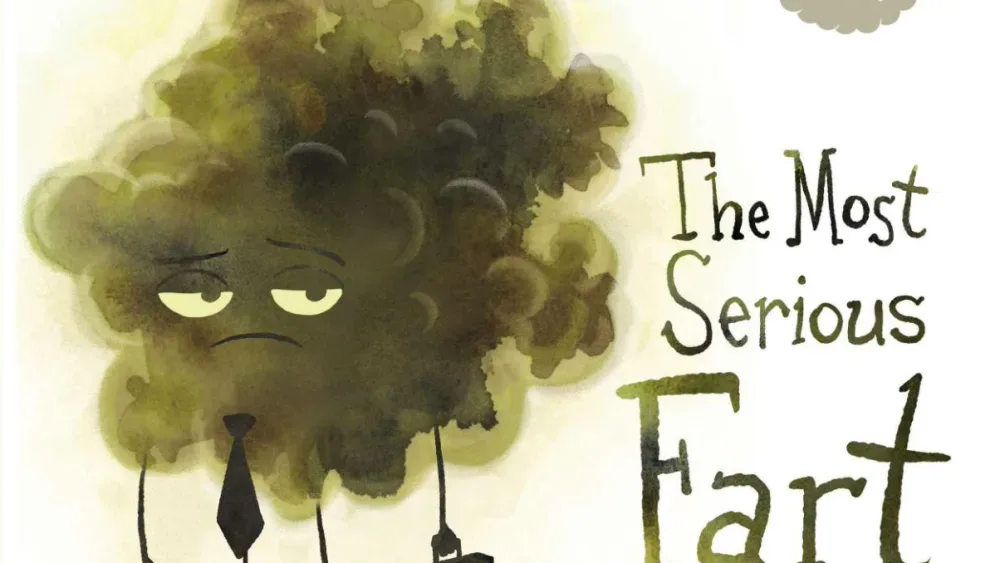
Utopai has brought in veteran animation casting director Scott Muller to oversee voice casting for The Most Serious Fart, an animated feature planned for theaters in 2027. The film adapts Mike Bender’s bestselling children’s book and centers on Siegfried, an unusually uptight fart who wants to make farts respectable.
That premise is deliberately silly, but the movie’s announced story has a more earnest direction: Siegfried is ashamed of what he is, embarks on a journey to change that, and ultimately learns self-acceptance, friendship and how to have fun. Bender is attached as the film’s writer, director and producer. Russell Hollander is also producing, while Coyote vs. Acme story artist Andy Brooks has joined as key story artist.
Muller’s appointment gives the project a particularly consequential early creative decision. In animation, the voice is not simply dialogue recorded after a character has been designed. A performer’s timing, rhythm, emotional texture and comic delivery can help establish how a character moves, reacts and relates to the people—or, in this case, gases—around them. For a central character whose whole identity begins with embarrassment, that balance looks essential.
Why voice casting is central to Siegfried’s story
In a statement, Muller framed casting as the audience’s first route into both Siegfried and his wider world. He described Bender’s characters as having room for bold comedy alongside a genuine emotional perspective, and said his goal is to find performers who can make the jokes work without losing the warmth and humanity at the story’s core.
That is a useful description of the challenge facing The Most Serious Fart. A title built around a juvenile comic word comes with immediate expectations: viewers may anticipate a barrage of gags, noisy sound effects and a character designed mainly to trigger a laugh. The announced plot, however, makes Siegfried’s discomfort with himself the dramatic engine. He is not merely a joke that happens to speak; he is a character who sees a basic fact of his existence as something to overcome.
Voice casting will determine whether that contradiction feels playful, sympathetic or overly solemn. A performance that leans exclusively into absurdity could make Siegfried’s shame difficult to connect with. One played with no comic elasticity could undercut the premise that gives the film its distinctive identity. Muller’s stated emphasis on both humor and emotional point of view suggests the production is seeking a performer able to navigate those competing pressures rather than choose only one.
“Voice casting” refers to the process of selecting actors for spoken performances. In animated work, it can include identifying the lead voice, shaping the sound and chemistry of supporting characters, and finding performers whose delivery fits a project’s intended tone. The announcement does not identify any cast members, nor does it indicate when casting choices will be revealed. What it does establish is who will guide that process.
Muller brings a résumé rooted in animated character comedy
Muller’s previous casting-director work includes The Simpsons, Futurama, King of the Hill and the animated Napoleon Dynamite series. Those credits place him among projects where vocal character work has to communicate far more than plot information. Animation often asks a voice to carry personality quickly: a pause can signal uncertainty, a shift in pace can create a joke, and an intentionally strange cadence can become part of a character’s recognizable identity.
Related coverage includes Scott Muller to Lead Voice Casting for ‘The Most Serious Fart’.
That experience is relevant to a project whose protagonist has a conceptually comic premise but an explicitly emotional arc. The production has not disclosed Siegfried’s eventual voice, the film’s broader cast, or details about the other characters he will meet. Still, Muller’s involvement makes clear that performance is being treated as a foundational element rather than a late-stage finishing touch.
It also gives the adaptation a creative throughline between its major assignments. Bender remains the person most directly responsible for the story’s written and directorial shape. Brooks is tasked as key story artist, a role closely tied to visual storytelling through character, expression and movement. Muller will focus on who gives those characters their voices. These areas overlap in animated filmmaking: dialogue affects expression, performance affects comedic pacing, and a character’s movement can be developed in response to the personality a performer brings.
What a key story artist contributes
Brooks’ credit is another meaningful piece of the announcement, even though the production has not shared artwork, character designs or a trailer. A story artist typically helps turn a screenplay or story material into visual sequences, working through how scenes play, where reactions land and how movement communicates an idea. In animation, that function is especially important because the film must build every visual decision rather than capture a live performer on a set.
Bender said Brooks brings a strong ability to tell stories through character, expression and movement. For an adaptation focused on a character’s journey from shame toward acceptance, expression and physical behavior are not decorative details. They are likely to be part of how the movie shows Siegfried’s initial rigidity, his encounters with friendship and any eventual loosening of his severe outlook.
The announced team therefore points toward a production method that values the connection between story, performance and visual acting. “Visual acting” is the use of pose, timing, facial expression and movement to make an animated character’s feelings readable. It matters even when a script states emotions directly, because viewers often understand a character’s state through the gap between what the character says and what the character does.
There is little else publicly established about the feature’s exact look, its setting or the extent of its supporting cast. The available information supports a narrower but clearer takeaway: the filmmakers are assigning specialists around the elements most likely to decide whether the adaptation’s unusual central idea has emotional clarity as well as comic force.
The production’s stated approach to AI
Utopai has also specified that human animators and illustrators will lead the creative process and originate the film’s artwork. The company said AI will be used selectively as a production tool to support iteration under their direction.
That wording distinguishes between originating the art and assisting with iteration. In production language, “iteration” generally means repeated revisions: trying versions of a creative idea, refining material or adjusting work in response to feedback. The announcement does not define which individual AI tools will be used, which departments may use them, or how extensively they will factor into the workflow. It would be premature to infer those details.
What is established is the hierarchy Utopai describes. Human artists are positioned as the leads making the creative work and generating the film’s artwork, while AI is characterized as selective support under human direction. For a project whose makers are stressing a distinctive adaptation and character-led storytelling, that distinction is part of its stated production philosophy.
The question of authorship is particularly relevant in animation because a finished character combines many artistic choices: design, voice, staging, movement, timing and sound. No single element can fully supply a personality. The creative team announced for The Most Serious Fart reflects that reality. Bender is responsible for the project at the writing, directing and producing levels; Brooks brings story-art expertise; Muller guides vocal performance; and human animators and illustrators will lead the artwork.
A children’s-book adaptation with a carefully stated emotional target
The premise of an anxious fart trying to become respectable is so inherently comic that it could easily invite assumptions about the kind of film being made. But the project description repeatedly returns to Siegfried’s emotional struggle. His journey is framed around accepting himself, building friendship and discovering enjoyment, not simply proving that a joke premise can stretch to feature length.
That does not reveal the movie’s full plot, and no announcement should be read as proof of how the finished film will play. It does, however, set an identifiable creative target. The production wants the comedy to coexist with sincerity. Muller’s remarks focus on warmth; Bender’s remarks focus on preserving the book’s heart; and Brooks’ role is described in terms of character and expression.
For audiences, the most immediate practical implication is that there is no cast list to evaluate yet. The next major creative reveal could come through that casting process, since the person selected to voice Siegfried will help define the adaptation’s version of its protagonist. Until then, the announcement is principally a team update: Muller is handling voice casting, Brooks is key story artist, Bender is writer-director-producer, Hollander is producing, and the film remains aimed at a 2027 theatrical release.
The growing slate of ambitious screen adaptations remains a wider pop-culture thread, as seen in this look at the rock-opera ambition behind Greta Gerwig’s Narnia. The Most Serious Fart is working on a far more mischievous scale of title and premise, but its announced creative appointments make the intent straightforward: turn a gag-ready children’s-book concept into an animated character story with enough vocal and visual specificity to make Siegfried’s world feel like its own.