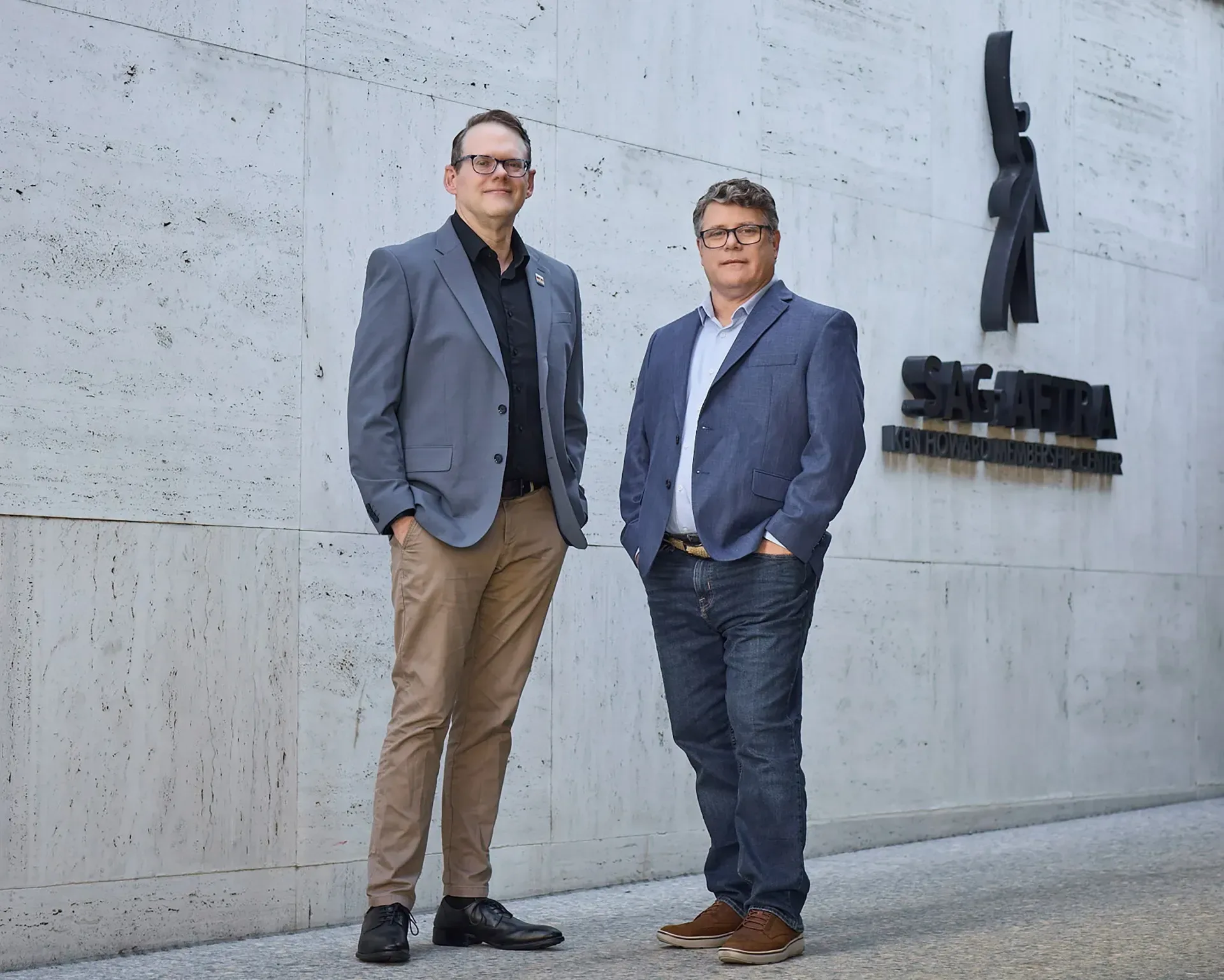
SAG-AFTRA has extended national executive director Duncan Crabtree-Ireland’s contract through June 20, 2032 and added chief executive officer to his title. The board approved the arrangement in a weighted vote, with 98.34% in favor.
The decision moves well beyond a routine personnel matter. Crabtree-Ireland’s prior contract was scheduled to end in 2028; the four-year extension now keeps him in the role through the next scheduled round of negotiations with major studios. The union’s current agreement with those studios is set to expire in June 2030.
For performers working across film, television and other covered entertainment work, the value of the move is primarily continuity. Labor negotiations are long-term projects: priorities are shaped well before formal bargaining begins, complex contract language must be interpreted after a deal is made, and the workplace issues on the agenda can evolve rapidly. SAG-AFTRA described the extension as a way to provide stability and continuity amid industry disruption.
The financial terms of the new agreement were not disclosed. Crabtree-Ireland was paid $1.1 million during the union’s 2026 fiscal year.
A leadership role expanded, not simply renamed
Crabtree-Ireland already held the job of national executive director. Adding CEO gives the position a title commonly used for an organization’s senior operational leader, but it does not erase the union’s elected leadership structure. Sean Astin remains SAG-AFTRA’s president, while Crabtree-Ireland leads its staff and organizational operations.
That distinction matters. A union president is an elected officer, accountable within the union’s governing system. A national executive director and CEO is an executive role focused on administering the organization, carrying out policy, overseeing staff operations and supporting bargaining work. The two positions can work closely together while serving separate functions.
Astin characterized the extension as a vote of confidence in Crabtree-Ireland’s bargaining and management record, pointing to his work in negotiations, government-facing discussions and wider industry meetings. The board’s margin also signals unusually broad support for maintaining the current executive approach.
A weighted vote means the reported percentage reflects the union’s voting rules rather than necessarily a simple headcount of individual board members. The disclosed result establishes the scale of approval, though it does not by itself describe how each board representative voted or how voting weight is allocated.
Related coverage includes SAG-AFTRA Extends Duncan Crabtree-Ireland Deal Through 2032, Adds CEO Title.
Why the 2030 negotiation date is central
The clearest practical consequence of the extension is timing. With the major-studio agreement expiring in June 2030, Crabtree-Ireland will remain in office during the planning, negotiation and early implementation periods surrounding that contract cycle.
That can be especially important where bargaining priorities require institutional knowledge. Negotiations are not only about deciding what the union wants next. They also involve knowing why existing provisions were written as they were, identifying where language has produced disagreements, tracking technological changes and understanding which safeguards are working in practice.
Crabtree-Ireland was a central figure during the 2023 actors’ strike, an experience that is likely to remain relevant to the union’s negotiating posture even as the next bargaining agenda takes shape. The supplied information does not establish what demands SAG-AFTRA will make in 2030, nor does it predict whether the talks will become contentious. It does establish that the executive leading staff through a major recent strike will be retained through the upcoming studio-contract cycle.
For a membership organization, continuity can also reduce the disruption that might come with a top executive change immediately before high-stakes talks. A new leader would need to absorb the union’s contract framework, staff structure, bargaining history and member concerns while preparing for a deadline. The extension avoids that particular handoff.
AI remains the major policy thread
Artificial intelligence has been a defining part of Crabtree-Ireland’s work at SAG-AFTRA. The union has pursued agreements intended to let performers participate in the economic opportunities created by AI while also guarding against unauthorized uses of their likenesses.
In plain terms, a performer’s likeness can include recognizable aspects of identity such as appearance, voice or other characteristics that could be replicated or simulated. The concern is not merely that new software exists; it is whether a performer has meaningful control when that software is used to reproduce, alter or generate a version of their work or identity.
The union’s stated approach is notable because it is not framed solely as opposition to AI. The objective described is two-sided: performers should be able to share in potential gains, while unauthorized use of their image, voice and identity should be prevented. That balance turns the issue into questions of consent, control and fair compensation.
Those questions are highly practical. If a person’s image or voice can be used in a new context, a contract may need to address who authorizes that use, what information the performer receives, whether additional payment is due and what limits apply. The source material does not provide the detailed terms of any specific AI agreement, so it would be wrong to presume that every use case has been settled. But the union has clearly placed the subject at the center of its bargaining work.
Crabtree-Ireland said the years ahead will be crucial to shaping that path, emphasizing that members should control their “image, likeness, voice, and destiny in the workplace” and receive fair compensation. His statement places human creativity and performer agency at the center of the union’s policy position.
“Leading SAG-AFTRA’s staff is the honor of my career,” Crabtree-Ireland said, adding that he intends to keep fighting alongside the union’s leadership for member control and fair compensation.
What the extension does—and does not—tell performers
The board action gives SAG-AFTRA a known executive leader through mid-2032. It confirms that AI, performer consent and workplace compensation will remain associated with the leadership team’s priorities. It also means Crabtree-Ireland will be in place when the current major-studio deal reaches its June 2030 expiration.
It does not, however, reveal the eventual terms of the next studio agreement. It does not disclose the financial terms of his extended contract. And it does not establish particular AI rules beyond the union’s broader goal of protecting performers from unauthorized uses while allowing them to benefit from the technology’s upside.
That uncertainty is normal at this stage. Bargaining positions are developed over time, and final contract language depends on negotiations. The immediate news is governance: the union’s board has elected to preserve executive continuity before that process accelerates.
A career built inside the union
Crabtree-Ireland has spent nearly his entire career at SAG-AFTRA. Before becoming national executive director in 2021, he served as general counsel and chief operating officer.
Those earlier roles help explain why the board may regard him as suited to a combined executive leadership position. A general counsel typically works on legal matters and the interpretation of obligations; a chief operating officer generally focuses on the organization’s day-to-day functioning. Neither title alone captures every responsibility of a national executive director, but together they point to experience spanning legal, operational and bargaining-related work.
That background is useful in a period when disputes over technology can quickly become disputes over contracts, rights and business practices. It also offers institutional familiarity: an executive who has worked through several senior roles is likely to have a deep working knowledge of how the union’s staff and leadership interact.
The stakes stretch beyond any one set of negotiations. Performers are confronting questions about how creative labor is recognized and paid when digital tools can alter or reproduce elements of a performance. SAG-AFTRA’s leadership has already made AI protections a focus, and its decision to keep Crabtree-Ireland in place signals that the organization expects the issue to remain central through the next decade’s early years.
Entertainment labor also intersects with the development of the people who work onstage, onscreen and behind the scenes. For a separate example of how industry pathways are being addressed, paid fellowships tied to live-entertainment careers illustrate the wider importance of creating sustainable routes into the business. SAG-AFTRA’s current action concerns established union governance, but it sits within the same larger conversation about who gets opportunity, protection and compensation as the industry changes.
The next marker is still years away
There is no new studio contract to assess today. The relevant deadline remains June 2030, while Crabtree-Ireland’s extended term runs two years beyond it, ending June 20, 2032. That sequence means he would not only lead staff into the talks but also remain in position during the period when a new agreement would ordinarily need to be put into operation.
For now, SAG-AFTRA has made a clear organizational choice: preserve leadership continuity, elevate its national executive director with a CEO title, and retain an executive closely identified with the union’s recent bargaining, strike-era and AI work. As the next round of negotiations approaches, the detailed outcomes remain unknown. The person tasked with helping guide the union through them does not.