Robert Pattinson has offered up a gloriously combustible pick for the movie-discourse group chat: Michael Bay’s Transformers is, in his view—or possibly his most entertaining provocation—“the definitive movie of the 2000s.”
The actor made the comment during a filmed conversation with director Lance Oppenheim about favorite movies. The discussion began with bright colors, heavy saturation, and a glossy visual finish, leading Pattinson to argue that this particular approach to color grading reached its high point in Transformers and was not seen again afterward.
It is a compact observation, but one that gets at why Bay’s giant-robot blockbuster remains such an immediate cultural reference point. Even people who would not choose it as the decade’s defining film can likely picture the aesthetic Pattinson means: polished surfaces, emphatic contrast, intense color, and an image designed to look enormous and tactile. Whether Pattinson meant the declaration sincerely, ironically, or as a mixture of both is not entirely clear. His reputation for mischievous interview answers makes treating the line as an unqualified critical manifesto a risky proposition.
Still, the joke works because there is a serious idea inside it. If “definitive” does not mean “best,” it can mean the work that most decisively captures a period’s dominant instincts. In that sense, Pattinson’s selection invites a useful distinction between a film’s artistic standing and its usefulness as a visual time capsule.
What Pattinson appears to mean by the glossy 2000s look
Color grading is the process of adjusting a filmed image’s color, contrast, brightness, and overall mood after it has been captured. It can make an image feel warmer or cooler, cleaner or grittier, muted or aggressively vivid. Pattinson’s point is not simply that Transformers contains a lot of color. He is pointing to a high-sheen, highly controlled finish: images whose colors and highlights appear pushed toward maximum impact.
That matters because visual style can be as period-specific as a soundtrack or a fashion trend. A movie does not need to announce its era in dialogue when its lighting, contrast, and finish do the job instantly. Pattinson described the bright, saturated, glossy style as building toward Transformers; framing the film as a culmination suggests an endpoint for a look, rather than merely another example of it.
There is also a difference between saturation and brightness. Saturation refers to the intensity or purity of a color—how rich red, blue, or yellow appears—while brightness concerns how light or dark the image is. A saturated, glossy look often pairs strong color with crisp highlights and deliberate contrast. For a story centered on metal-bodied machines and large-scale action, that kind of finishing gives surfaces a slick, heightened presence.
Home-viewing choices can alter how audiences perceive that visual language. A display’s picture mode, ambient room light, and image processing may make a movie’s colors seem restrained or overwhelming. Viewers trying to notice the distinction Pattinson is describing could start with a neutral display setting rather than an especially vivid preset; screen-synced lighting can also change the room’s perceived contrast, a consideration relevant to this look at screen-synced mood lighting for TV viewing.
A bold verdict with built-in ambiguity
Pattinson has previously made at least one knowingly false interview anecdote, so the tone around his Transformers claim is part of the story. He delivered the remark with a smile that has prompted understandable skepticism. But ambiguity is not the same thing as evidence that he dislikes the movie or its visual style. The safest read is that he made a deliberately provocative statement while discussing a real aesthetic trend.
That is also why the comment has legs. A plain declaration that a famous blockbuster is “good” is not very interesting. Calling it the defining film of an entire decade, however, forces a sharper question: what are we asking a “definitive” film to represent?
- Critical quality: Is it the most accomplished movie of the era?
- Popularity: Is it the movie most people saw or discussed?
- Industry influence: Did it affect how later films were made or marketed?
- Visual identity: Does it immediately communicate what the period looked like?
Pattinson’s explanation places his selection firmly in that last category. He was talking about a finish and a visual mode, not laying out a ranked canon of the decade’s greatest films. That narrower framing makes the take easier to understand, even if it remains designed to make people argue.
The rest of Pattinson and Oppenheim’s movie conversation
The discussion did not stay with robot blockbusters. Pattinson praised the action scenes in Scarface, describing them in balletic terms. The choice is revealing in a broad sense: “balletic” action is not simply fast or violent action. It implies choreography, rhythm, and a sense that movement across the frame has its own expressive pattern.
Oppenheim, meanwhile, said a person’s opinion of Tom Cruise’s Vanilla Sky can help him tell whether he will like them. It is another example of the pair using movie preferences less as objective rankings than as personality tests, conversation prompts, and shorthand for taste.
Oppenheim also said Pattinson frequently sends a one-word text: “Braveheart.” Pattinson highlighted the famous freedom speech from Braveheart as one of his favorite movie moments. Taken together, the picks are eclectic by design: a visually maximal robot spectacle, stylized crime-film violence, a divisive Cruise drama, and a rousing historical-epic speech all become ingredients in a playful conversation about cinematic memory.
That mix may be the most informative part of the exchange. Pattinson’s taste, at least in this setting, is not being presented as a neat divide between prestigious cinema and populist entertainment. The through-line is impact: a color treatment that announces itself, action with a choreographed quality, a scene that reaches for emotional lift, or a title that works as a social litmus test.
Why the comment lands at a notable moment for Transformers
The Transformers name remains in a shifting place on the screen. A planned Transformers and G.I. Joe crossover has been canceled. Separately, Bradley Cooper is set to play Duke in a standalone G.I. Joe movie directed by Danny McBride. Those developments do not change what Pattinson said about the earlier Transformers film, but they do underline why the franchise still invites attention: its future is being reconsidered even as its past continues to function as a vivid marker of blockbuster style.
For fans, the practical takeaway is not that one actor has settled the question of the 2000s. He absolutely has not. Rather, Pattinson has supplied a useful lens for revisiting movies that are often reduced to plot, spectacle, or franchise baggage. Watch the image itself: the treatment of metal, the force of the colors, the glare of highlights, and the way the screen’s polish is used to sell scale.
That may be the real value of a take delivered with a knowing grin. It makes viewers look again. And if a single mention of Transformers can revive an argument over what an entire decade looked like, it has already demonstrated some claim to being definitive—at least as an object of debate.
Pattinson’s current screen work
Pattinson and Oppenheim appeared in the conversation while promoting Primetime, a psychological thriller in which Pattinson plays Chris Hansen, the host associated with To Catch a Predator. The film opened with $19.2 million from 2,863 theaters, placing it third in A24’s library behind Backrooms at $81.4 million and Civil War at $25.5 million.
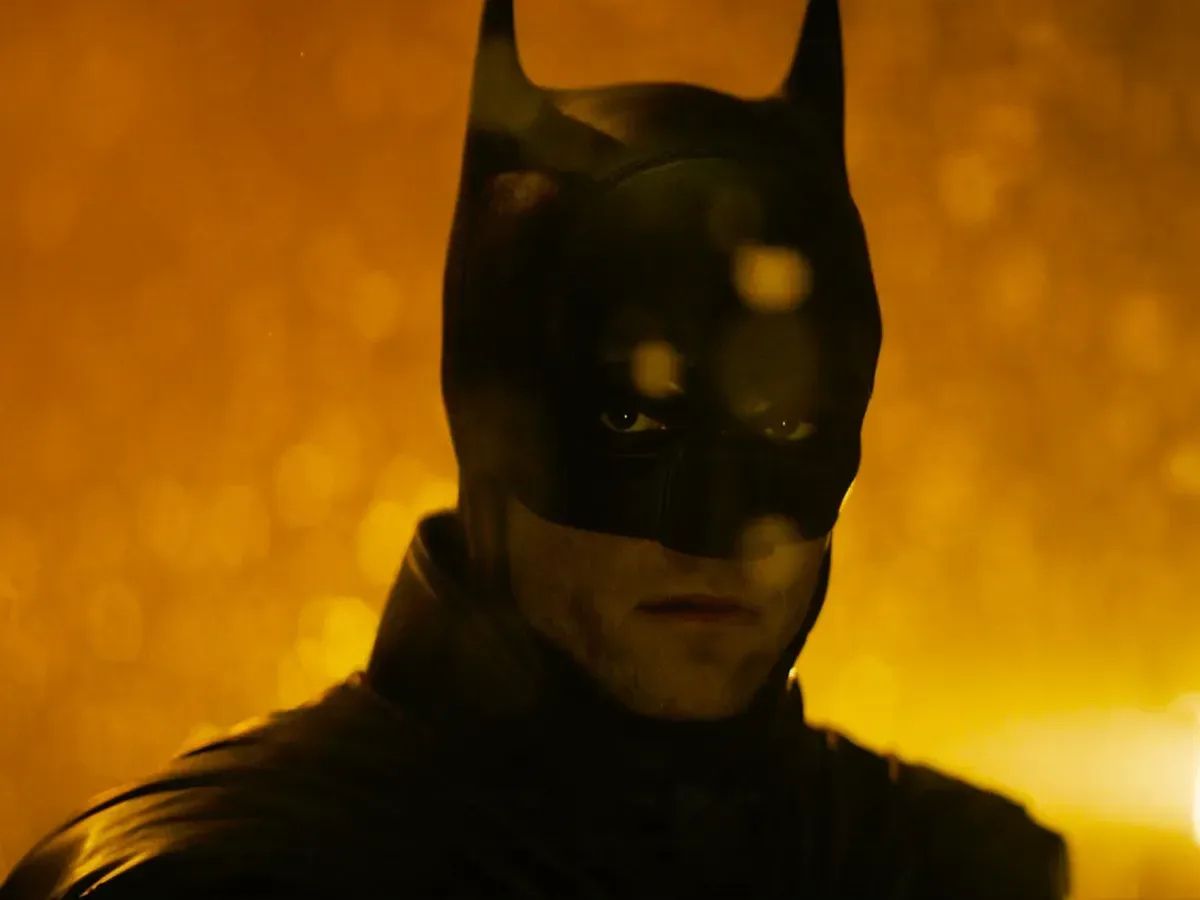
Hansen has called the film a “fever dream” and said he plans to make his own documentary response. Pattinson is also filming The Batman Part 2, which he has teased takes a “completely different direction” from its predecessor. He has also expressed doubt about folding his dark, specific Batman interpretation into James Gunn’s wider DC universe, saying the tone is so particular that it gets inside the viewer.
For now, though, the headline-grabbing takeaway is simpler: Robert Pattinson has volunteered Michael Bay’s Transformers as the 2000s in movie form. Sincere verdict, sly prank, or both, it is a line with enough visual logic behind it to keep the debate rolling.