Resident Evil has delivered a franchise-record launch, taking in $108.3 million worldwide in its opening weekend. The new horror film earned $60 million domestically and $48.3 million internationally, putting its first few days above the $102 million made across the entire theatrical run of 2002’s Resident Evil.
That comparison neatly captures the scale of the debut. The earlier film opened to $26 million before finishing at $102 million, while the new release has already passed that final figure on its first weekend. It is a substantial opening for a video-game-derived horror movie, and a particularly conspicuous result for a franchise that has been revisited repeatedly on screen.
A record-setting start for Resident Evil
The $108.3 million global opening is split between two key measures of theatrical performance:
- Domestic box office: $60 million, referring here to the film’s earnings in its home-market theatrical release.
- International box office: $48.3 million from markets outside that domestic total.
- Worldwide opening: $108.3 million when those two figures are combined.
Those categories matter because a worldwide figure shows the breadth of a release’s initial audience, while the domestic and international split indicates where that audience is arriving from. In this case, both sides of the release contributed meaningful sums rather than the opening depending solely on one market.
The 2002 comparison is also more useful than a simple opening-weekend-to-opening-weekend race. Its $26 million debut was a fraction of the new film’s $60 million domestic start, but the more striking benchmark is its full $102 million theatrical total. Zach Cregger’s film has cleared it immediately, before its theatrical run has had time to develop beyond opening weekend.
What the budget comparison does — and does not — mean
The new Resident Evil was made on a reported $75 million budget. Its $108.3 million worldwide box-office opening is therefore larger than that production-budget figure.
That is an encouraging commercial marker, but it is worth being precise about the language around it. Box-office gross is the amount sold in theatrical tickets; it is not automatically the same as the amount ultimately returned to a studio or the film’s final profit. Production budgets also describe the cost of making the movie, rather than providing a full account of every expense connected to a theatrical release.
Even with that distinction in mind, passing the stated $75 million production budget in worldwide ticket sales during the first weekend is a meaningful early sign. It gives the film a strong foundation as it continues its run, while avoiding the need to pretend that one headline number settles every financial question.
For the franchise, the opening suggests that a familiar name can still pull a large theatrical audience when paired with a horror-forward approach and a story designed as its own entry point. That distinction may be especially important for an audience split between longtime players and moviegoers who simply want a new horror release.
A new story in Raccoon City, not a direct game adaptation
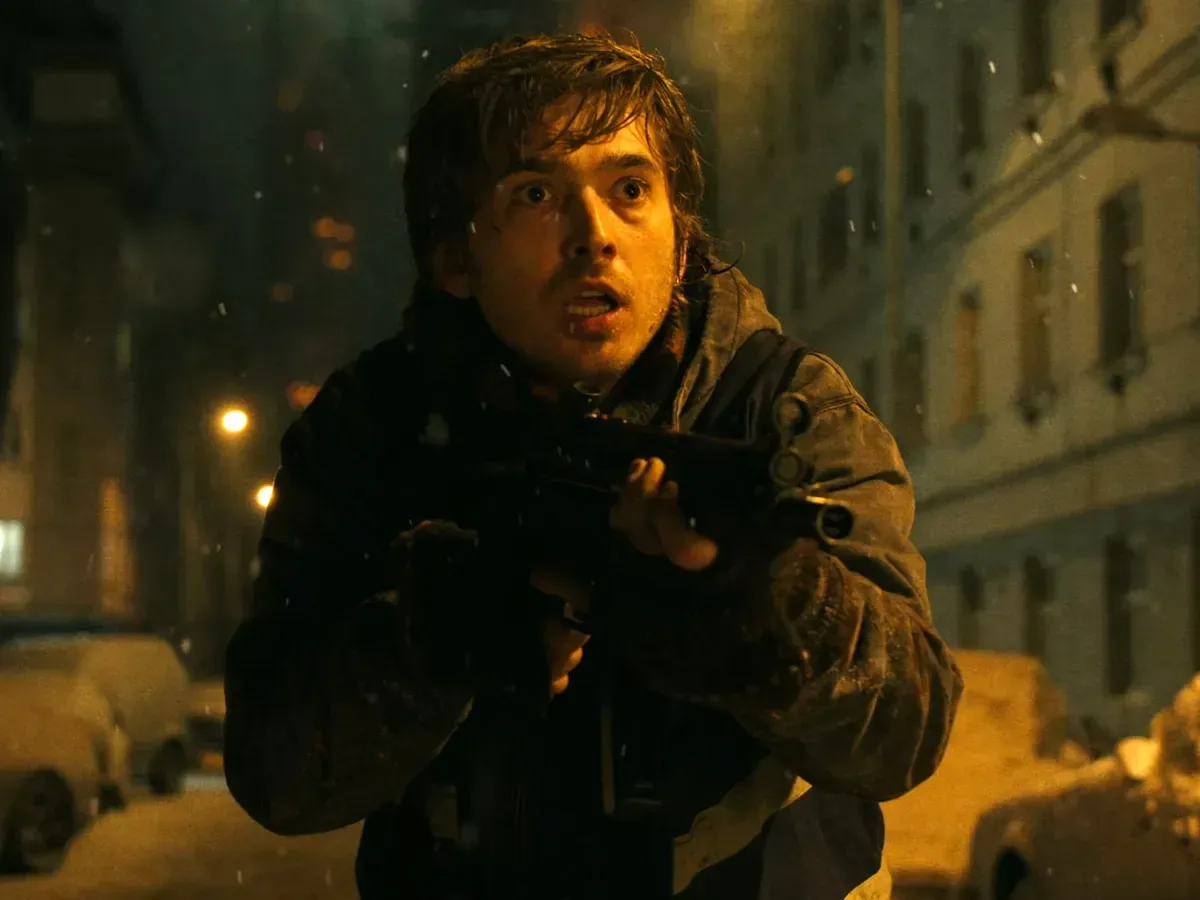
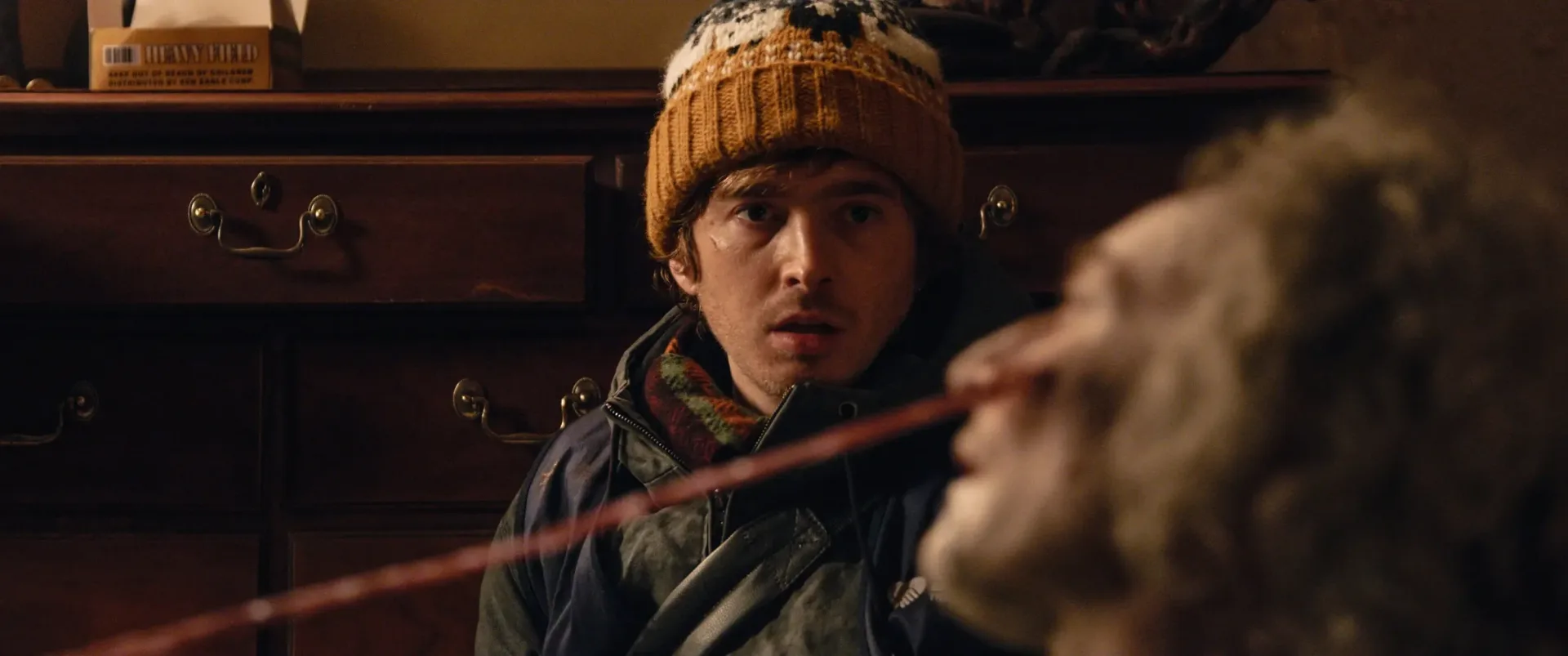
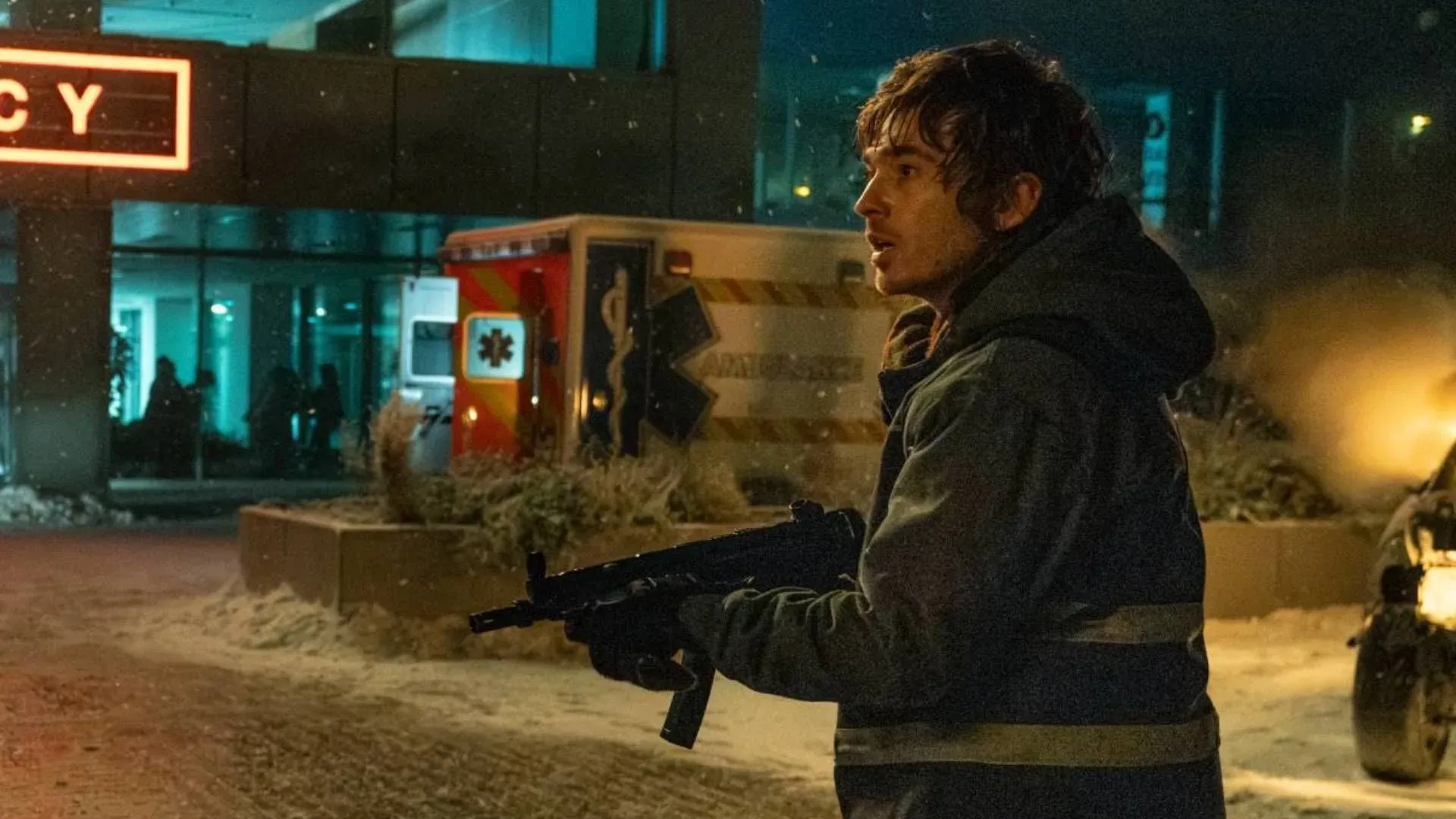
Cregger’s film does not retell one specific game installment. Instead, it takes place within the world of Resident Evil and follows an original protagonist: Bryan, played by Austin Abrams.
Bryan is a struggling medical courier who accepts a job transporting a mysterious green package to Raccoon City. The premise positions him as an exhausted outsider moving toward a city where people are mutating, rather than as a direct cinematic version of an established game character’s campaign.
That is a meaningful adaptation choice. A direct adaptation typically asks a film to reproduce the plot, cast, locations and key beats of one existing game. An original story set in an established fictional world can instead use recognizable setting and horror concepts while building a plot around a new lead. It provides room for a standalone movie narrative without requiring viewers to know the precise sequence of any particular game.
It also creates a different kind of question for devoted fans. Rather than measuring the movie only by whether it recreates a chosen game scene by scene, viewers can look at how it uses the series’ broader identity: Raccoon City, biological mutation, uneasy survival and the sense that an ordinary delivery has become a nightmare.
Cregger directed the feature and co-wrote the screenplay with Shay Hatten. Abrams’ Bryan gives the story a deliberately unglamorous starting point: a courier down on his luck, carrying an unexplained package toward a place the audience already knows is dangerous.
Critical response arrives alongside the commercial result
The film currently holds a 95% score on Rotten Tomatoes. That reception, paired with the opening-weekend total, gives the release a two-part success story: strong initial ticket sales and an overwhelmingly positive critical aggregate at this stage.
Cregger’s recent horror work had already attracted attention. Barbarian and Weapons each hold 92% scores on Rotten Tomatoes. Weapons also received Oscar nominations, with Amy Madigan winning for her performance as Aunt Gladys. The new Resident Evil now adds a major franchise opening to that run.
It is too early to treat a first weekend as a final verdict on theatrical longevity. Openings measure the immediate rush to see a movie, while a complete run depends on what happens afterward. Still, there is no ambiguity in the milestone already achieved: the new film has earned more worldwide in one opening weekend than the 2002 Resident Evil earned over its entire theatrical life.
Why the original-story approach has practical appeal
For a long-running game property, an original movie story can be a pragmatic compromise. It lets filmmakers draw from the atmosphere and central ideas audiences associate with the series, while keeping the plot accessible to people who have never played a game. At the same time, a setting such as Raccoon City gives returning fans a specific point of recognition rather than offering a wholly detached horror premise with a familiar title attached.
The approach also reflects a wider conversation around how game worlds become films and television. Names, locations and lore can be powerful connective tissue, but screen stories need their own momentum and perspective. Bryan’s delivery into a mutation-ridden city is an efficient example: it brings an unfamiliar central character into a recognizable disaster zone and lets the movie’s danger emerge through his route.
That broader adaptation conversation remains active across games and entertainment, including debates over whether familiar worlds need sequels, reboots or a more fundamental reset. The discussion around what counts as a “WoW 2” shows how much naming and continuity can shape audience expectations. Resident Evil takes a clearer route: it is set inside a known universe, but its plot is not presented as a direct replay of one game.
Resident Evil is now playing in theaters. With $108.3 million worldwide from its first weekend, the film has set a new commercial high point against the 2002 movie’s box-office benchmark while establishing its own Raccoon City story.