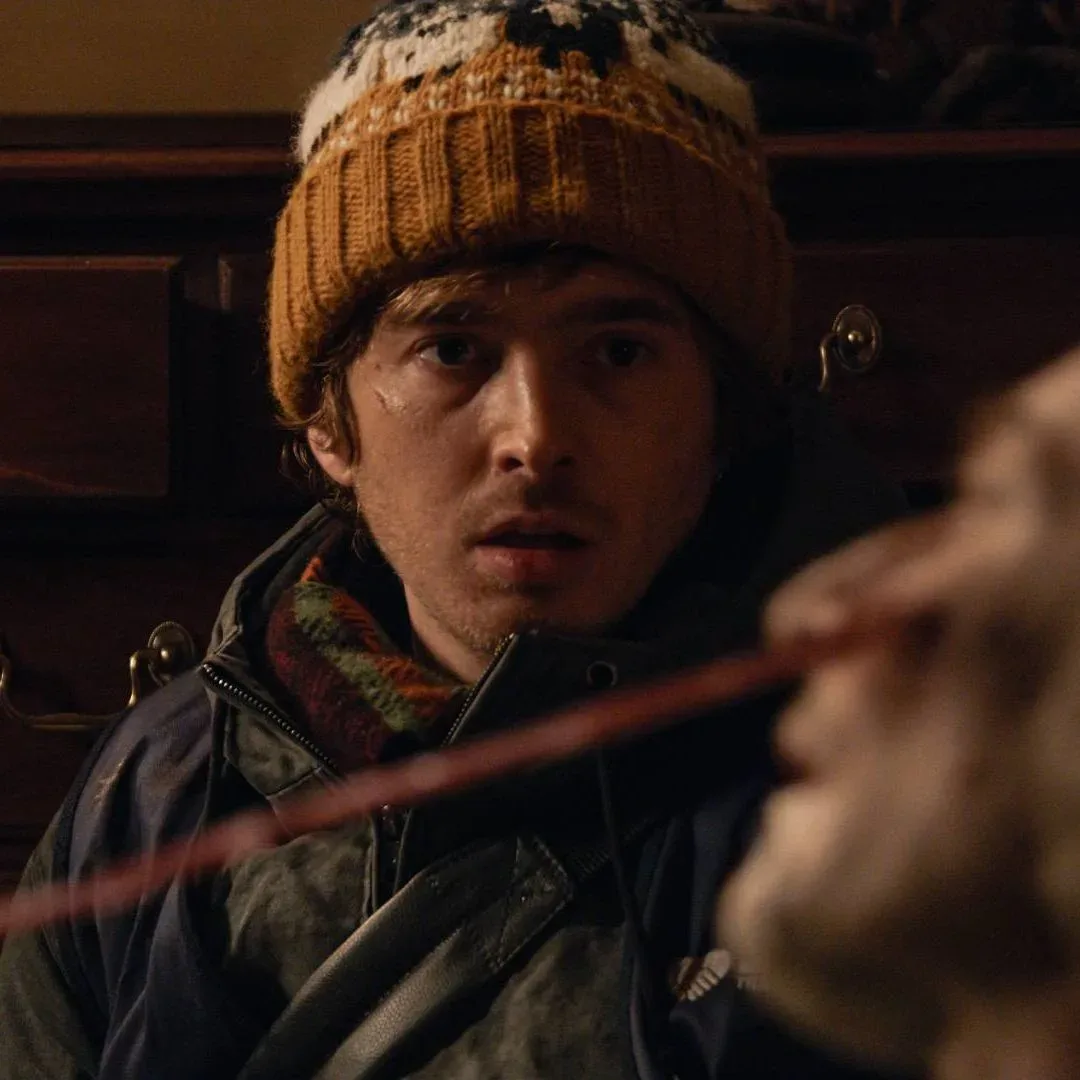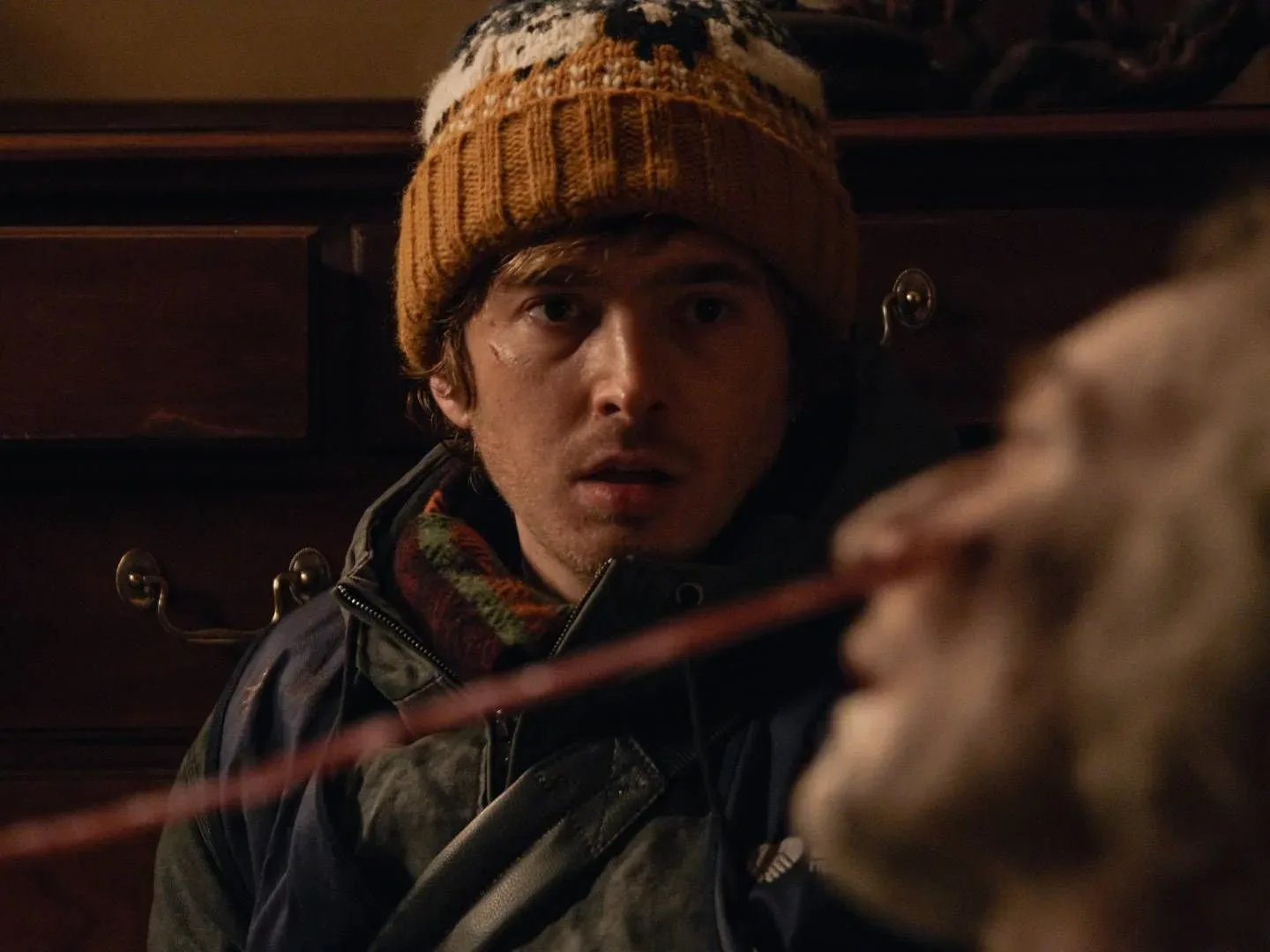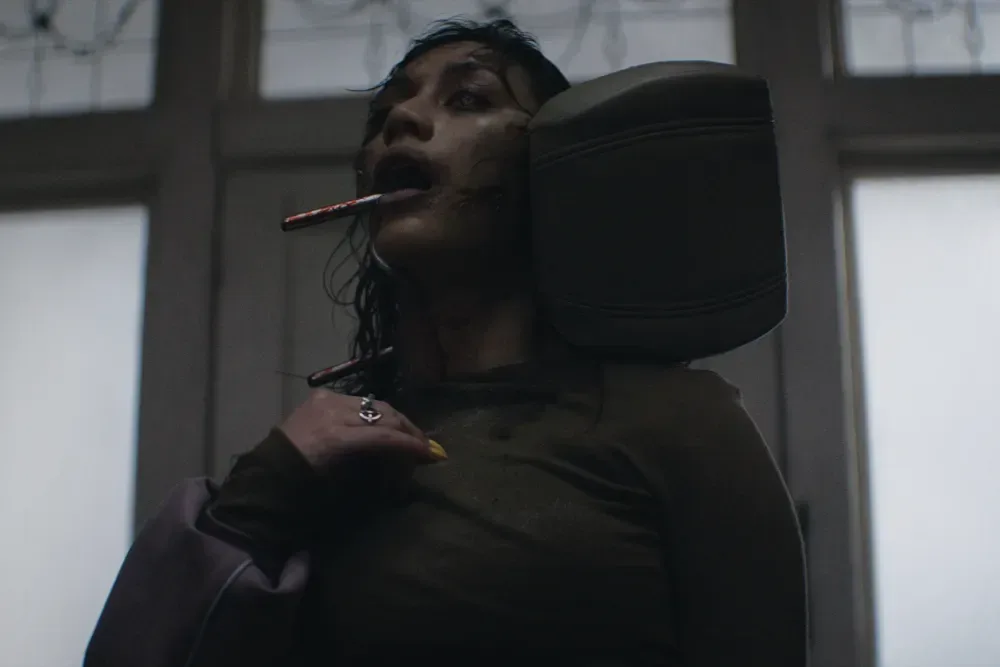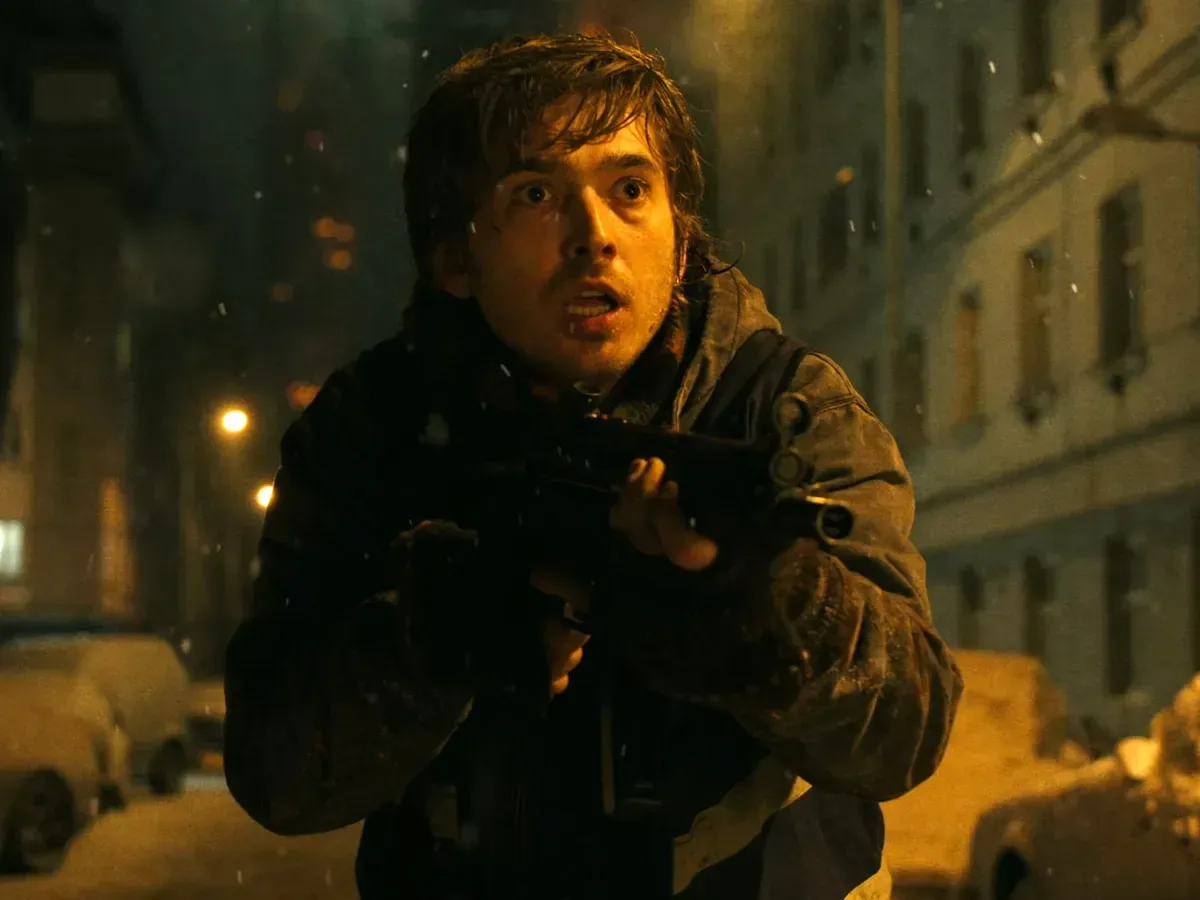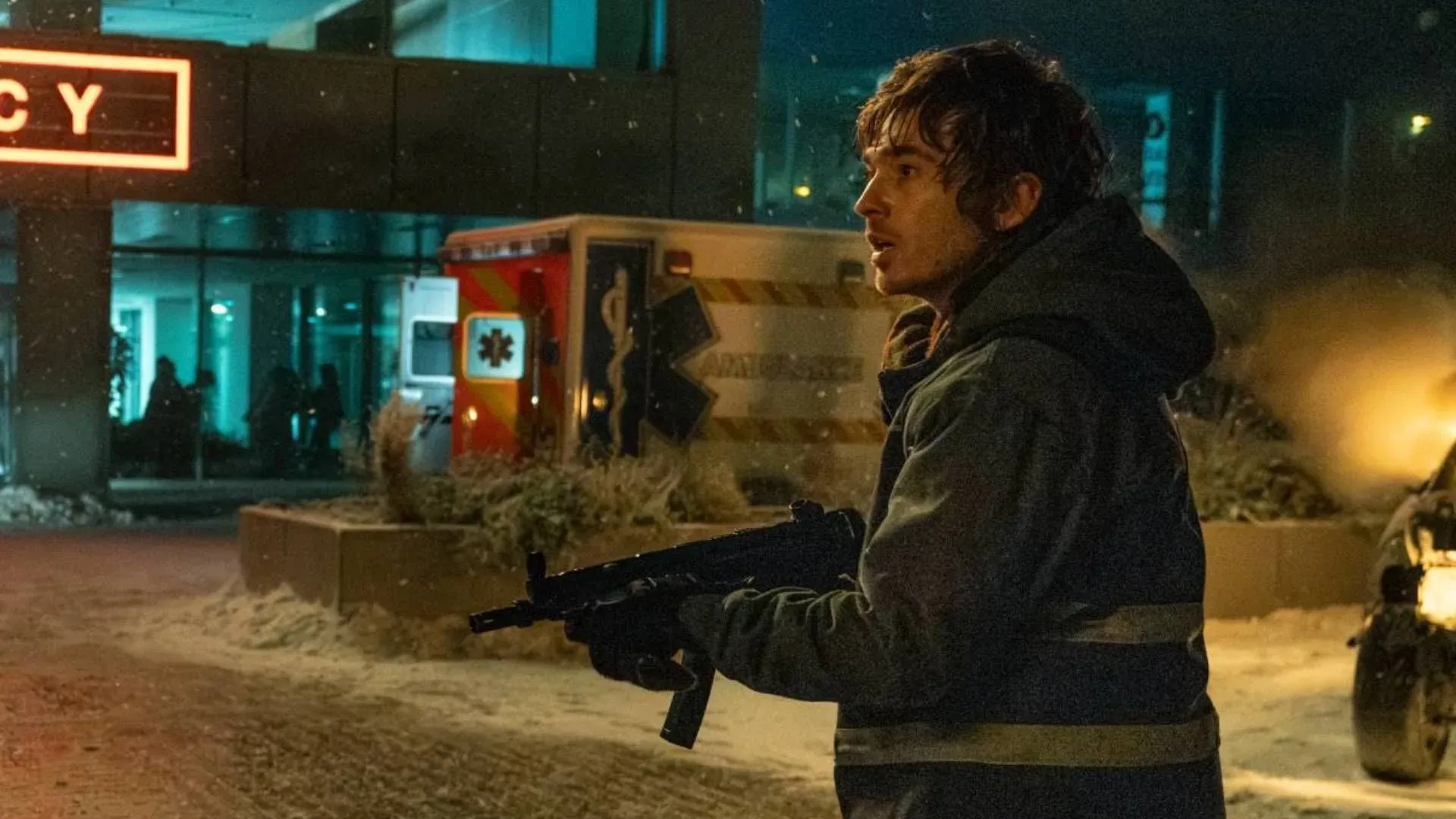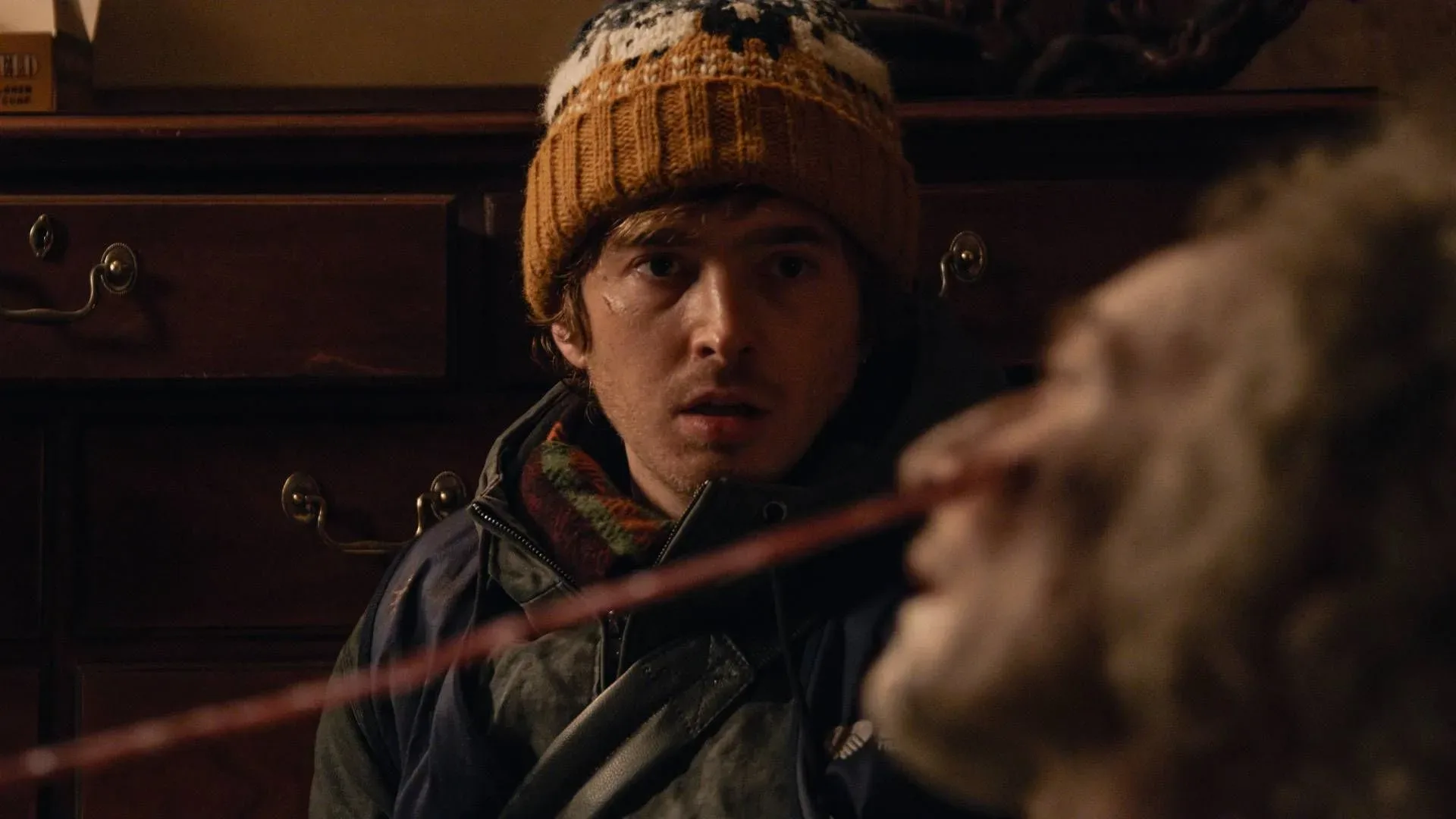
Resident Evil’s most unnerving new creature may owe much of its disturbing motion to a remarkably physical experiment. A behind-the-scenes video shared by movement coordinator Jakub Hudlický shows a group of performers bound together as they explore the rolling locomotion of the film’s “Merged Monster,” a mass of zombified bodies that pursues Bryan, played by Austin Abrams, during his attempt to reach Raccoon City hospital.
The footage is compelling precisely because it makes the monster’s movement legible without making it any less strange. Rather than a creature that simply walks, runs or crawls, the Merged Monster rolls forward in a shifting knot of arms, legs and torsos. Its motion feels unstable: one body appears to drive the turn while another becomes a brace, a pivot or an obstacle. That visual disorder is central to why the creature registers as something more alarming than a conventional zombie.
Hudlický described the early work as a question posed in July 2025: how should the Merged Monster move? The resulting clip shows that the answer began with stunt performers and physical experimentation, involving Filmka Stunt Team and Cirk La Putyka, rather than starting solely from a digital design.
What the video does—and does not—confirm
It is important to separate the striking behind-the-scenes material from what has been definitively established about the finished movie. The video confirms that performers physically tested and created the creature’s unsettling rolling behavior. It does not conclusively establish that every shot of the Merged Monster in the completed film was achieved practically.
That distinction matters in modern creature filmmaking. Practical performance generally means an effect created on set with physical performers, costumes, prosthetics, mechanisms or props. VFX reference, by contrast, can involve actors or stunt teams performing a movement so digital-effects artists have a tangible guide for timing, weight, spatial interaction and body position. A production can also use a hybrid approach: practical performers may establish the motion and eyelines on set, while visual effects alter, extend or replace elements for the final image.
Nothing in the clip alone settles where Resident Evil’s Merged Monster lands on that spectrum. The strongest accurate reading is also the most interesting one: the creature’s movement was developed through a real, difficult group performance. Whether those bodies appear directly in the final shots, are partly enhanced, or primarily informed later visual-effects work remains unconfirmed.
Why a linked group of performers creates a different kind of horror
The idea of several people moving as one monster is a formidable coordination problem. Each performer has to protect the others, maintain the shared shape and react instantly when the collective mass changes direction. A roll that looks chaotic on camera still requires control. Someone needs to lead momentum; others need to yield safely; limbs must be placed with awareness of the people immediately beside and beneath them.
That tension between apparent chaos and exact physical control gives the concept unusual power. A computer-generated model can be animated to move in any number of ways, but human bodies bring natural imbalance, friction and hesitation. When multiple people attempt to move as one tangled form, tiny shifts in weight create a sense that the shape could collapse or snap into a new configuration at any moment. For a zombie amalgamation, that lack of a clean silhouette is especially effective.
Related coverage includes Resident Evil's Merged Monster May Have Been Brought to Life by a Remarkable Practical Stunt Performance.
The Merged Monster’s rolling motion also rejects the ordinary visual language viewers expect from a pursuer. A person-shaped monster communicates direction through a head, shoulders, feet and a recognizable stride. This creature is described as a tangle of limbs, reducing those readable cues. The audience can tell it is coming, but the way it will turn, unfurl or connect with its environment is much harder to predict. Horror often benefits from that kind of uncertainty.
There is a practical storytelling advantage as well. Bryan’s objective is straightforward—reach the hospital in Raccoon City—but the threat pursuing him is not. A monster that moves in an irregular, rolling mass can make an escape route feel unsafe even when its destination is clear. It is not simply faster or stronger than a typical zombie; it is visually and physically harder to anticipate.
A film creature built beside, rather than inside, the games
The Merged Monster is not a creature found in the Resident Evil games. That is consistent with director Zach Cregger’s stated approach: the film is inspired by the games rather than functioning as a direct adaptation, and its story sits on the periphery of Resident Evil 2.
That framing gives the movie room to create an original threat while still using Raccoon City and the wider Resident Evil atmosphere as its foundation. For fans, it is an important distinction. A direct adaptation invites a different set of expectations, often centering on whether familiar characters, plot beats, creatures and locations are reproduced exactly. A story positioned on the edge of a known game can instead use the setting as a space for new incidents.
The Merged Monster seems designed for that freedom. It is recognizably compatible with Resident Evil’s body-horror tradition—a single entity assembled from infection victims—but it is not presented as a checklist recreation of a game enemy. Its purpose is specific to this film’s chase: it embodies the accumulating aftermath of the outbreak and turns that mass of victims into one pursuing obstacle.
That approach does not erase the relevance of the games. The hospital destination and Raccoon City setting keep the adaptation anchored in familiar territory. But the original creature suggests that the film’s connection is tonal and geographic as much as it is literal. It wants to inhabit the nightmare around Resident Evil 2, not merely reenact it.
The value of movement design before the camera
Creature design is often discussed in terms of makeup, texture, teeth, gore or silhouette. The Merged Monster footage is a useful reminder that movement can be just as defining. A design may look grotesque in a still frame, yet become less convincing if it moves too neatly. Conversely, a simple concept can become memorable when its physical behavior is distinctive.
Hudlický’s work highlights movement coordination as a vital link between stunt craft and monster performance. The task is more expansive than teaching actors a routine. It involves establishing a movement vocabulary: how the creature starts, stops, turns, falls, recovers and gains momentum. For an entity made from interconnected zombie bodies, those choices need to communicate both collective mass and individual human anatomy gone wrong.
The practical rehearsal shown in the video has another benefit: it provides a shared point of reference for the entire production. Performers, camera operators and visual-effects artists can work from an actual physical event rather than an abstract description such as “a body mass rolls toward the actor.” That does not prove precisely how the final image was made, but it explains why practical exploration remains valuable even on productions that use digital effects.
For audiences, the end result is usually felt rather than consciously identified. The most successful movie monster movements have an internal logic, even when that logic is grotesque or impossible. The Merged Monster’s logic appears to be collision, momentum and reconfiguration. The early stunt work suggests the filmmakers took time to discover that logic with human bodies in a room.
Practical implications for the film’s horror-comedy balance
Resident Evil has been received warmly so far, holding a 96% score on Rotten Tomatoes and earning praise for its frightening, funny and exceptionally bloody horror-comedy mix. The Merged Monster is a useful example of how those tones can coexist without undercutting each other.
There is an inherent absurdity to a group of performers tied together and attempting to roll as a single monster. Seen in isolation, the setup can sound almost playful. Transformed by framing, editing, makeup and context, however, that same physical idea becomes nightmarish. Horror-comedy often relies on this proximity between the ridiculous and the horrifying: the audience recognizes the wildness of the premise while still responding to the danger inside the scene.
The behind-the-scenes clip also makes the finished concept more impressive rather than less. Knowing that real performers worked through this peculiar, demanding motion adds an extra layer to the monster’s screen presence. It is a reminder that a creature can be technologically enhanced and still begin with sweat, timing, teamwork and a very uncomfortable-looking stunt rehearsal.
Resident Evil is currently playing in theaters. For viewers heading in with game knowledge, the Merged Monster is best understood not as a missing monster pulled from the series’ catalogue, but as an original piece of the film’s peripheral Raccoon City story—one whose unnerving motion was at least developed through an extraordinary practical performance.
For another recent game-adjacent horror item on the calendar, see the streaming plans for Evil Dead Burn.