Zach Cregger’s Resident Evil has drawn an emphatically positive first wave of reactions ahead of its September 18 theatrical opening. The early commentary paints the Sony release as a loud, bloody, audience-facing horror movie that leans into pressure, jump scares, grotesque creature design and unexpectedly prominent humor.
That response matters because Cregger is entering studio franchise filmmaking for the first time after directing Barbarian and Weapons. It also arrives with a major creative caveat: this is not a screen version built around game mainstays Leon S. Kennedy or Jill Valentine. Instead, Cregger and co-writer Shay Hatten have created a new story set within the franchise’s world.
Early social-media reactions are not a substitute for full reviews, and they tend to reflect a limited first audience rather than broad critical consensus. Still, the consistency of the praise is notable. Multiple viewers have highlighted the same handful of traits: sustained tension, gory action, a strong big-screen scale, horror-comedy timing and Austin Abrams’ central performance.
A survival-horror movie first, by the sound of it
“Survival horror” is a useful term here, and not just a marketing-friendly label. In games, it generally describes horror driven by vulnerability, hostile environments and the strain of making it through immediate threats. The genre’s appeal is not merely seeing monsters dispatched; it is the feeling that the character may not have the tools, safety or time needed to survive.
The first reactions suggest Cregger’s film is attempting to translate that sensation into a theatrical rhythm. One response described the movie as having its momentum locked from the opening scene, while another singled out its “relentless tension” as an especially faithful quality from the games. The promise is less a quiet, slow-burn exercise than a high-intensity horror blockbuster that keeps forcing its protagonist forward.
That distinction may be central to how the reboot separates itself from merely borrowing familiar names and imagery. A movie cannot reproduce player control, resource management or the uncertainty created by having to move through a game space yourself. It can, however, build dread through pacing, restricted information, dangerous encounters and a protagonist who feels outmatched. The early notices indicate that pressure and escalation are the movie’s chosen route.
Several first reactions characterize the film as relentless, scary and designed to play especially well with a large theatrical crowd.
One critic called it a true horror blockbuster and urged audiences to see it on the largest possible screen with a crowd. Another said the movie delivered multiple effective jumps, while a further reaction praised the gory action and “Thing-esque” creature designs. That last comparison signals body-horror-adjacent monster work: creatures intended to feel twisted, invasive and physically wrong, rather than simply functioning as clean action targets.
None of that guarantees every viewer will respond to the same mix of volume, gore and speed. But it does establish a clear expectation for anyone heading in on opening weekend: the reports point toward a forceful, communal horror experience rather than a restrained lore drama.
Austin Abrams leads a new Raccoon City story
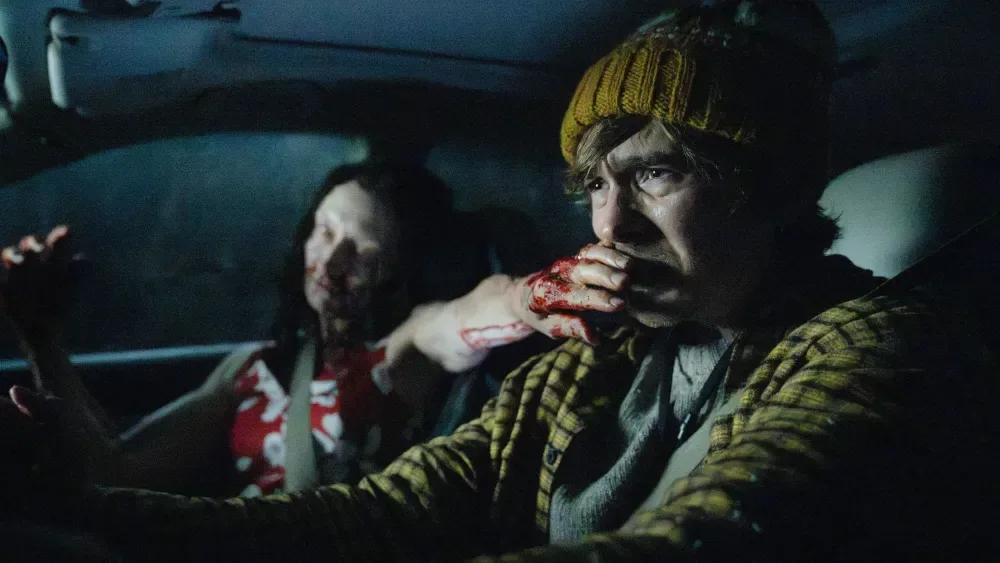
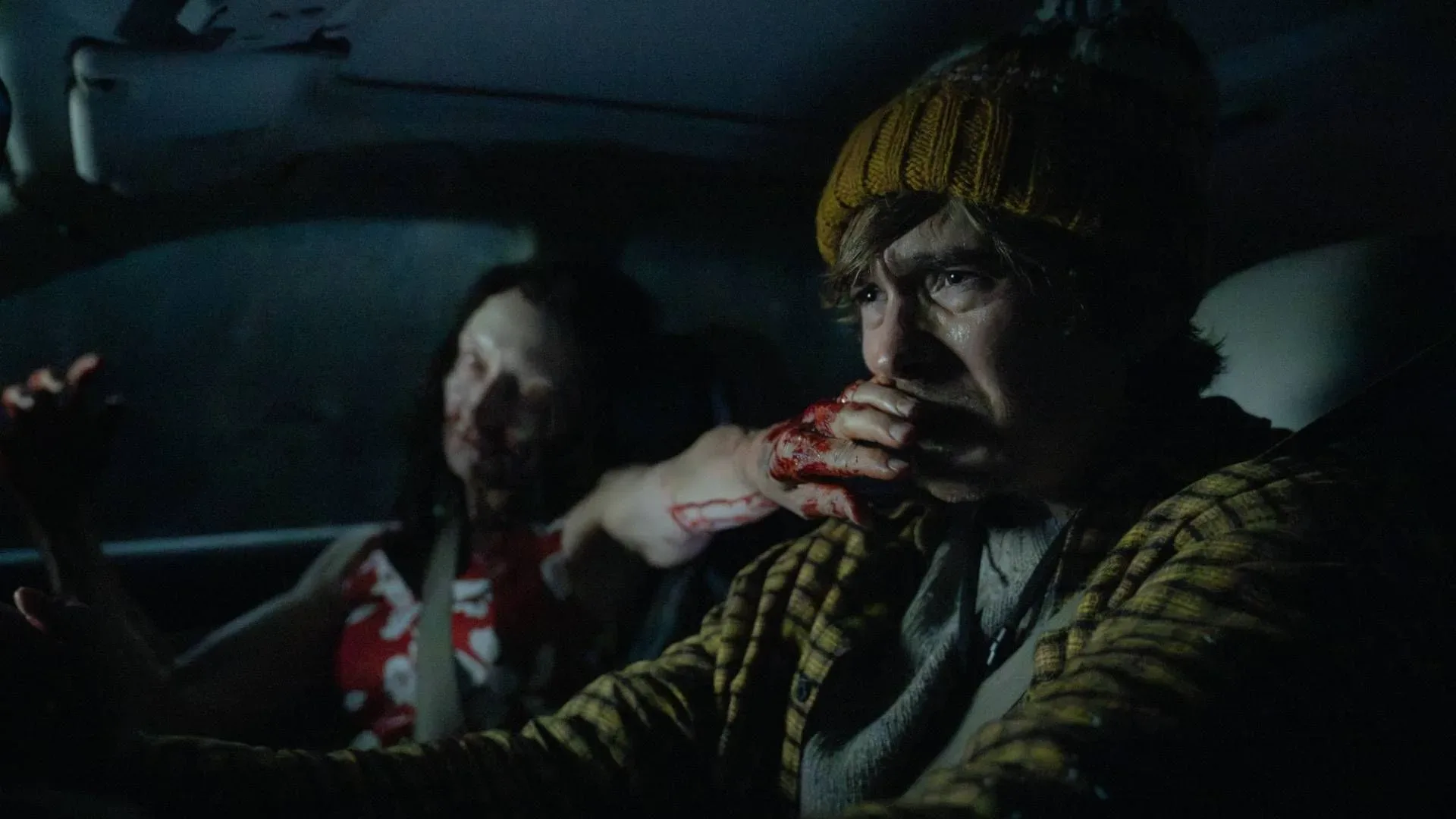
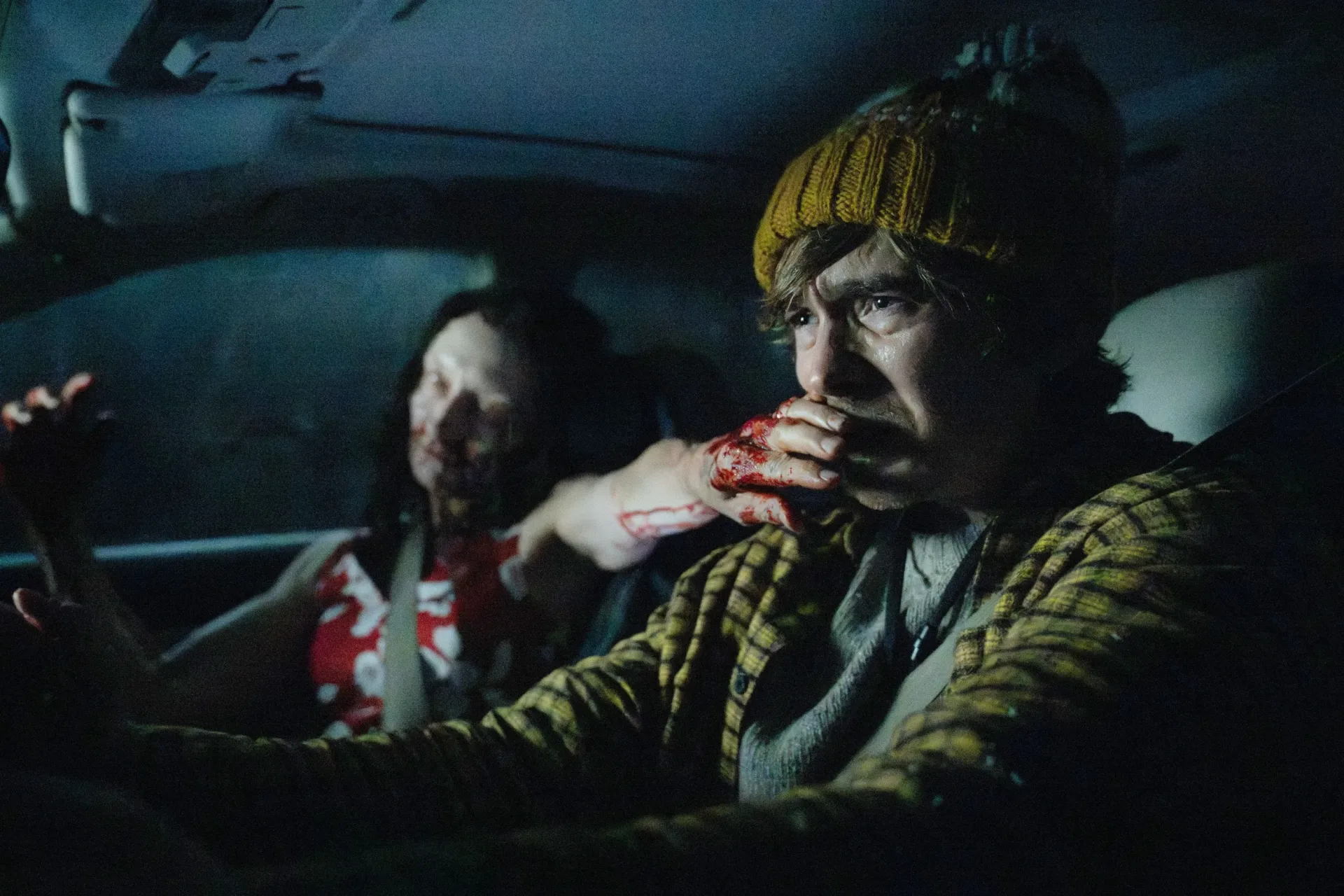
Abrams plays a medical courier sent to make a delivery to Raccoon City General Hospital just as a zombie outbreak becomes the problem he has to survive. The role positions him as an everyman rather than an established super-cop, special agent or legacy game hero. Early reactions describe his character as far over his head, with Abrams’ natural charm making him easy to root for even as the situation turns increasingly chaotic.
One reaction also highlights the physical-comedy angle of Abrams stumbling through zombie kills. That could be a valuable tonal choice. Resident Evil has long had room for both heightened absurdity and grim horror, but balancing laughter with fear is difficult. Comedy can puncture suspense if it turns danger into a joke; used carefully, it can make a frightened, overwhelmed lead feel human before the film snaps back to a scare.
For this iteration, the reported humor seems to be part of the movie’s identity rather than a stray one-liner between action scenes. Several reactions mention it alongside intensity rather than treating it as an awkward contradiction. The result, if that balance holds through the full film, could make the protagonist’s panic and persistence more immediate than a purely stoic action performance would.
The supporting cast includes Zach Cherry, Kali Reis and Paul Walter Hauser. The initial reaction posts focus chiefly on Abrams, so there is not enough information yet to draw firm conclusions about the scope of those supporting roles or the film’s larger character dynamics.
The original-story decision is the biggest point of tension
The reboot’s biggest debate was visible before these early reactions arrived. Cregger’s movie does not feature Leon or Jill, two of the game universe’s best-known characters. Cregger has said he wanted to tell a fresh story, while also acknowledging he was “naive” to expect that decision would not upset some of the fandom.
That objection is understandable on its own terms. Adaptation audiences often attach to particular characters, relationships and storylines, especially in a franchise with a long history. When a film uses the Resident Evil setting but makes room for an original lead, viewers can reasonably ask what makes the project feel connected beyond zombies, Raccoon City and genre vocabulary.
The favorable reactions offer one possible answer, though not a complete one: fidelity may be coming more from atmosphere and momentum than from a direct character-by-character translation. A reaction calling this the most faithful take yet specifically emphasized tension associated with the games. This is a different adaptation philosophy from recreating a favorite campaign beat for beat. It prioritizes the emotional mechanics of the source—danger, confinement, grotesque threats and desperate forward motion.
Whether that is satisfying will remain subjective. Fans hoping for Leon or Jill should not assume their appearance from enthusiastic reactions; the supplied details make clear that Cregger’s story deliberately moves in another direction. Fans more interested in a standalone nightmare set in the franchise’s world may find the new-protagonist approach more inviting.
A franchise with plenty of movie history—and a fresh target
This is not the first attempt to put Resident Evil on the big screen. There have been six earlier films beginning with 2002’s Resident Evil, starring Milla Jovovich and Michelle Rodriguez. Jovovich continued as the lead through Apocalypse (2004), Extinction (2007), Afterlife (2010), Retribution (2012) and The Final Chapter (2017). Johannes Roberts later wrote and directed the 2021 reboot Resident Evil: Welcome to Raccoon City.
Collectively, the film franchise has grossed more than $1.2 billion worldwide. That commercial history explains why a new film carries both opportunity and scrutiny. There is a considerable built-in audience, but there are also competing expectations created by the Jovovich-led series, the 2021 reboot and the games themselves.
Cregger’s version therefore has to answer two questions at once: can it work as a horror movie for people with no detailed franchise knowledge, and can it evoke something meaningful for longtime players without foregrounding their most expected heroes? The early verdict is encouraging on the first question. Critics repeatedly call it scary, funny and cinematic, and several rank it highly among video-game adaptations. The second question will be debated more intensely once general audiences can see the finished film.
For readers following other movie coverage, Joking Joystick’s look at The Julia Set is another example of how a film’s central performance can shape its reception—though Resident Evil is clearly pursuing a much more creature-filled kind of peril.
What the first reactions do—and do not—tell us
The strongest common thread is confidence in Cregger’s handling of spectacle. The film has been described as big, scary, bloody and often very funny, with creature designs that leave an impression. Abrams’ lead performance has also been singled out as a major asset. Those are meaningful signals for viewers deciding whether this looks like their kind of Resident Evil.
At the same time, early reactions have not yet supplied much detail about the screenplay beyond its basic premise, the treatment of the supporting ensemble, or how deeply the movie engages with the wider lore. They also do not settle the original-character debate. A punchy first response can identify an effective shock or a raucous theater atmosphere, but it cannot establish a lasting consensus on every choice in a franchise adaptation.
For now, the clearest takeaway is refreshingly direct: Cregger’s Resident Evil appears to be chasing survival-horror intensity with a new central character, not nostalgia through a greatest-hits roll call. If the full critical response supports these early impressions, it may give the long-running film series one of its strongest cases yet for treating the games’ tension as the real material worth adapting.