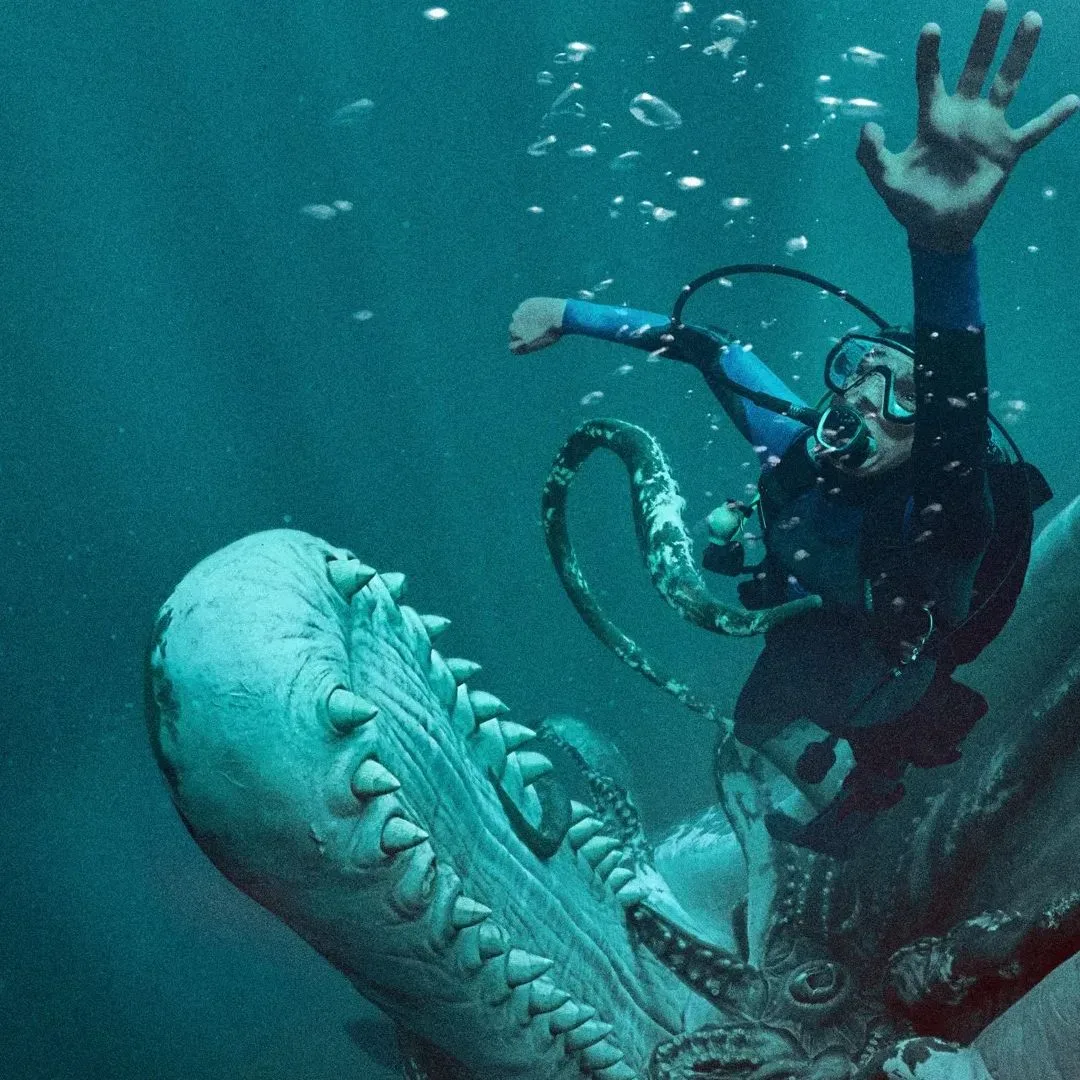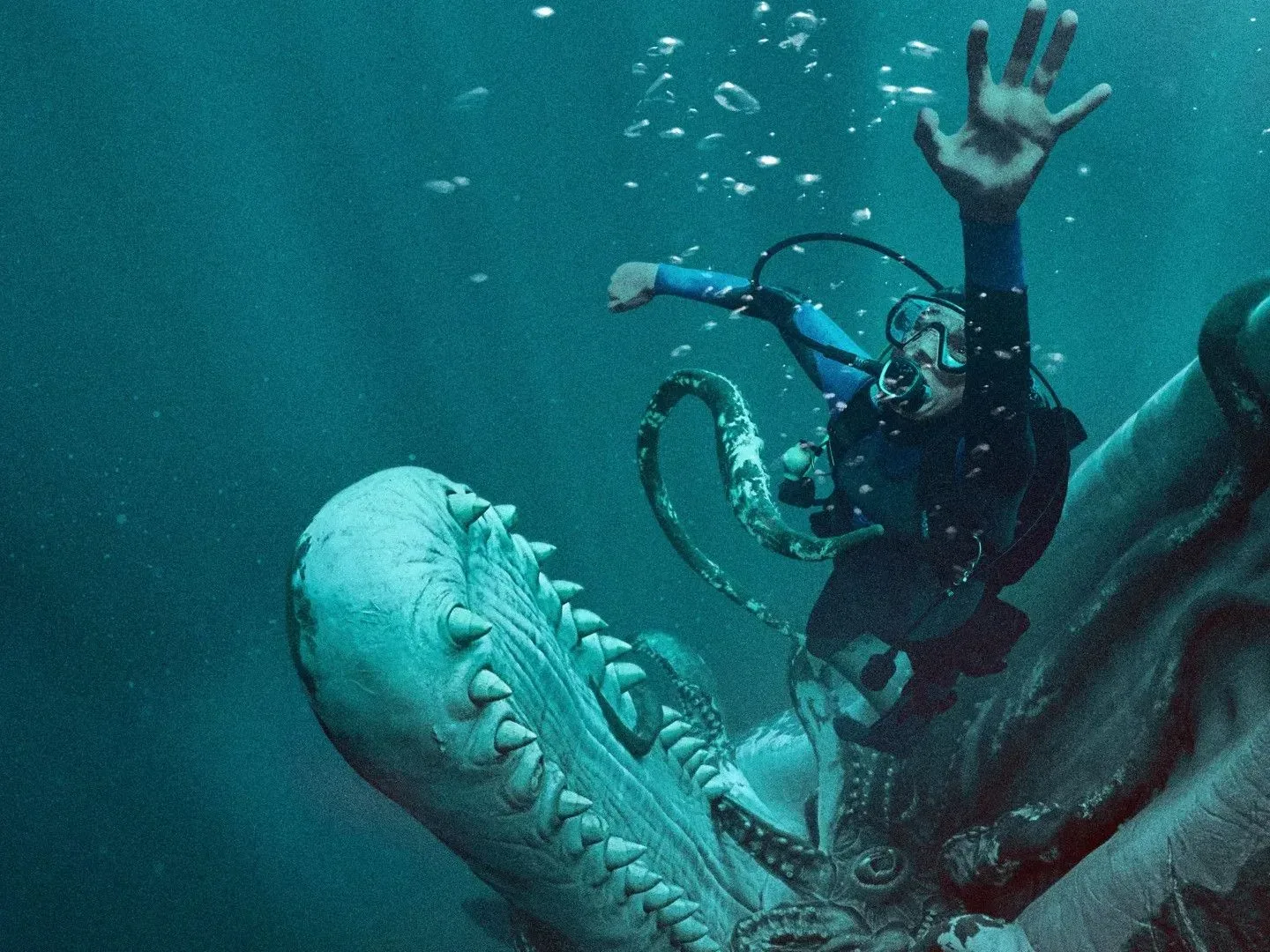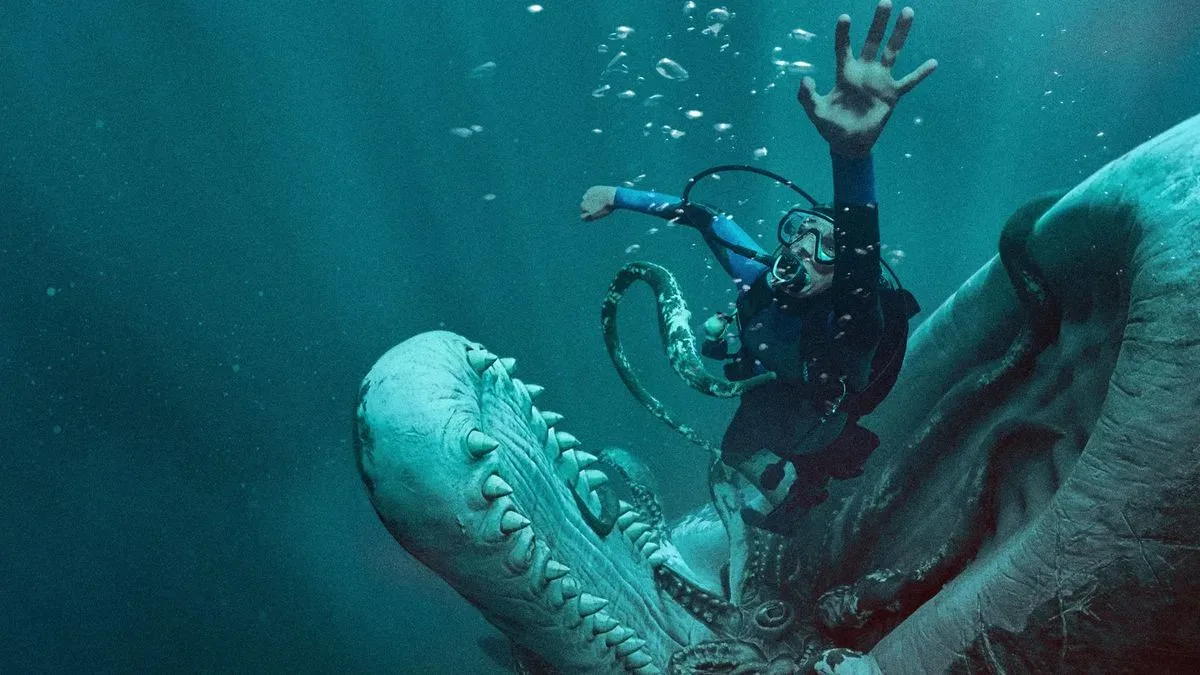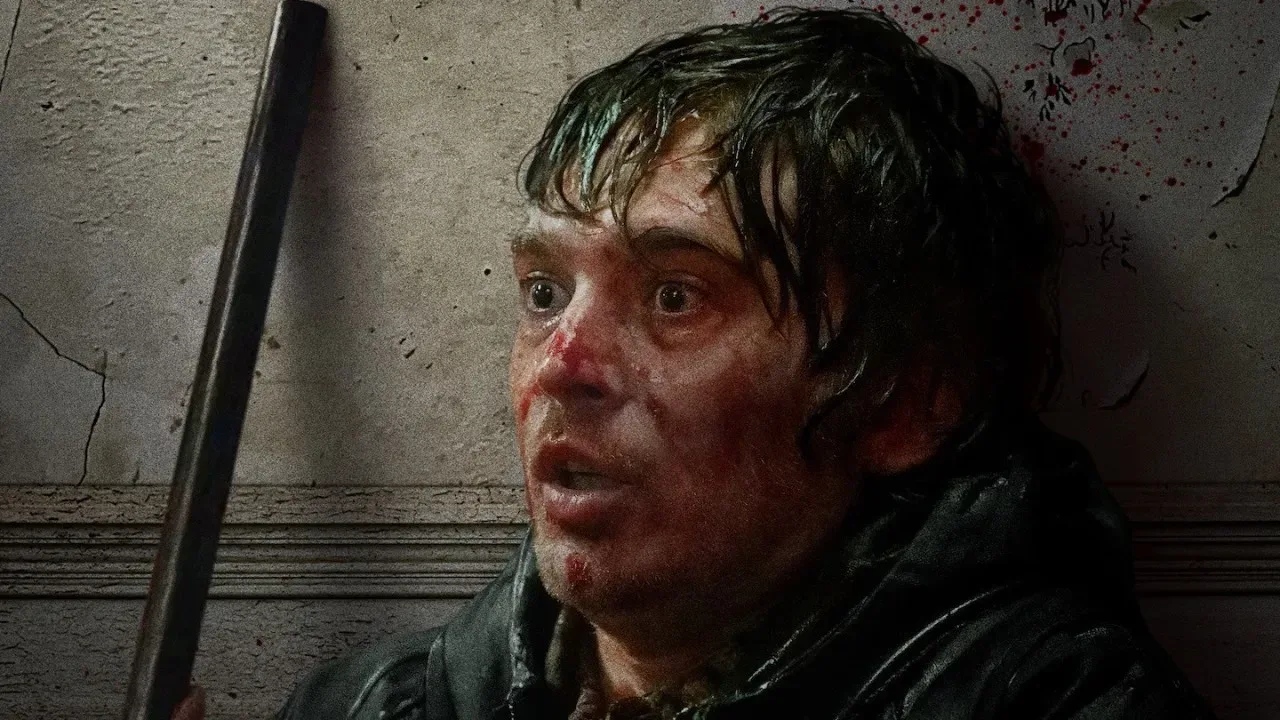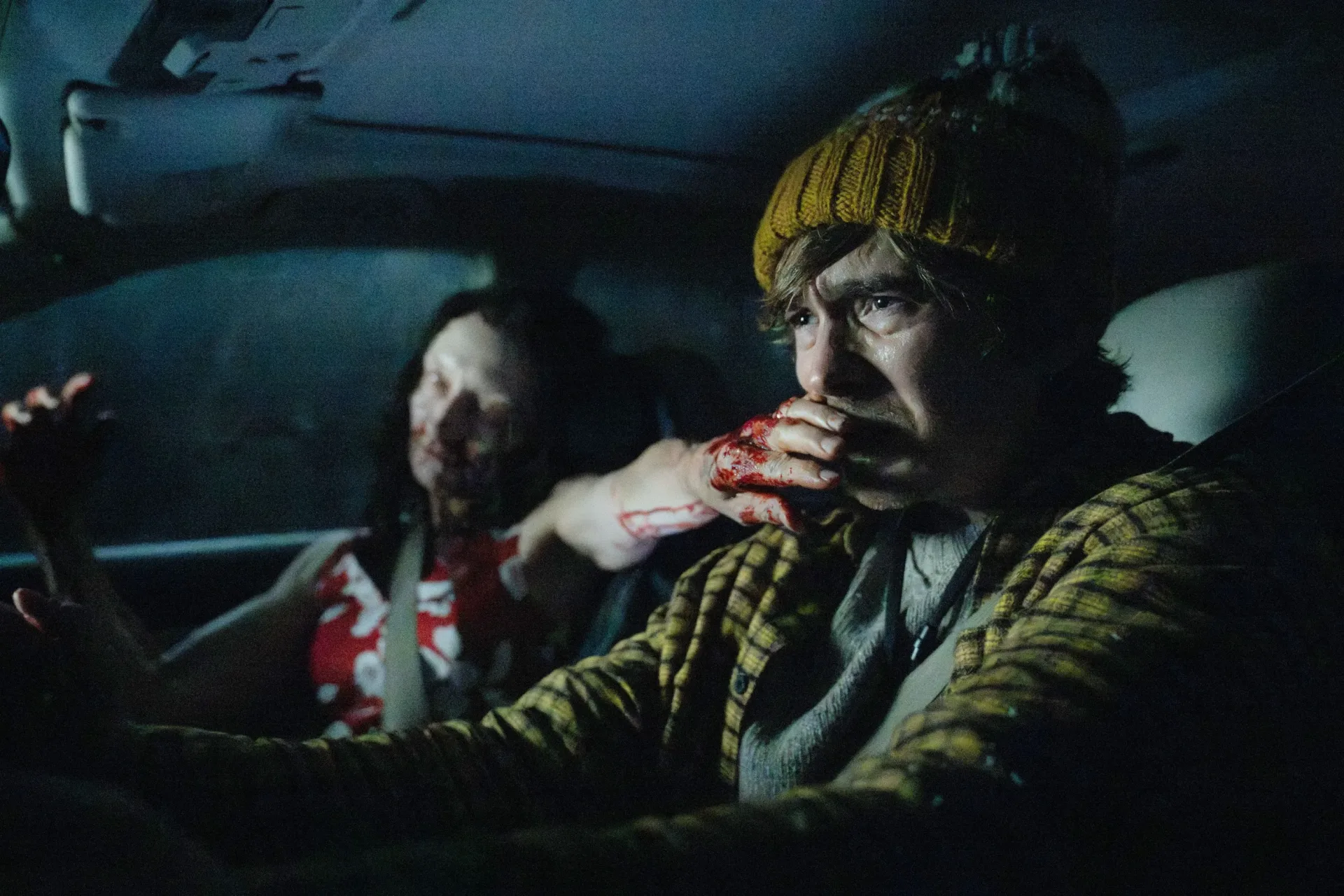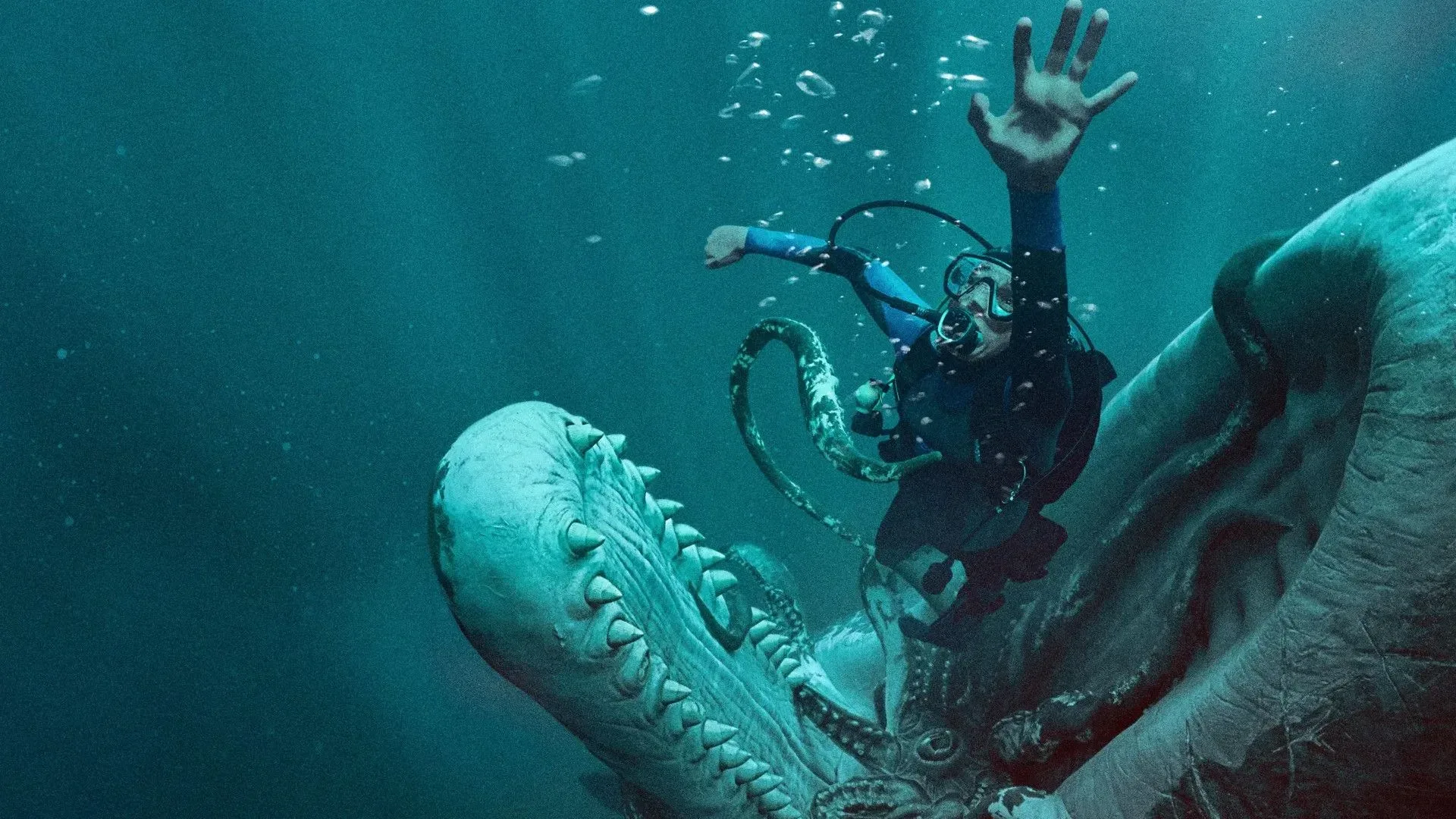
Austin Abrams’ preparation for the horror thriller Whalefall apparently became convincing enough to attract an unwanted real-world intervention. While working toward the physical demands of playing diver Jay Gardiner, Abrams spent time walking around in scuba gear to acclimatise to its weight. Later, when the character’s appearance became increasingly distressed, Abrams says security was called while he was walking around a studio lot because he looked, in his words, “so fucked up.”
It is an unusually direct illustration of a familiar screen-acting reality: a character’s physical condition is not merely something supplied by makeup once cameras roll. For Abrams, the preparation described here involved equipment, movement and substantial changes in body shape across a compact period of work. Those transformations also connect Whalefall to his role as Bryan in Zach Cregger’s upcoming Resident Evil film.
The two projects place their protagonists in very different kinds of danger. Jay is a diver swallowed by a huge whale in Whalefall; Bryan faces the zombie-threatened world associated with Resident Evil. Yet both roles are built around vulnerability rather than the polished, unruffled image often expected of a conventional action lead.
Getting used to the gear before the camera rolls
Scuba gear is central to Jay Gardiner’s identity as a diver, and Abrams’ walks in the equipment were meant to familiarise him with its weight. That choice speaks to a practical side of performance preparation. Costumes and props change how an actor stands, turns, moves and uses space. A performer may need to account for bulk, restriction and fatigue before attempting to portray someone under extreme pressure.
In this case, the preparation also produced an image that was hard to separate from the character’s worsening situation. Abrams recalled that Jay eventually becomes visibly more distressed and swollen-looking. During that phase of the production, he says his own appearance was alarming enough for security to be summoned on the lot.
That anecdote should not be mistaken for proof that an actor must remain in character at all times, or that intense preparation is inherently a requirement for strong work. Rather, it describes Abrams’ particular approach to a role whose premise puts a man in a terrifyingly confined, life-threatening scenario. The scuba walks had a clear practical purpose: becoming accustomed to the physicality of the diver’s gear.
What “method” means in this context
“Method” is often used loosely in entertainment coverage, sometimes as shorthand for any performance preparation that looks extreme from the outside. The details Abrams shared point to something more specific than a catch-all label: he altered his routine and physical presentation to support the demands of individual characters.
For Jay, that included building familiarity with scuba equipment and getting into athletic condition. For Bryan in Resident Evil, Abrams moved in the opposite direction, deliberately adding weight. He wanted viewers to see Bryan as somebody who might not be able to escape the situation, rather than someone whose appearance immediately suggests physical readiness or endurance.
“I wanted Bryan to be a dude you look at and think he won’t be able to get out of this,” Abrams said. “I didn’t want him to look like someone who runs laps in his free time or something like that.”
That is a character-design decision as much as a visual one. In survival horror, a protagonist’s apparent limits can shape the audience’s sense of risk. A character who looks capable may still be frightened or overmatched, but a character who appears less physically prepared can communicate peril before the plot has explained it. Abrams’ stated aim was to make Bryan’s vulnerability readable on sight.
A rapid sequence of contrasting roles
Before Whalefall and Resident Evil, Abrams had been maintaining a very low weight for James, a drug-addicted character in Cregger’s 2025 horror film Weapons. Delays required Weapons to recast, but Abrams remained with the project and passed on other opportunities while waiting.
The result was a demanding run of distinct physical targets: remaining very thin for James, getting sportier for diver Jay, then gaining weight for Bryan. Abrams characterised the process without pretending it followed a precise formula, saying there was not really any science to it and that he did what he could to reach what each role required.
It is important to keep the scope of those comments clear. They describe Abrams’ own experience, not a recommended approach to body transformation or a production blueprint for other actors. The available details do not establish a medical plan, timetable, amount of weight lost or gained, or the full support structure around the work. What is established is the direction of the changes and the close succession in which the roles arrived.
That distinction matters because entertainment stories about transformations can turn bodies into spectacles while overlooking the narrative reason behind them. Here, the rationale Abrams gave is unusually straightforward. James needed to appear extremely thin. Jay needed the fitness and physical credibility of a diver wearing heavy equipment. Bryan needed to look like a person whose ability to survive would be in doubt.
Why Bryan’s appearance matters for Resident Evil
Resident Evil has long been associated with pressure, limited safety and characters attempting to survive overwhelming threats. The supplied details do not reveal the film’s story, Bryan’s wider role, or which familiar elements of the game series will appear. They do, however, offer a useful clue to the intended texture of Abrams’ character.
Rather than presenting Bryan as visibly athletic and assured, Abrams wanted him to look ill-equipped for a crisis. That does not mean the character is necessarily helpless; it means his physical presentation is being used to establish uncertainty. The viewer is invited to question whether he can make it out.
It is a potentially fitting choice for horror, where suspense often depends on the gap between what a character needs to do and what they seem capable of doing. A visibly invulnerable hero can lower that tension. A character who appears ordinary, exhausted or physically compromised can make the same threat feel more immediate.
That vulnerability also differentiates the project from a generic action-film reading of the premise. Abrams did not describe training for Bryan to look combat-ready. He described gaining weight so Bryan would not look like somebody who casually runs for fitness. The performance decision is therefore less about spectacle than communicating fragility.
Whalefall’s danger is more enclosed, but no less hostile
Whalefall puts Jay in a predicament with a radically different visual language from zombie horror: he is swallowed whole by a massive whale. The basic premise still shares an essential survival-horror ingredient with Resident Evil: an individual is trapped in a situation that threatens to overwhelm them.
For Jay, scuba equipment is not a decorative signifier of his profession. It is part of the physical reality Abrams sought to understand. The gear adds weight and changes the body’s relationship to the environment, an especially relevant concern for a story centered on a diver facing an extraordinary marine disaster. His account of the security incident adds a darkly comic off-camera footnote, but the underlying preparation was aimed at making the role’s escalating strain more believable.
Whalefall is now in cinemas. Abrams’ comments meanwhile give audiences a narrow but revealing view of the work connecting it to his forthcoming Resident Evil role: not a promise of plot details, but an account of how physical appearance and bodily discomfort can help sell the fear that a character may not make it out.
For a different look at preserving and finding new uses for older gaming hardware, see our guide to useful things to do with a PlayStation 3 before retiring it.