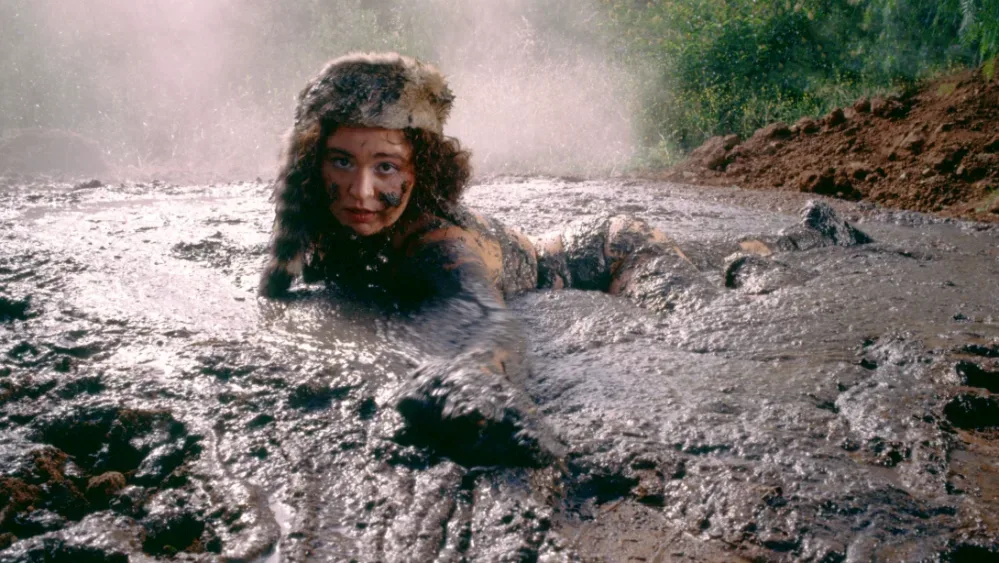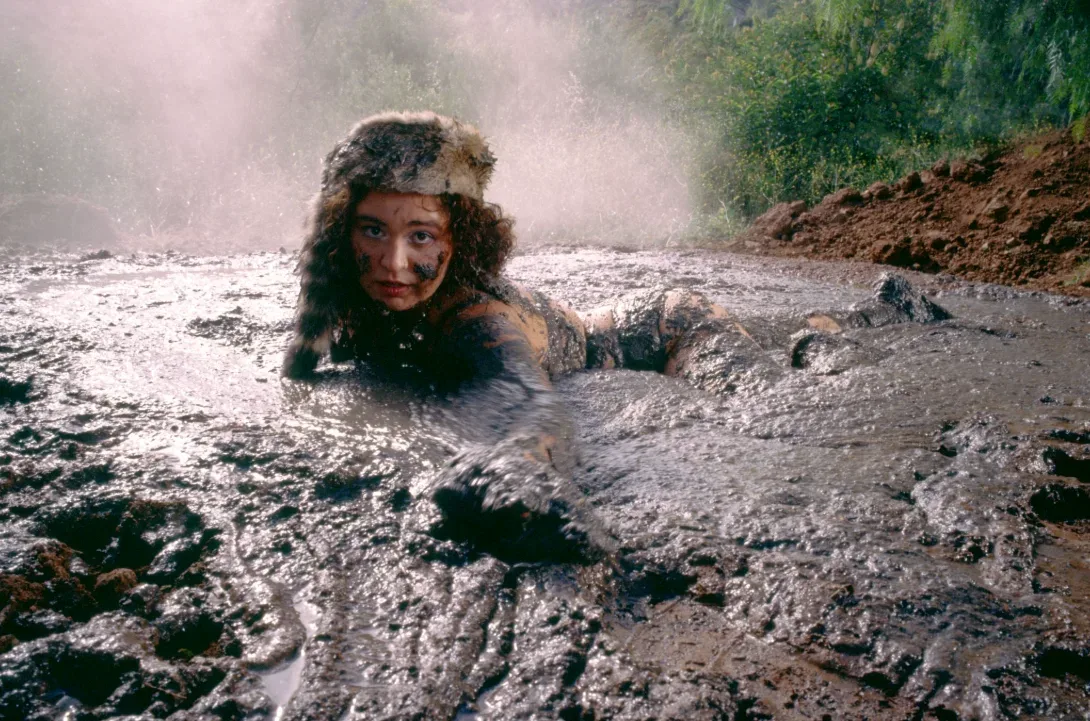
Remi Wolf’s third studio album, Mud, is built around an image that is deliberately unglamorous: being covered in earth, uncomfortable, and unable to clean up the experience immediately. The album is out now, and Wolf has described the mud as both a literal component of its visual language and a metaphor for living through intense emotions rather than trying to sidestep them.
That idea even took physical form. Wolf rolled around in a makeshift mud pit, partly as a personal challenge inspired by her affection for Survivor, a show she has wanted to join. The experiment apparently made one thing clear: handling mud in a controlled environment is not necessarily a qualification for reality-TV endurance. More importantly, though, it supplied a fitting shorthand for the record’s core feeling: messiness can be unpleasant, but surrendering to it can eventually become freeing.
What ‘Mud’ is trying to express
Wolf has framed the album’s emotional movement as “mudding and sudsing”: first allowing the difficult material to stick, then finding a form of release. In practical terms, that means Mud does not present pain as a problem to be rapidly solved. Its stated interest is in the middle stage—the discomfort, frustration and uncertainty that can accompany an apparent breakup or other emotional rupture.
That distinction matters. A breakup record is not automatically a record about closure. Wolf’s descriptions suggest that Mud is more concerned with the raw period before closure, when a person may still be bargaining, grieving or struggling to understand what changed. She has called the emotions on the album brutal, but sees value in feeling them fully instead of suppressing them.
The 10-track project marks a shift in emphasis from some of the big, immediately singable songs associated with Wolf’s earlier work, including “Photo ID” and “Soup.” Those tracks helped establish her as an artist capable of vibrant, memorable pop moments. Mud, by contrast, is described as more diaristic. “Diaristic” here means writing that resembles a diary: direct, personal and focused on the speaker’s immediate internal life rather than a broad fictional scenario.
That does not mean the record abandons hooks or drama. The available song details point to highly projected feelings. On “I Won’t Cry,” Wolf delivers lines of pleading and self-worth, including a demand to know why someone does not want her back. “Bottle” addresses the emotional aftermath of goodbye and the urge not to think too closely about it because doing so prompts tears. The details are specific enough to communicate hurt while leaving the larger circumstances open to listeners.
Vulnerability as the album’s organizing principle
Wolf has always aimed for honesty in her work, but she has presented Mud as a deeper level of exposure and, in her view, her strongest body of work so far. The key creative choice was to make space for feelings that can be difficult to package neatly: sadness, desperation, rejection and emotional overload.
Her stated hope is not merely that listeners recognize those states, but that the album gives them permission to release some pressure of their own. Wolf has compared that goal to taking people “to church,” not as a genre label or a claim about religion, but as an image of communal catharsis. Catharsis is the emotional discharge that can come from art: a song gives a listener a safe structure in which to cry, sing, shout or confront something they have been holding in.
That framing gives the mud concept a broader function than an album-cover gimmick. Dirt is the condition of being overwhelmed; cleansing is not erasing the experience, but moving through it. Wolf’s language suggests that both halves are necessary. The record’s visual and lyrical ideas are therefore meant to work together rather than operate as separate marketing layers.
A smaller circle in Joshua Tree
The process behind Mud also reflects its emphasis on trust. Wolf worked with a close group of friends and collaborators, including Jared Solomon, Jack Demeo and Gigi Grombacher. The group spent time in Joshua Tree, where they jammed around a campfire and recorded in a makeshift studio set up in an Airbnb.
For Wolf, reducing the distance between herself and the people making the album was a practical response to feeling vulnerable and broken down. Earlier albums—2021’s Juno and 2024’s Big Ideas—involved hired creative directors to help realize her visions. This time, Wolf wanted to tighten the circle, leaning on people with whom she already felt comfortable.
That is not an argument that a smaller crew is inherently better than a larger professional production team. It is an argument about fit. When the subject matter is intensely personal, a familiar setting and collaborators who understand the artist’s communication style can help keep the work honest. The Joshua Tree setup also reinforces the handmade atmosphere Wolf has attached to the album: friends gathering, trying ideas, and letting the material develop outside a more formal studio routine.
There is a useful contrast here between vulnerability as a topic and vulnerability as a working condition. Wolf was not simply writing songs about being emotionally exposed; she was trying to build a creative environment where that exposure was possible. The reported campfire jams and improvised studio are meaningful in that context because they describe an approach built around comfort, closeness and room to experiment.
Mud, claustrophobia and cleansing in the visuals
Wolf took the lead as creative director for the album’s imagery. She considered the mud pit essential to the visual identity, while each song’s associated video was given its own emotional role. The visual for “Bottle” was designed to feel claustrophobic, while “I Won’t Cry” was conceived as a representation of cleansing.
Claustrophobia, in this context, means creating a sense of confinement or not having enough emotional space to breathe. It is a natural complement to a song centered on a painful goodbye and tears that feel hard to contain. Cleansing, meanwhile, extends the album’s “sudsing” side: it does not deny the mud, but follows it with an act of washing and release.
Wolf also planned a Los Angeles car-wash celebration for the album release, another image that carries the same thematic logic. A car wash is recognizably about removing grime, but it is also loud, public and playful—an appropriate match for an artist who can treat painful material seriously without requiring every surrounding visual to be solemn.
The visual strategy appears especially considered because it avoids reducing the record to one static mood. The mud communicates discomfort and surrender. The “Bottle” concept narrows into confinement. “I Won’t Cry” shifts toward release. Taken together, those ideas create a sequence rather than a single aesthetic: getting messy, sitting in the feeling, then attempting to come out the other side.
Live debuts and a Hayley Williams connection
Wolf has also been testing new material in front of audiences, including performances connected to one of her longtime influences, Hayley Williams. Wolf debuted “Twiggy,” the lead single from Mud, with Williams at the Newport Folk Festival in July. The pair later performed Williams’ “Parachute” during the second night of Wolf’s Hollywood Bowl show in Los Angeles.
The connection predates these appearances. Wolf opened for Paramore in 2023, and she and Williams have stayed friends. Wolf has spoken warmly about Williams’ talent and artistry, making the shared performances significant both as a creative milestone and as an example of a professional relationship that grew into an ongoing friendship.
Live performance can serve a different purpose from release-day listening. A studio recording locks in one version of a song; a concert lets an artist observe how a new song moves through a room, where a crowd reacts, and whether an emotional lyric becomes a shared moment. Wolf’s stated desire for Mud to offer emotional release makes those early live outings particularly relevant. They place songs about private turmoil in a communal setting.
For another recent story about how a short, spontaneous studio moment can become a defining musical signature, read Lil Jon’s account of the split-second ad-lib behind his signature “OK”.
Wolf’s ‘Off Campus’ cameo
Outside the album campaign, Wolf appears in a cameo on Prime Video’s hockey series Off Campus. She performs at a fictional schoolwide block party. It was her first time spending time on a set of that kind, and she has described the experience as an opportunity to meet the cast and watch the collective machinery behind a screen production at work.
Her observation about the “village” is a concise description of how television sets function. A performer may be the visible center of a moment, but a scene depends on many coordinated roles, from cast and direction to camera, lighting, sound, wardrobe and production teams. Wolf’s part was a cameo rather than an indication of a move away from music, and she has made clear that her immediate attention remains with Mud.
Ultimately, the album’s defining proposition is refreshingly simple: difficult feelings do not have to be made tidy before they can become art. Wolf is betting that listeners will follow her into a project that is more exposed and emotionally unsettled than its central image initially suggests. The mud may be the memorable visual, but the point is the willingness to endure the mess long enough to find some relief within it.