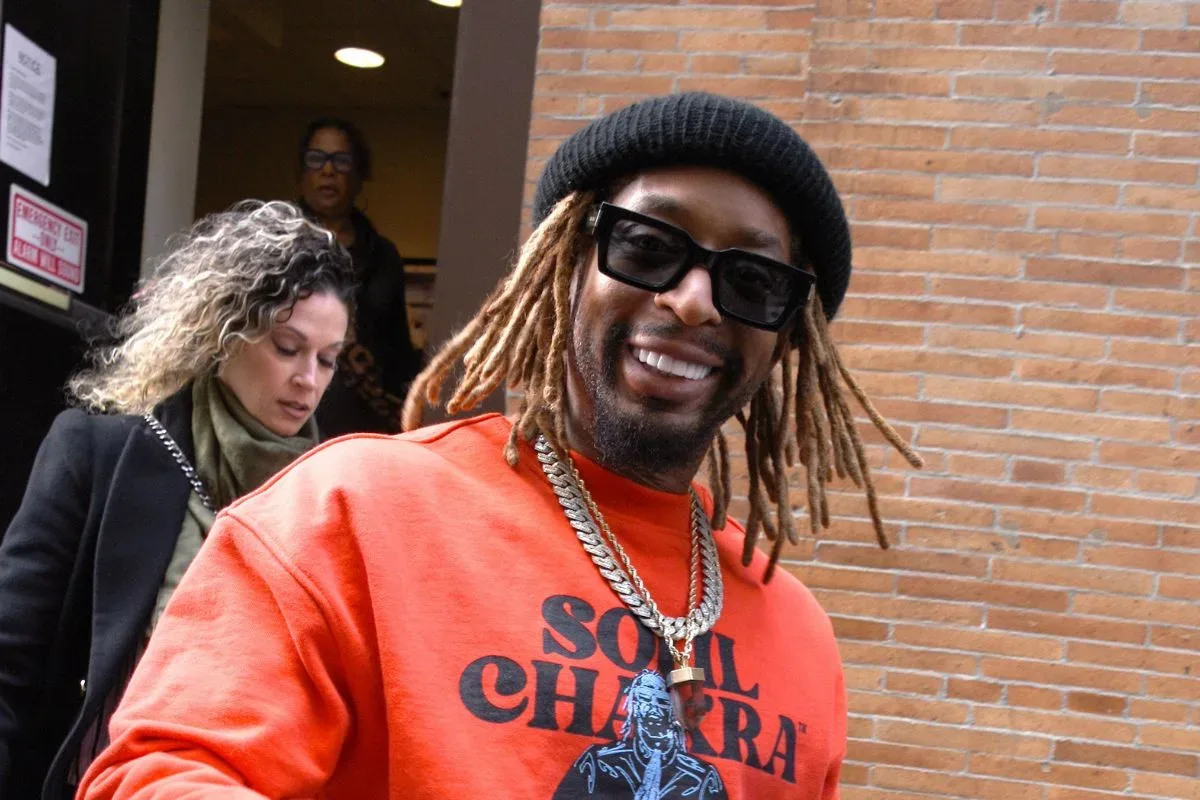
A word as ordinary as “OK” can become unmistakable when the timing, tone and personality behind it line up. Lil Jon says that is exactly how one of his best-known vocal signatures began: not as a carefully plotted branding move, but as a spontaneous reaction in the recording booth.
Reflecting on work connected to Put Yo Hood Up, the Atlanta hitmaker recalled putting on his headphones, hearing the beat begin and immediately launching into the kind of ad-libs that help establish a track’s energy. He heard himself say “OK,” liked the effect, and decided to repeat it. That quick decision turned a commonplace phrase into part of the vocal vocabulary audiences came to associate with Lil Jon.
“I remember the exact moment the OK became a signature ad lib,” Lil Jon said.
A small recording decision with a long afterlife
An ad-lib is an improvised vocal addition to a song rather than its central written lyric. It can be a word, a short phrase, a shout, a laugh or another vocal sound used to add emphasis, momentum or character. In Lil Jon’s recollection, “OK” began as precisely that: a reaction delivered over the opening of the track while he was hyping the music.
He described looking up after the first take and realizing that the sound had landed. Rather than treating it as a one-off accident, he followed the instinct to use it again through the introduction. The phrase itself was not unusual; the delivery made the difference.
That distinction matters. An ad-lib does not need to communicate a detailed idea to be effective. Its musical role can be rhythmic, emotional or theatrical. It can announce that a record has started, sharpen a transition or give listeners a cue they recognize before the main lyric arrives. Lil Jon’s account frames “OK” as an example of a performer hearing an unexpected possibility and committing to it before the moment passed.
The story also makes the signature feel less like a slogan imposed from outside and more like a creative choice that grew out of the session. He was not describing a plan to manufacture a catchphrase. He was describing an immediate judgment: it sounded good, so it stayed.
From record intro to recognizable character trait
The phrase’s reach expanded beyond music when Dave Chappelle built it into the recurring “A Moment in the Life of Lil Jon” sketches. The comedy centered on an exaggerated version of Lil Jon whose answers to everyday questions arrived as huge exclamations: “Yeah,” “What” and “OK.”
A February 2004 airport sketch placed Chappelle’s version of Lil Jon at a check-in counter. Routine questions about luggage became loud exchanges built around those familiar responses. The joke then shifted when the character briefly adopted a composed, polished voice to ask about frequent-flyer miles before returning to the shouting.
Related coverage includes Lil Jon Traces His Signature “OK” Back to a Studio Ad-Lib.
The premise worked because the sketches treated the vocal tics as instantly legible. They translated a musical persona into a setting where a listener did not need to know a specific song to understand the joke. That is a useful distinction between a reference and a character: the sketch was not simply repeating a sound from a record, but organizing a whole comic persona around the contrast between everyday situations and heightened delivery.
For viewers, the comedy format gave the ad-libs another route into memory. For Lil Jon, it expanded the audience for elements of his performance that might otherwise have stayed tied more closely to songs, videos and club culture. He said Chappelle showcased his ad-libs to a wider public and placed them in pop-culture history.
That kind of crossover can change the way a performer is recognized. A song may be known for its hook, beat or chorus; a sketch can isolate a few seconds of an artist’s public voice and make those seconds usable in a completely different context. The result is not merely a parody of the artist’s work. It becomes a shared shorthand audiences can quote, imitate and recognize independently of the original recording.
Lil Jon joined the joke
The connection did not remain one-sided. Lil Jon later appeared in another sketch, speaking by phone with Chappelle’s impersonation of him. The pairing gave the bit an extra layer: the real performer and the parody version exchanged the same booming catchphrases.
That appearance acknowledged the exaggeration without removing the traits that made it work. It also illustrated how a comedy impression can become part of an artist’s broader public story when the artist embraces the exchange. In this case, Lil Jon has credited the sketches with taking his voice into spaces his music had not yet reached.
Comedy and music have long shared a reliance on repetition, timing and recognizable delivery, and this example brings those elements together in a particularly compact way. The raw material was a short improvised word. The musical performance made it distinct, while the sketch format turned it into a recurring comic device.
That broader movement between music and screen comedy remains part of the same pop-culture ecosystem that lets performers be recognized across formats, whether through character-driven television or projects such as other performer-led screen roles and franchises. Lil Jon’s example is unusually direct because the transition began with an ad-lib rather than a scripted role.
The anecdote is part of Lil Jon’s forthcoming memoir
Lil Jon revisits the origin of “OK” and Chappelle’s role in its cultural spread in I Only Shout So You Can Hear Me, his forthcoming memoir written with Paul Cantor. The 304-page book is scheduled to arrive October 20 through Atria/Black Privilege Publishing, Charlamagne Tha God’s imprint.
The memoir covers his time as an Atlanta DJ, the rise of Lil Jon & the East Side Boyz, and the creation of songs including “Get Low,” “Yeah!” and “Turn Down for What.” It also addresses creative burnout, family struggles, meditation and his embrace of Islam. That range places the catchphrase story within a larger account of his career and life rather than treating it as an isolated bit of trivia.
His comments on Chappelle are especially notable because they identify a boundary that the sketches crossed: music had made the ad-libs part of his artistic identity, but comedy helped make them broadly recognizable cultural signals. In the book, Lil Jon writes that Chappelle took him somewhere music could not.
That does not reduce the original studio moment. If anything, it highlights why it endured. A piece of improvisation first had to be memorable enough to survive the recording process, recur in performance and attract the attention of a comedian who could see a character inside the sounds. Each step depended on the phrase retaining its identity while moving into a new setting.
What the “OK” origin story says about signatures
Lil Jon’s recollection is a reminder that recognizable artistic markers are not always created through elaborate planning. Some arrive through experimentation and are retained because the performer notices their effect. The key creative action in this case was not inventing an unfamiliar word; it was recognizing that a familiar word sounded different in a particular voice, against a particular beat, at a particular moment.
There is also a practical lesson in the way he tells it. Recording sessions can preserve spontaneous choices that would be difficult to reconstruct if the performer paused to overthink them. Lil Jon heard the first “OK,” reacted to his own delivery, then repeated it while the momentum was still there. The repetition gave the ad-lib a role in the intro, and the role gave audiences something to associate with him.
Chappelle’s sketches then demonstrated a different kind of creative interpretation. Rather than attempting to reproduce a song, they lifted a few vocal markers and placed them against deliberately mundane situations. The tension between the loudness of the response and the normality of an airport check-in became the engine of the joke. The occasional switch to a calm voice made the exaggerated shouting feel even more intentional.
For Lil Jon, the result was a signature that travelled from the booth to records, videos, comedy sketches and everyday pop-culture reference. Its origin, though, remains remarkably simple: an artist heard an improvised “OK,” thought it worked, and chose to say it again.
Upcoming appearances
- October 20: I Only Shout So You Can Hear Me is scheduled for release.
- October 21: Lil Jon is scheduled to discuss the memoir with Charlamagne Tha God at Barnes & Noble Union Square in New York.
- October 26: Another scheduled event will take place at The Grove in Los Angeles.