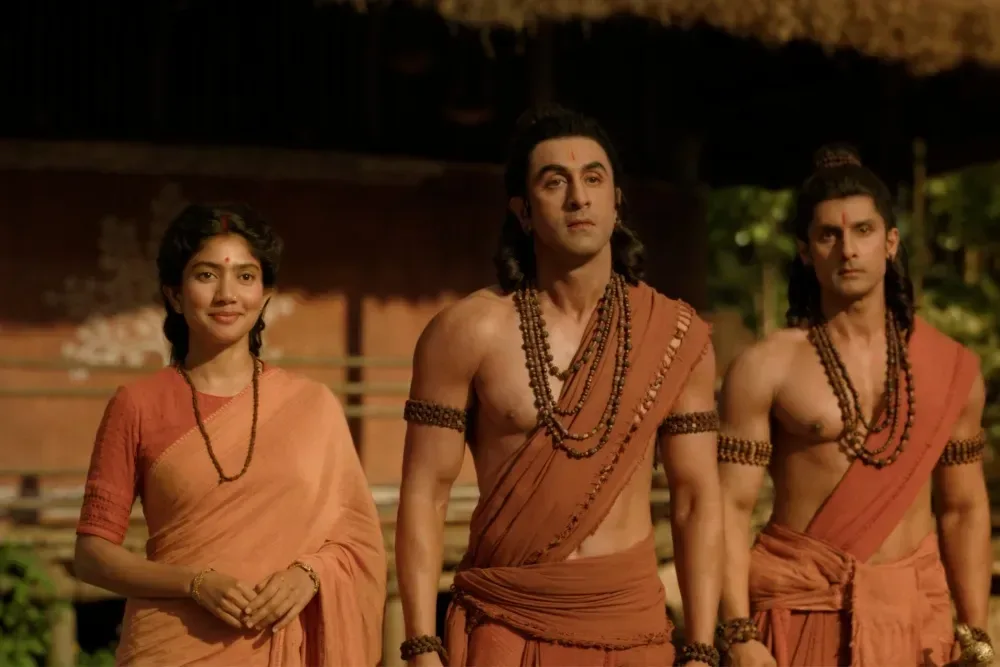
Ramayana Part 1 is arriving with the kind of challenge that makes a standard blockbuster launch look like selecting “easy” difficulty. The first half of Nitesh Tiwari’s two-film adaptation must serve audiences who know the epic’s major beats intimately, welcome people encountering it for the first time, and carry a cultural responsibility its makers plainly recognize.
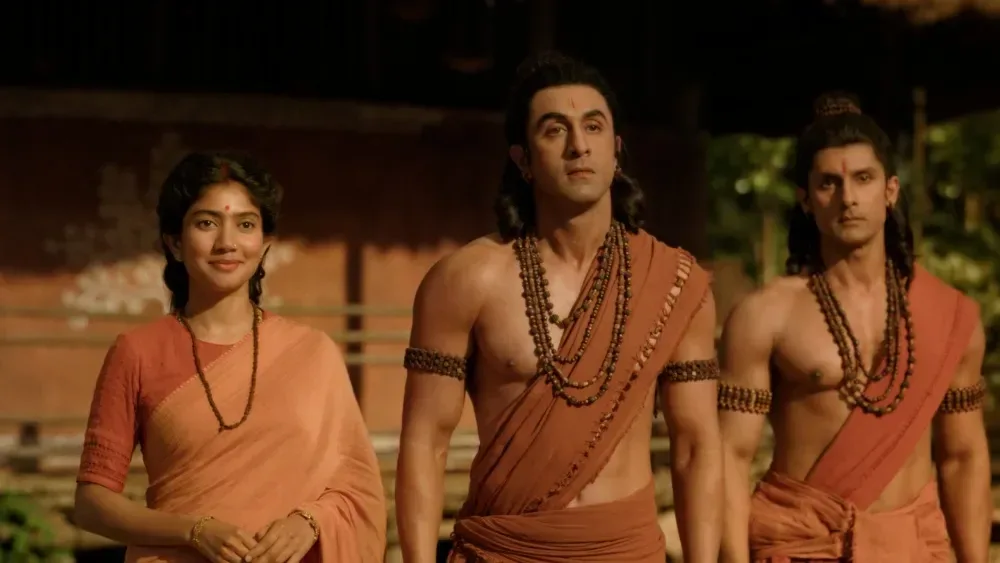
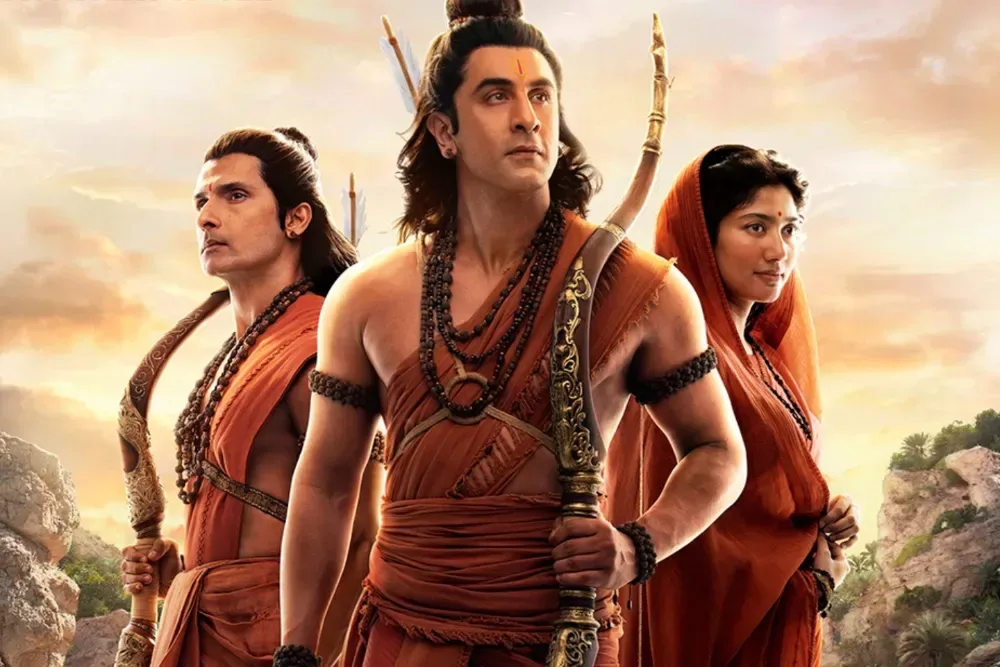
Its answer is not to pretend the story needs a surprise ending. Instead, the creative team is centering performance, emotional specificity, music and large-scale visual construction. Ranbir Kapoor plays Rama, the prince sent into exile; Sai Pallavi plays Sita, whose abduction by Yash’s Ravana, king of Lanka, sets the central conflict in motion. The film opens worldwide on November 5.
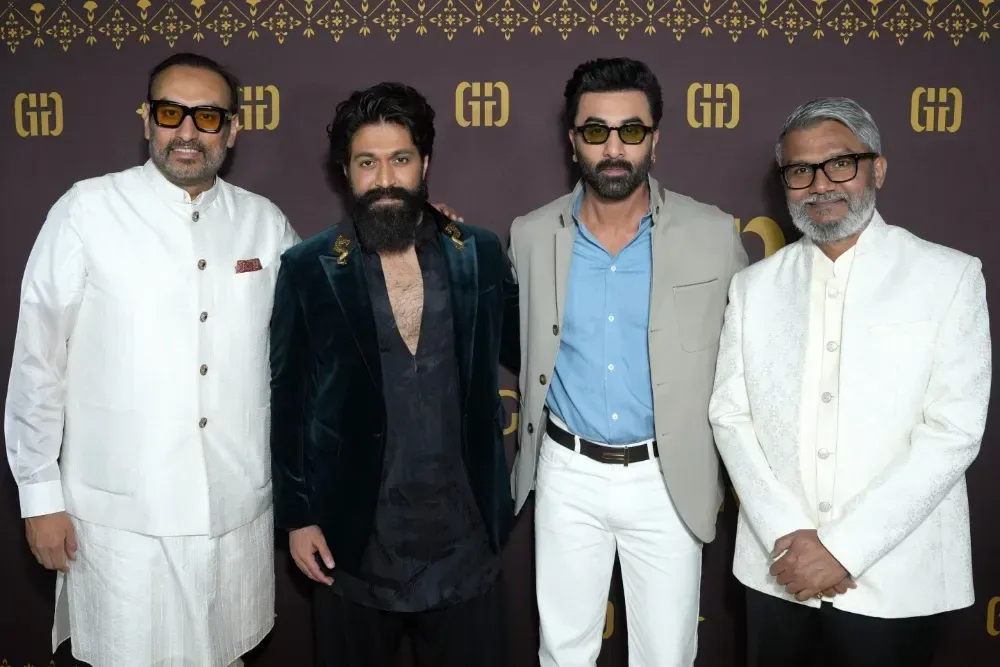
Producer Namit Malhotra’s stated goal is ambitious but clear: make a version with global-scale filmmaking resources while remaining faithful to what makes the Ramayana enduringly meaningful in India. That tension—between immense spectacle and recognizable spiritual and emotional weight—is the project’s defining design brief.
The production is led by Malhotra’s Prime Focus Studios alongside Yash’s Monster Mind Creations. DNEG and sister company ReDefine are handling the visual effects. Malhotra is also the founder and CEO of DNEG, a company with eight Oscar wins, most recently for Dune: Part Two. That pedigree explains the technical muscle behind the undertaking, but it does not by itself solve the more difficult storytelling question: how do you make a familiar narrative feel present rather than merely monumental?
A known story still needs to feel immediate
Tiwari’s approach starts with a useful distinction. Knowing the events of a story is not identical to experiencing their impact through its characters. The director has emphasized relationships, difficult choices and the internal consequences of major moments, rather than treating the Ramayana solely as a sequence of famous narrative checkpoints.
That is particularly relevant here. For an audience already familiar with Rama, Sita and Ravana, suspense does not have to mean uncertainty over what happens next. It can come from how a character responds, how a relationship changes under pressure, or how much emotional weight a scene allows itself to carry before the narrative moves on.
In practical filmmaking terms, this means the pressure on performance and scene construction is enormous. A giant visual-effects set piece may establish scale, but it cannot create attachment on its own. Tiwari has described his continuing test for a scene in straightforward human terms: does it feel honest, and does the audience care about the people involved? That standard is perhaps less flashy than an army-sized digital landscape, but it is the part that decides whether the large moments land.
The director’s earlier films include Dangal and Chhichhore, works he cites when discussing audiences’ response to the truth of relationships. The new film is a substantially different proposition in scale and cultural importance, yet the stated creative principle remains consistent. Small gestures, exchanges and choices are meant to supply the emotional foundation for the epic material.
Related coverage includes ‘Ramayana Part 1’ Opens With Rahman-Zimmer Score and a Two-Film Vision.
That focus also helps explain why the film is structured as two parts. Malhotra has said the first installment needs to leave viewers invested enough in its characters that they want to return. The second film cannot rely purely on unfinished business as a menu-screen prompt; the intention is for audiences to feel they are re-entering a world with people, themes and music they already know.
What a score does, and why this collaboration matters
Music is central to that plan. A.R. Rahman and Hans Zimmer have collaborated on an Indian film for the first time, creating the score for Ramayana. T-Series is the music label, while Amazon Music is the streaming partner.
It is useful to separate two terms that often get bundled together. A score is the music composed to support scenes and dramatic action within a film. A soundtrack can refer more broadly to the released music associated with a film, including songs designed to live independently outside the theater. In this case, both functions matter. The score needs to serve characters and scenes; the songs are also being released as their own public-facing works.
Rahman and Zimmer recorded with an orchestra at AIR Studios in London, bringing Indian and Western musicians together for the production. Malhotra has framed the collaboration not as a simple exercise in making the music sound internationally legible, but as an attempt to create a new sound that keeps an emotional familiarity while speaking in a contemporary musical language.
That wording is important. “Global” can become shorthand for sanding down specificity until a work is merely expensive and broadly recognizable. The stated intention here is different: honor the epic’s Indian roots while making music that can connect across audiences and markets. Whether the finished score achieves that balance will be for listeners to decide, but the production’s priorities are unusually explicit.
Tiwari’s description of the composing process is equally grounded in storytelling. He says music placement is guided by what a character feels and what the audience should carry from a scene. Some situations call for a powerful musical statement. Others, he notes, are better served by restraint or even silence. That is a valuable reminder that more volume is not automatically more feeling—an insight every game menu that begins blasting an orchestral loop at maximum confidence could probably use.
The desired result is music that draws an audience deeper into a moment without pulling focus to the mechanics of the composition. In other words, the score should be felt as part of the experience rather than noticed as a giant arrow pointing toward the intended emotion.
“Jai Jai Ram” begins a staggered music rollout
The album campaign began with “Jai Jai Ram,” released September 14 to coincide with Ganesh Chaturthi. Rather than placing all tracks into the world at once, the team has given individual songs separate release windows. That approach makes each song a distinct entry point to the film, while also reserving aspects of its context for the theatrical experience.
Tiwari has said that this balance matters to him. A song may be someone’s first encounter with Ramayana, so it should truthfully convey the project’s emotion and spirit. At the same time, the film should provide additional meaning when audiences see that music in its dramatic setting. The song is not meant to replace the scene; it is a bridge toward it.
Malhotra is also looking beyond the first film’s closing credits. He sees recurring songs and musical themes as a way to preserve an emotional connection during the interval before part two. This is one of the score’s most practical narrative jobs. A melody can function as a memory trigger: a few notes may recall a character, relationship or earlier turning point without needing an exposition refresher.
That is not a guarantee of cultural longevity, of course. The producers’ aspiration is for the music to become part of celebrations, prayer or everyday listening, but audiences—not campaign plans—determine whether a song earns that place. The more measurable objective is repeat engagement over time, rather than a single burst of attention around launch.
Streaming is being treated as part of the release, not a shelf after it
Amazon Music’s role goes beyond hosting the album. The service says Indian-language music represents roughly 70% of its customers’ listening in India, and it has spent more than two years creating standalone events and platform activity around major film albums. For Ramayana, it held an October 21 celebration at Chennai Trade Centre, where Rahman performed songs from the film with Kapoor, Pallavi and Yash appearing onstage.
The service is also releasing a short-form Instagram and YouTube series, including Decoding Ramayana with A.R. Rahman, and has built a dedicated album destination with four playlists named for characters from the epic. Because Amazon Music operates in more than 50 countries, the songs go live internationally at the same time as in India.
This is a broader release strategy than simply uploading tracks and watching a dashboard blink. The platform is positioning songs as a film’s early invitation: a piece of music can make an emotional connection before someone buys a ticket. Listening data can show which tracks are reaching which audiences, though the decisions over what releases and when remain with the filmmakers and T-Series.
Amazon Music has said its meaningful measure is sustained engagement: whether listeners return after the initial launch, and whether an album guides them toward music they have not previously played. For this campaign, that makes the time between the two films especially significant. The hope is that the album keeps the world of Ramayana active in listeners’ routines rather than functioning as a disposable promotional artifact.
That emphasis on direct, ongoing listener connection sits alongside a wider shift in music promotion. As explored in a recent look at artists building direct relationships with fans, release plans increasingly treat music as an active relationship rather than a one-week product drop. Ramayana applies that idea on a very different scale, using songs, live performance, short-form video and playlists to maintain the relationship around a major film event.
The real test is bigger than scale
All of these pieces—international visual-effects capacity, a two-film structure, a high-profile composer pairing, individual song launches and streaming-platform programming—give Ramayana Part 1 an imposing framework. But the makers themselves keep returning to a simpler standard: connection.
Malhotra’s production ambition is rooted in a belief that the epic deserves the fullest available filmmaking resources. Tiwari’s counterweight is that scale has value only when audiences remain connected to the people inside it. Rahman and Zimmer’s work is intended to carry emotion both within scenes and across the gap to the next film. The release campaign, meanwhile, is built to let those songs travel well beyond the cinema.
It is a massive undertaking, but not one that claims spectacle alone is the win condition. For a story already held close by millions, the task is less about unveiling a new map than making a familiar journey feel alive when the player picks up the controller again.