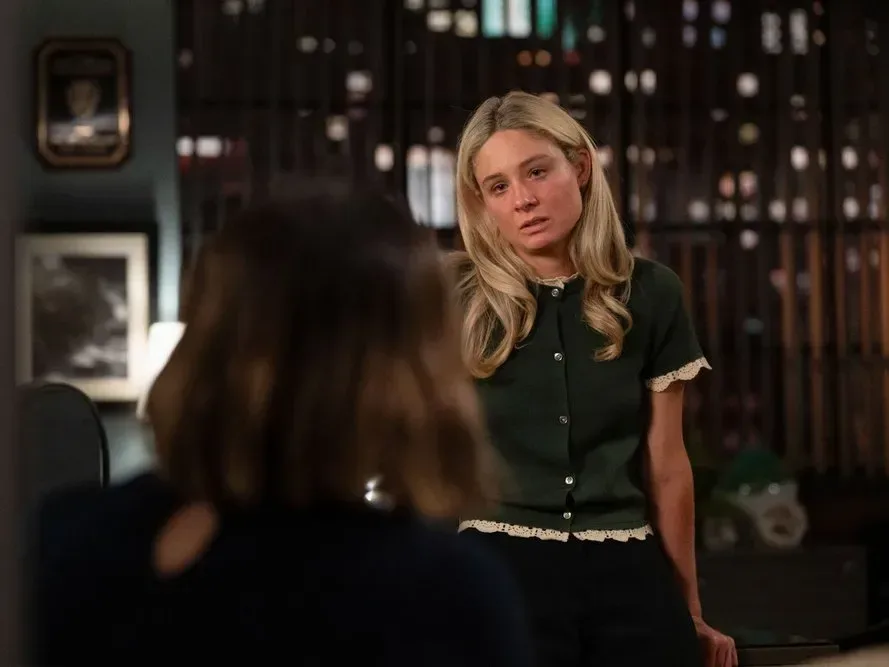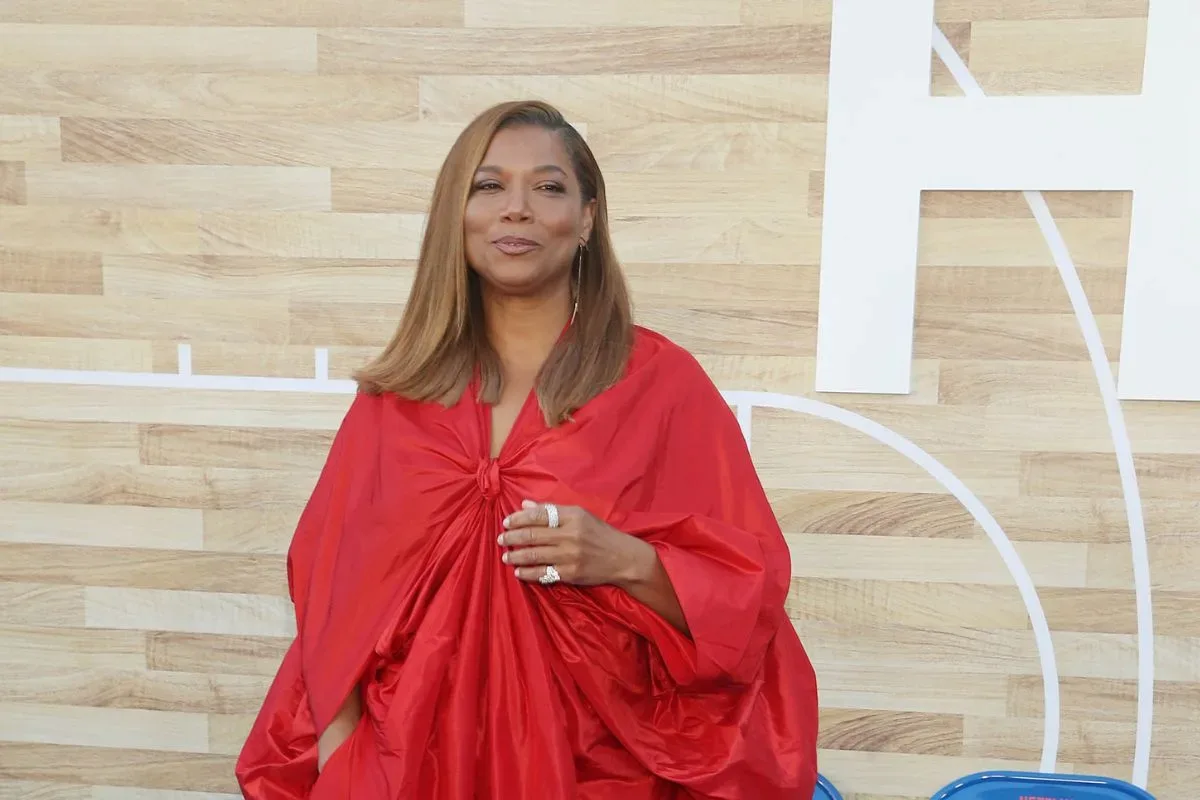
Queen Latifah’s first season in a red coaching chair is arriving at one of the format’s most unforgiving moments: the battles. A preview for the round puts two members of Team Queen, Alt Bloom and Morgan Lett, on the same song, Lauryn Hill’s “Ex-Factor,” with only one set to advance on Latifah’s team.
The performance does not appear to make the decision any easier. Latifah tells the pair that both are winners to her and says they are both among her top singers, reacting to the choice in front of her with visible disbelief. The other coaches offer feedback, but they do not land on a single consensus: Riley Green favors Lett’s energy, while Kelly Clarkson points to Bloom’s range. Adam Levine also compliments Bloom’s range, ultimately leaving the call in Latifah’s hands.
That split is what makes a battle-round decision more complicated than a simple search for the biggest voice. Range, in vocal terms, is the span of notes a singer can perform; it can be a meaningful measure of technical capability, especially on a demanding song. But it is not the only measure of a persuasive performance. Energy can describe the force, urgency and engagement an artist brings to the stage. Those are different strengths, and “Ex-Factor” creates room for both: a contestant can make an impact through control and vocal expansion, or through direct emotional intensity.
For viewers, the matchup is also a reminder of what the battle format asks a coach to do. The round pairs two artists from the same team in one arrangement. It is a comparison, but it should not necessarily reward imitation or the most overtly showy moment. A coach has to judge how each voice fits the song, how each singer uses their allotted space, and which artist seems best positioned to build from the performance in later rounds. Latifah’s reaction suggests Bloom and Lett gave her enough to seriously consider more than one path forward.
A Lauryn Hill song raises the stakes
“Ex-Factor” is not a neutral song choice for a televised singing contest. Its force comes from emotional specificity, so a performance has to convey feeling without losing the song’s shape. In a duet battle, that challenge becomes shared: two singers must establish individual identities while making the arrangement work as one performance.
Latifah praised Bloom and Lett’s work together as well as the arrangement. That detail matters. An arrangement is the way a song is organized and interpreted for a particular performance: who takes which sections, how voices overlap or alternate, and where the singers change dynamics. In a battle, it can either clarify the artists’ differences or reduce them to a series of isolated showcases. The positive response indicates that this version gave both performers room to make their case.
The coaches’ divided reaction also offers a useful way to view what audiences will be hearing. Clarkson and Levine highlighting Bloom’s range does not mean Lett lacked other strengths; Green’s preference for Lett’s energy points to a contrasting quality that may be just as central to the performance. Rather than treating the feedback as a scoreboard, it is more accurate to see it as evidence that the artists made different impressions on experienced listeners.
That is the central pressure point for Latifah. She is not simply deciding whose contribution sounded strongest in one exchange. She is selecting the singer who will remain on Team Queen. The decision is personal to the structure of the show, but it can shape an artist’s opportunity to keep performing in a season that is built to extend into live competition.
Patti LaBelle brings a mentor’s perspective to Team Queen
Latifah is not approaching the battle rounds alone. Patti LaBelle is advising her singers during the battles, creating a meaningful connection for the first-time coach. LaBelle previously served as a mentor to Latifah, and executive producer Audrey Morrissey said it was especially important to Latifah that her own team could learn from someone who helped guide her.
Mentoring in this context is distinct from coaching. The coach has responsibility for a team and makes the advancement decision. An adviser can bring another artistic perspective to preparation, interpretation and confidence before the singers take the stage. The arrangement gives Team Queen access to both Latifah’s current leadership and LaBelle’s guidance, while keeping the final choice where the format places it: with Latifah.
There is a clear through-line in that setup. Latifah has said that her focus is to see the contestants and give them an opportunity, rather than turn the process into a showcase for her own experience. Bringing in a mentor who influenced her approach makes that principle feel more concrete. The contestants are being encouraged by a coach who values their individual identities, and advised by an artist Latifah herself trusted earlier in her career.
It also frames the emotional weight of the Bloom-Lett battle in a more human way. A difficult cut does not erase the value of a strong performance or the work behind it. Latifah’s comments to both singers make clear that she sees merit in each of them. The format still requires one person to move forward, but the response recognizes that a head-to-head result cannot fully capture two artists’ potential.
Latifah’s preparation for the coaching role
Before the season began, Latifah sought advice from former coach John Legend about the mechanics of the competition and what the role would demand. She said he reassured her that she was taking on the show for the right reasons. That consultation is noteworthy because the job combines several pressures at once: listening critically, offering constructive direction, managing a team and making elimination decisions in public.
The battle round is where those demands become especially visible. A blind-audition-style decision is about whether a voice makes a compelling first impression. Battles add development and comparison. The coach must account for the singers’ preparation, their compatibility with the material, their potential after the round and the team’s evolving needs. There is no indication that Latifah has reduced the call to one trait. Her response, and the other coaches’ differing feedback, instead point to a choice between artists who succeeded in different ways.
For a new coach, that is an instructive first major dilemma. It tests whether the values she expressed before the season—making space for contestants to show who they are—can guide a decision when there is no obvious weak link. It also reinforces why veteran advice can matter without replacing a coach’s own judgment. Legend could explain the contours of the process; LaBelle can advise the singers; but Latifah has to identify the artist she believes should continue under her guidance.
What advancement means in Season 30
The result has consequences beyond one battle. The early rounds decide which contestants have a route toward a longer run of live shows. Season 30 is set to bring back six weeks of live competition, with viewers voting in real time and results announced the same night. In practical terms, that creates a sharp change in the competition: a coach’s early selections determine who reaches the stage where audience response becomes decisive.
Real-time voting means the live phase operates on a faster feedback loop. Viewers do not wait for a later results episode; the result is delivered that night. For contestants, that makes the ability to communicate quickly and distinctively especially valuable. It is not proof that a singer with a certain technical strength will fare better, but it does explain why coaches may look beyond a single vocal metric while forming a team. Stage presence, connection to material and a recognizable point of view can all affect how an artist registers in a live setting.
Bloom and Lett’s “Ex-Factor” performance therefore functions as more than a self-contained duet. It is an early test of the qualities Latifah wants her remaining artists to carry into the season. Bloom has drawn praise for range. Lett has drawn support for energy. Both have earned enough from their coach that the decision has become emotional, while the arrangement itself has been singled out positively.
The battle-round premiere is scheduled for Monday at 8 p.m. Eastern on NBC, with the episode available on Peacock the following day. For additional coverage of the matchup, readers can also see this report on the Bloom and Lett battle. Music remains at the center of the show’s biggest choices, much as it does in Gucci Mane’s reflective recent run, though the competition’s immediate question is far more direct: which of two praised Team Queen singers gets the next opportunity?