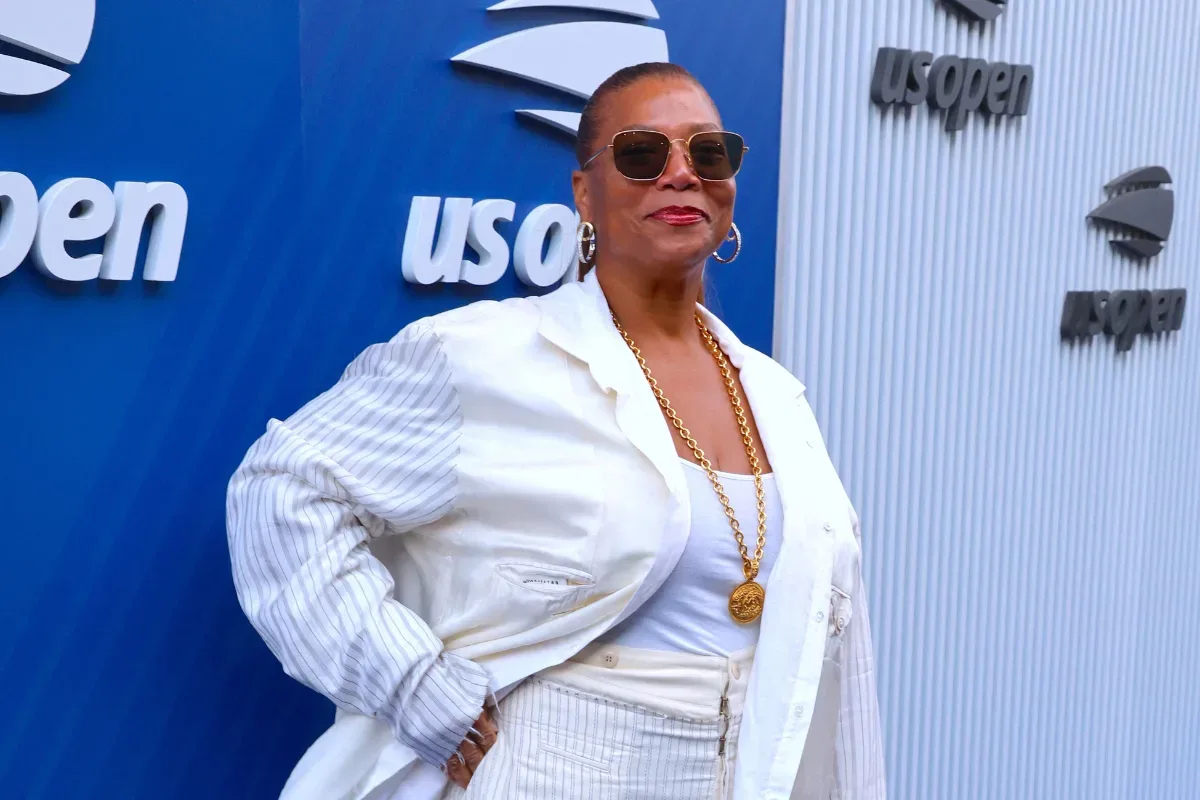
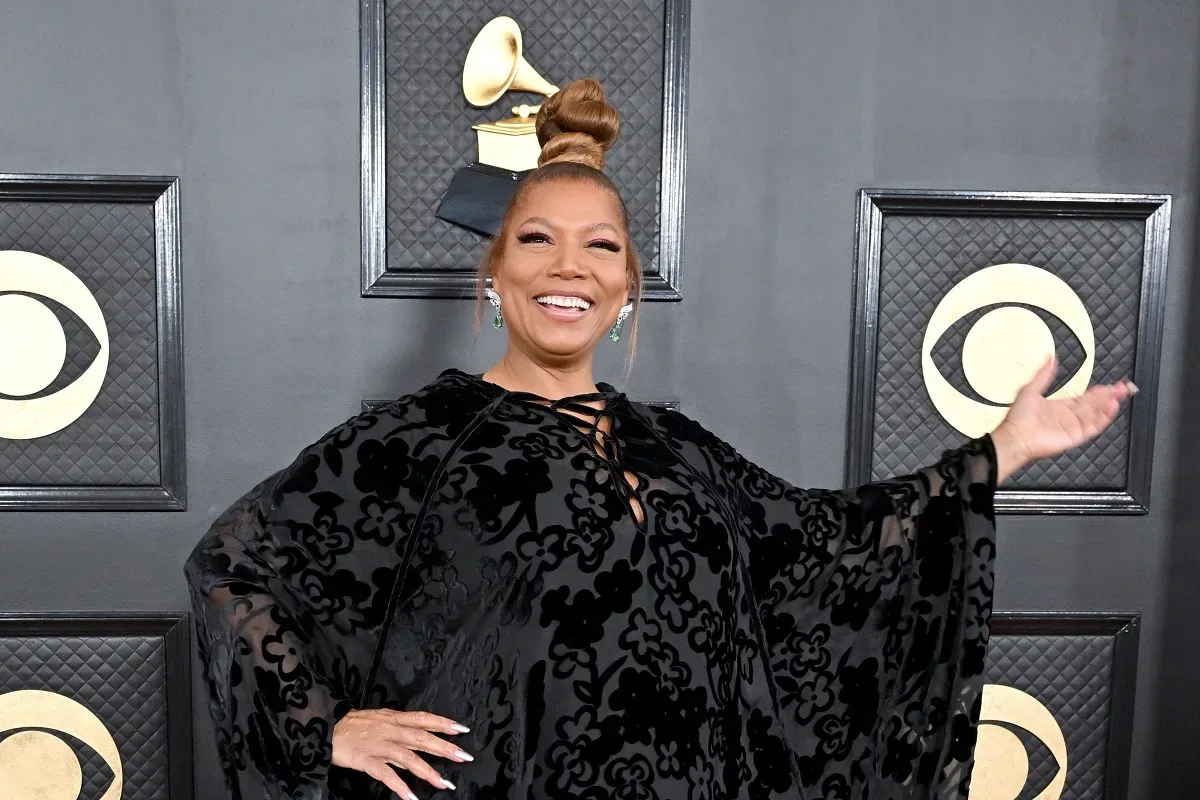
Queen Latifah’s return to the Grammy ballot comes by way of an invitation she did not hesitate to accept: Dolly Parton asked her to join a new recording of “Light of a Clear Blue Morning,” and the collaboration has now been nominated for Best Country Duo/Group Performance.
The nomination is Latifah’s first since 2008. It places the rapper, singer and actor in a country category alongside Parton, Lainey Wilson, Miley Cyrus and Reba McEntire—an unusually broad meeting of voices and musical histories, united here around a charitable release rather than a conventional album campaign.
Latifah said the recognition surprised her. She had been moving carefully with her own music, but Parton’s request was straightforward enough to override any hesitation. “You know, when Dolly calls, you come,” Latifah said. “I love her, you know, so I’m happy to be a part of it and glad it’s with all the girls.”
A collaborative nomination with a charitable purpose
“Light of a Clear Blue Morning” arrived January 16, ahead of Parton’s 80th birthday. Its stated purpose extends beyond the awards race: net proceeds from both the recording and its music video have been designated for pediatric cancer research at Monroe Carell Jr. Children’s Hospital at Vanderbilt in Nashville.
That structure matters. A benefit record can serve two functions at once: raise money through its release and draw broader attention through the artists involved. Here, a Grammy nomination gives the project an additional platform while retaining the stated fundraising focus. The nomination recognizes the performance in the country duo/group category; it is not itself a measure of the amount raised or a substitute for the medical-research mission behind the release.
Parton produced the new version with Kent Wells. Chris Lord-Alge mixed the track, David Foster played piano, and the Christ Church Choir provided backing vocals. Those credits outline a layered production built around a shared vocal performance, piano accompaniment and choral support.
Latifah recalled hearing Parton sing without accompaniment and bringing in a longtime background singer to hear those vocals. The memory helps explain why the collaboration appears to have resonated with her beyond its awards outcome: it was an opportunity to work directly with a performer she clearly admires, in a recording designed to benefit a specific cause.
Why the country-category placement is notable
Best Country Duo/Group Performance is an awards category centered on collaborative performances in country music. Latifah’s presence is notable because much of her best-known recording career has been associated with hip-hop, though her body of work has never stayed inside one lane.
Her 1993 album Black Reign included “U.N.I.T.Y.”, which won Best Rap Solo Performance in 1995. The song confronted harassment, domestic violence and misogyny, and remains central to the public understanding of her musical legacy. Latifah later explored another part of her voice on 2004’s The Dana Owens Album, a collection rooted in soul and jazz standards, before returning to rap with 2009’s Persona.
That history does not turn this nomination into a solo pivot to country. The honor belongs to a group recording assembled by Parton. But it does underline the range that has long been present in Latifah’s catalog: rap, singing, standards and now a credited place on a country-category charity single. In practical terms, the nomination recognizes a particular collaborative performance, not a reclassification of her career.
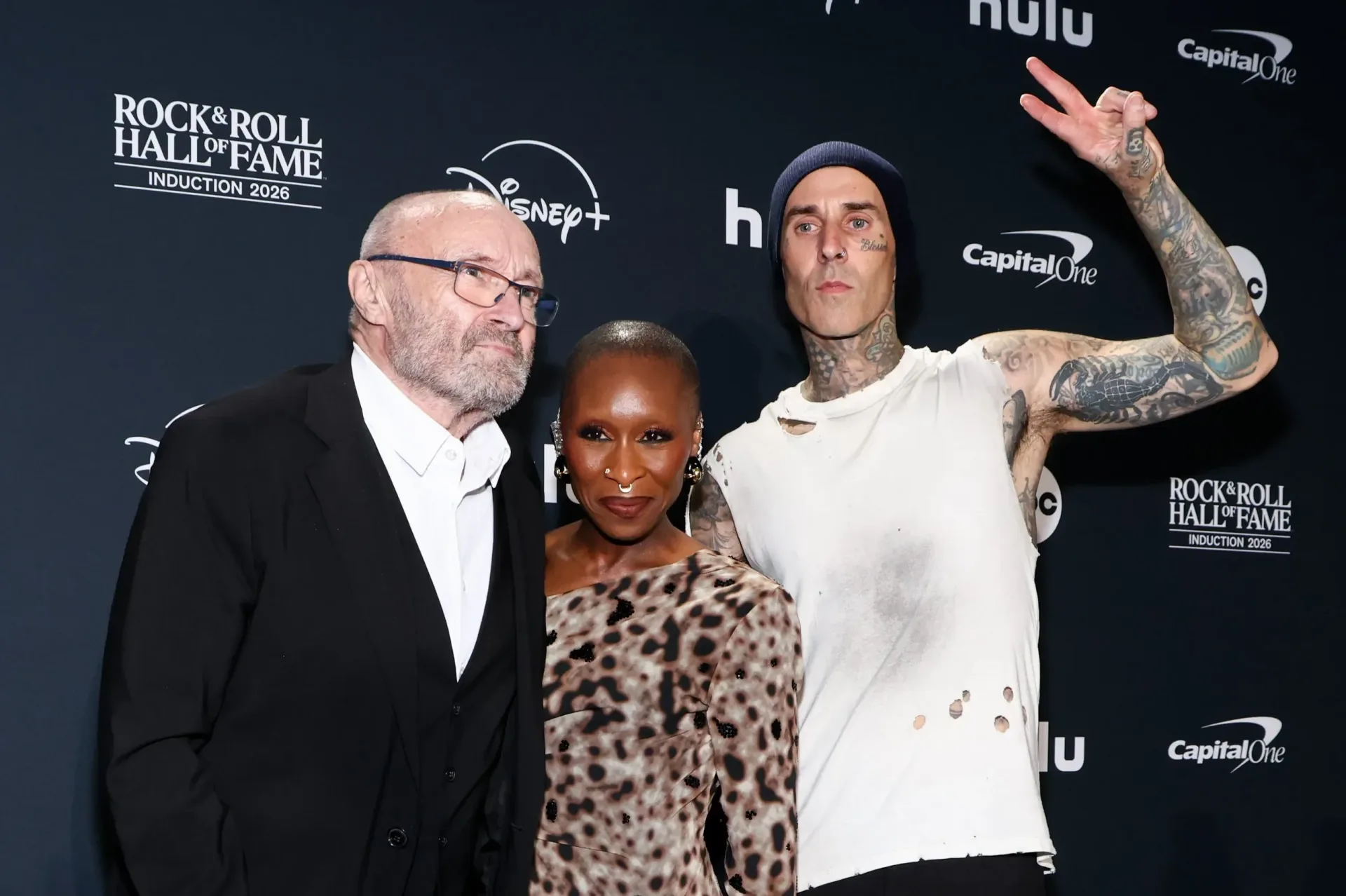
It also makes for a fitting moment in a busy period of recognition. Latifah recently entered the Rock & Roll Hall of Fame, where Megan Thee Stallion delivered her induction. Latifah then performed with fellow honoree MC Lyte, including “U.N.I.T.Y.” and “Ruffneck.” The Hall of Fame appearance connected her present-day honors directly to the work that established her as a formidable rap artist.
Her Grammy return, by contrast, highlights her adaptability and a willingness to participate in a cross-genre collective when the project and the person asking made sense. That mixture of legacy material, new collaboration and public recognition is a stronger description of the moment than any claim that Latifah has abandoned one musical identity for another.
The competition in Best Country Duo/Group Performance
Latifah and her collaborators face a category full of prominent partnerships. Parton also appears through a collaboration with Zac Brown Band. The other nominated recordings include Mumford & Sons with Chris Stapleton, Kacey Musgraves with Miranda Lambert, and Lainey Wilson with John Mayer.
The field reinforces how collaboration can stretch the boundaries of a genre category without erasing each artist’s individual background. Established country artists are paired with guests from adjacent musical worlds, while Parton is represented by more than one nominated collaboration. Against that backdrop, Latifah’s appearance on a Parton-led charity recording is distinctive, but it is also part of a category built to recognize shared performances.
For listeners, the key details are simple: this is a new rendition, it features a large group of artists, and its net proceeds from the record and video are earmarked for pediatric cancer research. The Grammy nomination may introduce the release to people who know Latifah primarily through Black Reign, her screen work or her Hall of Fame recognition, while country listeners may encounter her in a setting framed around ensemble singing rather than a rap performance.
A long gap, without a simplistic comeback narrative
The Recording Academy identifies this as Latifah’s first Grammy nomination since 2008, a long interval that invites “comeback” language. Yet her work across that time has not been defined in the supplied record as an absence from creative life. She has moved across different musical forms, and her recent Rock & Roll Hall of Fame induction further confirms the continuing weight of her earlier work.
The more precise takeaway is that awards recognition has returned through a specific collaboration. Parton’s invitation, Latifah’s immediate acceptance and the project’s pediatric-cancer-research beneficiary are the core facts. The category placement adds an unexpected genre angle; the length of time since her last Grammy nomination supplies the historical dimension.
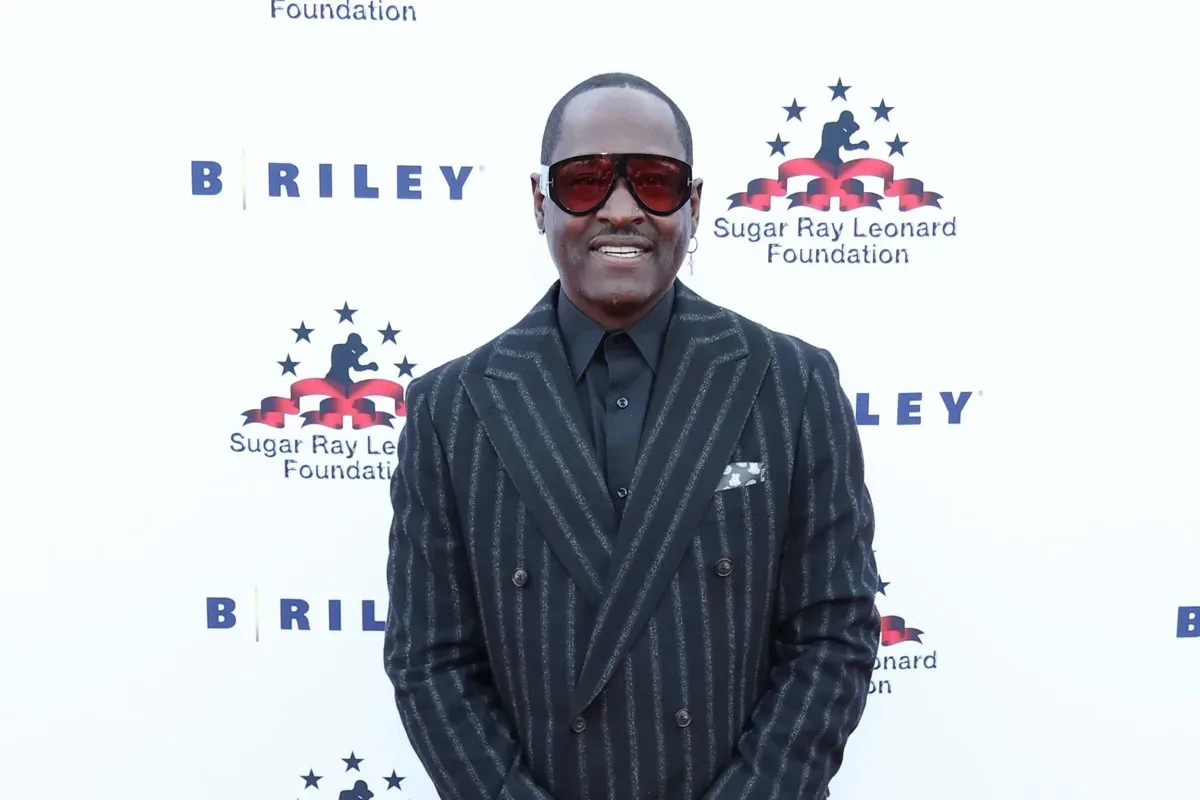
For a useful parallel on artists whose public careers extend beyond a single musical moment, see Johnny Gill’s recent reflections on life and career priorities.
When and where the Grammys air
The 2027 Grammy Awards are scheduled for February 7 at Crypto.com Arena in Los Angeles. The ceremony is set to air on ABC, Disney+ and Hulu.
Whether “Light of a Clear Blue Morning” wins or not, the nomination has already created a notable intersection in Latifah’s story: her first Grammy recognition in nearly two decades arrives through a Parton-led, country-category recording whose proceeds are intended to support pediatric cancer research. It is a recognition of the ensemble’s performance, and an unusually meaningful reason for artists from different traditions to share a track.