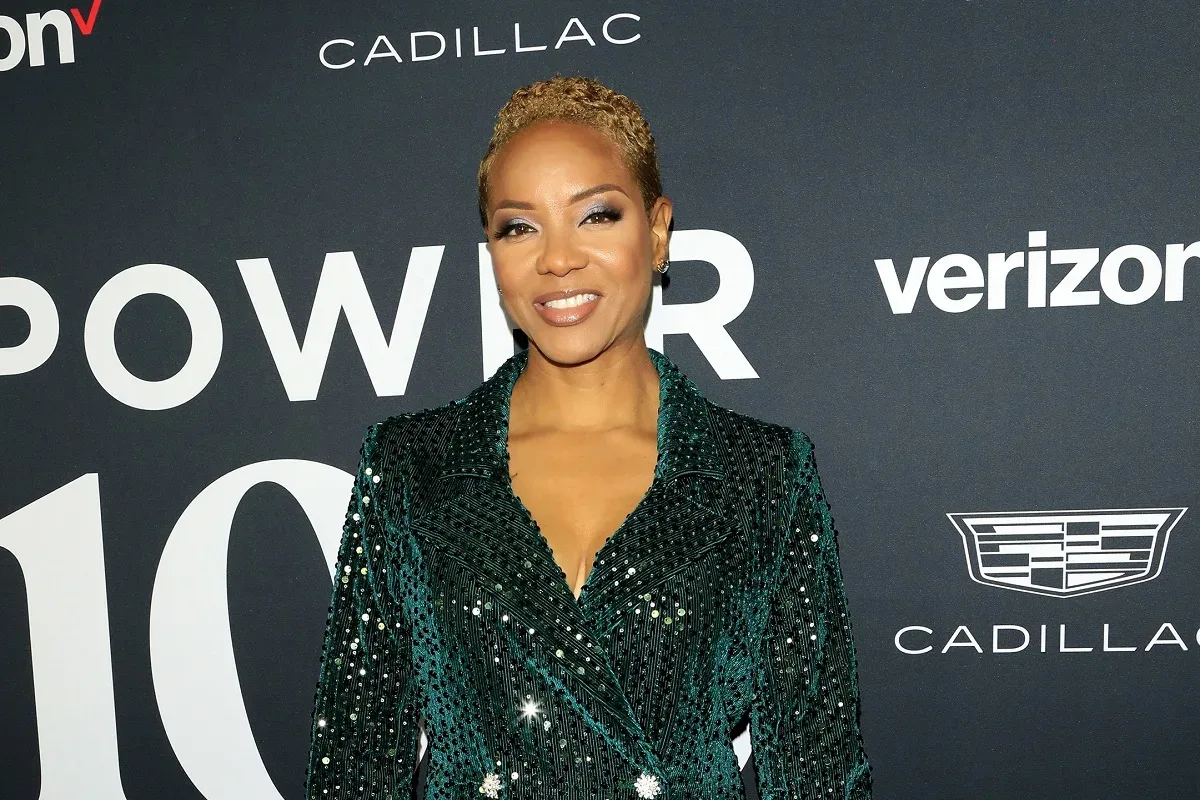
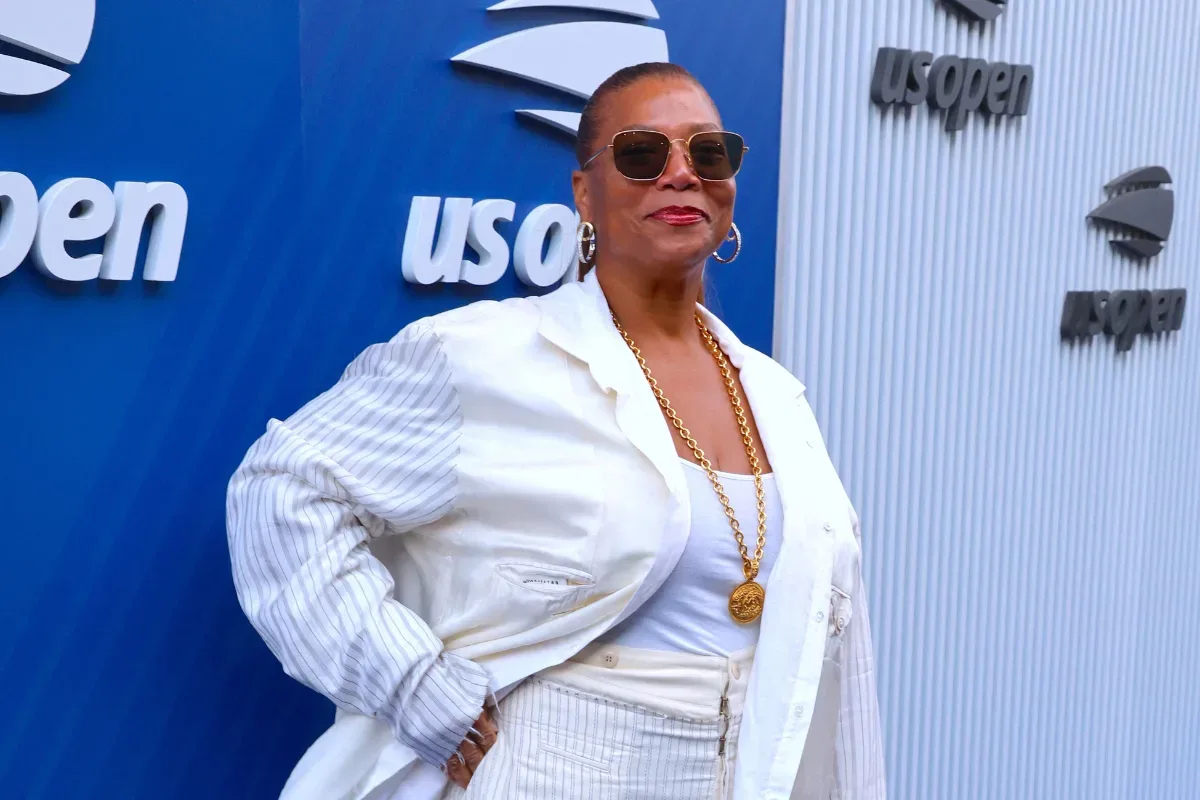
Queen Latifah is approaching her Rock & Roll Hall of Fame induction with a message that is bigger than a trophy, a speech or a personal career milestone. She is pleased to be included, thrilled to share the occasion with artists she admires and clear-eyed about why the honor once seemed unimaginable.
For Latifah, the issue was never whether Black musicians and hip-hop artists had shaped popular music deeply enough to belong in a Rock & Roll Hall of Fame. It was that the institution did not always appear to recognize that reality. Her comments ahead of Saturday’s ceremony frame this moment as evidence of progress, but not a reason to forget the years when the Hall’s definition of its own subject seemed too narrow.
“We made rock and roll, but we couldn’t get in,” Latifah said. “So, if there are no Black people in the Rock & Roll Hall of Fame, what kind of Rock & Roll Hall of Fame are you?”
That question is deliberately direct. Latifah is not treating induction as a final verdict on artistic worth, nor is she presenting institutional recognition as the thing that made her career meaningful. Instead, she is identifying a gap between the vast influence of Black music and the visibility granted to Black artists within a major cultural institution.
Her position also makes room for change. Latifah said it has been “amazing” to watch the Hall grow and evolve. The important distinction is that appreciation for the present does not erase criticism of the past. Both ideas can coexist: the honor matters, and it took too long for it to feel plausible.
A class that connects generations of Black music
Latifah will enter alongside Sade, Wu-Tang Clan and MC Lyte. That grouping makes the occasion feel less like a lone career tribute and more like a broad acknowledgement of different eras and approaches within Black music. Sade’s body of work, Wu-Tang Clan’s collective identity and MC Lyte’s foundational stature in hip-hop each represent distinct artistic paths. Latifah’s own presence adds another: a rapper whose records asserted women’s authority and whose later work expanded into television and film.
The shared class carries particular weight because Latifah has openly named MC Lyte as one of the artists who made her own future easier to imagine. Seeing MC Lyte rhyme when she was younger gave Latifah an example of a woman commanding space in hip-hop. She also cited Salt-N-Pepa as a formative model, not simply for their music but for practical generosity.
“She was the blueprint for me. Salt-N-Pepa were the blueprint for me,” Latifah said of MC Lyte and the group. “They took us little baby acts on tour and taught us how to do things. I really appreciate them.”
Calling someone a “blueprint” means more than naming an influence. It suggests an example that showed the route could be traveled: women could write, perform, lead, tour and build careers in a field where opportunity had to be fought for. Latifah’s gratitude highlights a form of mentorship that does not require a formal program or title. Visibility, access and advice can all change what an emerging artist believes is possible.
That makes her induction alongside MC Lyte especially resonant. The recognition is not only adjacent careers receiving the same honor. It places an artist and one of the figures who helped shape her sense of possibility within the same celebration.
From “All Hail the Queen” to a lasting voice
Before Latifah’s screen career widened her audience, her musical identity was already firmly established. Her 1989 album All Hail the Queen introduced a rapper insisting that women belonged at the center of the conversation rather than at its edges. “Ladies First” carried that insistence into a defining statement, while the later “U.N.I.T.Y.” reinforced it with a similarly enduring commitment to women’s dignity and respect.
The significance of that work is not reducible to a single slogan. Latifah’s approach made space for strength, criticism, pride and community-minded perspective in a genre where women often had to contend with limited expectations. Her cited influences help explain why that stance matters: an earlier generation created room, and Latifah used that room to speak with her own authority.
There is a useful practical lesson in the way she describes the process. Cultural change is often discussed as if it arrives only through grand institutions deciding to revise their standards. Latifah’s story points to another mechanism: artists bringing newer acts on tour, showing them how the business works and making ambition feel tangible. Recognition from a hall of fame may document a legacy. Peer support helps create one.
An honor that did not require a campaign
Latifah also described a surprising personal element of the news: she did not have to chase it. After learning of the induction, she called her longtime business partner, Shakim Compere. They shared the rare pleasure of receiving an acknowledgment that had not demanded the kind of push and persistence she associates with many opportunities in her career.
That detail matters because it keeps the induction from becoming a simple story about an award. Latifah is accustomed to pursuing openings and making things happen. This time, the recognition came to her. The contrast does not diminish the work behind the achievement; it emphasizes how unusual it felt to be honored without having to make a case for herself first.
It also helps explain why the moment can carry gratitude and skepticism at once. The Hall’s recognition is welcome, but Latifah’s earlier experience taught her not to assume institutions would automatically see the breadth of Black artistry or women’s contributions. An induction can therefore feel validating without being treated as proof that every structural problem has been solved.
Her Newark work links recognition to lived experience
Latifah’s reflections on community extend beyond music. Her housing work in Newark has been shaped by the experience of her mother, Rita, who supported children on a teacher’s income. That family history informed what Latifah wanted apartments connected to her efforts to offer.
The point is not that a music honor and housing work are the same type of achievement. They are not. But both are tied to a consistent concern with who gets to feel included, secure and seen. In her musical career, Latifah argued for women’s centrality. In the housing work described here, personal knowledge of family financial pressures informs a concern with what a home should provide.
BET is set to premiere You Can Go Home Again, a documentary about that housing work, on November 27. Its arrival shortly after the induction gives viewers another lens on a public figure often discussed through entertainment milestones. The documentary’s subject is not an add-on to her legacy; it is an expression of priorities rooted in Newark and in her family’s experience.
There is also a wider pop-culture pattern worth noting. Major honors frequently invite audiences to revisit an artist’s past, but they can also direct attention to what that artist is doing now and whom they credit for getting there. That spirit of recognition across creative communities is visible elsewhere in entertainment awards conversations, including Teyana Taylor’s comments about supporting Amy Madigan at the Oscars.
What Latifah’s criticism asks listeners to consider
Latifah’s comments do not require fans to choose between celebrating the induction and examining the institution. They ask for both. The ceremony can honor her work, her influence and the artists around her, while the conversation around it can still confront the consequences of exclusion.
Her central point is simple: if an institution presents itself as a home for the history of rock and roll, its membership should reflect the people who made that history. In Latifah’s telling, Black artists were never external to the story. The failure was in the framing that made their place seem uncertain.
This year’s class does not rewrite every earlier omission. It does, however, place Latifah, MC Lyte, Wu-Tang Clan and Sade in a shared moment of recognition. For Latifah, that moment is personal because it arrives after a career built on conviction and work. It is also communal because it acknowledges the examples she followed, the peers she celebrates and the larger musical history she says was too often left outside the frame.