
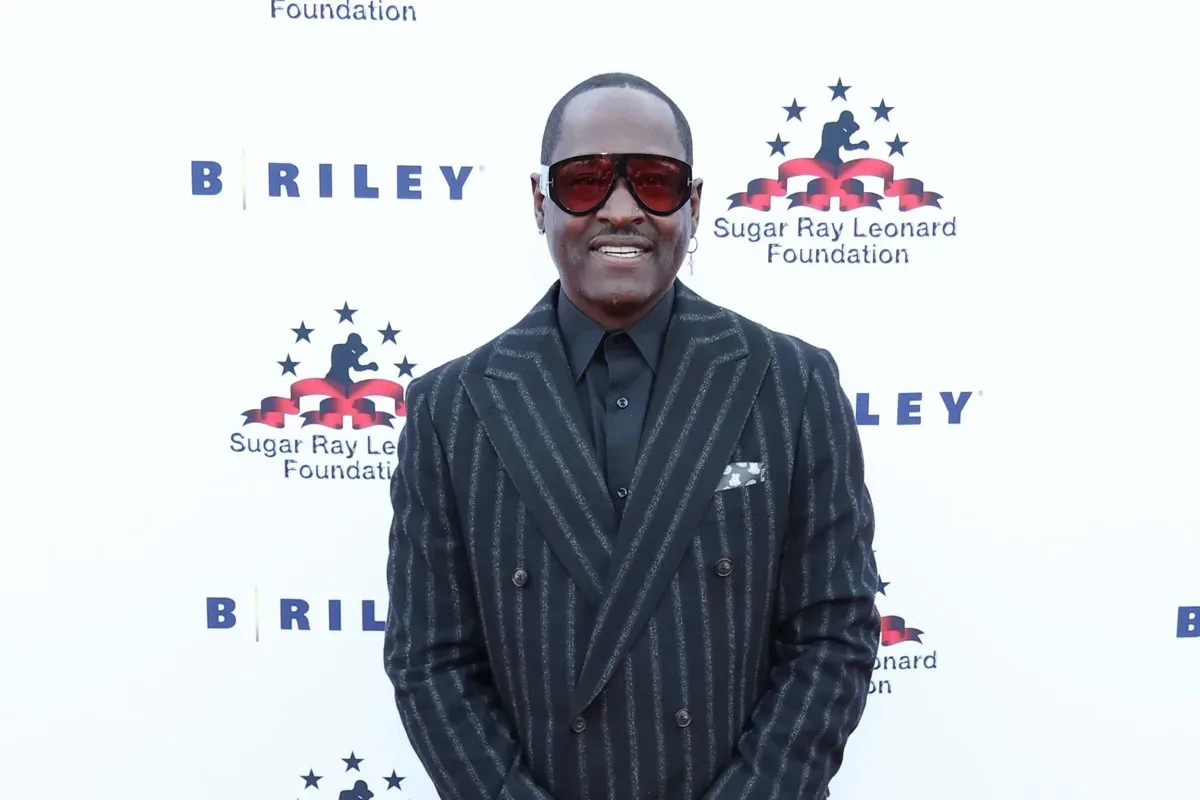
Johnny Gill has offered a notably plainspoken answer to a question that public figures are often expected to make complicated: he is content with the life he has built, and marriage is not currently part of the plan.
Speaking in a recent interview, the singer said he still dates and did not rule out marriage forever. But he stressed that he is not searching for it. At 60, Gill’s priority is protecting the calm, autonomy and daily rhythm he values at home. His shorthand for that outlook was memorable: he said he is committed to “Peace” and has no intention of ending that relationship.
It is an outlook shaped neither as a rejection of companionship nor as a sweeping declaration about how everyone else should live. Gill spoke warmly about family, friends, laughter and shared memories. The distinction is more personal: he wants room for connection without giving up the privacy and decompression that make his life work.
A preference for space, not isolation
Gill said his most recent relationship lasted 12 years, an important detail in a conversation that can easily be flattened into a celebrity headline. He is not describing someone who has withdrawn from relationships altogether. Rather, he is explaining why a legal or domestic commitment is not something he is actively chasing.
That difference matters. Companionship means time, affection and experiences shared with other people. Personal space, as Gill describes it, is the ability to decide when the workday is over, when conversation pauses, and how home feels after the demands of travel and performance. Those needs can coexist, but they require a balance that differs from person to person.
For an artist whose work has placed him in front of audiences for decades, the desire to control his offstage environment is understandable as a practical preference. Gill described being able to leave business concerns behind once he gets home. He contrasted that with the added attention and household responsibilities that may follow when a partner is sharing that space, especially after time away on the road.
That is not a claim that partnership itself prevents peace. It is Gill setting out the version of peace that he presently values. The interview leaves room for the possibility of marriage while making his present position clear: it would need to complement a settled life, rather than become a goal pursued for its own sake.
The small ritual behind the larger point
The most revealing part of Gill’s explanation may be how ordinary it is. Each morning, he spends roughly 20 to 30 minutes outdoors with coffee, without television or music, before confronting the day’s responsibilities.
That ritual is modest, but it makes the larger idea tangible. In this context, “peace” is not merely a slogan or a romantic counterpoint to songs built around passion. It is a protected stretch of quiet: no soundtrack, no screen, no performance and no immediate demand for his attention.
There is also a practical lesson in the specificity. Broad statements about balance can be hard to act on; a defined routine is easier to recognize and preserve. Gill knows what his reset looks like, when it happens and what interrupts it. Whether the ritual is a morning coffee, a walk, reading, exercise or simply silence, the underlying point is that recovery time usually has to be deliberately made visible in a schedule.
His comments do not prescribe a relationship model for listeners. They do, however, underline a useful question: what conditions make home feel restorative after a high-pressure day? Gill’s answer involves silence, solitude and the freedom to close the door on work. For someone else, the answer might involve a partner, children, friends or a busy household. The relevant point is the clarity of the boundary, not the particular form it takes.
Romantic records, private boundaries
Gill’s perspective carries a certain contrast because his catalog is so closely tied to romance, seduction and vocal drama. His solo work includes “My, My, My,” “Rub You the Right Way” and “Wrap My Body Tight,” records that foreground charisma and intimacy. His career also includes major group chapters with New Edition and LSG, where individual personalities and shared harmonies have remained central to the music.
But romantic performance and a performer’s personal choices are not the same thing. A song can inhabit a heightened emotion for several minutes; a life has to make room for rest, responsibility, family and changing priorities. Gill’s remarks draw a line between the emotional world of his recordings and the routine he wants when he is not onstage.
That line does not diminish the music. If anything, it reflects the range demanded of a long career. The performer who can sell a love song in a large room also has to manage travel, work concerns and the quieter intervals after the lights are down. Gill’s comments suggest that he sees the latter as worthy of protection, not as empty space between appearances.
Still active within a shared musical legacy
His emphasis on an orderly private life arrives alongside continued visibility as a performer. During New Edition’s Philadelphia tour stop earlier this year, Gill moved between the group’s material and his own repertoire, including a solo performance of “Fairweather Friend.” He also performed LSG’s “My Body” and took “My, My, My” into the crowd rather than confining the moment to the stage.
Those choices illustrate the breadth of a career with several distinct musical identities. New Edition represents the group catalog; LSG adds another ensemble chapter; and Gill’s solo material brings a separate set of audience expectations. Moving among them in one show is more than a greatest-hits exercise. It requires a performer to carry different eras and collaborations without treating any one of them as an afterthought.
The Philadelphia event also brought New Edition together with Toni Braxton and Boyz II Men. Braxton credited Gill with encouraging her to return to performing when she had concerns about resuming the stage amid health struggles. That account puts another dimension on Gill’s public role: not only a singer working his own material, but a peer whose encouragement could matter to another established artist.
Longstanding musical relationships remain a visible thread in his career. Gill has also previously named Charlie Wilson, Frankie Beverly and Keith Sweat as artists he would like to meet in a Verzuz matchup. Verzuz is a performance-comparison format centered on artists’ song catalogs, and Gill’s selections point toward peers whose bodies of work sit naturally beside his own in R&B conversation.
That context makes his present-day comments feel less like a retreat from public life than a decision about its limits. He can perform with colleagues, reach into a crowd during a signature song, celebrate old musical bonds and still reserve a section of the day for a coffee in silence. Both realities are part of the same career.
Why the message lands beyond celebrity gossip
Public discussion around marriage often turns into a binary: either someone is searching for it or rejecting it. Gill offers a third, less dramatic position. He has not declared marriage impossible. He simply says it is not what he is looking for now, because the arrangement he has is working.
There is value in the precision. A person can appreciate romance, date, care deeply about friends and family, and still decide that their current home life does not need to be reorganized. It is also possible for that decision to change later. Gill allows for that uncertainty rather than pretending a present preference is a permanent prophecy.
For fans, the headline may be the line about being married to peace. The more substantial takeaway is the reasoning beneath it: a long relationship in his past, an ongoing openness to dating, a preference for quiet after work, and a daily routine he considers worth defending. It is not a universal formula. It is a clear description of what contentment looks like for him at this stage.
That clarity also fits the wider world of live music, where public visibility and private recovery are often in tension. Recent coverage of touring artists continues to show how quickly performance schedules and major appearances can shift; for another example of the live-event landscape, see this report on a Rolling Loud India lineup change. Gill’s comments are not about a tour announcement or a new release, but they speak to the personal structure that can sit behind a durable performance career.
For now, Gill’s position is straightforward. The music, the friendships, the family time and the performances remain meaningful. So does the ability to return home, put the business day aside and keep a small portion of the morning entirely to himself.