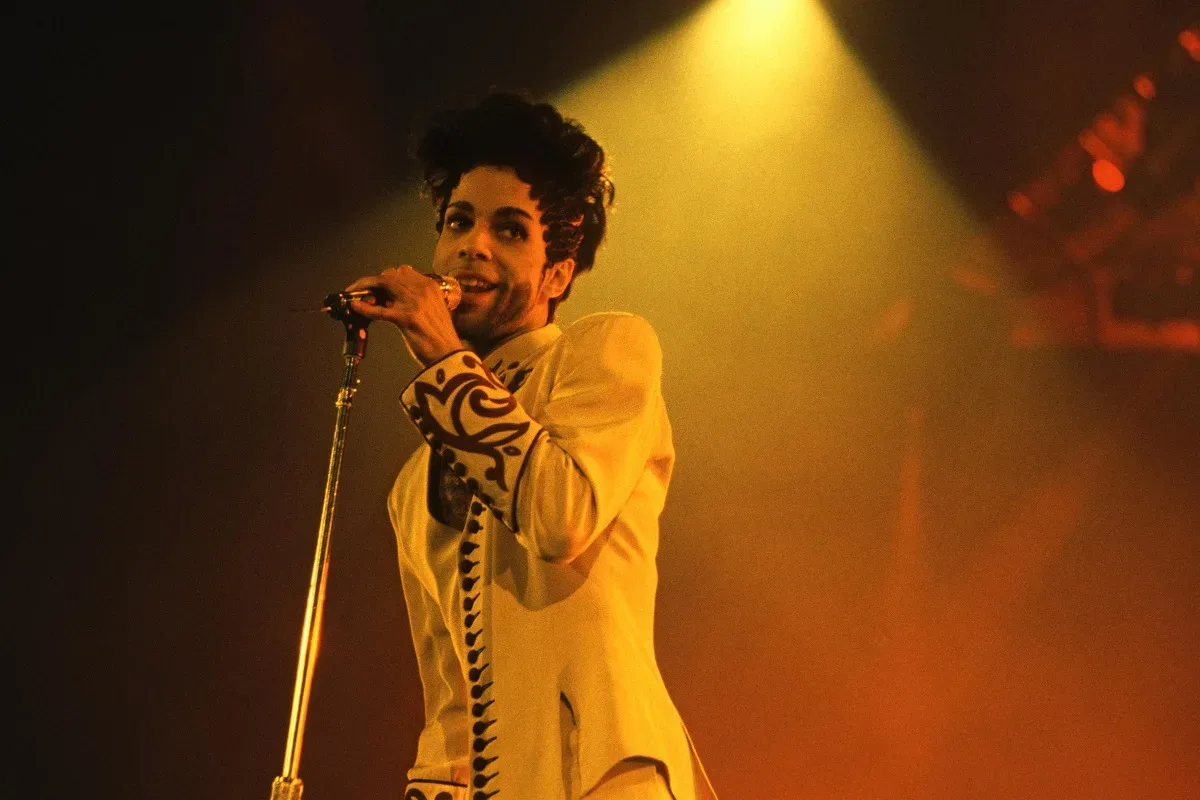
Prince’s estate has issued a four-track Calabama EP through NPG Records that gives listeners a direct way to hear the debate surrounding the Timeless version of “Calabama.” The EP includes both the album version, which has later-added horn parts, and the original recording without those additions. It also contains two untouched recordings of “Prince And The Band.”
The release is notable because the difference is no longer an abstract credit-sheet question. Listeners can compare the two presentations of “Calabama” for themselves: the archival recording as it existed before the later horn overdubs, and the version selected for Timeless. The estate has said “Calabama” is the only track on Timeless to receive added music, and that criticism of the horn additions prompted requests for the unaltered track.
That makes the EP both a release in its own right and an unusually clear piece of archive documentation. Rather than asking fans to infer how much a modern intervention changes an older performance, it places the two versions in the same package.
What changed on “Calabama”
Prince recorded “Calabama” at Paisley Park on January 21, 2003, with John Blackwell on drums. The horn parts used on the later version were supplied by Greg Boyer, Adrian Crutchfield and Lynn Grissett.
In recording terms, those horns are an overdub: a part recorded after the underlying performance, then combined with it in a final mix. An overdub is a standard studio technique and is not, by itself, an indication of a mistake or a revision being hidden. But it takes on special significance for a posthumous archive project when the artist is not present to approve the final decision.
The raw “Calabama” therefore is not merely an alternate mix. Based on the details provided for the release, it is the earlier recording without the subsequently recorded horn material. The Timeless version retains the original performance while changing its arrangement through newly added instrumentation.
Arrangement matters because it shapes how a song’s core elements are perceived. Horns can reinforce rhythmic accents, add harmonic color, create a larger ensemble feel, or alter the emotional weight around a vocal or instrumental passage. The original and the augmented version can share the same foundation yet make a different impression because the listener’s attention is guided differently.
Neither presentation automatically settles the artistic question. The horn-added take may make a case for a fuller listening experience, while the raw version preserves the recording without new musical material. What the EP does provide is transparency: fans now have access to the two approaches rather than only the revised one.
Related coverage includes Prince Estate Issues Raw “Calabama” EP Version After Horn Debate.
Why the comparison matters for vault releases
“Vault” is commonly used to describe unreleased recordings held in an artist’s archive. A vault project often demands choices about what form the public should hear: a demo, a work-in-progress, a completed master, a live performance, or a newly assembled and mixed version. Those choices are especially consequential when releases draw from different eras and different degrees of completion.
Timeless is built around that breadth. The ten-track collection spans recordings from 1977 through 2016 and is sequenced by year, rather than being framed as a document of one album session. It opens with “I Am You,” recorded at Sound 80 in Minneapolis, then moves through “Heaven,” “With This Tear” and “Stone” before “Calabama.” It closes with “How Come U Don’t Call Me Anymore?,” captured during a March 4, 2016 performance at Oakland’s Oracle Arena.
That structure places an early studio recording and a late concert performance in one chronological program. It is a useful reminder that an archival collection can operate as a curated overview rather than a reconstruction of a single intended album. Yet the wider the range of material, the more important it is to distinguish between historical recordings and contemporary work applied to them.
Producer Chris James mixed and mastered Timeless. His connection to the material is not solely retrospective: he worked with Prince and recorded “Bestest Friend,” another track on the collection, at Paisley Park in 2012. Mixing and mastering are different finishing stages. Mixing balances and positions recorded elements, such as vocals, drums and horns, within a track. Mastering prepares the completed mix for release, aiming for consistency and translation across playback formats.
Those processes can be necessary to present archival audio coherently, particularly when recordings originate years apart. Added instrumentation is a separate decision. It changes the recorded musical content, not simply its balance, sonic polish or format preparation. The Calabama EP is valuable precisely because it lets listeners separate those issues.
Two “Prince And The Band” recordings broaden the EP
The EP’s other half consists of two untouched versions of “Prince And The Band.” That choice extends the release beyond a single-song correction or supplement. It presents unaltered archive material alongside the “Calabama” comparison, reinforcing the distinction between recordings preserved as-is and recordings later augmented for an album context.
The second “Prince And The Band” recording dates to August 22, 2006. It features Maceo Parker on saxophone, Ray Monteiro on trumpet and Greg Boyer on trombone. The personnel information is especially useful for listeners approaching the track as an archival performance document: it identifies the musicians attached to that session rather than leaving the recording as an anonymous outtake.
There is also an important nuance in the word “untouched.” In archive-release discussion, it can describe the absence of newly added musical performances. It does not necessarily mean that no technical preparation occurred before release; recorded audio still may be mixed or mastered. Here, the term matters because it sets the two “Prince And The Band” takes apart from “Calabama” on Timeless, which received additional horn contributions.
Transparency is the practical benefit
The strongest practical outcome of the EP is that it gives fans a reference point. Those who favor the Timeless arrangement can assess how the later horns affect the track. Those who prefer recordings without posthumous additions can hear the underlying version without needing to treat the album edition as the only available form.
It also avoids a false either-or choice. The horn version remains part of Timeless, while the original is now available separately. That does not erase disagreements about the estate’s creative role, but it does make the release history clearer and preserves access to both approaches.
The estate is also planning to make selected untouched vault recordings available for listening at Paisley Park in 2027. If carried out as described, that plan would offer another path to archival material in its preserved form. For a catalog as extensive and varied as Prince’s, the distinction between an archival recording, a newly arranged release version and a fully untouched presentation is not administrative trivia. It is central information for anyone trying to understand what they are hearing.
The wider music world continues to wrestle with questions of artist intent, ownership and legacy; a related dispute over rights and creative history can be seen in this look at the Chris Martin issue referenced in Kanye West’s “Big Brother”. In “Calabama’s” case, the estate has chosen a comparatively legible response: put the raw recording into circulation next to the enhanced one, and allow the musical difference to be heard.