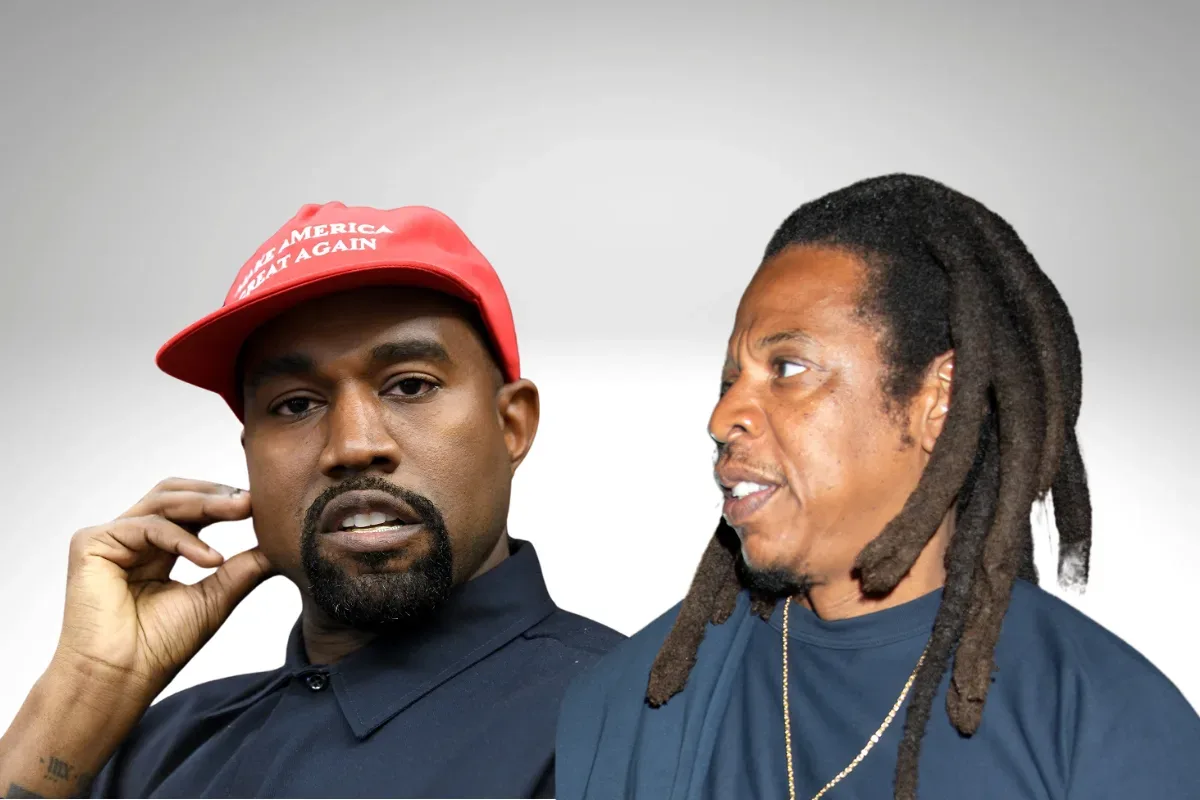
Jay-Z has revisited one of the smaller but revealing points of tension in his long, complicated history with Kanye West: the Chris Martin grievance embedded in West’s 2007 song “Big Brother.” Speaking in episode seven of the JAŸ-Z In 8 docuseries with Rick Rubin, Jay-Z challenged the idea that working with the Coldplay frontman could have constituted a betrayal. His explanation is direct: Martin was already his friend, and Jay-Z says he introduced Martin and West.
The exchange matters less as a dispute over who recorded with whom than as an illustration of how collaborators can interpret access, loyalty and professional relationships in sharply different ways. West put his perspective into the song itself, meaning a personal disagreement was heard by a mass audience as part of a larger meditation on his relationship with Jay-Z. Jay-Z’s newer comments provide his side of that old narrative, framing the conflict as an issue of entitlement rather than creative competition.
The lyric at the center of the disagreement
“Big Brother” appeared on West’s 2007 album Graduation. The track addresses Jay-Z with a mix of admiration, frustration and self-criticism, a tonal combination that helps explain why it has remained notable in discussions of their partnership. Within the song, West recalls telling Jay-Z that he had made a record with Coldplay. He then expresses dismay at seeing Jay-Z make a song with the band’s singer, Chris Martin.
West also acknowledges that he initially took the concern to Jay Brown, identified in the lyric as an A&R at Roc-A-Fella, instead of taking it straight to Jay-Z. The song presents that indirect approach as something that worsened the issue. In other words, the lyric is not only a complaint about a collaboration; it also recognizes a communication failure.
A&R, short for artists and repertoire, is the record-business role commonly associated with talent development, artist relationships and helping shape releases. Mentioning an A&R figure in the verse gives the disagreement an organizational dimension: West depicts a personal concern moving through the wider machinery around a major label operation rather than remaining a private conversation between two artists.
Jay-Z’s response: collaborators are not exclusive property
Jay-Z’s account rejects the core assumption he hears in the song. He said the situation was treated almost as though he had betrayed West merely by making music with Martin. For Jay-Z, that reading makes little sense because Martin was his friend and because he says he was the person who introduced the two artists.
His broader point is uncomplicated: nobody owns another person’s creative availability. Martin, in Jay-Z’s framing, was free to work with as many artists as he chose, regardless of who reached him first or discussed a potential collaboration first. Jay-Z characterized the underlying mindset as entitlement.
That distinction is important. A collaboration can feel deeply personal to the artists involved, particularly when it represents a new sound, a trusted connection or an idea they have championed. But a featured artist is not automatically committed to exclusivity. Unless there is a private agreement to the contrary, sharing a creative contact does not grant one collaborator control over that contact’s future work. Jay-Z’s comments argue for that professional boundary in plain terms.
Related coverage includes Jay-Z Revisits Kanye West’s Chris Martin Dispute Behind “Big Brother”.
The timeline clarifies why the perceived slight is not a release-order question
The available release history also undercuts the simplest interpretation of the disagreement. Jay-Z and Martin’s “Beach Chair” was on Jay-Z’s 2006 album Kingdom Come, predating the September 2007 release of West and Martin’s “Homecoming.” Jay-Z later appeared on Coldplay’s “Lost+” in 2008.
That sequence does not settle every personal detail behind West’s lyric. The song is concerned with the moment he says he told Jay-Z about his Coldplay record, not necessarily which finished recording reached listeners first. Still, the timeline is useful context. It shows that Jay-Z’s working connection with Martin was not a new development that began only after West’s Homecoming plans were discussed.
It also helps separate two concepts that can get blurred in celebrity disputes: chronological priority and emotional ownership. An artist might feel protective of a collaboration idea even if another artist has an existing relationship with the same guest. Jay-Z’s recollection makes clear that he does not see that feeling as a valid claim over Martin’s choices.
Why “Big Brother” continues to invite competing readings
The power of “Big Brother” is that it does not reduce Jay-Z and West to a clean rivalry. West addresses Jay-Z as a towering influence while voicing resentments about the relationship. That tension is built into the title itself: “big brother” can suggest mentorship, affection, hierarchy, dependence and conflict at once.
Jay-Z’s comments indicate that public lyrics can flatten a complicated private situation. He described how listeners could hear West’s account and come away believing Jay-Z had behaved unfairly. His response does not deny that West felt hurt. Instead, it contests whether the underlying expectation was reasonable.
That is a meaningful difference. One person can sincerely experience disappointment while another sees no breach of trust at all. Public songs tend to preserve the first version in a vivid, repeatable form; a later interview or documentary reflection gives the other participant a chance to explain the context they believe was missing.
A creative relationship that has always carried both praise and friction
Jay-Z’s discussion arrives as part of a docuseries that has included reflective and complimentary remarks about West, even while touching on periods of tension in their careers. The Chris Martin matter is therefore not presented as a definitive explanation for the pair’s wider fallout. It is one episode within a relationship that has included collaboration, mutual influence and highly public disagreements.
The supplied account also notes a more recent cycle of conflict involving comments about Jay-Z’s children with Beyoncé, an apology from West, and a Jay-Z diss delivered during a Roots Picnic freestyle. Those developments are separate from the older Coldplay-related disagreement, and the documentary comments do not purport to resolve every aspect of their fractured relationship.
Keeping those threads separate is useful for readers. The old “Big Brother” lyric concerns a specific perception about a collaborator and a friendship. Later disputes involve different statements and different stakes. Treating them as one continuous argument would overstate what Jay-Z addressed in episode seven.
What the exchange says about collaboration
At its core, this is a disagreement about expectations. In music, connections often produce opportunities: a producer introduces an artist, a vocalist records a hook, or a shared acquaintance opens the door to a session. But those connections are not automatically exclusive. Jay-Z’s view is that a mutual acquaintance remains free to create wherever they wish.
West’s lyric, meanwhile, records the emotional side of the equation: an artist may see a partnership as an extension of an idea they brought forward and feel frustrated when a trusted peer enters the same space. The song also contains self-reproach about not addressing the concern directly, which makes it more nuanced than a simple accusation.
The result is a useful reminder that creative disputes do not always turn on a provable rule being broken. Sometimes the conflict comes from assumptions that were never shared, much less agreed upon. Jay-Z’s latest explanation is an argument against assuming possession of people or relationships. More than a decade after the song, it supplies a concise counterpoint to the version of the incident listeners first encountered in West’s verse.
For more music-industry context, see the latest update on the dismissed copyright claims involving Travis Scott’s ASTROWORLD and UTOPIA.