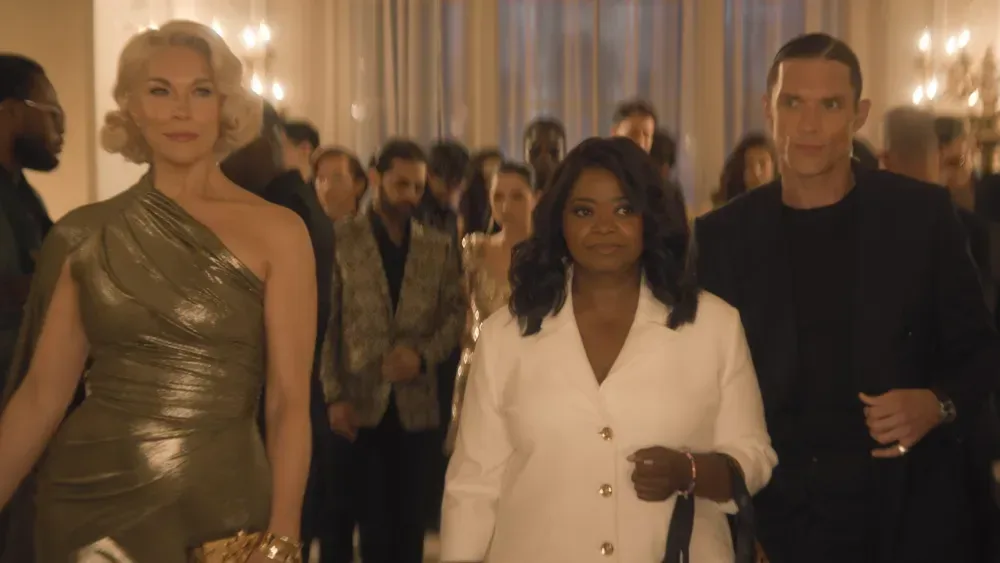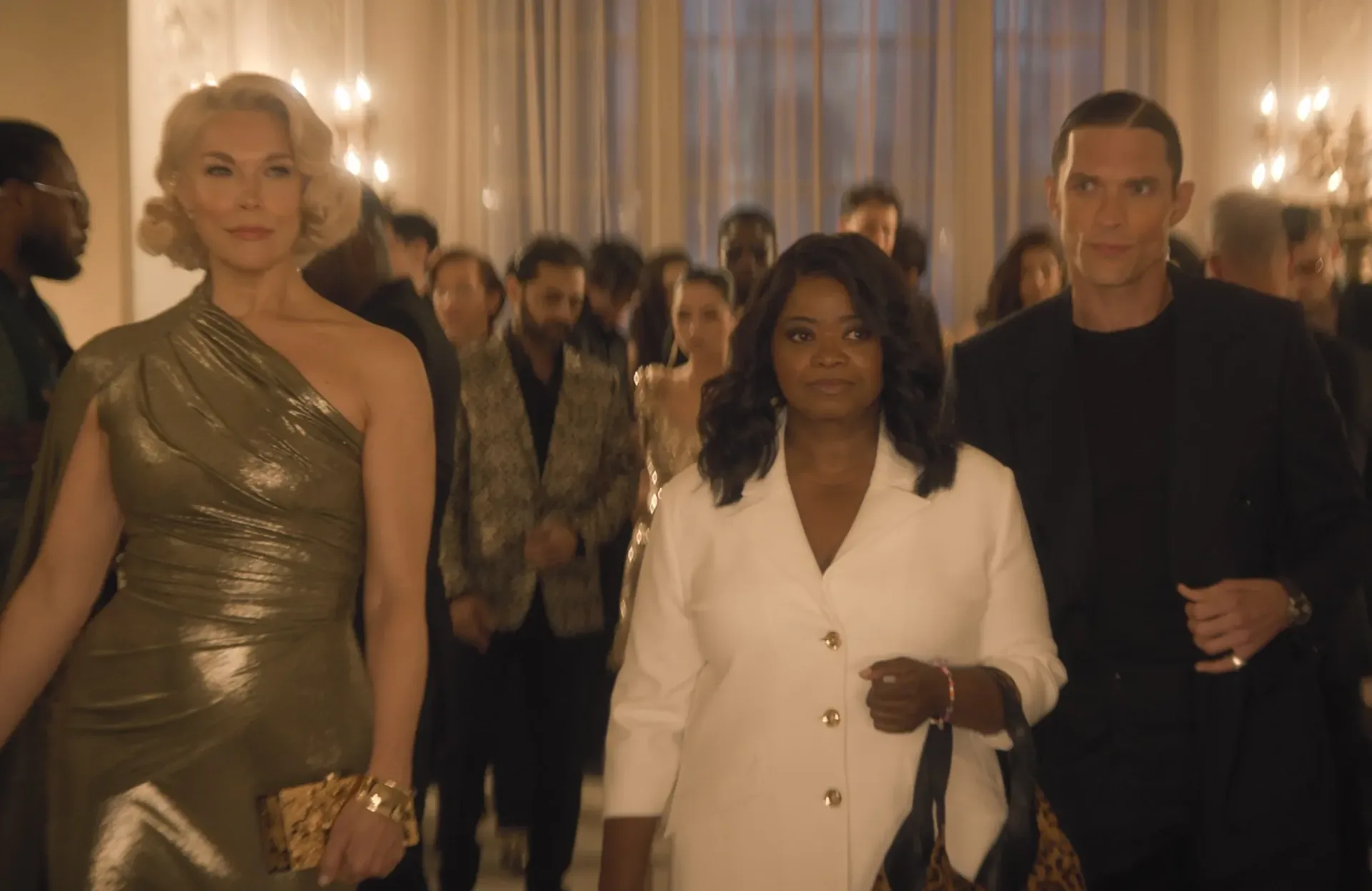
Ride or Die will not return for a second season. Prime Video has canceled the action-buddy dramedy after one season, bringing a quick end to the series led by Octavia Spencer and Hannah Waddingham. The show premiered in July 2026, after the two performers’ collaboration was first reported in December 2023.
The cancellation closes the book on a premise designed to put an intimate friendship under maximum pressure: Debbie Claybourne, played by Spencer, discovers that her best friend Judith Burton, played by Waddingham, is an international assassin. A botched hit and a threatening figure from Judith’s past then force the pair onto the run across Europe, with law enforcement, professional killers and criminals pursuing them.
No reason for the cancellation was provided in the available information. That matters because a one-season cancellation does not, by itself, establish whether a decision came down to audience size, completion rates, costs, creative plans, scheduling, or a combination of factors. Those are common points of speculation around streaming shows, but they should not be presented as established explanations here.
A buddy story with an assassin-sized complication
The central setup gave Ride or Die two lanes to operate in at once. It was a buddy dramedy—meaning a story that combines interpersonal comedy and drama around a pair of central characters—but it also used the vocabulary of an action thriller: a failed hit, people in pursuit, criminal danger and a race against time.
Debbie and Judith’s friendship was therefore not merely the emotional backdrop for action scenes. Judith’s concealed identity was the event that changes the relationship itself. Debbie believed she knew her closest friend, only to learn that a major part of Judith’s life had been hidden from her. With both women forced to flee together, the road-trip structure turns that revelation into an ongoing problem rather than a single surprise.
That is a useful distinction in stories built around a “secret life” premise. The secret does not simply create plot mechanics—who is chasing whom, where the characters can go, or how they evade danger. It also changes what every past interaction means to the person who was kept in the dark. For Ride or Die, that person is Debbie, while Judith must contend with the practical fallout of her work and the personal fallout of deception.
The premise also makes Waddingham’s Judith the key bridge between genres. Judith is a friend first in Debbie’s eyes, an assassin in reality, and a target when her past resurfaces. Spencer’s Debbie, meanwhile, is drawn into that world rather than entering it as a trained participant. Their different perspectives are fundamental to the show’s tension: one understands the danger but has not told the truth; the other has to reassess both her friend and the circumstances that now endanger them.
Why the road-trip format mattered
A road trip across Europe is more than scenery in the stated setup. It is the story’s pressure chamber. Characters on the move have less opportunity to settle into safety, and travel naturally supplies changing locations, shifting allies and new complications. For Debbie and Judith, being pursued means movement is a necessity rather than a leisurely choice.
Related coverage includes ‘Ride or Die’ Canceled by Prime Video After One Season.
The approach also fits the “ride or die” idea in the title. The phrase commonly describes fierce loyalty: the kind of bond that survives severe adversity. Here, the series applies that idea to best friends whose relationship is tested by lies, violence and external threats. The title points to a question at the center of the premise: can loyalty remain intact after one friend learns the other has concealed an identity this consequential?
The show’s blend of fugitive action and female friendship invited comparisons in critical discussion to the on-the-road dynamics of Thelma & Louise. The strongest element identified in that discussion was the connection between Spencer and Waddingham, with Waddingham’s role as a full-fledged action performer singled out as a notable aspect of the series. That response helps clarify what the show was reaching for: action stakes rooted in the chemistry and companionship of its two leads, rather than action existing separately from the relationship.
For viewers, that distinction can be the difference between a chase narrative and a character-led chase narrative. In the former, the main question is often whether the protagonists escape. In the latter, escape still matters, but the more durable question is what the ordeal reveals about the people trapped in it together.
The cast and creative team behind the series
Spencer and Waddingham headed an ensemble that included Ed Skrein, Calam Lynch, Savannah Steyn, Jamie Parker and Jacky Ido. Sylvia Hoeks and Bill Nighy also appeared in the series. The available details do not establish the full scope of each character’s role, but the casting places the central partnership inside a broader story of pursuers, danger and figures connected to Judith’s past.
Tessa Coates created Ride or Die and served as showrunner and executive producer. A showrunner is generally the senior creative figure responsible for guiding a television series’ day-to-day storytelling and production direction. Matt Miller was also a showrunner and executive producer, while Peyton Reed directed and executive produced.
The series was produced by Paramount Television Studios, Amazon MGM Studios, Double Dream and Octavia Spencer’s Orit Entertainment. Executive producers included Coates, Miller, Reed and Spencer for Orit Entertainment; Waddingham; Andy Muschietti, Barbara Muschietti and Irene Yeung for Double Dream; Brian Clisham; and Stephanie Kluft.
“Executive producer” can cover different responsibilities from project to project, so the credit alone does not define a uniform creative or operational role for every person named. What is clear is that the series brought together its creator, principal performers, director and production partners at the executive level.
What cancellation after one season means—and what it does not
The immediate practical outcome is simple: there is no second season currently planned. The announced cancellation means viewers should not expect the story of Debbie and Judith to continue in a new season through Prime Video.
It does not automatically answer unresolved narrative questions, if any remained after season one. A cancellation announcement is a business decision about future production, not an explanation of every plot thread. Likewise, it does not tell viewers whether the creative team had mapped additional chapters, whether the first season was intended to stand alone, or how far future story ideas might have developed.
That lack of specificity is especially relevant to a serialized premise. The show’s setup contains a built-in ongoing engine: Judith’s history continues to threaten both women, while Debbie has to live with the knowledge that her friendship was built on incomplete information. Those tensions could support more story, but the cancellation confirms only that they will not be explored in a second season on the platform.
For audiences who gravitated toward the combination of friendship and high-stakes intrigue, the show’s endpoint is a reminder that a compelling premise and an ongoing premise are not the same thing as a guaranteed long-running series. Streamers can end a project after a single installment even when its cast, tonal mix or core relationship has clear avenues to expand.
An action-comedy space built around partnership
Ride or Die arrived with a concept that shares a broad interest with other fictional stories about assassins and shifting loyalties, including this look at a spy-agency story involving dream assassins. The similarity stops at the general thematic level: Ride or Die is specifically a contemporary buddy dramedy centered on Debbie and Judith’s flight across Europe.
Its distinctive proposition was to make a best-friend pairing carry both the humor and the emotional consequences of an assassin-thriller setup. Spencer’s Debbie is not simply a civilian dragged into escalating danger; she is Judith’s best friend, which gives every disclosure and decision personal weight. Waddingham’s Judith is not only an action figure with enemies; she is someone whose concealed life has placed the person closest to her at risk.
With Prime Video ending the show after one season, that particular blend of companionship, deception and international pursuit remains confined to its initial run. The series leaves behind a concise premise: two best friends learning what loyalty means when one of them turns out to have been living a life the other never knew existed.