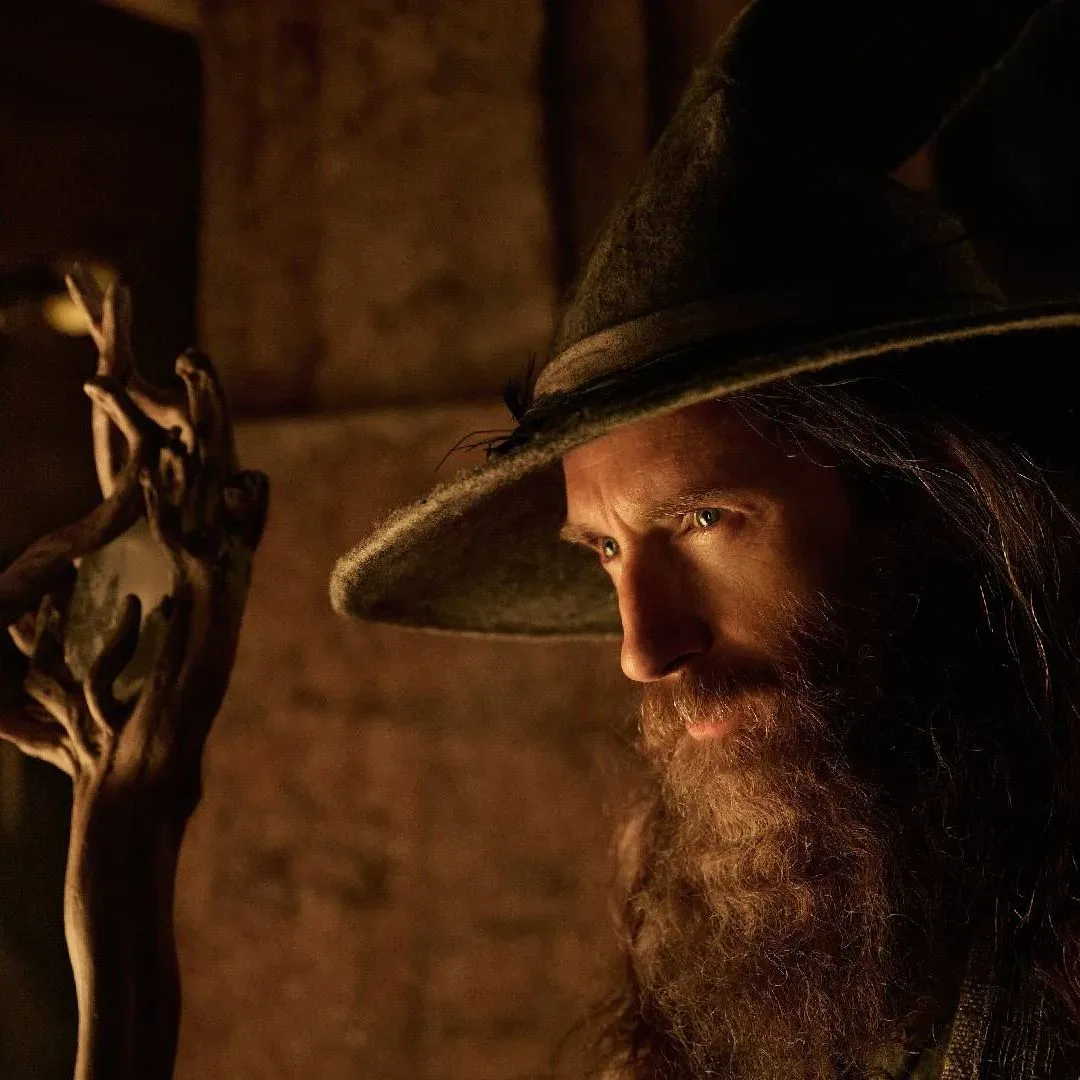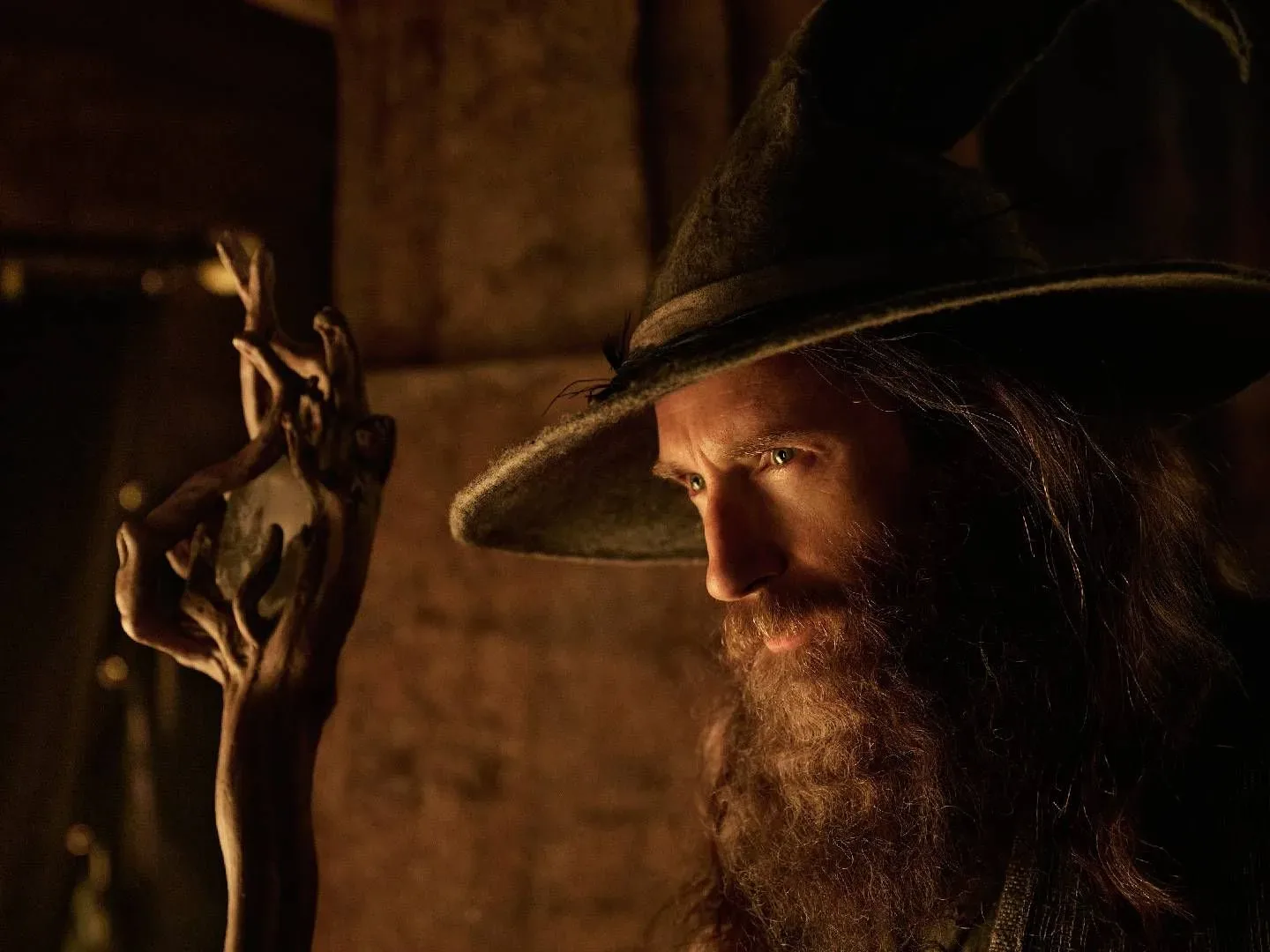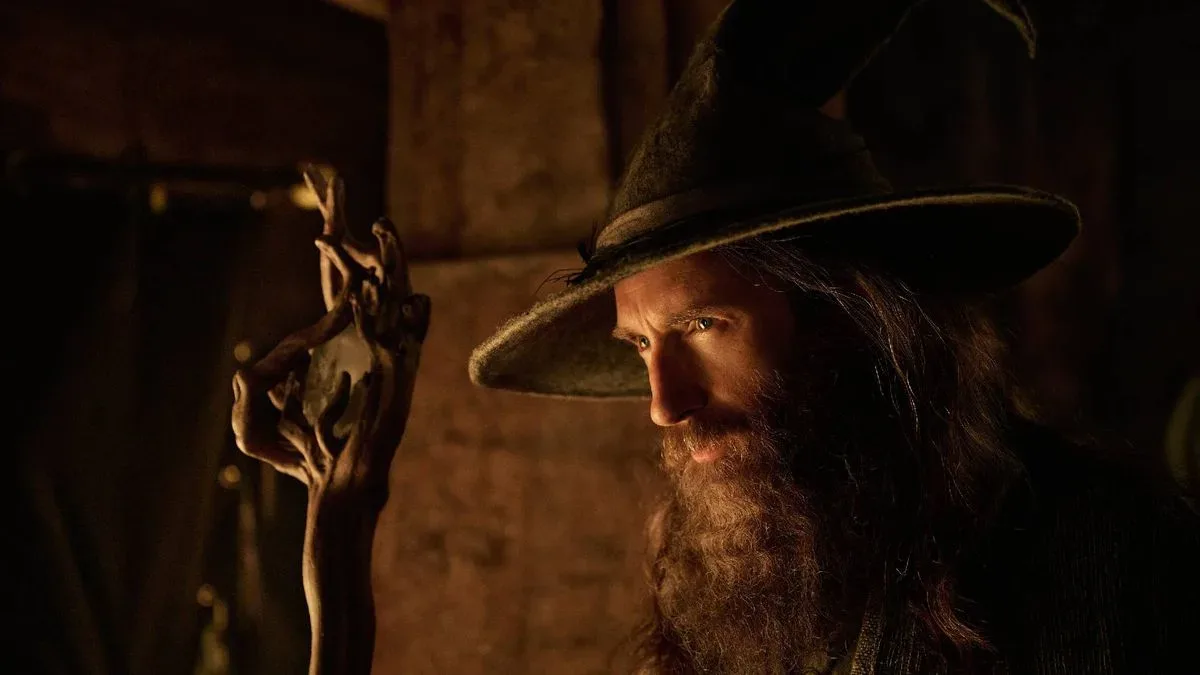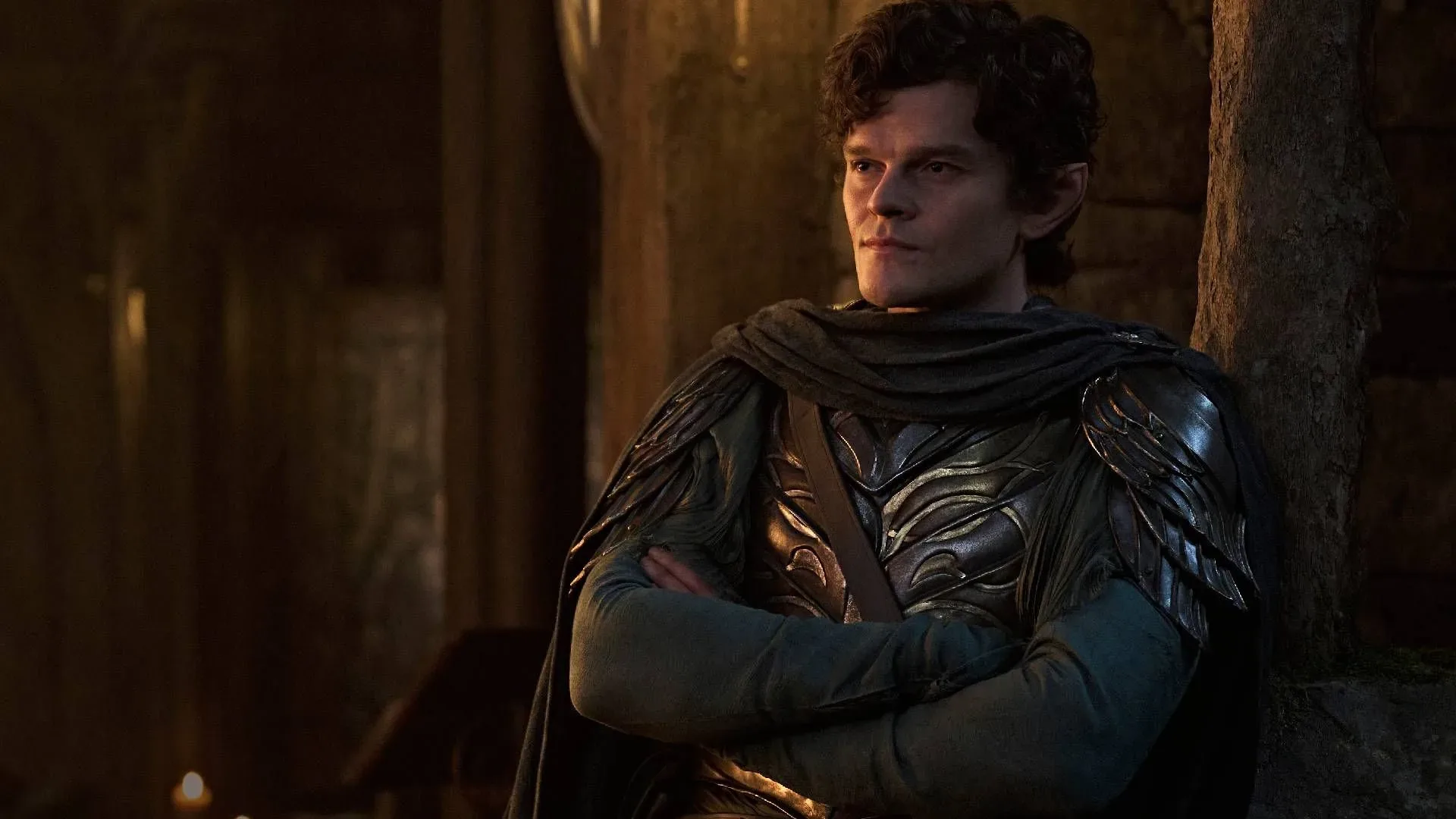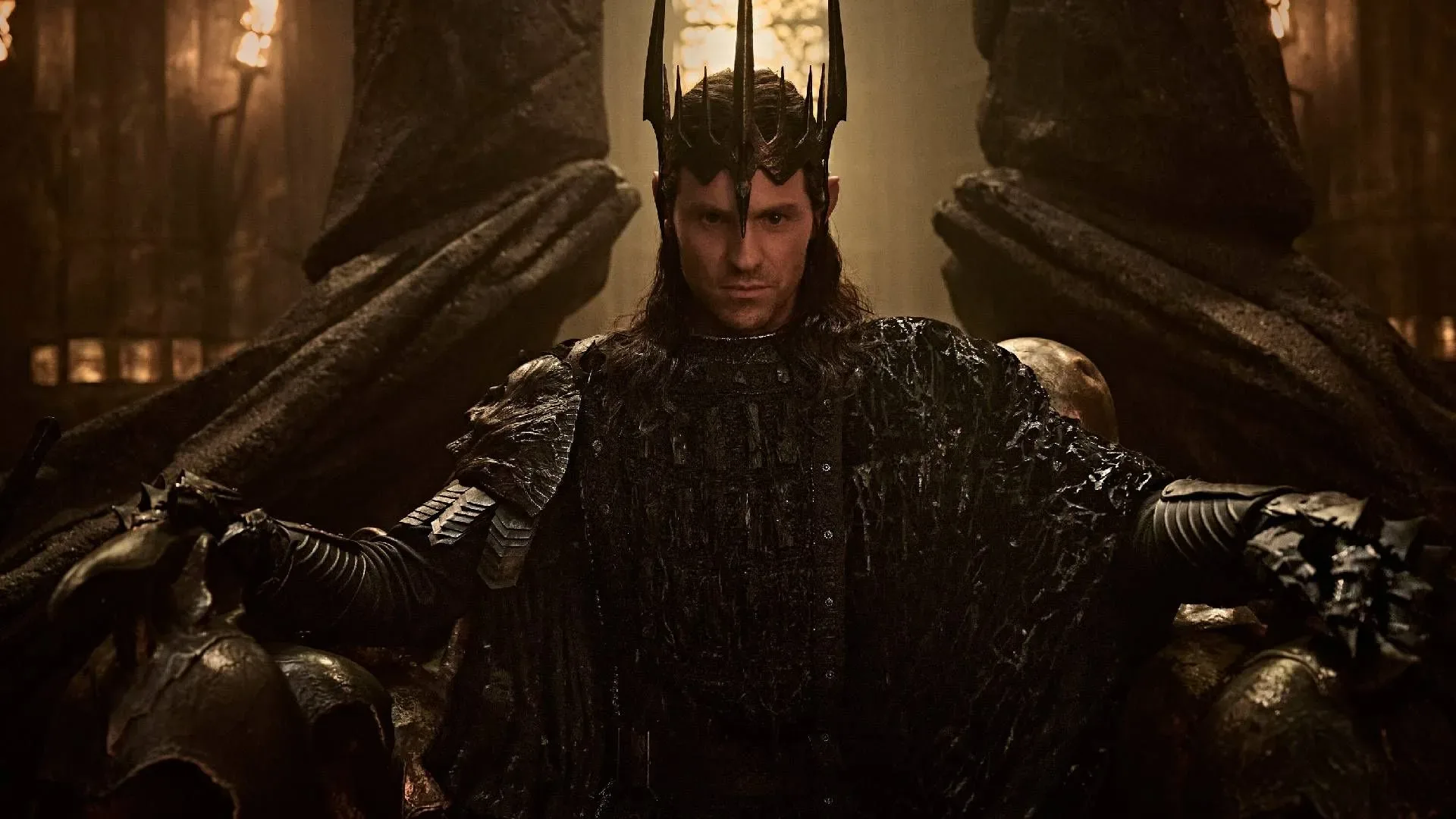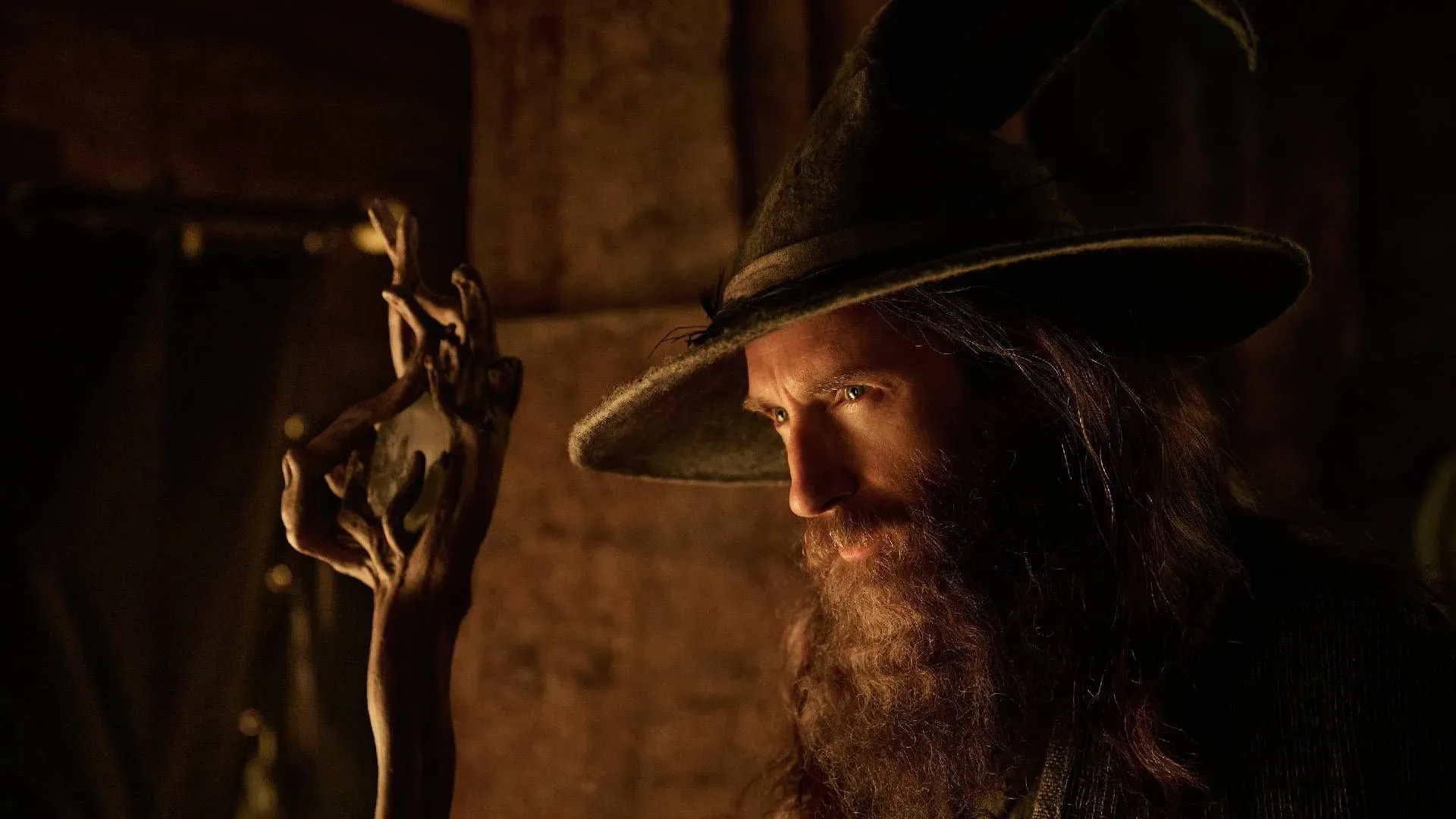
The Lord of the Rings: The Rings of Power has put one of its biggest magical mysteries in a new light. A Season 3 featurette frames Gandalf’s next task not simply as a confrontation with Ciarán Hinds’ Dark Wizard, but as an attempt to recover someone who was once close to him.
Daniel Weyman’s Stranger was confirmed to be Gandalf in the previous season. That resolution answered a major question surrounding the character, yet it left an equally intriguing one in its place: who precisely is the Dark Wizard, and why does he appear to have a past with Gandalf that neither man can fully access?
The new material does not provide a clean identity card for Hinds’ character. It does, however, make the connection between the two wizards central to the coming story. Hinds describes their history and mission as something lost to time, while Weyman identifies Gandalf’s opening objective in especially personal terms: “Win your old friend back.”
That wording matters. It suggests a relationship shaped by memory, separation, and competing purposes rather than a straightforward hero-versus-villain pairing. It also has viewers reconsidering a long-running Tolkien question: could the series be drawing from the elusive tradition of the Blue Wizards?
A mystery that is now about two wizards, not one
The Dark Wizard’s identity remains unconfirmed. The featurette establishes only that he and Gandalf have shared history, and that the details of their mission have faded into what Hinds calls the “mists of time.” This is an important distinction for any lore discussion: the video provides a clue about their relationship, not a final declaration of who Hinds is playing.
For Gandalf, the key dramatic detail is the apparent recovery of memory. Weyman refers to a force called the “Dreamscape,” which seems to prompt recollections of the two figures together on a mountain. The term is not explained further in the available material, so it should presently be treated as a show-specific unknown: a mysterious space, state, or force associated with resurfacing the past, rather than a fully defined piece of on-screen mythology.
The mountain memory gives the relationship a visual foundation. It implies that Gandalf and the Dark Wizard knew one another before their present conflict, potentially before the circumstances that obscured their shared purpose. The fact that their recollection arrives through the Dreamscape also leaves room for ambiguity. Are they rediscovering a real shared past, remembering a mission imperfectly, or encountering a past that has been altered by distance and time? The featurette points toward answers but does not settle those questions.
That uncertainty is productive for the series. Gandalf’s stated goal is not “defeat” or “destroy” his adversary, but win him back. The language suggests that the Dark Wizard may not be irredeemable in Gandalf’s eyes—or, at minimum, that Gandalf regards him as somebody whose original path has been lost.
Why the Blue Wizard theory has returned
The speculation comes from two connected details: the suggestion of a shared, forgotten mission and the featurette’s imagery, in which the wizards’ cloaks appear to carry a bluish tint. Neither point constitutes confirmation. Together, though, they naturally invite comparison with Tolkien’s Blue Wizards.
In Tolkien material referenced by the discussion, Morinehtar and Romestamo are two wizards sent into the south and east of Middle-earth to oppose Sauron’s rise during the Second Age. Their identities have remained a particularly open-ended subject for readers. That uncertainty gives an adaptation room to use the concept without simply dropping a familiar, fully mapped character into the story.
Blue Wizards is the fan-facing label for that pair. The essential idea is not merely the color: it is two wizard figures whose work is connected to resisting Sauron beyond the better-known corners of Middle-earth. A shared mission involving Gandalf and the Dark Wizard would echo that broad setup, while the blue-leaning costume detail makes the comparison difficult to ignore.
Still, this remains theory, not confirmation. The featurette has not named either wizard Morinehtar or Romestamo. It has not declared that Gandalf and the Dark Wizard are the Blue Wizards. And it has not explained whether the apparent color choice is a deliberate lore signal, a visual motif for the Dreamscape, or simply an element of the scene’s design.
The more defensible reading is that Season 3 is deliberately placing Blue Wizard questions close to the surface. The production appears to want viewers thinking about two magic users who once stood together, had a purpose in common, and may now be divided over how that purpose should be carried out. Whether that culminates in a direct answer about the Blue Wizards is still unknown.
What “win your old friend back” could mean for Gandalf
Weyman’s description supplies the most concrete narrative direction available for the new season. Gandalf begins with an attempt at restoration. That makes the Dark Wizard more than a looming threat or an unexplained rival: he is tied to Gandalf’s own incomplete understanding of where he has been and what he is supposed to do.
In practical storytelling terms, the setup can support several kinds of scenes without requiring the featurette to have revealed their outcome. Gandalf may seek conversation before conflict. He may need to recover more of his own memories to understand what went wrong. Or the Dark Wizard’s recollection of their mission may be different from Gandalf’s, turning the disagreement into a question of conviction rather than simple amnesia.
It also changes the stakes of a potential clash. If Gandalf sees the other wizard as an old friend, any confrontation carries an emotional goal beyond survival. Redemption, reconciliation, and the recovery of a shared cause become possible themes. Those ideas fit the phrasing provided by Weyman, but they should not be mistaken for confirmed plot beats.
There is a second implication: Gandalf may still be discovering himself. The Stranger’s journey has involved questions of identity, and the Dreamscape’s recalled mountain encounter indicates that the confirmation of his name does not necessarily mean every aspect of his past is now clear. Season 3 can therefore continue exploring Gandalf’s self-knowledge while using the Dark Wizard as a living connection to what he has forgotten.
The visual clue is worth noticing—but not over-reading
Costume color can carry obvious symbolic weight in fantasy, especially when the story already contains a famous unanswered question involving “Blue” Wizards. The bluish cast to the cloaks in the recalled mountain scene is therefore a meaningful detail to flag.
But visuals are also highly dependent on setting, lighting, and the unusual nature of the Dreamscape sequence. A blue hue alone cannot establish a character’s formal identity. The strongest case for continued attention is cumulative: blue-tinged cloaks, a paired past, a forgotten mission, and two wizards whose relationship has become the emotional spine of Gandalf’s early Season 3 journey.
That accumulation is what makes the idea compelling. The series has not merely offered a color-based Easter egg. It has attached the imagery to a specific relationship and a stated attempt to bring an old friend back. If the Blue Wizard connection proves intentional, those details would look like groundwork. If it does not, they still point to a story about two figures separated from their shared purpose.
What has been confirmed, and what remains speculation
- Confirmed: Daniel Weyman’s Stranger is Gandalf.
- Confirmed: Gandalf and Ciarán Hinds’ Dark Wizard have a history that has been obscured by time.
- Confirmed: The Dreamscape is associated in the featurette with memories of the pair standing together on a mountain.
- Confirmed: Gandalf’s initial Season 3 mission is described as trying to win back an old friend.
- Confirmed: Tolkien wrote of Morinehtar and Romestamo, two wizards sent south and east to counter Sauron’s Second Age rise.
- Unconfirmed: That Gandalf and the Dark Wizard are Morinehtar and Romestamo, or otherwise meant to be the Blue Wizards.
- Unconfirmed: The Dark Wizard’s specific identity, original allegiance, and ultimate fate.
- Unconfirmed: The exact rules, origin, or consequences of the Dreamscape.
This divide is especially useful because lore speculation often turns a suggestive image into an assumed reveal. At this stage, the featurette gives viewers a direction of travel: Gandalf’s past is intertwined with the Dark Wizard’s, and understanding that past may explain the mission that now divides them. The rest is still a question the season needs to answer on screen.
When to watch and why this thread matters
The Rings of Power Season 3 debuts on Prime Video on November 11. Its Gandalf storyline now has a clear emotional hook: the search for a former companion who may have strayed from a shared mission. The possible Blue Wizard angle adds a layer of Tolkien-related intrigue, but the featurette’s most immediate promise is character-driven. Gandalf is pursuing somebody he believes can be recovered, even when both of them may be missing parts of the same history.
For viewers who enjoy tracking how fantasy franchises adapt expansive mythology, the distinction between clue and confirmation will be the one to watch. The blue-hued imagery may become a defining piece of the puzzle, or it may be misdirection. Either way, the series has made the Gandalf–Dark Wizard connection far more than background lore. It appears set to be a driving conflict from the first steps of the new season.
Readers looking for another upcoming fantasy-game story can also follow the latest update on God of War Laufey.