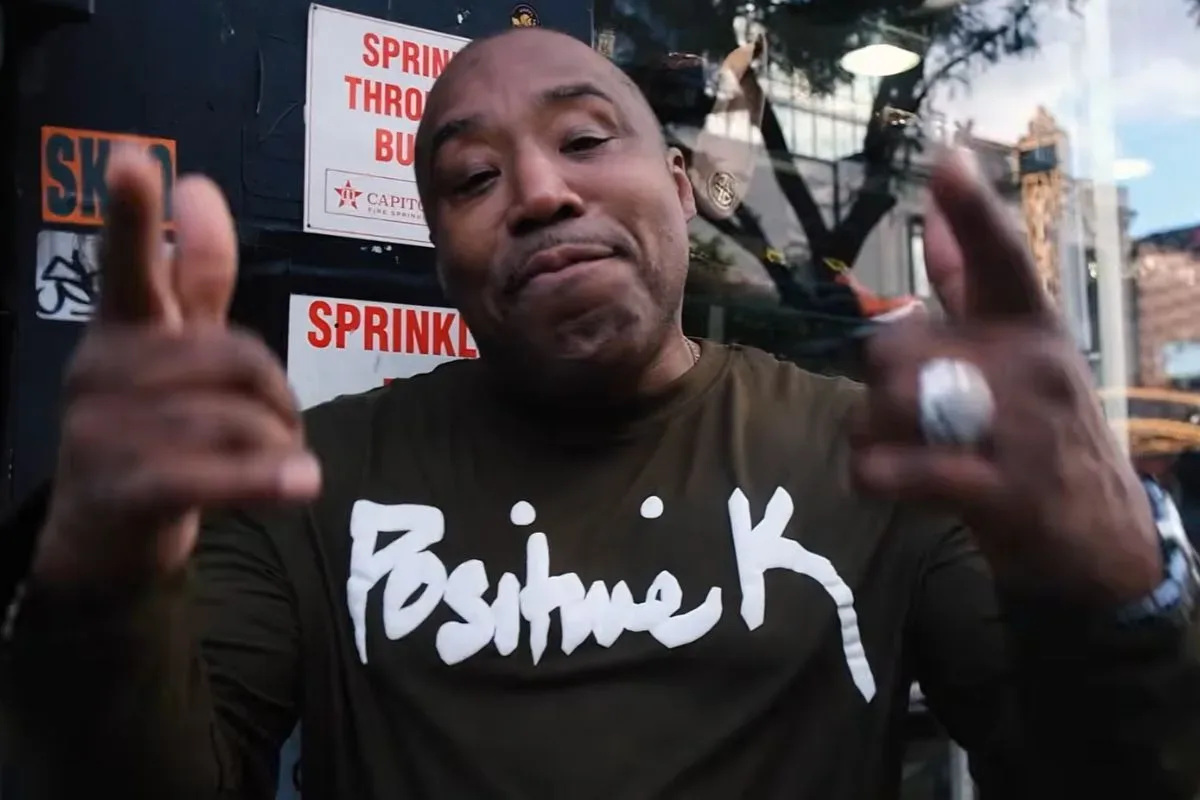
Positive K is speaking candidly about a responsibility that has taken priority over his music career: caring for his mother, Julie, who has lived with Alzheimer’s disease for years.
The rapper described changes to her movement, speech and thinking, as well as the difficult daily realities that can come with supporting a parent through dementia. But his account is not solely about hardship. He has found meaning in intimate routines, including choosing her outfits, and has come to view the role as a defining responsibility.
“This is my assignment in life,” Positive K said.
That statement gives the story its weight. It is not framed as a temporary detour or a public-relations talking point, but as a change in how he understands his place in his family and how he makes decisions. Positive K said caregiving has affected his relationships and helped him grow both as a son and as a person. He still wants to return to making music full time, but the experience has reshaped what he will bring to that work.
Caregiving is bigger than one person
The most practical point in Positive K’s remarks is also one that can be difficult for families to accept: caregiving cannot reliably be sustained by one person alone. He sought help from relatives and others, and credited the Alzheimer’s Association Georgia Chapter for responding when he needed support.
“It really involves everyone, and that is why you need a team,” he said.
In this context, a “team” does not have to mean a polished, formal arrangement. It can include relatives, friends, support-group peers and resource professionals. The important idea is shared responsibility. Alzheimer’s and other forms of dementia can affect memory, communication, behavior, physical mobility and decision-making over time. That means support needs can change, and a family’s first plan may not remain sufficient.
Positive K’s experience also illustrates why emotional support is not an optional extra. Care tasks may be visible, but the ongoing responsibility of making decisions, responding to change and keeping someone company can carry a substantial emotional load. The Alzheimer’s Association reports that nearly 13 million Americans provide unpaid care for someone with dementia. It also says 59% of dementia caregivers report high emotional stress, while 38% report physical stress connected to their care responsibilities.
Those figures place an individual family story within a much larger reality. An unpaid caregiver can be a son, daughter, spouse, friend or other loved one. They may be balancing caregiving with work, parenting, creative ambitions or their own health. Positive K’s comments make no claim that there is an easy balance. Instead, they underscore the value of asking for help before one person is expected to absorb every task and every difficult day.
Support groups offer more than information
For Georgia families, the Alzheimer’s Association Georgia Chapter offers free support groups led by trained facilitators. Options are available by phone, video and in person. The availability of different formats matters: a caregiver may not be able to leave home, may live far from a meeting place or may simply need a less demanding way to connect.
There are also groups for people in the early stages of dementia. That distinction recognizes that dementia affects more than caregivers. A person living with cognitive changes may benefit from meeting others who understand the uncertainty and adjustments involved, while loved ones may need a separate setting to discuss their own concerns.
A support group is not a replacement for medical care or individualized professional advice. Its role, as described here, is connection and guided support: a place where participants can talk with people facing similar circumstances and learn about resources. For someone who feels isolated by the demands of caregiving, that community can be an important part of the wider team Positive K described.
The organization’s free 24-hour helpline, 800-272-3900, is another resource for people seeking local services, emotional support or crisis assistance. Calls are confidential, and bilingual staff and interpreters help make the service accessible in more than 200 languages. Around-the-clock availability is particularly significant in caregiving, where questions or distress may not arrive during ordinary business hours.
A creative career still in view
Positive K’s public identity has long been connected to rap, but his creative work has not been limited to music. He has also pursued stand-up comedy. In 2023, he discussed opening for Mike Epps in 2021 and learning how to work rooms with different audiences. He said he wanted to earn credibility among comedians on the strength of the comedy itself, rather than expecting his name in rap to do that work for him.
That outlook provides useful context for his present moment. His career ambitions have not disappeared; he has said he hopes to resume music full time. Yet caregiving has altered the order of priorities, along with his sense of what personal growth looks like. There is no need to turn that into a neat narrative in which art and family duty are in conflict, or one in which either cancels the other. His remarks leave room for both: a commitment to his mother now and a desire to carry the lessons of this period into his future work.
It is also a reminder that public figures are not only performers, brands or past hits. They can be navigating the same long-term family responsibilities faced by millions of people outside the spotlight. Public discussion can help make caregiving less invisible, particularly when it emphasizes the need for practical support rather than treating endurance alone as the goal.
Why November puts the issue in focus
November is National Family Caregivers Month, a period that directs attention toward the people providing unpaid assistance to relatives and loved ones. Positive K’s account arrives in that context with a clear message: caring for someone with Alzheimer’s is personal, demanding and deeply human, but it should not be isolating.
His description of picking an outfit for his mother sits alongside the harder details of her illness. That contrast is meaningful. Dementia care is often discussed through statistics, symptoms and logistics. Those matters are essential, but they do not capture every part of a relationship. Familiar rituals, moments of self-expression and simple acts of care can remain important amid change.
For readers following entertainment and culture coverage, stories about an artist’s life can sometimes be reduced to a career update. This is more substantial than that. Positive K is sharing a perspective shaped by devotion to family, a willingness to seek help and an understanding that support must be collective. It is a perspective worth hearing far beyond the music world.
For more culture coverage on the site, read our review of The Cat in the Hat.