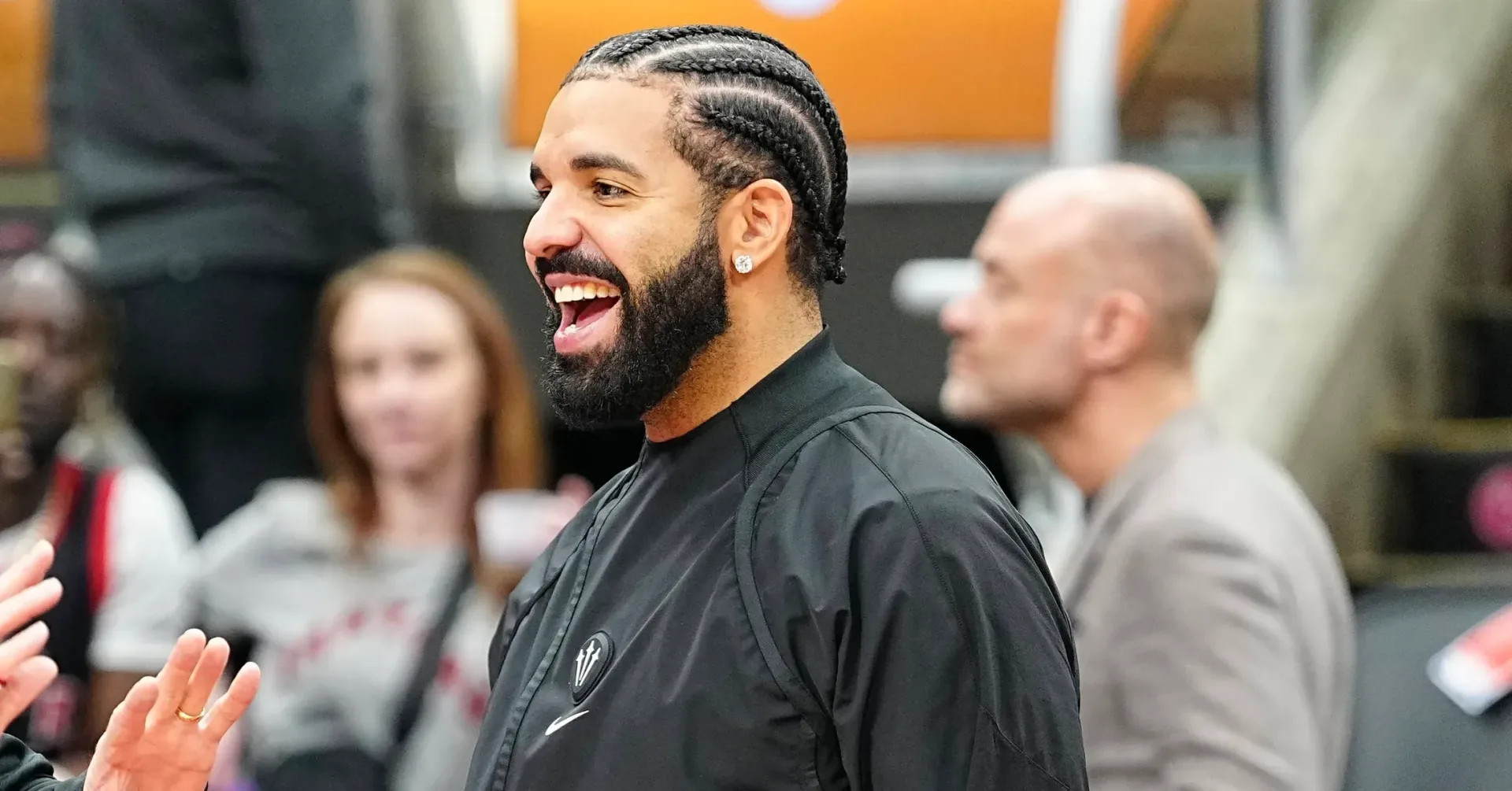
Apple Music has named Drake its Best Rapper of 2026, recognizing a year built around an unusually ambitious release strategy: three albums issued across hip-hop, R&B, and dance. The distinction places particular emphasis on ICEMAN, which Apple Music says became the first rap album released in 2026 to exceed 2 billion streams.
The honor arrives as Drake turns 40 and continues to work across several of the sounds most closely associated with his catalog. Alongside ICEMAN, the 2026 releases HABIBTI and MAID OF HONOUR form a three-project run that Apple Music characterized as a major comeback, commercially potent and critically resonant.
“The MC made his loudest comeback in years with a three-album release weekend spanning hip-hop, R&B, and dance, a genre-sprawling gambit that landed as critical and commercial lightning,” Apple Music said in its recognition.
A three-album strategy, not a one-album victory lap
The central point of Apple Music’s case is scale, but it is not scale in the narrow sense of a single hit or a lone blockbuster release. Drake’s year is being framed around range. Hip-hop, R&B, and dance are distinct commercial and creative lanes, even where they overlap in contemporary pop music. Releasing material across all three in one concentrated window turns the project into a test of audience reach: can one artist move listeners between formats without losing the momentum that comes from a unified campaign?
Apple Music’s answer is clearly yes. Its description of the weekend as a “genre-sprawling gambit” is significant because a gambit carries risk. Multiple releases can divide attention. A listener who connects with the rap record may not be looking for an R&B album at that moment; a dance-oriented release can face a similarly different set of expectations. The upside is that each album can speak directly to a different mood and listening habit rather than asking one project to perform every job.
That is the backdrop for ICEMAN, HABIBTI, and MAID OF HONOUR. The supplied information does not assign a specific genre to each individual title, so it would be premature to map them one-for-one. What is clear is that the three-album release weekend collectively covered hip-hop, R&B, and dance, and that Apple Music saw the breadth of that move as a defining feature of Drake’s 2026.
For listeners, the practical implication is straightforward: the accolade is not simply an invitation to check out the biggest streaming release. It is also an argument for approaching the three records as a connected moment. A multi-album weekend can be heard as a menu of separate records, but it can also be understood as one artist deliberately presenting several sides of his musical identity at once.
Why ICEMAN sits at the center of the award
Apple Music singled out ICEMAN as the commercial engine of the run. The platform said the album crossed 2 billion streams, making it the first rap album from 2026 to reach that mark. It also called the record the year’s most significant hip-hop release.
“ICEMAN did the heaviest lifting commercially, becoming the first 2026 rap album to cross 2 billion streams and reasserting Drake’s rightful claim to hip-hop’s hitmaking throne,” Apple Music said.
In streaming terms, 2 billion streams is an aggregate count of plays, not a headcount of individual listeners. One person can contribute numerous streams over time, while another may play only a track or two. That distinction matters when reading a number of this size. It measures repeated listening and catalog activity as well as broad audience reach; it does not by itself reveal how many unique people pressed play.
Even with that caveat, crossing the threshold described by Apple Music is a meaningful commercial marker. It indicates sustained consumption rather than a short initial burst alone. Album streaming totals can build through repeat plays, continued discovery, playlist placement, and listeners moving between individual songs and the full record. The information provided does not break down which of those factors drove ICEMAN, and it would be wrong to speculate. The key confirmed detail is the total itself and its first-in-2026 status among rap albums.
The wording “heaviest lifting commercially” also gives ICEMAN a specific role within the wider three-album release. Apple Music is not suggesting the other two titles were irrelevant; its earlier statement praises the combined cross-genre move. Rather, it identifies ICEMAN as the release that carried the largest commercial weight in that wider campaign.
What “Best Rapper” means in this context
Apple Music’s Best Rapper of 2026 designation is a platform honor, not a measurement that can settle every debate about rap artistry. “Best” can encompass a range of criteria: songwriting, technical performance, influence, cultural presence, critics’ response, sales, streams, or live impact. The rationale presented here gives considerable attention to two of those areas: the scale of the release plan and the commercial performance of ICEMAN.
That does not make the recognition empty. It makes its perspective legible. Apple Music is highlighting an artist who released across three genres, made a substantial commercial impact, and drew a description of both critical and commercial success. In other words, this is an honor rooted in the relationship between artistic reach and audience response on a major music platform.
There is a useful distinction between commercial success and critical success. Commercial success is about consumption and market performance—here, the reported stream total is the most concrete indicator. Critical success concerns appraisal and reception. Apple Music’s statement says the three-album weekend landed as both, but no reviews, scores, or individual critical assessments were provided alongside that characterization. Readers should therefore treat the platform’s phrase as its evaluation of the campaign, while the 2 billion-stream benchmark is the supplied numerical evidence.
It is also worth separating an award label from an objective genre hierarchy. Rap is a broad field with different stylistic traditions and audiences. One platform’s annual selection can spotlight a major cultural and commercial achievement without erasing the work of other artists or reducing the genre to a single scoreboard. Apple Music’s distinction says something specific about its view of Drake’s 2026—not everything there is to say about rap in 2026.
Longevity is part of the story
Drake’s age is part of the framing around this recognition. Having turned 40, he is being celebrated for maintaining a level of output and attention often discussed as difficult to sustain in rap. The supplied account describes 2026 as one of the strongest years of his career, with the multi-album release strategy serving as the evidence for that assessment.
Longevity in popular music should not be confused with simply remaining active. An artist can continue releasing music for years without commanding the same level of conversation or audience engagement. In this case, the relevant combination is continued activity, a high-volume release moment, genre flexibility, and the commercial benchmark tied to ICEMAN. Those elements together explain why Apple Music is presenting the year as a comeback of unusual force.
The phrase “comeback” can be slippery, too. It does not necessarily mean an artist disappeared; it can mean that a particular period feels louder, more consequential, or more dominant than the immediately preceding one. Apple Music called this Drake’s loudest comeback in years. With no further timeline or comparison points supplied, the responsible reading is limited: the platform believes the 2026 campaign represents a renewed peak of visibility and impact.
That kind of framing often matters because modern music careers are shaped by constant availability. Releases, singles, features, clips, and catalog listening can make every year look busy. A three-album rollout stands out because it offers a clearer event—one that audiences, platforms, and end-of-year conversations can organize around.
What comes next in 2027
Drake is expected to tour in 2027. No dates, venues, ticket details, or routing were provided, so fans should not infer any of those specifics from the recognition itself. The Apple Music honor speaks to the recorded-music side of 2026, while touring would bring a different measure of demand: whether the momentum around these releases carries into live rooms.
That distinction matters for anyone following the next phase of this run. Streaming numbers capture listening behavior on a platform. A tour is a separate undertaking involving location, schedule, capacity, and ticketing. The supplied information supports an expectation of touring, but not a prediction about sellouts or the scale of the shows.
For now, the confirmed headline is simpler: Apple Music has awarded Drake its Best Rapper of 2026, crediting a three-album, cross-genre release weekend and the reported performance of ICEMAN. It is a recognition of reach as much as rap—of an artist using multiple formats and a high-volume rollout to make a late-year claim on the conversation.
For more music-adjacent pop-culture coverage, see this look at Positive K’s reflections on caring for his mother.