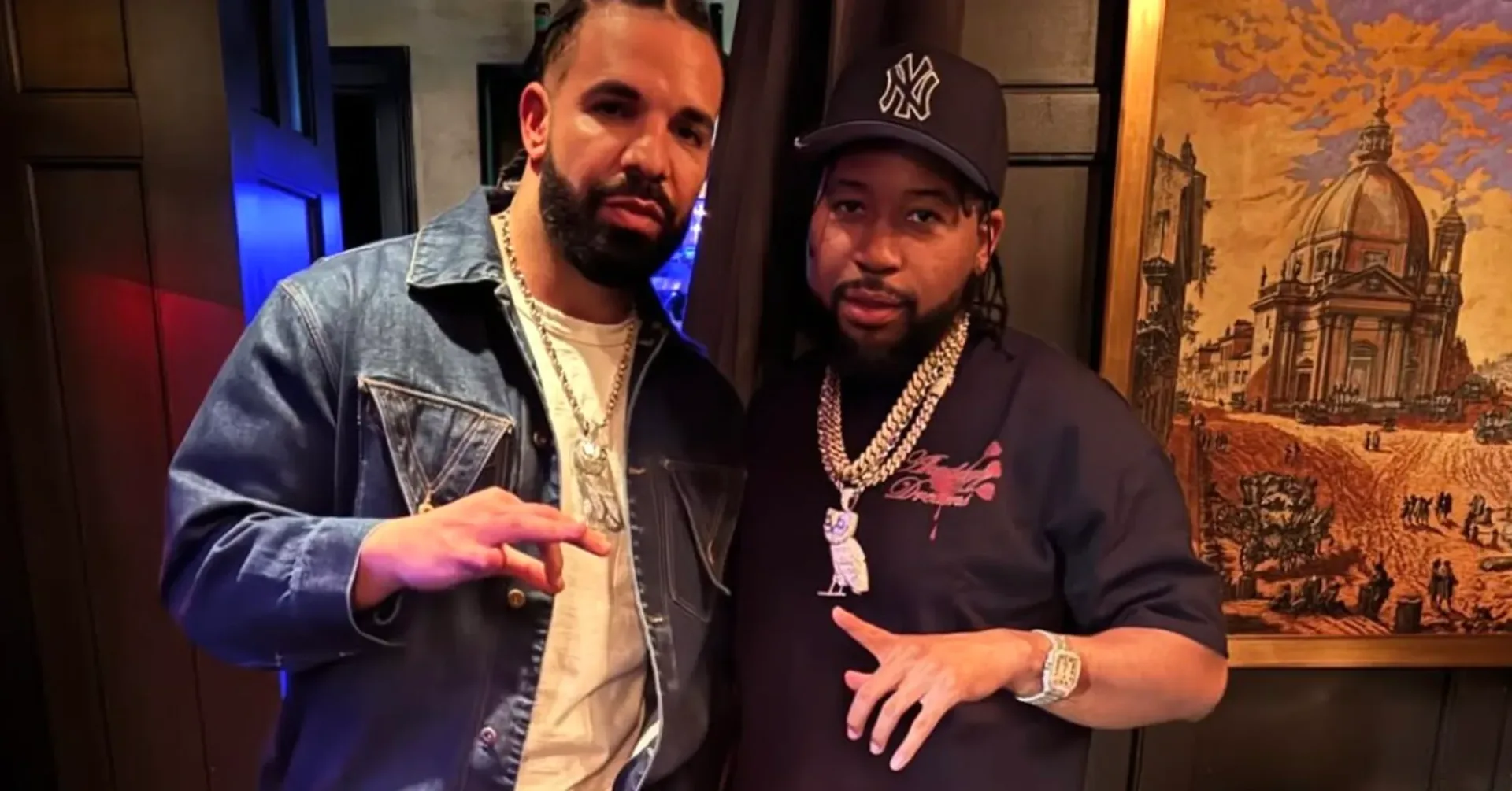
DJ Akademiks has offered an eye-catching account of what he says Drake spent around his recent birthday celebration and associated promotion. The commentator, who said he attended the party, characterized the level of expenditure as extraordinary while discussing it during a stream.
The key word is alleged. The figures discussed publicly were Akademiks’ estimates and assertions, not financial records or confirmed accounting from Drake or his representatives. Still, the claims have drawn attention because they put a number on the larger-than-life scale often associated with an artist at Drake’s level.
The figures Akademiks discussed
Akademiks said Drake spent more than $400,000 at the club hosting the birthday event. He further estimated the full birthday celebration at roughly $1.5 million.
He also claimed that Drake spent $500,000 on a gift for Lena The Plug and $200,000 on a gift for Sexyy Red. Beyond the party and gifts, Akademiks attempted to total the costs he associated with Air Drake and the ICEMAN promotional effort, putting that broader outlay above $12 million.
For more context, explore Walton Goggins’ Fallout Season 3 Wrap Post Fuels Ghoul Exit Speculation.
Those categories should not be treated as one simple receipt. A nightclub bill, a personal gift, aircraft-related spending and a promotional campaign are fundamentally different kinds of costs. They can also be accounted for differently: one may be a direct expense, another could involve a purchased asset, and a campaign may include multiple services and arrangements. Without documentation, the precise scope of each estimate—and whether any amounts overlap—cannot be established.
“I’ve never seen money spent like this,” Akademiks said while reacting to what he described.
Why the distinction between observation and estimate matters
Being present at a party can provide a view of its scale, but it does not necessarily provide access to invoices, agreements, production budgets, gift valuations or payment structures. That is especially relevant when a discussion moves from what was visible in a room to seven-figure totals for a whole celebration or promotional rollout.
There is also a meaningful difference between spending, value and promotion. Spending generally means cash paid or committed. Value is an estimate of what an item, service or experience is worth. Promotion describes activity intended to sustain attention around a performer or release, and it can cover many components rather than one purchase. Conflating those terms can make a headline number feel more definitive than the available information supports.
That does not mean the claims are impossible. It means the public should read them in the appropriate frame: they are a commentator’s account of unusually lavish activity, rather than independently verified evidence of Drake’s personal finances.
Air Drake and the ICEMAN campaign
Akademiks connected his larger estimate to Air Drake and ICEMAN promotion. In this context, Air Drake refers to the artist’s aviation branding, while a promo is a promotional push designed to build public awareness and conversation. The source material does not itemize the alleged costs, identify individual vendors, or explain which expenses Akademiks counted toward the total.
That missing detail matters because an overall campaign number can be interpreted several ways. It could be a tally of direct costs, an estimate based on the apparent scale of visible activity, or a blend of promotional and lifestyle expenses. The available claims do not settle which approach was used.
For fans, the most defensible takeaway is narrower than the viral figure: Akademiks believes the birthday-related spending, gifts and wider promotional activity reflected an exceptionally expensive period for Drake. The exact amount remains uncertain.
A spectacle built for public attention
Large artist celebrations and conspicuous promotional gestures naturally become part of the entertainment conversation. Their impact is not only financial. They create images, clips, social posts and debate, all of which extend attention beyond music itself. In that sense, luxury can function as public-facing spectacle, whether it is connected to a formal campaign or simply becomes a talking point once attendees share what they saw.
Akademiks’ remarks show how quickly that spectacle becomes a broader discussion about wealth and responsibility. His framing suggested that even someone accustomed to seeing successful figures in hip-hop found the spending striking. He also joked that the money he has earned in hip-hop media might make a move into rapping seem appealing.
But commentary about a celebrity’s lifestyle should not be mistaken for a diagnosis of their financial health. Akademiks suggested the spending was nearing an excessive level; that is an opinion, not a conclusion supported by verified financial information. There is no public basis in the supplied material to determine Drake’s income, liabilities, assets, business obligations or long-term plans.
What can and cannot be concluded
Drake is widely recognized as one of music’s biggest artists, and Akademiks’ account fits the public image of a major star capable of staging high-profile events. Yet the supplied information does not establish Drake’s net worth, confirm that he is worth any particular sum, or prove an individual “spending issue.”
- What was claimed: Akademiks said club spending exceeded $400,000, estimated the birthday festivities at $1.5 million, cited alleged gifts valued at $500,000 and $200,000, and placed wider Air Drake and ICEMAN-related spending above $12 million.
- What is not confirmed: The underlying receipts, the valuation methods, the exact contents of the totals and whether all cited costs were personally paid by Drake.
- What remains opinion: Whether the scale of spending is prudent, excessive or strategically worthwhile.
That uncertainty is not a minor footnote. It is the central context for a story built around large numbers. A clean total is compelling, but it can conceal unanswered questions about what was included, when a cost was incurred, and how its amount was determined.
The practical meaning of the claim
If Akademiks’ overall estimate is close to accurate, it would point to a period in which Drake combined a large private celebration with expensive public-facing activity. That would reinforce the extent to which superstar visibility can merge personal events, brand identity and music promotion into a single public narrative.
It would not, on its own, reveal whether those expenditures were sustainable or whether they delivered a measurable return. Public attention is valuable in entertainment, but the supplied material contains no performance data, contracts or financial analysis that could connect the alleged spending to business results.
For now, the story is best understood as a high-profile claim from an attendee and commentator, not a verified ledger. The figures are notable, the reaction is understandable, and the uncertainty is essential. Drake has not, in the information provided, publicly detailed the costs discussed or responded to the characterization of his spending.