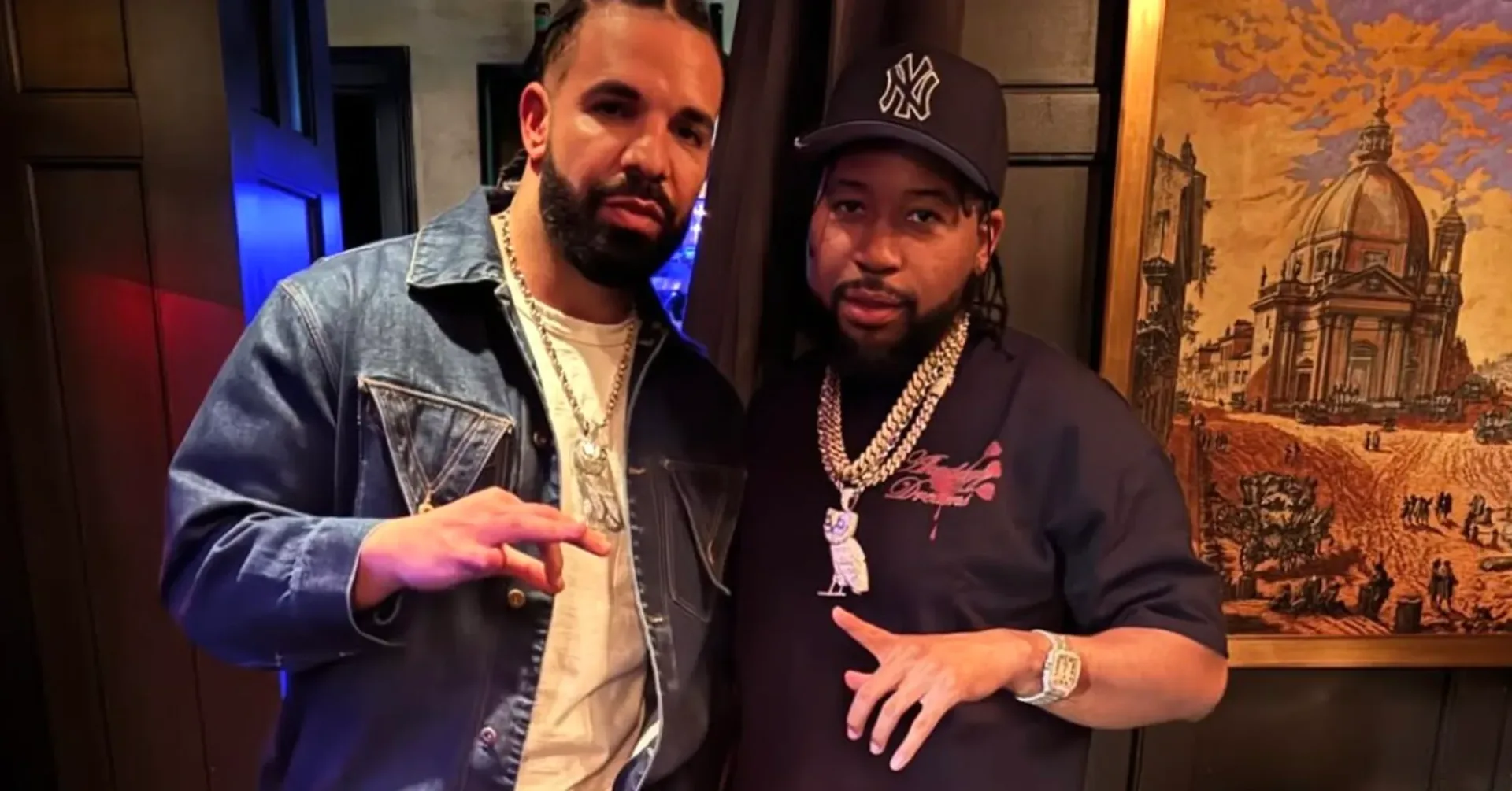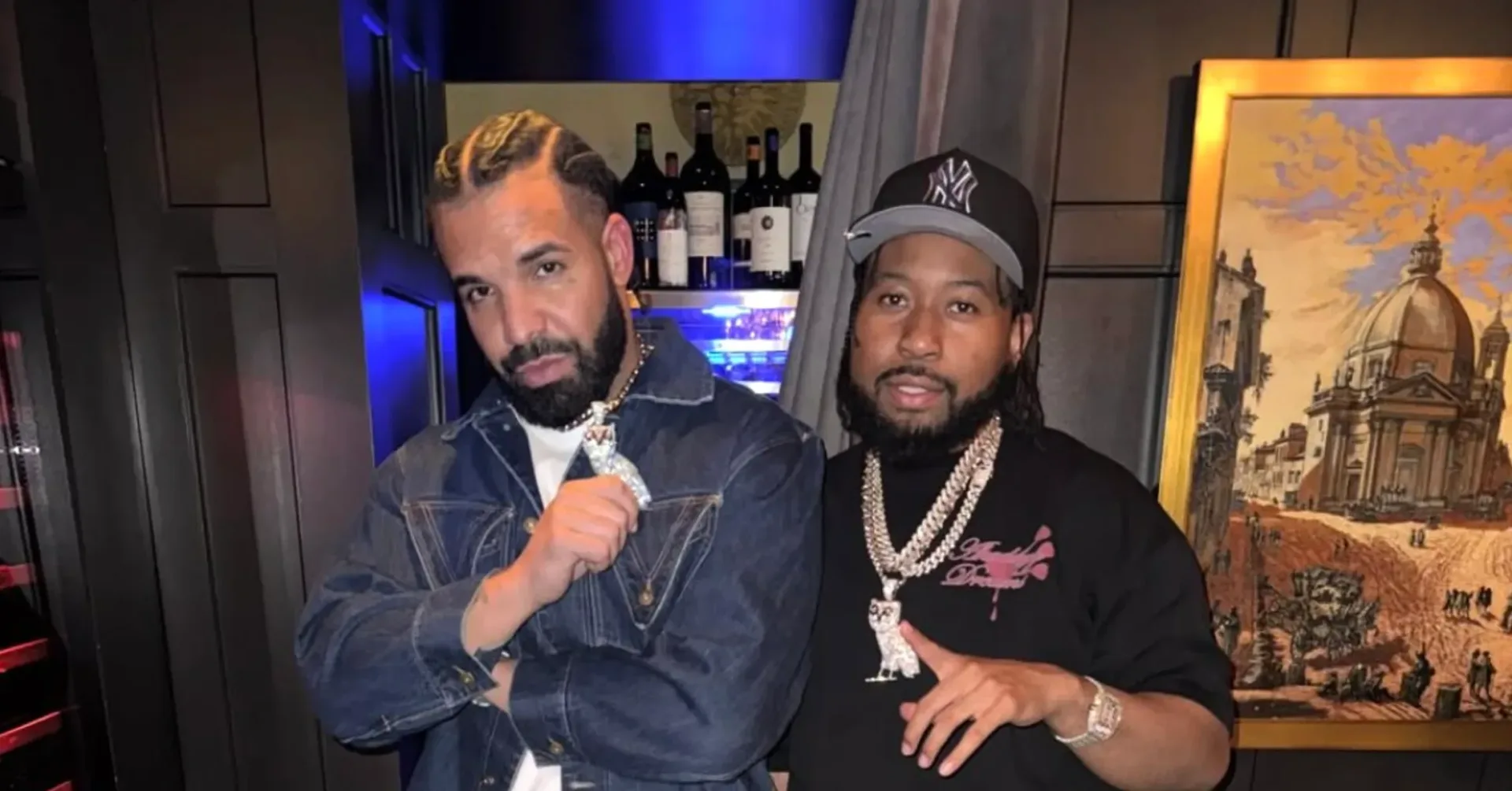
DJ Akademiks has explained why a potentially awkward encounter with Mal did not become the story of Drake’s 40th birthday celebration in New York City. The commentator, who attended the weekend events, said he deliberately chose not to confront Mal because he did not want to introduce negativity into a friend’s party.
The birthday gathering reportedly included a dinner on Friday followed by a club night on Saturday. Akademiks’ presence was unsurprising given his friendship with Drake, a relationship that has also been marked by Akademiks receiving an OVO chain. But the room also included people with whom Akademiks has publicly had friction, including Mal, formerly of the Joe Budden Podcast.
On a stream after the celebration, Akademiks made the boundary clear: “I would never have any negative thing in real life at my man’s party.” He further suggested that, regardless of the party setting, he likely would not have initiated anything with Mal anyway.
A party is not a debate stage
That distinction matters. A public disagreement can create an expectation that two personalities will address one another whenever they share space, particularly when fans know they have not reconciled. Akademiks’ explanation rejects that expectation. Attending the same private celebration does not automatically turn the event into a confrontation, a debate segment, or a test of who is willing to make the first move.
His answer also frames the decision as basic host etiquette rather than fear or avoidance. The party belonged to Drake, not to the personalities whose disputes might draw attention online. Starting an argument at a friend’s birthday would shift the focus away from the guest of honor, affect other attendees, and potentially turn a social event into content for spectators who were never invited.
That is a notably different setting from a livestream, podcast, or social-media exchange. In those venues, conflict is generally part of the format: participants choose when to speak, audiences arrive expecting commentary, and the conversation can be paused, clarified, or ended. A party has no such structure. It includes friends, acquaintances, and other guests who may have no interest in being caught inside somebody else’s unresolved disagreement.
What Akademiks actually addressed
Akademiks did not announce a reconciliation with Mal, nor did he describe a private conversation that resolved their issues. His comments were narrower: he explained why he did not create a negative moment at Drake’s event. That leaves the status of their broader relationship unchanged by the available information.
Keeping that line clear is important in celebrity-news coverage. No confrontation is not the same thing as a truce. It can mean restraint, indifference, good manners, timing, or a simple choice not to make a scene. In this case, Akademiks tied the choice directly to the setting and to his friendship with Drake.
It also means there is no reported showdown to dissect. The useful takeaway is less dramatic but more concrete: two people with past tension occupied the same social space, and one of them later said he chose not to disrupt the occasion. That is the full account offered here, rather than evidence of a new feud chapter or a repaired relationship.
Why Drake’s event changes the calculus
Drake was not merely another attendee; he was the person being celebrated. Akademiks characterized the occasion as his friend’s party, which explains why the social obligation took precedence over any urge to address past issues. In a close-knit entertainment circle, that kind of decision can have practical consequences beyond one evening. Guests may cross paths again at concerts, industry functions, and private gatherings, and turning someone else’s milestone into an argument can create a larger problem than the original dispute.
Akademiks indicated that those future crossings are likely. He said he plans to follow Drake on the artist’s upcoming tour and hopes to attend roughly twice as many shows as the 12 NBA YoungBoy shows he previously attended. If that plan plays out, the party was unlikely to be his last appearance in Drake-adjacent spaces.
That touring remark is not a schedule announcement, and no dates or venues were specified. It does, however, explain why Akademiks did not portray one party encounter as a make-or-break moment. His comments suggest he expects continued proximity to Drake’s professional and social orbit. A single night was not, in his telling, the place to force an interaction with Mal.
From online tension to in-person boundaries
The episode highlights a recurring mismatch between online audience expectations and real-world social behavior. Viewers can follow disagreements in fragments: a clip, a response stream, a podcast exchange, or a repost. That fragmented visibility can make conflict seem permanently active, as though every shared appearance must deliver the next episode. In reality, people can decide that a particular location is inappropriate for addressing personal tension.
Akademiks’ response draws a practical boundary between public commentary and real-life conduct. His statement does not deny that friction exists; it says that friction did not outrank the purpose of the gathering. That is an important difference, especially in a media environment where escalation often attracts more attention than restraint.
The decision also avoids putting Drake in an unnecessary position. When a conflict breaks out at someone else’s event, the host can become responsible for a dispute that was not theirs to settle. Akademiks’ explanation shows awareness of that dynamic. Rather than making Drake’s birthday into a venue for unresolved issues, he said he chose to preserve the atmosphere of the event.
For observers hoping for an explosive clip, that answer may sound anticlimactic. But it is also the more meaningful account of what happened: no reported argument, no announced reconciliation, and no indication that a birthday party became a proxy battleground for existing tensions.
What comes next remains undefined
There is no indication of an imminent Akademiks-Mal conversation or any formal effort to patch things up. Akademiks said he would likely see Mal more in the future, but anticipated proximity is not the same as an arranged meeting. It simply means the possibility of another encounter remains open.
For now, the available facts support a limited reading. Akademiks attended Drake’s New York City birthday celebration, where Mal was also present. He later said he did not confront Mal because he would not bring negativity to his friend’s event, and he suggested he would probably not have said anything regardless. Everything beyond that would be speculation.
The episode lands amid a broader pop-culture cycle in which an online remark can quickly become the center of a much larger conversation, as seen in a recent discussion around Tyler, the Creator’s sarcastic response and resurfaced posts. Here, however, the notable development is the absence of escalation. Akademiks’ account casts that absence as intentional: Drake’s birthday was a celebration, not a setting for a personal dispute.