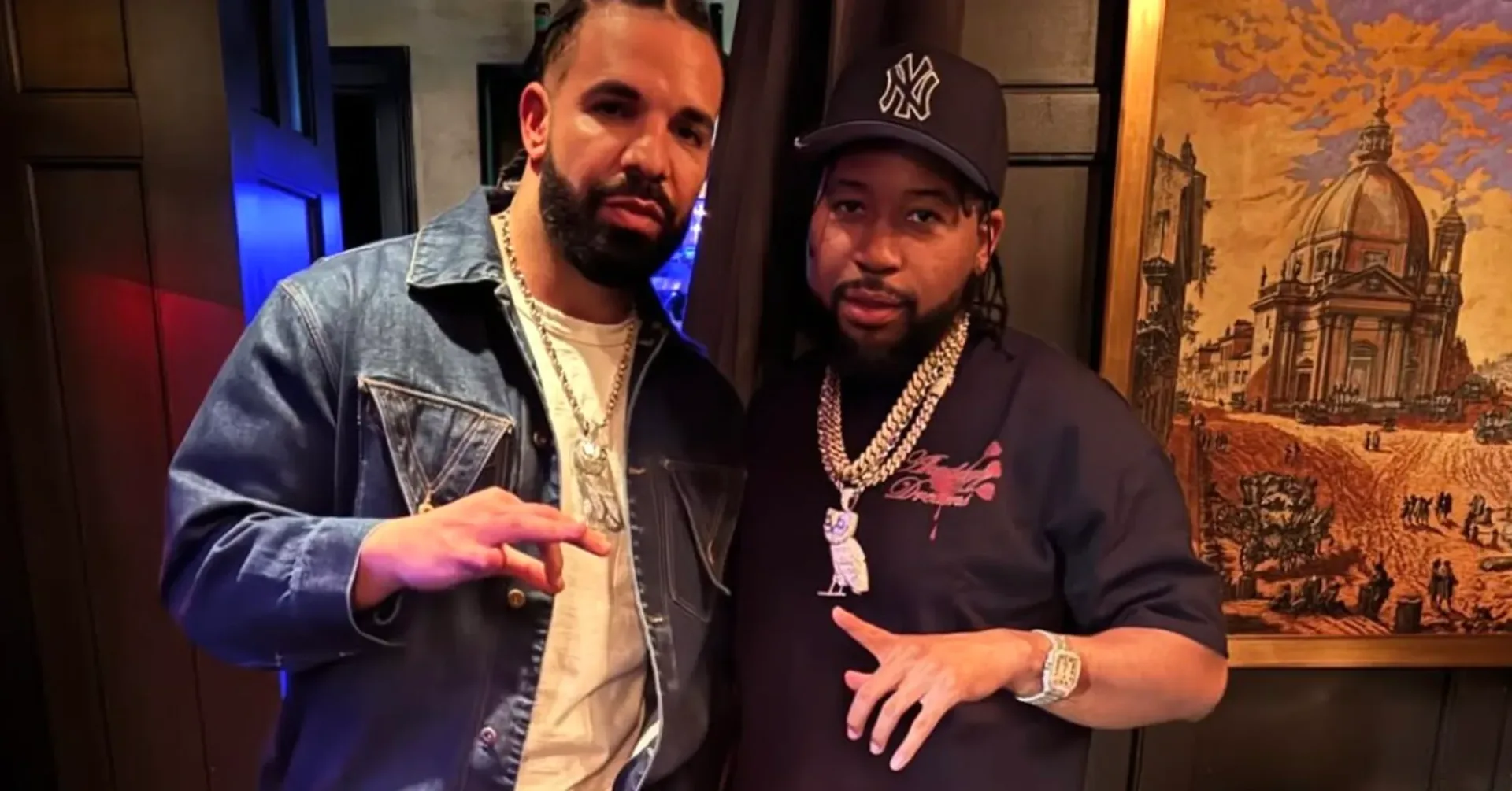
DJ Akademiks has found a very online use for an OVO chain: not as a screenshot attachment, but as profile-page scenery.
During a livestream with Derek King, Akademiks was asked whether he sends pictures of the owl chain to women in direct messages as a way to impress them. His answer was a joking no—with an important qualification. He said he does not directly send chain pictures because that would be “kind of corny,” but he knows people who visit his page can see the piece and, more importantly, see that he has appeared with Drake.
It is a small, funny story about the mechanics of celebrity adjacency on social media. The chain is physical, but the punch line is digital: the object has value in the way it changes a stranger’s first read of a profile.
The chain stays on the page, not in the message
Akademiks said he tries not to bury posts featuring the chain beneath too much newer content. He may archive the post, he explained, but keeps it positioned so someone clicking through his page can find it. He said some viewers had asked whether the image was AI-generated, prompting him to insist that the chain was real.
That detail reflects a very current social-media complication. An image that once might have functioned as straightforward proof of access can now be met with doubts about manipulation or fabrication. Akademiks’ response was not to make a grand claim about the jewelry itself; it was to joke about the verification process and then about the social leverage of the post.
His basic strategy, as he described it, is indirect. If he messages women who may not know him well, they can click his profile and encounter a visual cue that he has a relationship with Drake. The OVO owl chain and a photo or post involving Drake become part of the account’s context rather than an overt opening line.
DM is shorthand for a direct message, a private message sent through a social platform. Akademiks’ distinction matters to the joke: sending a jewelry photo unprompted would make the flex the whole conversation, while leaving the image on a public page lets the discovery feel accidental—even if the page’s layout has been considered.
Why the OVO symbol carries the joke
OVO is closely associated with Drake, and the owl mark makes the chain immediately legible to people familiar with his orbit. In Akademiks’ story, the item works less like a generic piece of expensive jewelry and more like a compact signal of access. A viewer is not simply meant to think, “That is a chain.” The intended reaction is closer to, “Why does this person have that chain, and why is he pictured with Drake?”
That is why the anecdote is more about proximity than material value. Akademiks has long made his Drake fandom public, and the pair linked up earlier in the year for the ICEMAN stream. The chain becomes a visible artifact of that connection. On a profile page, it also becomes a conversational shortcut: a piece of evidence that can prompt recognition before Akademiks has had to explain himself.
It is worth keeping the tone in proportion. Akademiks framed the exchange as a joke and explicitly said he does not send women the image directly. The story is not a tutorial in messaging etiquette or a claim that a chain guarantees attention. It is a self-aware admission that status markers can make an account more memorable, especially when they are tied to a globally recognizable musician.
Profile curation as a modern calling card
There is a practical observation beneath the gag. A social profile is often a quick-reference biography, particularly when two people have no prior context for one another. Photos, featured posts, clothing, collaborators and event appearances can all communicate a version of someone’s professional or social standing in seconds.
Archiving is central to that idea. On many platforms, archiving removes a post from the public-facing grid without necessarily deleting it permanently. Akademiks’ description suggests he is thinking about what a visitor sees when they land on his page—not only what is newest. In that sense, he is treating the feed as a storefront: one that needs a few recognizable reference points close at hand.
The AI comment adds another layer. Online audiences increasingly ask whether notable photos are real, especially when an image appears unusually convenient, glamorous or difficult to verify. Akademiks said he received messages questioning whether the chain image was artificial intelligence. His joke turns that skepticism into part of the bit: if someone is already investigating whether the image is real, they are already looking.
Of course, the same tactics can read differently depending on the audience. Some people will see a carefully maintained profile as normal presentation; others will see it as calculated. Akademiks appears comfortable with that tension. He has built a public persona around commentary, reactions and a willingness to say the quiet part out loud when it makes for a memorable clip.
The Drake connection remains a talking point
Akademiks’ rapport with Drake frequently draws attention. He stays engaged with Drake’s moves both through direct contact and public commentary, and he has recently made claims about Drake’s monthly earnings, discussed what he thinks may happen with Drake’s status at UMG, and previewed a prospective tour connected to Drake’s 2026 work.
That level of attention brings predictable criticism. Online detractors have accused Akademiks of “glazing,” a slang term generally used for excessive praise or overly eager loyalty toward a public figure. The chain story gives critics an easy visual symbol to focus on, but Akademiks’ own framing suggests he understands the optics and is happy to turn them into comedy.
Rather than deny the association, he has leaned into the fact that it changes how people respond to him online. The resulting joke is knowingly absurd: a major music-world connection repurposed as profile-page decoration in a private-message scenario. That mismatch is what makes it land.
Akademiks is hardly a neutral observer across the wider music conversation. He has continued publicly feuding with Lil Baby, among other artists, after lengthy online disputes. His Drake connection therefore exists alongside a broader public image shaped by arguments, commentary and deliberately provocative exchanges. In that environment, even a chain can become content.
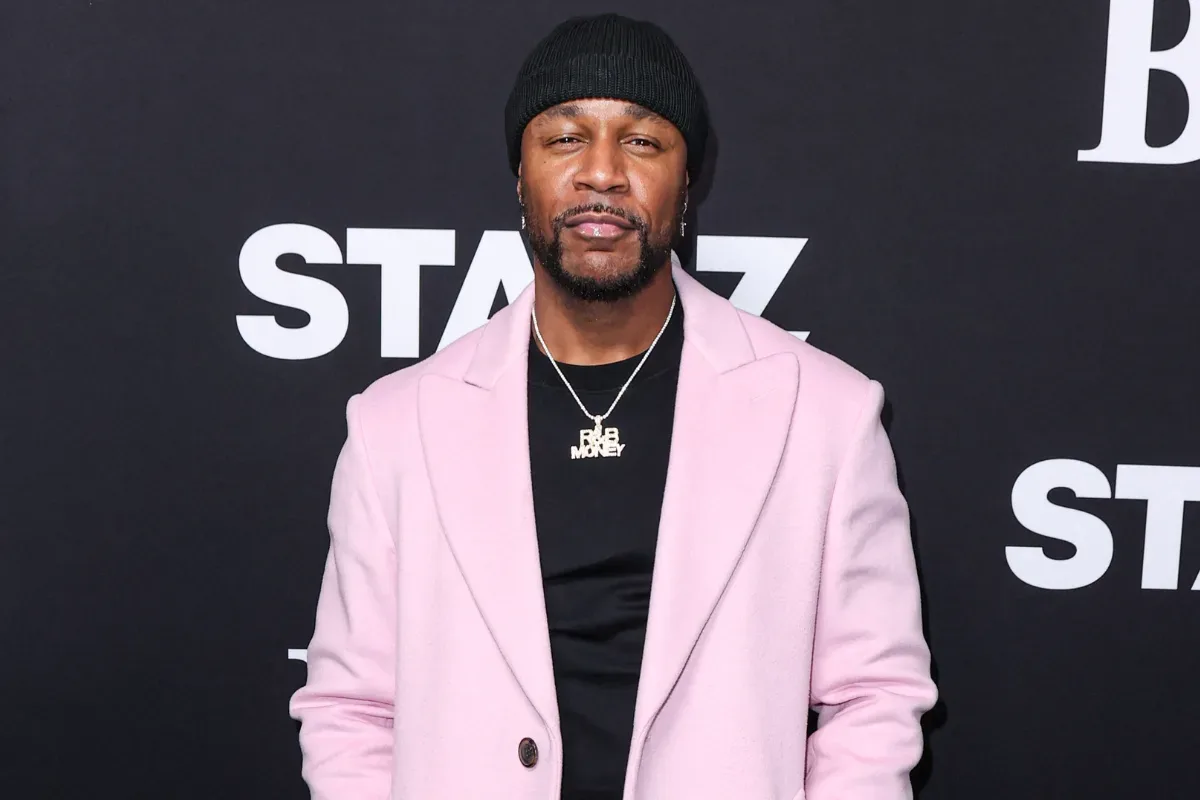
For readers following adjacent music milestones rather than streamer drama, Tank’s Adult R&B Airplay record with “Yes” is another recent example of how status is measured and discussed publicly in music spaces—through charts rather than an owl-chain profile post.
A flex that knows it is a flex
The clearest part of Akademiks’ story is also the simplest: he does not claim to be sending Drake-linked jewelry photos as a direct pitch. Instead, he says the profile does the work after someone chooses to look. That distinction lets him brag and mock the brag at the same time.
Whether people find that charming, corny or both is largely the point. A chain may be a tangible sign of affiliation, but its real role in this anecdote is as an internet breadcrumb—a quick clue to a connection that followers and critics already debate constantly.