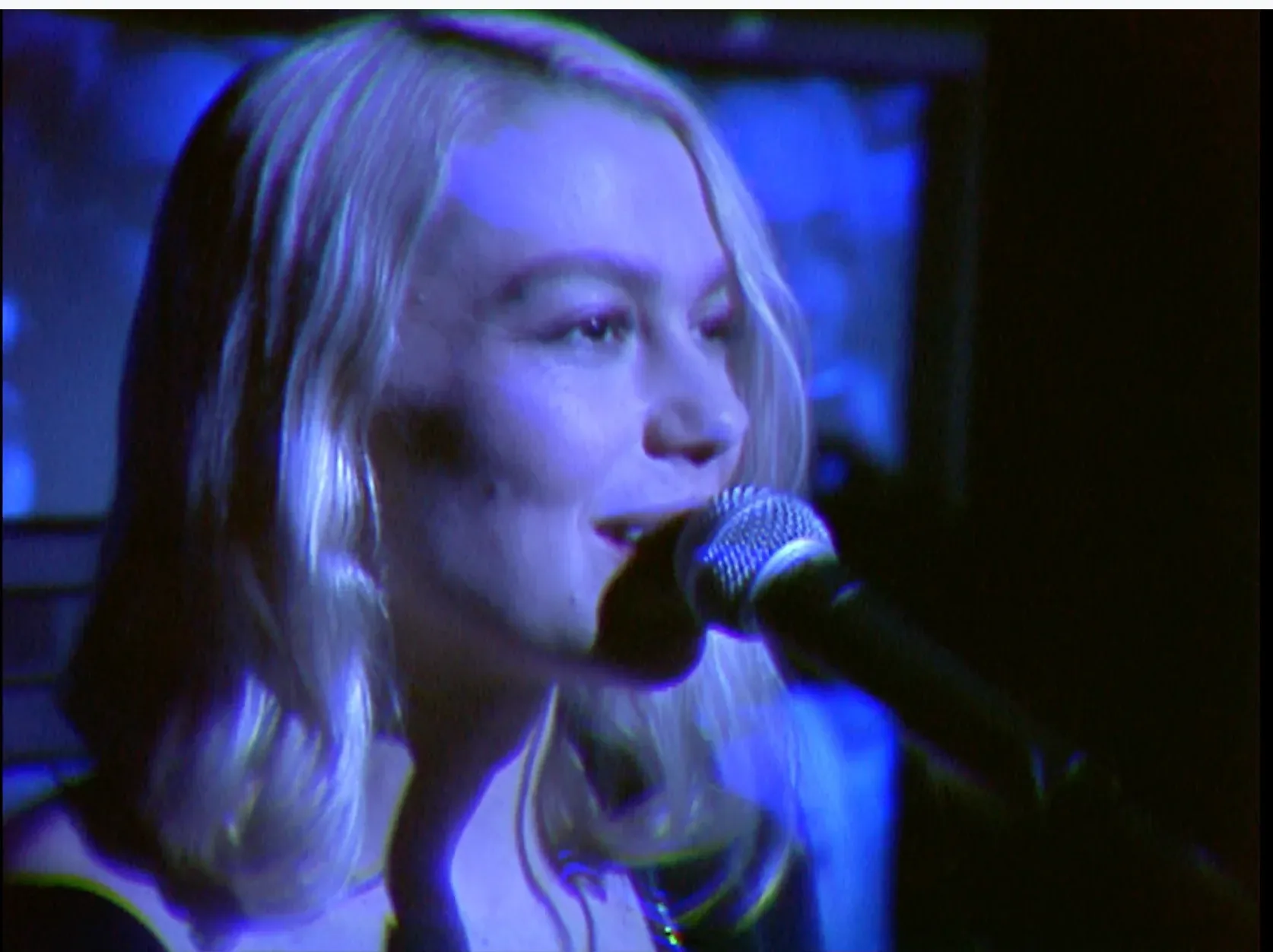
Phoebe Bridgers has released a new filmed three-song performance from Cherry Lane Theatre in New York, and its most notable moment is also its most understated: Julien Baker and Lucy Dacus join her for two songs, putting the three members of Boygenius together on camera for the first time in nearly three years.
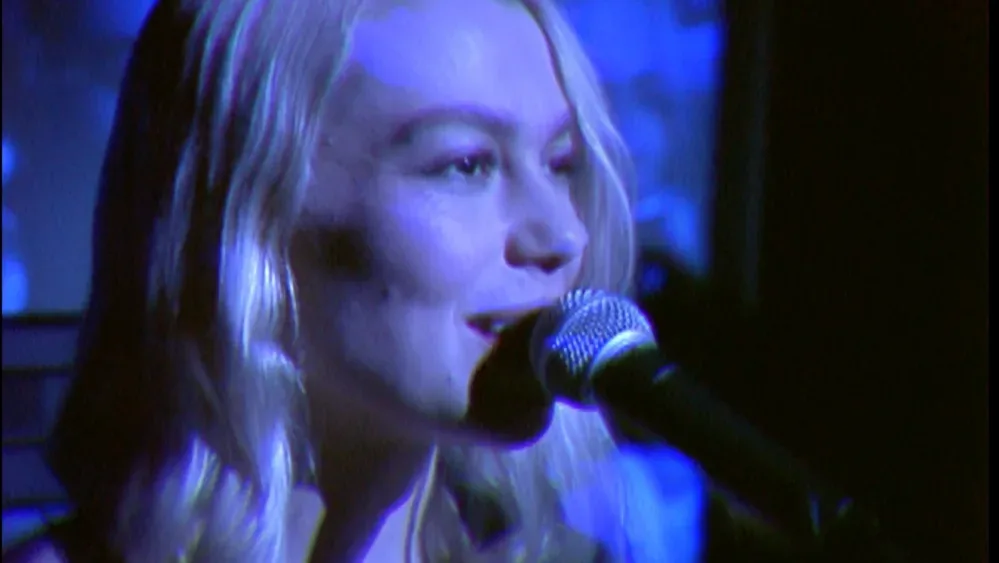
The session is part of the Sound Check at Cherry Lane Theatre series. Directed by Lance Oppenheim, it moves from a solo opening to a fuller acoustic ensemble and ends with the three singers alone. Bridgers performs “On Video,” the closing theme she wrote for Primetime, before Baker and Dacus arrive for “Haunted” and “Lost Boys,” both from Bridgers’ Lost Weekend album.
That structure gives the video a useful sense of scale. It does not attempt to reproduce a large arena staging or turn a brief studio performance into a conventional music-video spectacle. Instead, the arrangements keep drawing attention back to voices, instruments and the changing number of people in the room.
A return to the trio format
Bridgers, Baker and Dacus last appeared on camera together as Boygenius during a Saturday Night Live appearance in November 2023. The Cherry Lane performance is therefore a meaningful on-screen reunion, even though it is not framed as a new Boygenius release or a concert-scale comeback.
That distinction matters. Baker and Dacus previously contributed harmonies to “Haunted” and “Lost Boys” on Lost Weekend, so their presence here reconnects these versions to the album recordings rather than introducing an unrelated collaboration. The acoustic setting also makes the vocal relationship more exposed. Without a dense production surrounding them, the interplay among the three singers becomes the central musical feature.
What “acoustic” means here: an acoustic performance typically favors instruments that produce sound physically, such as acoustic guitars and keyboards, and uses a more restrained arrangement than a heavily produced studio track. It does not necessarily mean a song is performed with no amplification or recording equipment. In this case, the term is most helpful as a description of the pared-down musical presentation and its closer focus on harmonies.
Three songs, three visual and musical setups
“On Video” begins in dim light, with Bridgers positioned before a bank of television sets. Jay Gruska, a co-producer of the latest album, accompanies her on keyboards. The limited personnel give the opening a solitary character and establish the session as a performance built on gradual expansion rather than an immediate full-band entrance.
“Haunted” changes the energy. The song is presented as a brighter, more country-leaning number, with Bridgers joined by Dacus, Baker and four acoustic musicians. Dacus also carries a video camera during the performance, bringing an extra layer of image-making into a shoot that already foregrounds recording technology through the televisions in “On Video.”
Related coverage includes Phoebe Bridgers, Julien Baker and Lucy Dacus Reunite for Cherry Lane Performance.
For “Lost Boys,” the configuration contracts again. The accompanying musicians leave, leaving only Bridgers, Baker and Dacus. The arrangement is softer than the more spirited acoustic rendition of “Haunted,” which puts the emphasis squarely on the group’s blended singing rather than momentum or instrumental color.
This sequence is the session’s clearest artistic idea. Rather than treating all three songs as the same kind of live clip, it assigns each one a different degree of intimacy: solo performer and keyboard, expanded acoustic group, then the three-person vocal core. The approach is simple, but it gives the short program an internal arc.
Oppenheim’s connection to “Lost Boys” and “Primetime”
Oppenheim’s involvement is more than a one-off pairing. He also directed the official video for “Lost Boys,” the lead single from Lost Weekend. That earlier video included visual and thematic references to his 2024 three-part documentary Ren Faire, making this new performance a second Oppenheim-directed interpretation of the song.
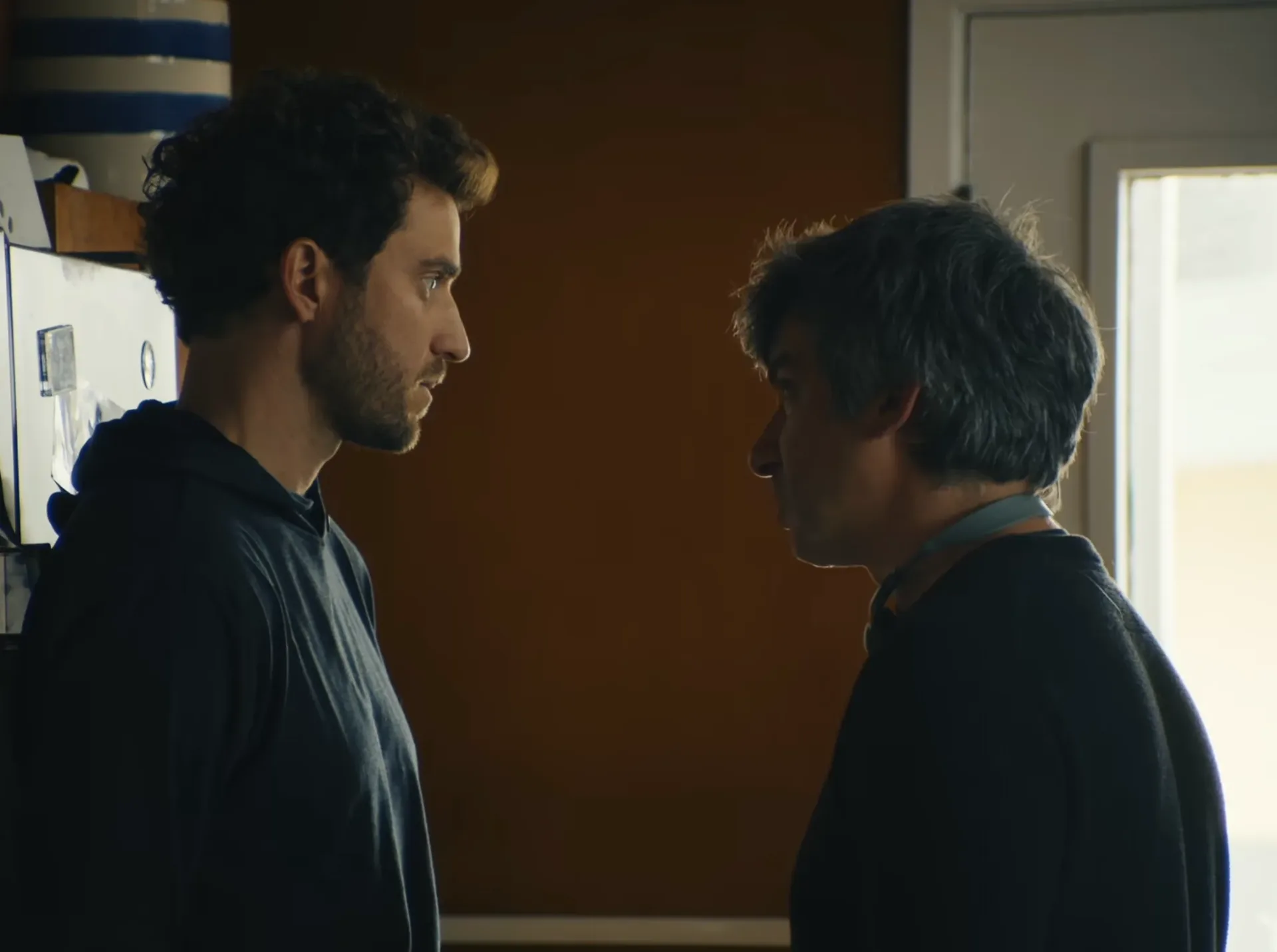
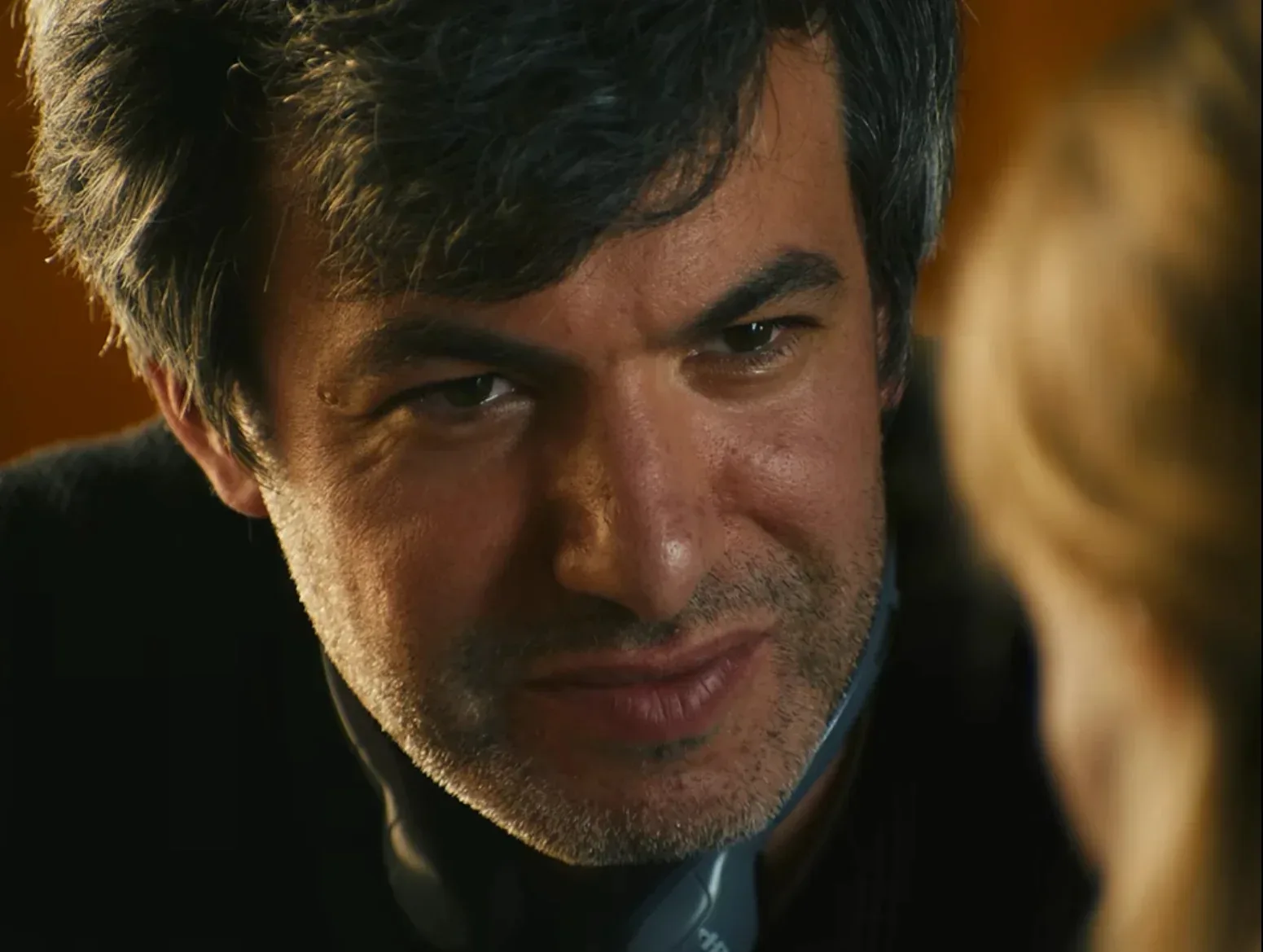
The director is also linked to Bridgers through Primetime, his dramatic-feature directing debut. The film dramatizes a story involving television personality Chris Hansen, and Bridgers has a supporting role as a decoy who attracts potential sexual predators. In addition to appearing in the film, she wrote its closing theme, “On Video.”
The connection helps explain why the session’s opening song and its setting feel so deliberately media-conscious. A television bank, a performer holding a video camera and a director returning to a song he has already filmed all create a throughline around the act of being watched and recorded. That is an interpretation of the presentation, not a stated narrative for the session, but the visual choices make the association difficult to miss.
A different kind of tour document
The performance was filmed after Bridgers’ three sold-out nights at Barclays Center in Brooklyn. Her current arena tour has a ban on cameras and phones, which means the Cherry Lane footage occupies an unusual role: it is an official, controlled performance document arriving at a time when informal audience clips from the tour are not part of the experience.
That does not make the video a replacement for an arena show. It is deliberately much smaller in scope. But it gives viewers a format that a vast venue cannot easily offer: close framing, audible space between the voices, and a set of arrangements designed for a theater room rather than a large crowd.
There is also a practical upside to the small format. A carefully recorded performance can preserve details that are often harder to register in a loud, large-capacity setting, particularly the handoff between lead and harmony vocals. For listeners interested in the specific blend that made Boygenius such a compelling unit, “Lost Boys” is the essential piece of the three-song set.
Why Cherry Lane Theatre fits the project
Cherry Lane Theatre is an off-Broadway venue described as New York’s oldest, and it is now owned and operated by A24, which released Primetime. The location connects the session to Bridgers’ film work while also supplying a setting far removed from the scale of Barclays Center.
That relationship between venue, film and song makes the session feel curated rather than merely convenient. “On Video” belongs to Primetime; Bridgers appears in the film; Oppenheim directed it; and the theater is operated by the company behind it. The project has a clear creative ecosystem, but the performance itself remains music-first, especially once Baker and Dacus join the frame.
The Sound Check at Cherry Lane Theatre series has also featured performances by Tame Impala and Blood Orange. Its existence suggests a repeatable format for artists who can use the venue’s close quarters to present material away from their usual touring scale.
Where to watch and what it signals
The complete Sound Check at Cherry Lane Theatre installment is available through A24’s YouTube channel. For Bridgers listeners, it offers a compact showcase of three different sides of her current work: the Primetime theme, a country-flavored ensemble performance and a hushed return to the Boygenius vocal formation.
It is especially valuable because it does not overstate what the reunion is. There is no supplied indication of a new Boygenius project, tour or release. What is here is more precise: a chance to hear three longtime collaborators revisit songs whose recorded versions already contained their shared harmonies, now arranged to foreground that connection.
For another look at how contemporary pop artists are using unusual textures and restless arrangements, see this look at Troye Sivan’s “She’s the Best”.