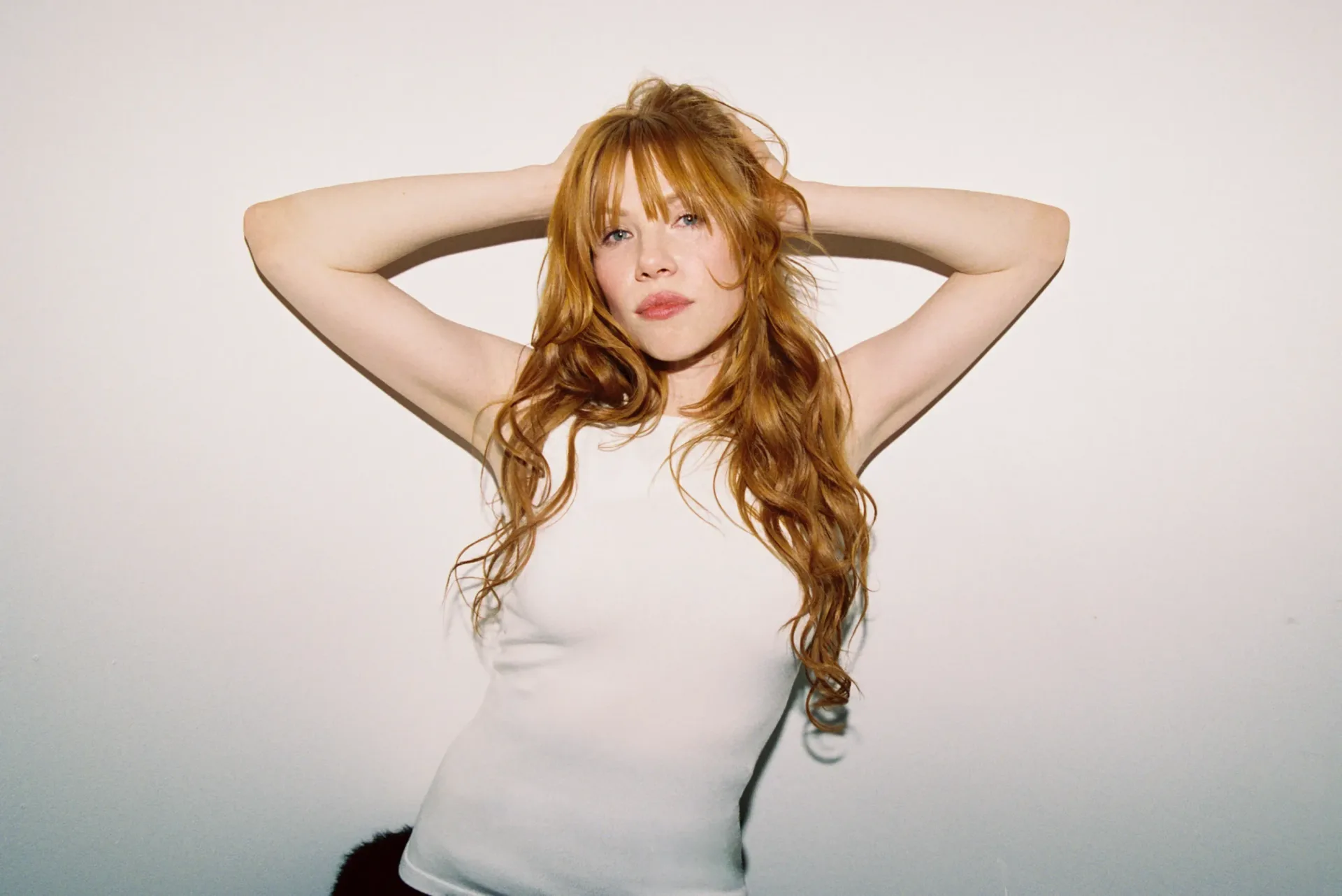
Troye Sivan’s She’s the Best does not appear interested in taking the most obvious victory lap. After the dance-pop charge associated with 2023’s Something to Give Each Other and its singles “Rush” and “Got Me Started,” a straightforward escalation would have been easy to imagine: bigger hooks, brighter release, a record engineered for perpetual nightlife. Instead, Sivan’s fourth album takes a more restless route. “Party” may be one of its lead singles, but the 12-track project is not simply a party record. It is a pop album that treats desire, fantasy and loneliness as inseparable forces.
The result is an ambitious, sometimes unruly collection with a strong sense of atmosphere. Its sounds draw heavily from ’90s reference points, moving among glitch-hop, drum and bass, UK garage, breakbeats, synthetic textures and guitars. That stylistic breadth means She’s the Best is not defined by a single clean lane. But the trade-off is purposeful: it favors character and feeling over the instant uniformity that can make a record easy to summarize.
A dancefloor album with the lights turned inward
Something to Give Each Other was shaped by the freedom of reconnection after lockdown, while also examining the emotional debris of a relationship. She’s the Best preserves the physicality of dance music but changes the angle. Its body-focused songs are often charged by an emotional question: what happens when momentary attraction runs into a wish for something lasting?
That tension is central to the album. Sivan can be candidly carnal, funny and knowingly blunt, yet those impulses repeatedly give way to a more vulnerable admission: immediate pleasure does not cancel isolation. On “I Do This For You,” the search for local romantic possibility is followed by an apology for spiraling into hysteria and a plain acknowledgment of loneliness. The juxtaposition is crucial. The song does not frame lust and longing as opposing identities; it treats them as simultaneous states.
For more context, explore Dreambound’s Webtoon Identity Revealed: Ro Stein and Ted Brandt’s Fantasy Is Part of DC Vertigo’s Fanatic.
“Cowboy” and “Embarrassingly” push the record further into interior space. The former concerns a man arriving in a dream, while the latter turns memory of a former lover into a particularly private confession. These details give the project an intimacy that is easy to miss if its electronic surfaces are treated as mere decoration. The synths, rhythmic momentum and club-derived styles are not disguising the songs’ emotions so much as giving those emotions motion.
What the genre shifts contribute
The album’s use of multiple electronic-pop touchstones is more than aesthetic name-dropping. Each term points to a different way a song can create energy or instability:
- Drum and bass typically emphasizes rapid, breakbeat-driven percussion and deep low end, creating urgency and speed.
- UK garage is associated with shuffled, syncopated rhythms; its groove can feel loose, physical and conversational rather than rigidly four-on-the-floor.
- Glitch-hop incorporates deliberately fractured or digitally manipulated rhythmic details, making polish feel interrupted or unsettled.
- A breakbeat is a drum pattern built around breaks rather than a simple straight dance pulse, often adding swing, friction or a sense of suspended momentum.
Those approaches suit an album concerned with emotional contradictions. A stable, universally sleek pop framework could have made its confessions feel overly resolved. Here, the changing rhythms and textures support a record that resists settling down. “Troye Meets World,” powered by UK garage, compresses its idea into a body-and-music encounter: sound meets physical response. “FF,” meanwhile, places Sivan’s verses over a languid breakbeat before his chorus shifts into Auto-Tuned falsetto amid a dense instrumental wash.
Related coverage includes Troye Sivan’s ‘She’s the Best’ Turns Pop Ambition Into a Restless, Intimate Statement.
Auto-Tune is often discussed only as pitch correction, but it can also be used as a vocal texture. In this setting, the processed falsetto helps make the voice feel less like a fixed centerpiece and more like one element moving through the production. That is a useful way to understand Sivan’s performance across the record.
Voice as texture, not a contest of volume
Sivan does not approach these songs as a vocalist trying to overpower every arrangement. His strength is more selective: he can place a phrase precisely, then allow the track to carry the emotional weight around it. The approach gives the album its sense of restraint even at its most explicit. He often sounds close, dry and conversational, rather than grandiose.
That choice matters on material so dependent on mood. A full-throated, attention-commanding delivery could flatten the ambiguity of songs built around yearning and uneasy self-awareness. Instead, Sivan’s voice frequently works like another instrument in the arrangement. His lines can glide across a beat, sharpen a joke, or dissolve into the synth architecture. On “FF,” the contrast between the slinking verse vocal and the altered high chorus embodies the album’s larger push-pull between intimacy and excess.
There is risk in that approach. Listeners seeking a conventional vocal showcase may find the performances understated. Yet understatement is part of the record’s design. Sivan is prioritizing tone and storytelling: the feeling of a thought arriving in private, perhaps before it has been fully edited into a clean pop declaration.
Plainspoken desire and the value of discomfort
The writing can be exceptionally direct. “Canada Dry” is described as a “slinky back arch pop” song centered on a Canadian object of desire, and its premise is intentionally not coy. The album’s sexuality is neither treated as a coded aside nor turned into a hollow provocation. Sivan has long made explicitly queer pop, including “Bloom” and “My My My!,” and She’s the Best continues that openness while complicating it with need, self-consciousness and the wish for permanence.
That directness may make some listeners uncomfortable, particularly when a lyric closes the usual distance between private thought and polished pop language. But it also prevents the record’s emotional core from becoming abstract. These songs are not merely about “desire” in a generalized sense. They are about wanting specific people, replaying imagined scenarios, remembering previous intimacy and recognizing that a fantasy cannot necessarily solve a deeper ache.
The dedication to the women around Sivan adds another dimension to its perspective. The album is populated by collaborators including Jack Antonoff, George Daniel, Finneas, Tayla Parx and longtime collaborator Leland, who co-writes every song. Their presence points to a substantial creative network, but the project still lands as a distinctly curated statement. Rather than smoothing every influence into a uniform product, it leaves room for contrasting impulses and edges.
Ambition over easy coherence
Not every album needs to behave like a perfectly optimized playlist. She’s the Best makes a case for an alternate pop ambition: one where a project can move through disparate production ideas, explicit humor, dreamy desire and real melancholy without pretending they are all the same mood. It is less interested in providing a single unbroken party than in tracing what can coexist inside a person who goes out, hooks up, remembers, fantasizes and still feels alone.
That does not mean the record abandons pleasure. “Party” carries deadpan fun, and “Troye Meets World” embraces the body-first logic of club music. But pleasure here is not presented as a finish line. It is an experience that can be liberating, fleeting, absurd, tender or insufficient depending on the song and the moment.
At 31, Sivan has spent more than half his life in public view, beginning as a YouTuber in Australia and continuing as a pop artist navigating sexuality in the open. She’s the Best suggests an artist increasingly comfortable declining the safest route to broader stardom. Its weirdness is not a detour from its confidence; it is evidence of that confidence. The album’s uncertainty is emotional, not artistic. Sivan knows the world he wants to build, even when its narrator cannot quite decide what he needs from the people inside it.