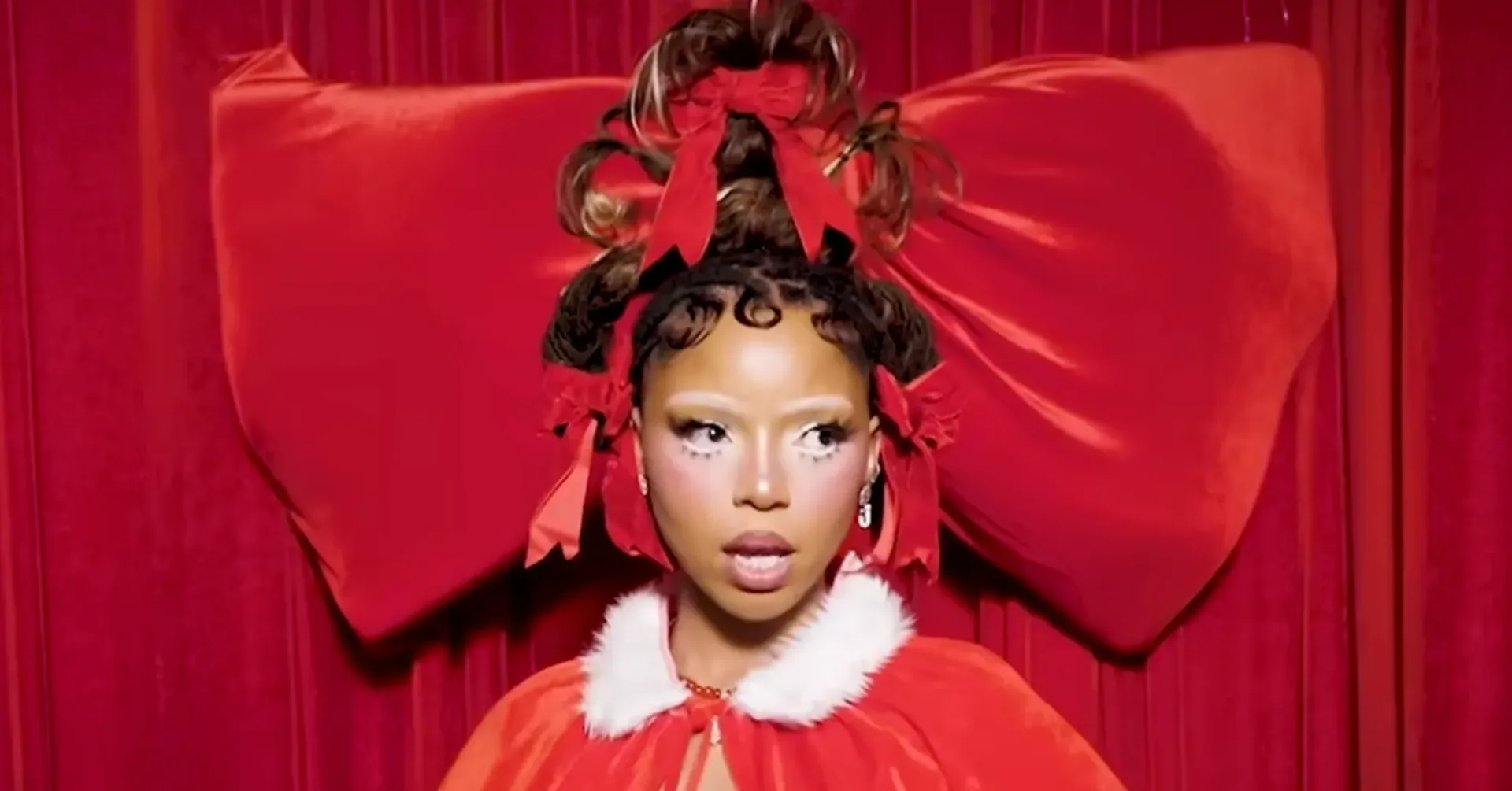
Christmas songs are often built to be broadly familiar: snow, lights, romance, family rituals and the same cast of seasonal characters. Chlöe Bailey has taken a conspicuously different route with MRS CLAUS DONT HAVE 2 KNOW, a holiday single released Friday, Nov. 6. The record uses a playful but adult premise involving Santa Claus, and the reaction has been as split as its title is provocative.
Some listeners have embraced the joke and the knowingly “naughty” framing. Others have objected to sexual material being attached to Christmas imagery at all. The discussion is not simply about one lyric or one holiday trope. It has also reopened a longer-running argument around Bailey’s solo presentation: whether a performer should be judged differently when she moves into more overtly sensual material after audiences first knew her in a different context.
Whatever side listeners take, the early commercial snapshot suggests that curiosity and criticism are happening at the same time. Bailey reposted an update saying the song hit No. 3 on the U.S. iTunes Top Holiday Songs chart on Friday, responding with a brief “Mwahaha.” That placement does not settle whether the song will return to playlists in future Decembers, but it does show an immediate audience for a Christmas release that clearly was not trying to sound traditional.
A deliberately grown-up Christmas premise
Bailey telegraphed the tone ahead of release with “naughty AND nice this year.” That wording matters because it places the song in a longstanding seasonal contrast: Christmas culture often divides its imagery between sweetness and mischief. In this case, the mischief is the point, with the song built around the idea of Santa having a secret romantic encounter.
The difference is that MRS CLAUS DONT HAVE 2 KNOW applies that innuendo to characters usually treated as harmless holiday fixtures. For listeners who want seasonal music to stay within the cozy, all-ages lane, that combination is exactly what feels jarring. For listeners reading it as a cheeky novelty, the exaggerated setup is the joke rather than an attempt to remake Christmas music as something solemn or transgressive.
That divide reached daytime television even before the single arrived. Discussing the title on the Nov. 3 episode of Today with Jenna & Sheinelle, Jenna Bush Hager asked whether Bailey was suggesting a hookup with Santa. Sheinelle Jones called the idea “naughty,” while the two also joked about the apparent infidelity toward Mrs. Claus. The exchange captured the immediate, surface-level reaction the title seems designed to provoke: surprise first, then debate over how far the gag goes.
What “sexualizing the holiday” means in this debate
Critics using that phrase are not objecting to a technical change in the music itself. They are objecting to the context: sexual suggestion placed beside an occasion and mythology many people associate with children, family gatherings and nostalgia. It is a cultural objection, rooted in the expectation that holiday releases should be universally comfortable background music.
Supporters see a different context. Christmas music is also made for adults, and Bailey’s defenders have argued that the criticism is disproportionate because the track is humorous. Under that reading, the Santa-and-Mrs.-Claus setup is not a serious commentary on marriage or a replacement for traditional carols. It is a knowingly ridiculous scenario designed to be memorable during a crowded holiday release window.
Related coverage includes Chlöe Bailey’s ‘MRS CLAUS DONT HAVE 2 KNOW’ Sparks Holiday Debate.
Neither reading requires listeners to enjoy the song. They explain why the response is so polarized: audiences are evaluating not just its sound, but what they believe seasonal pop is permitted to do.
The response is tied to Bailey’s solo career
The controversy also connects to criticism Bailey has received since beginning her solo releases outside Chloe x Halle. Her 2021 debut single Have Mercy introduced a more sexually expressive image, and some listeners struggled to square that with the artist they had watched perform alongside her sister, Halle Bailey.
That history helps explain why a joke-filled Christmas release has become part of a larger conversation. The reaction is not solely about Santa Claus. It is also about the expectations some people carry from an artist’s earlier work, especially when audiences feel they have watched that artist grow up in public.
There is an important distinction between a performer changing creative direction and a listener deciding the new direction is not for them. Bailey’s recent single puts both positions in view. A fan can prefer Chloe x Halle’s work or want a more conventional holiday song. At the same time, a more mature solo approach is not inherently a contradiction just because an audience encountered the performer at an earlier stage of her career.
The argument often becomes sharper when artists who began young are involved. Familiarity can produce a sense of ownership in audiences, even though a public-facing image is not a permanent agreement to remain in one mode. Bailey’s defenders are pushing back on precisely that impulse: the idea that an adult woman’s sexual expression needs special justification because some listeners preferred an earlier version of her public persona.
Not Bailey’s first holiday recording
MRS CLAUS DONT HAVE 2 KNOW is not Bailey’s first encounter with Christmas music, but it is a notable contrast with her earlier holiday work. She previously recorded Winter Wonderland for the 2023 film Candy Cane Lane, a selection associated with a far more familiar, traditional side of the seasonal catalog.
Placed together, the two releases make clear that “holiday music” is a wide category rather than a single style or mood. Winter Wonderland carries the recognition of a standard. The newer song uses recognizable Christmas figures as the basis for adult humor. The material may share a seasonal setting, but the intended experience is plainly different.
That distinction is useful for listeners navigating the conversation. Disliking the newest single does not mean Bailey has never approached the holidays conventionally. Likewise, the existence of a traditional recording does not mean every later Christmas release must follow that model. The new song’s title, teaser and premise all indicate that Bailey was pursuing a particular comic tone rather than accidentally stumbling into controversy.
Why the iTunes placement matters—and what it does not prove
Bailey’s reported No. 3 position on the U.S. iTunes Top Holiday Songs chart is a concrete sign of opening-day interest. It shows that the song found buyers quickly enough to rise near the top of that specific chart. For a release that generated conversation before listeners could hear it, that is meaningful evidence that debate did not stop people from seeking it out.
It should not be treated as a guarantee of a lasting seasonal standard. A chart position is a moment-in-time measure, and one opening-day placement cannot answer whether listeners will return to the song year after year. Bailey herself appeared to treat the early result with playful villain energy rather than as a grand verdict, replying to the reposted update with “Mwahaha.”
Still, the placement reinforces a practical reality of modern pop: a divisive premise can be an effective attention hook without resolving the underlying disagreement. Some people may press play because they enjoy Bailey’s work. Some may be drawn by the joke. Some may simply want to understand the online argument. Those are different motivations, but all can contribute to an immediate chart showing.
A holiday track built for a narrower lane
The strongest case for reading the single on its own terms is that it does not present itself as a replacement for every kind of Christmas song. Its “naughty AND nice” campaign language tells the audience in advance that it is aimed at a more adult lane. The title itself makes the premise unmistakable.
That transparency does not eliminate criticism, and it is reasonable for listeners to decide they do not want this kind of humor in their holiday rotation. But it does mean the release is best understood as a deliberate tonal choice, not as an attempt to disguise an adult concept inside a conventional family carol.
Bailey’s single ultimately illustrates how much cultural baggage a Christmas song can carry. Seasonal characters are shared reference points, so altering their tone gets an outsized response. The same familiarity that makes the joke easy to understand also makes it easy to debate. Whether MRS CLAUS DONT HAVE 2 KNOW becomes a repeat December listen remains uncertain, but its first day has already established the central point: for some listeners, it is a funny adult detour; for others, it crosses a line that holiday music should leave alone.
That tension is likely to continue around Bailey’s work more broadly, as it has since Have Mercy. Her early chart showing does not make the criticism disappear, and the criticism does not erase the audience that responded. In an adjacent music conversation, a debated Drake verse likewise showed how quickly pop discourse can outpace certainty. Bailey’s holiday track is different in subject, but the pattern is recognizable: a brief piece of music becomes a larger argument about image, intent and what audiences expect from the artist behind it.