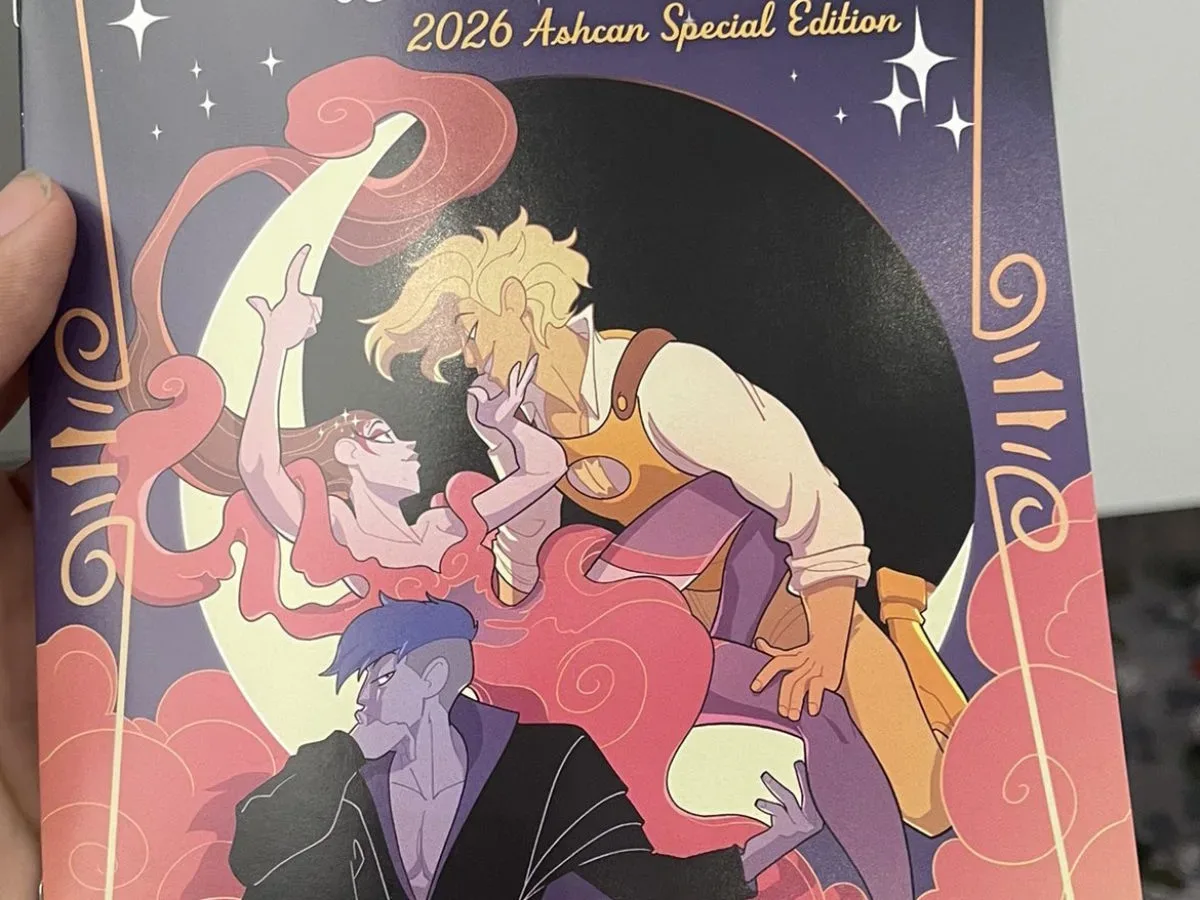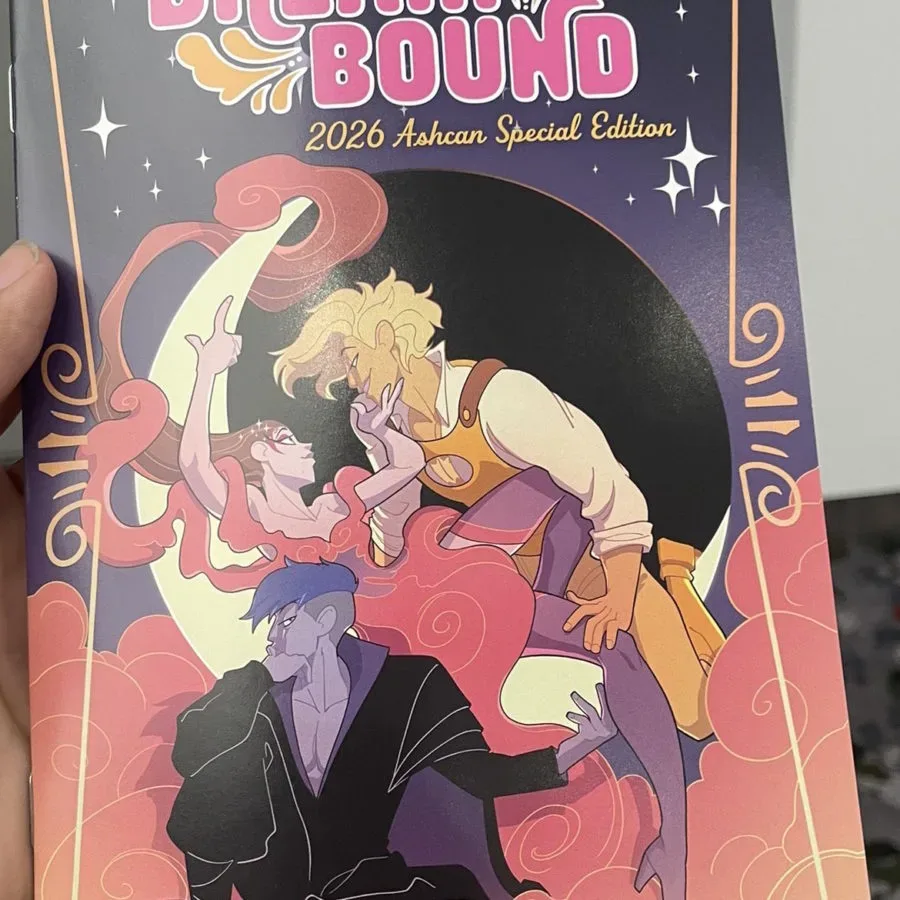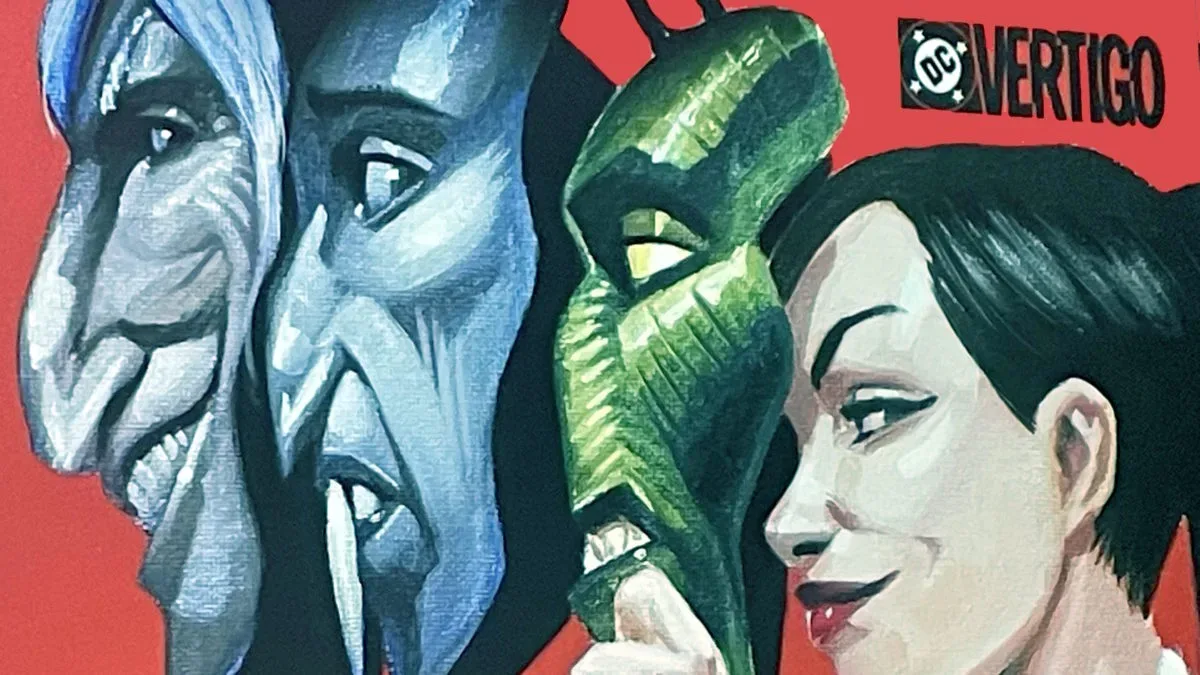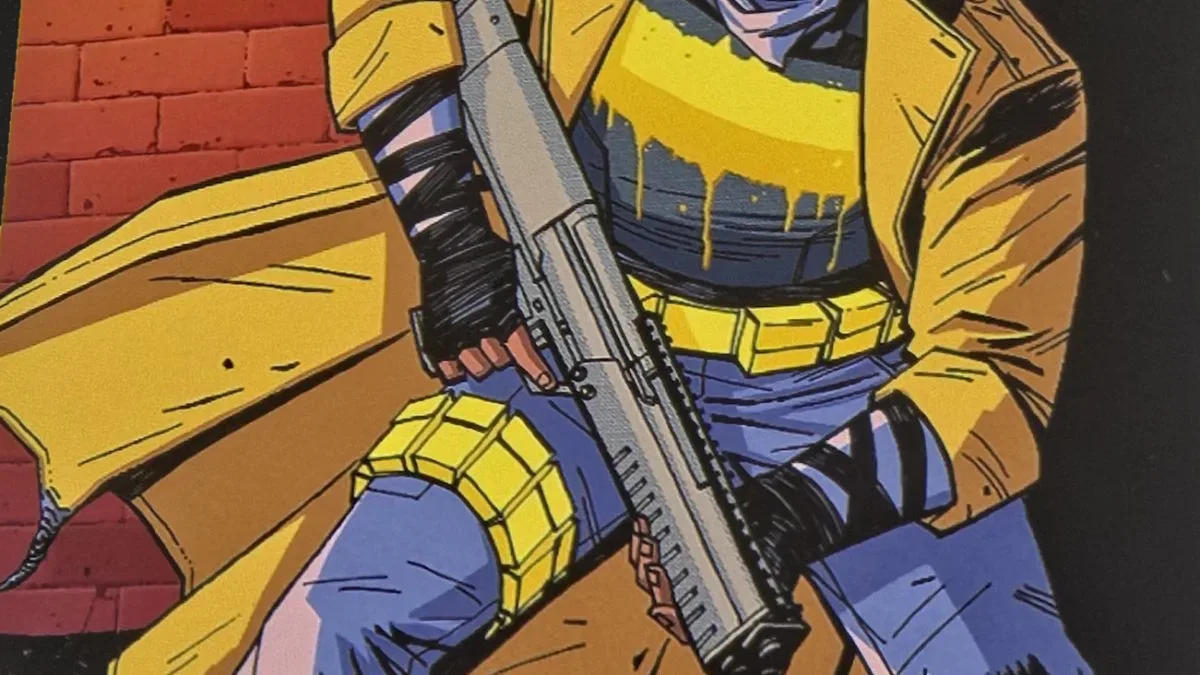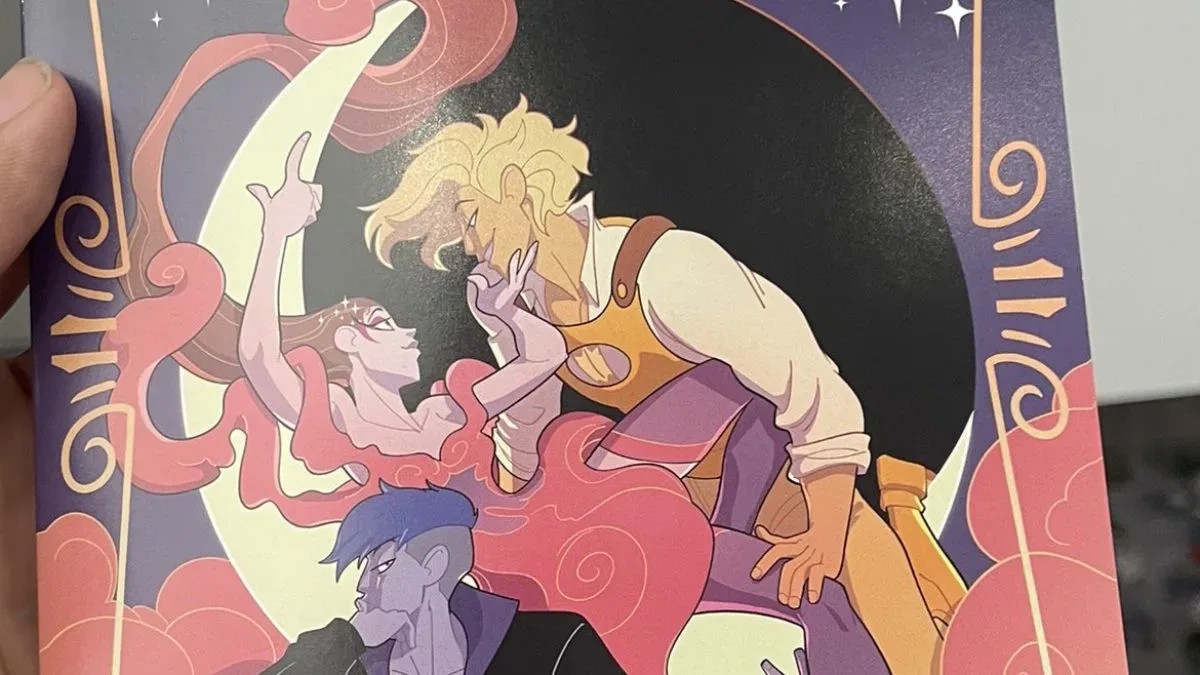
One of the more playful reveals from New York Comic Con is also a lesson in how a comic can hide in plain sight. Dreambound, a fantasy series already running on Webtoon Canvas under the name Sadie Wilson-Finley, has been revealed as a DC Vertigo project by Ro Stein and Ted Brandt. Its apparent independence was part of the premise: Dreambound is not merely a companion title to Fanatic by Grace Ellis and Hannah Templer. It is the fictional comic that exists inside Fanatic’s world.
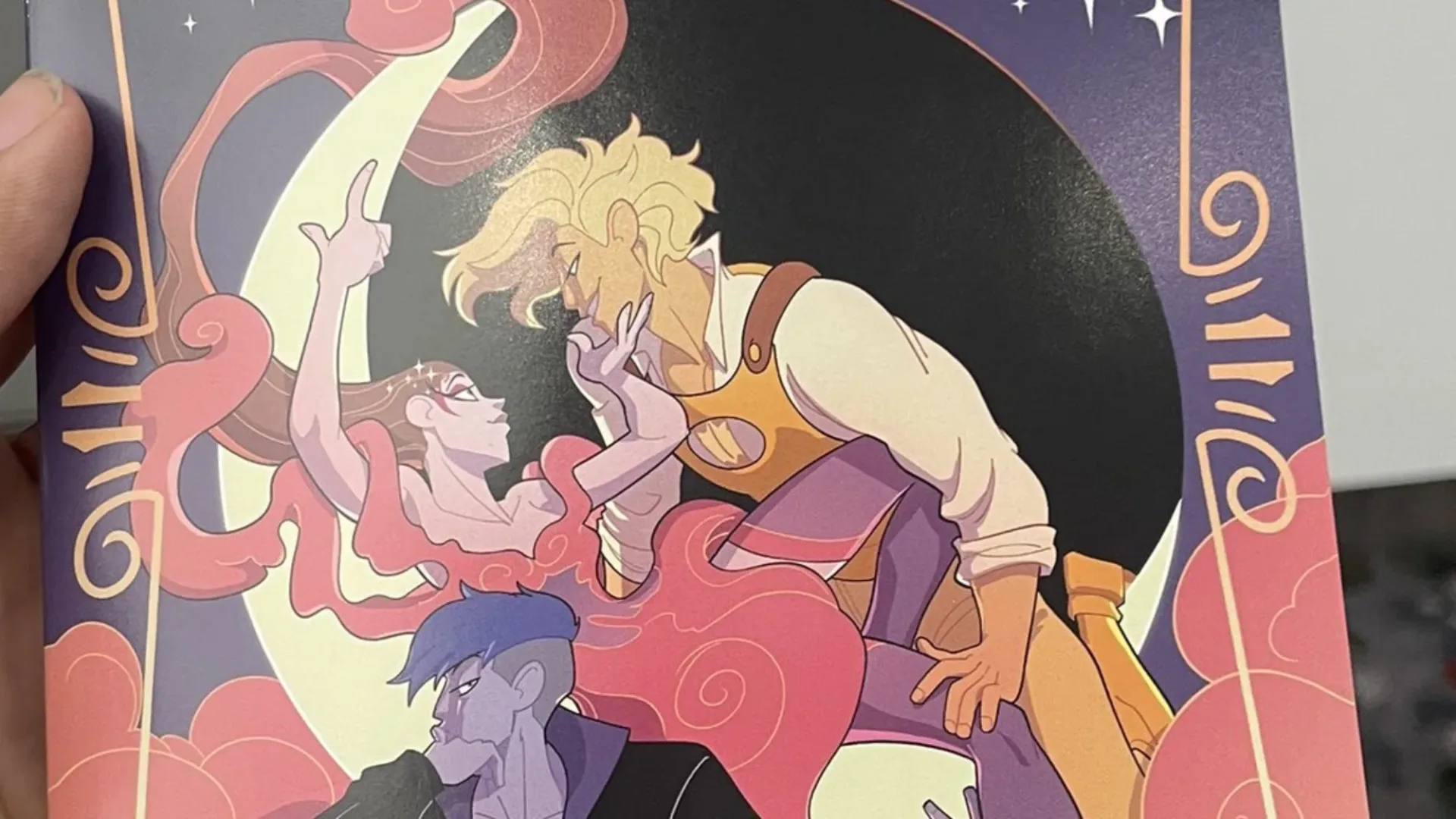
That structure gives the Webtoon series a new meaning without changing what it offers readers on its own terms. Dreambound is a fantasy about 16-year-old Aisling, whose orderly life starts coming apart after she learns that the glamorous prince appearing in her dreams is real. Following him into a place known as The Dream places her between that princely figure, described as a heroic golden boy, and his charismatic but ethically questionable brother. Her growing connection to The Dream is presented as a central mystery.
The series began publishing at the start of September, with new installments scheduled for Fridays. Readers who encountered it as a standalone Canvas comic can therefore continue to approach it as a serial fantasy, while the Fanatic reveal adds a second layer: it is also an artifact of another story about fandom, creative work and the potentially damaging ways people relate to both.
A comic embedded in another comic’s reality
Fanatic was initially announced among DC Vertigo’s upcoming slate and had been planned for summer 2026, but did not arrive during that window. It has now been reannounced alongside the Dreambound reveal. Ellis and Templer’s book concerns a woman whose fixation on a comic and its creator becomes a deadly parasocial obsession, warping her sense of reality.
Parasocial is a term used for a one-sided emotional relationship, in which someone can feel a close bond with a public figure, artist or creator who does not personally know them. In Fanatic’s setup, the relationship is not a distant background concern; it is the engine of the plot. Making Dreambound a readable, outward-facing comic within that fiction turns the audience’s relationship with the material into part of the project’s design.
That does not mean every Dreambound reader must treat the fantasy series as a clue hunt or a prelude. The stated premise contains a complete entry point: a teenager, an impossible dream realm, and two brothers with competing pulls on her future. But its later print presentation can add a deliberately different perspective. A reader may be able to encounter Dreambound as Aisling’s supernatural story, then see it as the object that another character in Fanatic encounters and becomes consumed by.
It is an unusually literal version of a “comic within a comic.” Fiction has long used invented media to reveal character, establish a subculture or create a mirror for its own themes. Here, the embedded work is being published in a real format as well, rather than simply appearing as a few imaginary covers or panels. The format makes the premise more tactile and gives the in-universe comic a life beyond an explanatory prop.
What the flipbook format means
In print, Dreambound will appear as a flipbook in Fanatic. A flipbook in this context is a publication with material that can be read from opposite ends: readers turn the physical object over to begin the other section. It is a format well suited to related stories that retain distinct identities, and especially appropriate for a project whose premise rests on crossings between stories, audiences and realities.
The announcement does not establish a full reading order, issue count, print date or further distribution details for Fanatic. That uncertainty is worth keeping in mind. What is clear is the intended relationship: Dreambound will be present in the print edition as Fanatic’s internal comic, not simply as an unrelated digital extra.
The convention presentation reportedly leaned into that boundary-blurring approach, with a character from the comic interrupting to object to the announcement. That theatrical device fits a project interested in the friction between creators, fiction and fandom. It also makes the reveal feel less like an ordinary credit update and more like an extension of Fanatic’s concept.
Why the hidden byline matters
The pseudonymous Webtoon credit is central to the reveal. Before the convention disclosure, Dreambound was attributed to Sadie Wilson-Finley. It is now known to be made by Stein and Brandt. The decision to initially use a different name allowed the series to appear as the sort of comic a Fanatic character might discover, discuss and form an attachment to, without immediately advertising the larger connection.
There is a practical storytelling effect here. Readers who start with Dreambound have access to a fantasy premise without an upfront explanation that it is tied to a story about obsessive fandom. Readers who arrive through Fanatic, meanwhile, can understand why that comic has an audience within the fictional setting and can assess its appeal directly rather than being asked to imagine it.
The approach also gives the eventual Fanatic release an extra dimension without requiring Dreambound to abandon its serial life. Its Friday episode schedule keeps the digital project moving in public, while the print flipbook gives it an additional function. Rather than treating Webtoon as a marketing sample for print, the setup makes the Webtoon run part of the fiction’s architecture.
Dreambound’s fantasy premise, explained
The Dream is described as a realm where anything is possible, a phrase that establishes possibility but also implies instability. Aisling does not simply visit a magical place; she enters a setting in which ordinary rules may not hold and where her own unknown connection is important enough to be dangerous.
The two brothers create the story’s immediate emotional and moral tension. One is a prince with a hero complex, which suggests admirable intentions mixed with a potentially rigid need to be the rescuer. The other has a magnetic presence but questionable morality, and his fascination with Aisling may expose the truth of her bond with The Dream. Those elements establish a romantic and supernatural triangle while leaving the key answers—what Aisling is connected to, why the brothers matter to that secret, and what The Dream wants—unresolved.
Its lead is specifically 16 years old, so Aisling’s controlled life and sudden exposure to a limitless realm can also be read as a coming-of-age setup. That is an interpretation of the supplied premise rather than a disclosed plot outcome: the published description does not say what choices she makes or where the story is headed. Still, the contrast between control and a world of unrestricted possibility gives Dreambound a clear emotional foundation independent of its Fanatic role.
Vertigo’s creator-focused context
The reveal arrives under the revived DC Vertigo imprint. Vertigo originally launched in January 1993 under editor Karen Berger, developing from DC’s earlier mature-reader material. Its early identity included series connected to the broader DC landscape as well as original creator-participant works, including Preacher, Fables, 1000 Bullets and Transmetropolitan.
DC relaunched Vertigo in 2024, with executive editor Chris Conroy, who also oversees Black Label, leading the line. The revived imprint’s stated focus is wholly original, creator-participant stories outside the DC Universe. Dreambound and Fanatic fit that positioning neatly: they are not presented as superhero continuity material, and their appeal lies in original genre storytelling as well as an experimental connection between a vertical-scroll webcomic and a physical book.
That blend of format and premise is perhaps the most useful takeaway. Dreambound offers an accessible fantasy hook for Webtoon readers, while Fanatic frames the existence of such a comic as part of a more unsettling story about access, attachment and creator-audience boundaries. The two projects do not merely share a publisher; they are designed to reflect on one another.
What readers can do now
Dreambound already has several episodes available on Webtoon Canvas, providing the immediate route into Aisling’s story. The supplied information does not give a new on-sale date for Fanatic, so readers should not infer one from the reannouncement alone. Nor does it establish a broader collected-edition plan beyond the promised flipbook appearance in Fanatic’s print version.
For fans tracking comics that use unusual structures, the key details are straightforward: Stein and Brandt are the creators behind the previously pseudonymous Dreambound; Ellis and Templer’s Fanatic is the larger work it inhabits; and the eventual print object is intended to make that connection physical. It is a smart match between form and subject, particularly for a story examining how people can mistake a relationship with media for a relationship with the people behind it.
For another forthcoming creator-driven comic project with a very different supernatural angle, see TMNT: The First Ronin’s Yōkai prequel announcement.