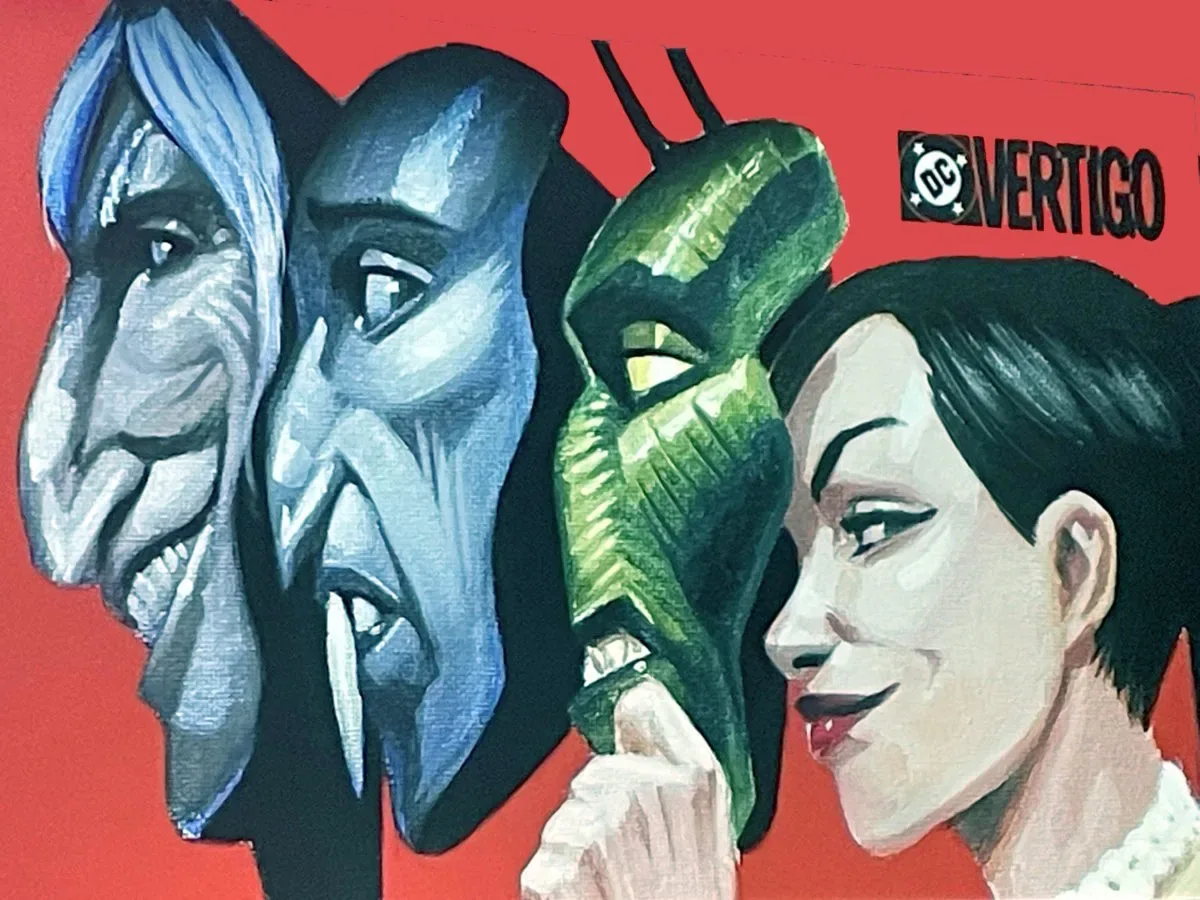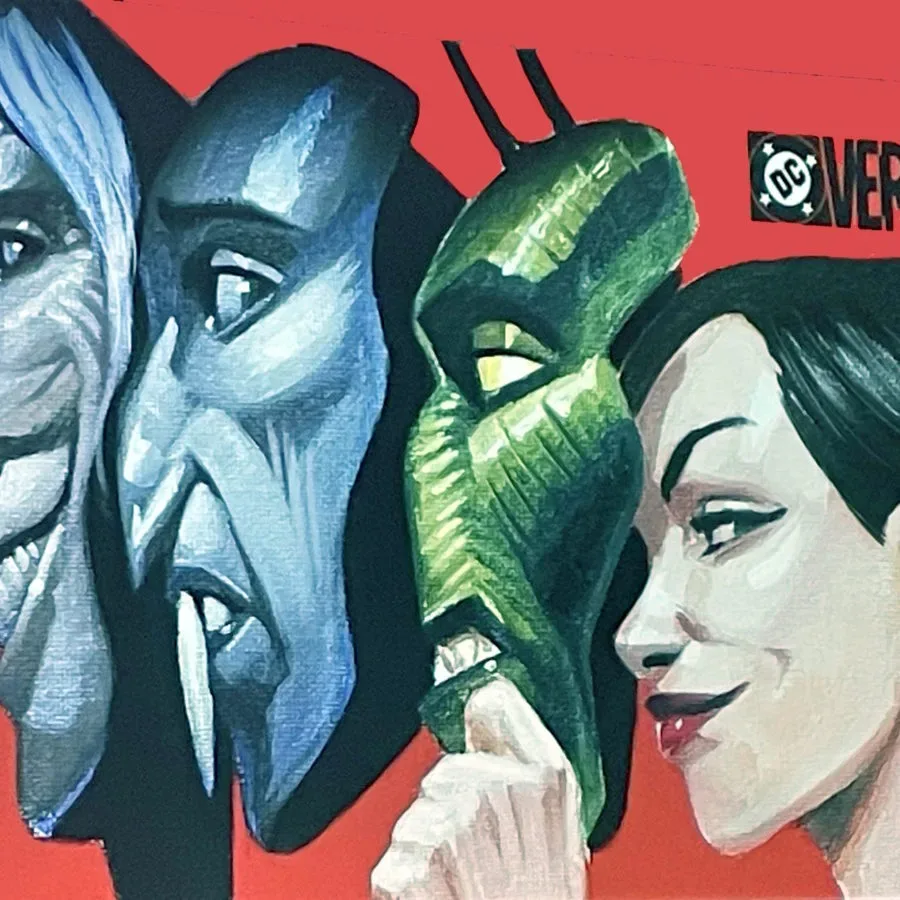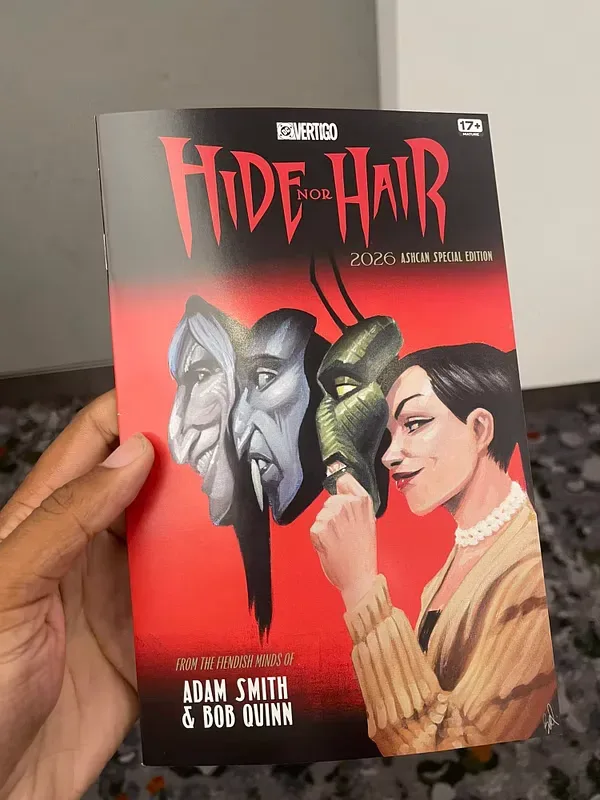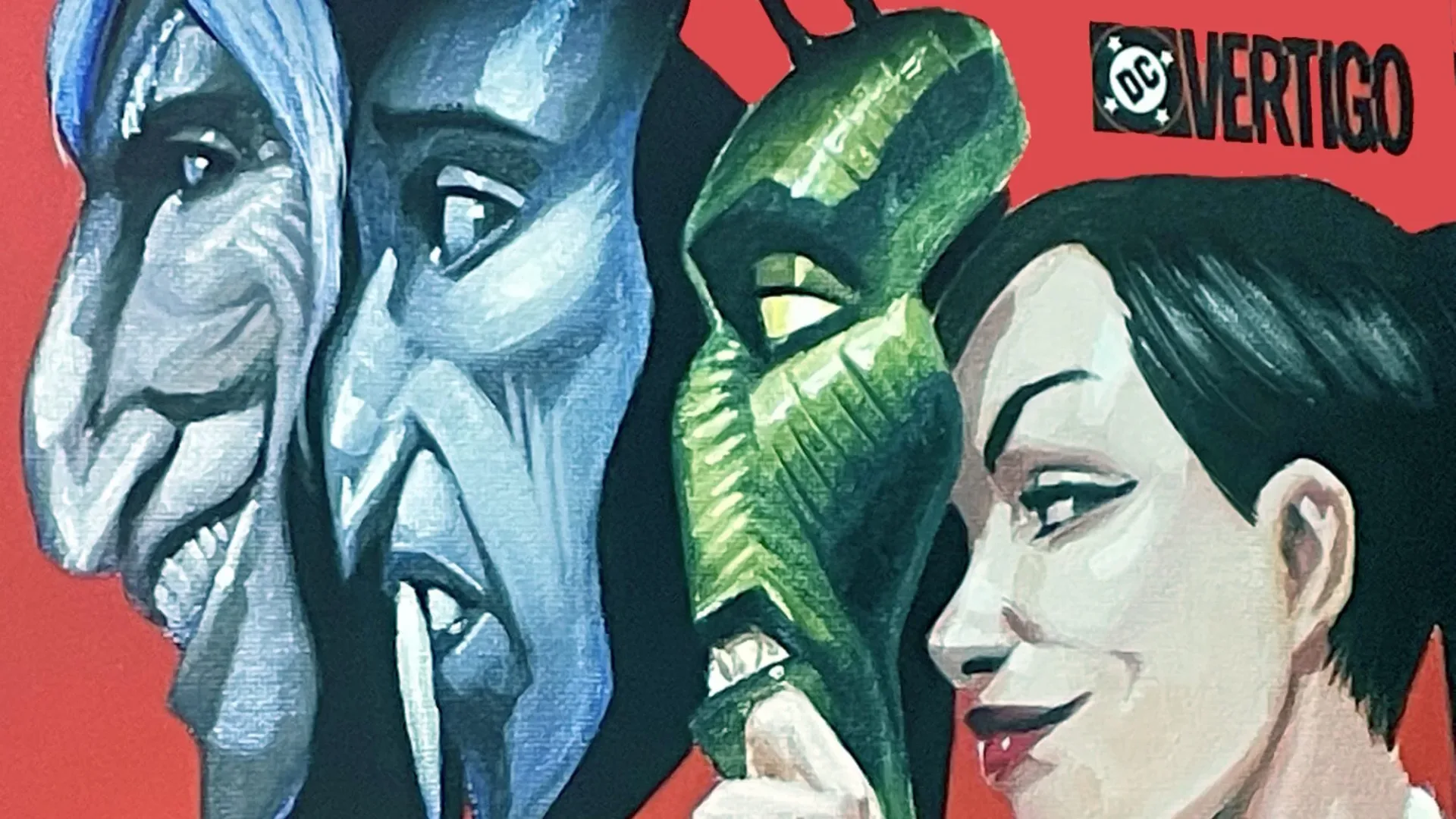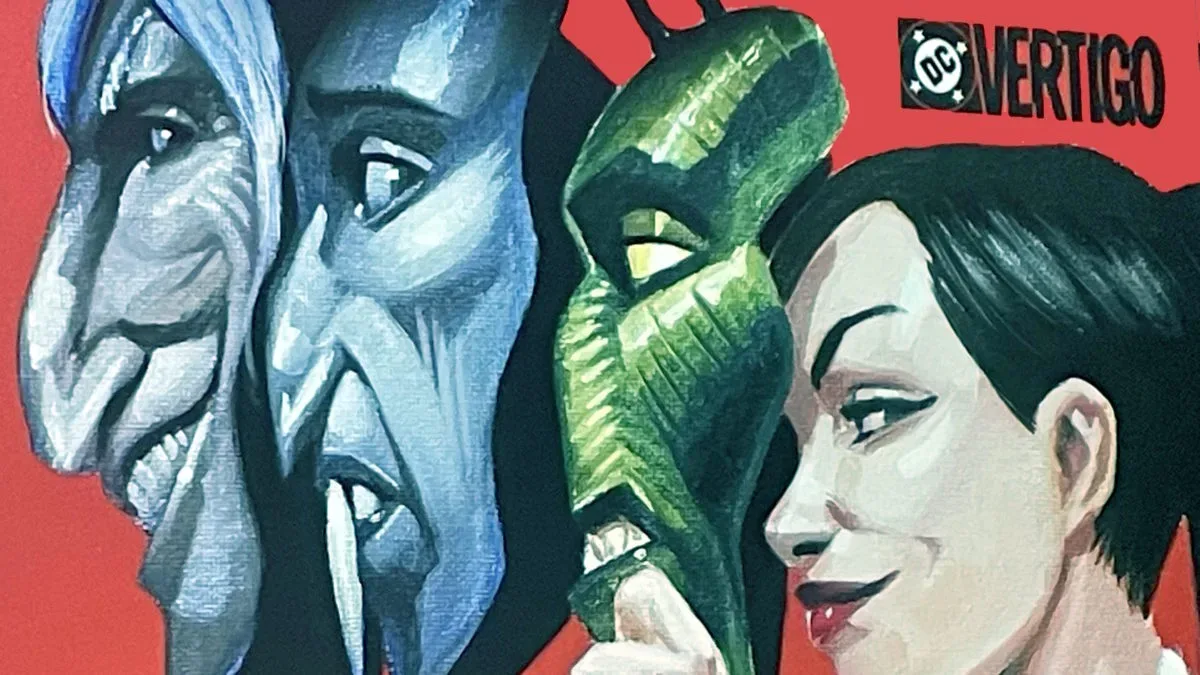
DC Vertigo has added a new original horror project to its revived line: Hide Nor Hair, by writer Adam Smith and artist Bob Quinn. Revealed during New York Comic Con, the comic follows a makeup artist working in a film-noir-era Hollywood whose specially made masks suddenly begin to live.
That concise premise puts performance, artifice and horror in the same room. A mask is ordinarily an object designed to create an illusion: it lets an actor become somebody else, whether that means a glamorous screen character, a monster, or a stranger with a concealed identity. In Hide Nor Hair, the central complication is that those crafted objects are no longer staying inert. The idea naturally lends itself to body horror, supernatural menace and the uneasy tension of noir storytelling, although further plot, format and release details have not been specified.
A premise built for noir-horror
Film noir is a style of crime drama associated with shadowy visuals, morally compromised characters, looming danger and people who are seldom exactly who they appear to be. Putting a makeup artist at the center of that world gives Hide Nor Hair an especially fitting lens. The protagonist’s day job is fundamentally about transformation, using physical materials to manufacture faces and identities for the screen.
Once the masks themselves start coming alive, the story’s horror engine is immediately clear: the line between a creation and its creator has broken down. The makeup artist is not simply confronted by a monster from outside the studio. Their own work becomes the threat. That is a strong foundation for a story where the tools of cinematic illusion may carry real consequences.
There is also a useful distinction between the book’s stated setting and an assumption about its plot. The announcement establishes Hollywood in a noir era and living masks; it does not yet identify the makeup artist, explain what animates the masks, name other characters, or say whether the series will approach its horror through crime, fantasy or something else. Those unanswered questions leave room for the comic’s eventual pitch to reveal how far its central nightmare reaches.
Smith and Quinn arrive with different creative routes
Smith’s prior graphic-novel work includes Long Walk to Valhalla, Jim Henson’s Beneath the Dark Crystal, At the End of Your Tether and Angel + Spike. Smith also participated in Scott Snyder’s first DC Talent Workshop. That background spans original graphic fiction and established licensed worlds, which makes a creator-driven Vertigo title a logical next stop.
Quinn comes to the project after first spending a decade in video game development before moving into comics. His credits include work connected to James Bond, Red Sonja, The Green Hornet, The Lone Ranger, Way of X, Knights of X, X-Men, Captain America, Champions, Cable and Alligator Loki. He also co-created Kill Your Darlings with Ethan S. Parker and Griffin Sheridan.
For Quinn, Hide Nor Hair is a DC debut; it is also described as Smith’s first major DC Comics project. The pairing matters because the concept will need visual storytelling to make its basic contradiction convincing. Masks must read as crafted, physical objects before their animation can disturb the reader. Likewise, the Hollywood setting will need to establish a period atmosphere without losing the monstrous immediacy promised by the premise.
Quinn’s move from game development into comics is notable in practical terms, though it should not be overstated as a guarantee of any specific stylistic choice. Both mediums rely on deliberate visual communication, but comics control time differently: readers decide how long to linger on an expression, a prop, a background detail or the reveal of a threatening figure. A story about masks may be particularly well served by that control over the page, allowing suspicion to grow around an object before it visibly becomes something more.
What DC Vertigo represents here
The new book also fits the contemporary purpose of DC Vertigo. Vertigo originally launched in January 1993 under editor Karen Berger. It developed from DC’s earlier mature-reader titles of the 1980s, including Swamp Thing, Hellblazer, Animal Man, Doom Patrol, Sandman and Shade, the Changing Man.
The label became associated with both books that had some connection to the wider DC publishing landscape and stories built as original creator-participant work. Early examples included Preacher, Fables, 100 Bullets and Transmetropolitan. The newly announced series belongs on the latter side of that heritage: it is positioned as an original story outside the DC Universe rather than another adventure tied to a familiar superhero continuity.
DC brought the imprint back in 2024 as DC Vertigo. Executive Editor Chris Conroy, who also oversees Black Label, leads the revived line. Its stated emphasis is on wholly original, creator-participant stories, a description that is important for readers trying to understand where Hide Nor Hair sits. No prior knowledge of Gotham, Metropolis, mutant teams or multiverse events has been presented as a prerequisite. The appeal is the standalone hook: old Hollywood, handmade masks and a supernatural reversal of control.
That separation is not a minor branding detail. Shared-universe comics often gain momentum from established characters and long-running continuity. Original books instead have to establish their own setting, cast and rules quickly. Hide Nor Hair begins with an accessible image that can do that work in a single sentence. A mask coming alive is direct horror; a makeup artist in noir Hollywood gives it character and atmosphere.
The convention reveal and ashcan handout
The project was announced at New York Comic Con, held at the Javits Center in New York City. The 2026 event marks the convention’s 20th anniversary and has a Coney Island theme, alongside its broad schedule of exhibitors, Artist Alley programming, panels, screenings, signings, gaming areas, cosplay events and other pop-culture activities.
Panel attendees received a free ashcan for Hide Nor Hair. In comics, an ashcan is generally a small-format promotional or preview publication, rather than the standard retail edition of a comic. It can give a forthcoming project a physical presence at an event even before regular publication details are available. The supplied information does not establish its print quantity, contents, later distribution or aftermarket value, so collectors should be careful not to treat the convention handout as automatically rare or valuable solely because it was distributed at a panel.
For readers, the more immediate significance is that a physical preview existed at the reveal. It indicates that the project arrived at the convention with material ready to show attendees, but it does not answer the larger outstanding questions: when the comic will launch, how many issues it will run, whether it will be serialized or released in another format, and who else is on the creative team.
Why the announcement stands out
Horror about Hollywood is hardly an unfamiliar idea, but Hide Nor Hair has chosen a sharply specific professional perspective. Makeup effects are often discussed as a way to make impossible things appear real. Here, the premise flips that function: the fabricated faces appear to gain their own reality. The result has the potential to turn a craft of concealment into a source of exposure, forcing its maker to reckon with whatever their masks become.
The title itself reinforces the focus on surfaces and identity. “Hide” suggests concealment, while “hair” evokes the tangible material of a face or costume. It is an apt name for a comic interested in the border between a person, a performance and an object made to imitate a person.
Readers who follow Quinn’s superhero work may recognize a creator whose bibliography includes major Marvel characters and teams; those keeping an eye on the broader screen-comics space can also find discussion of Marvel-linked television in coverage of Charlie Cox’s comments on the Defenders’ return. Hide Nor Hair, however, is being framed around an original premise rather than an existing hero property.
For now, the announcement supplies an evocative core rather than a full production dossier. Smith and Quinn are attached; DC Vertigo is the publishing home; the setting is noir-era Hollywood; and the inciting threat is a makeup artist’s masks coming to life. Until more information arrives, that is enough to identify the book as one of the revived imprint’s stranger and potentially more visually driven horror propositions.