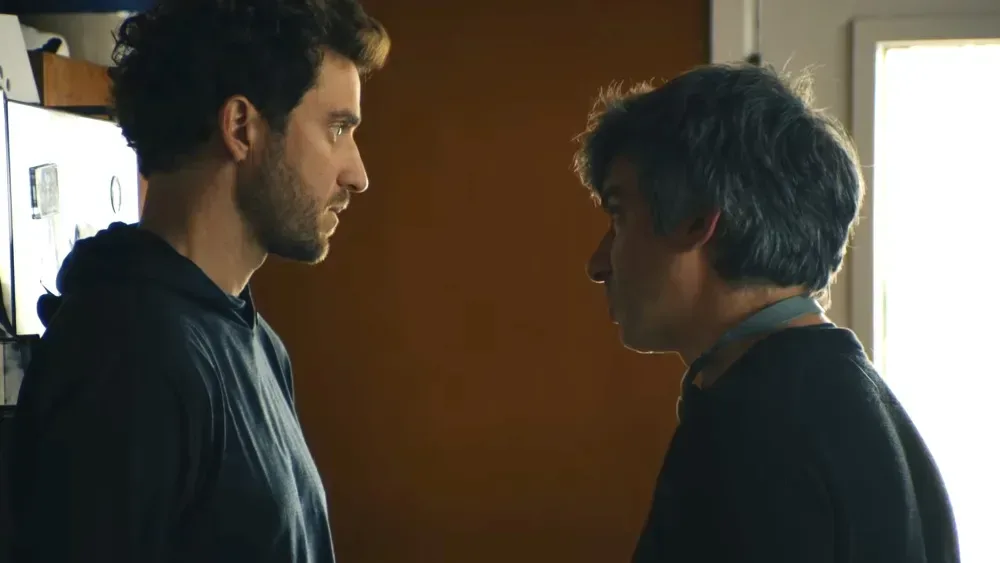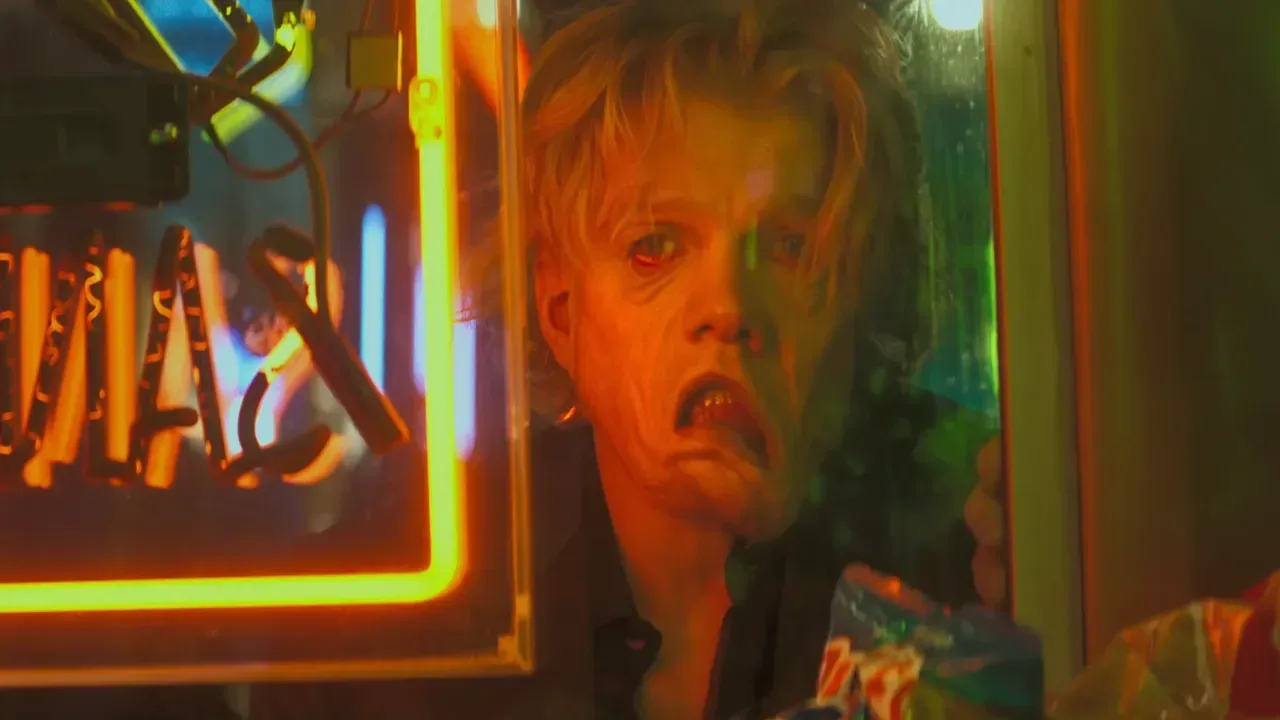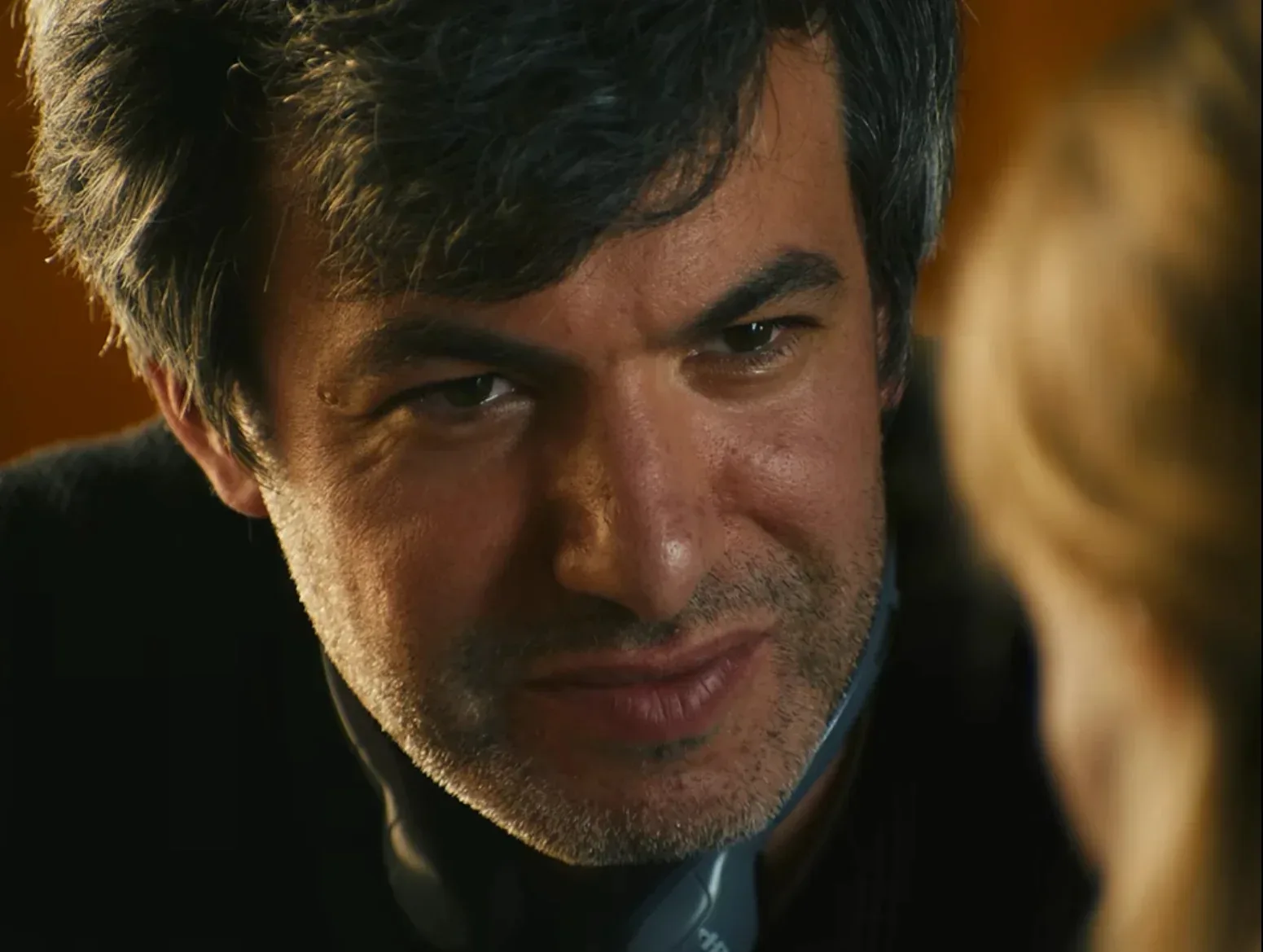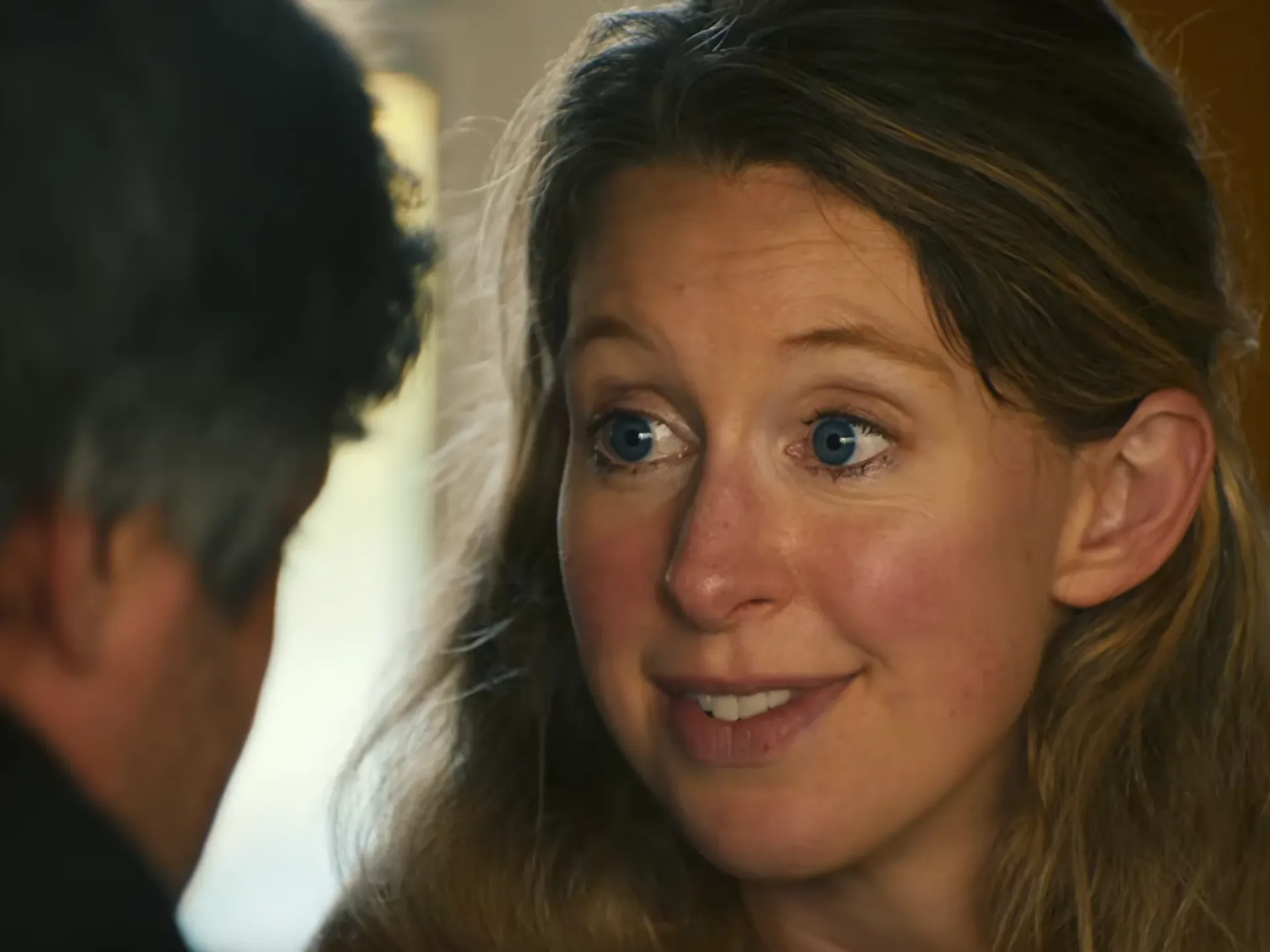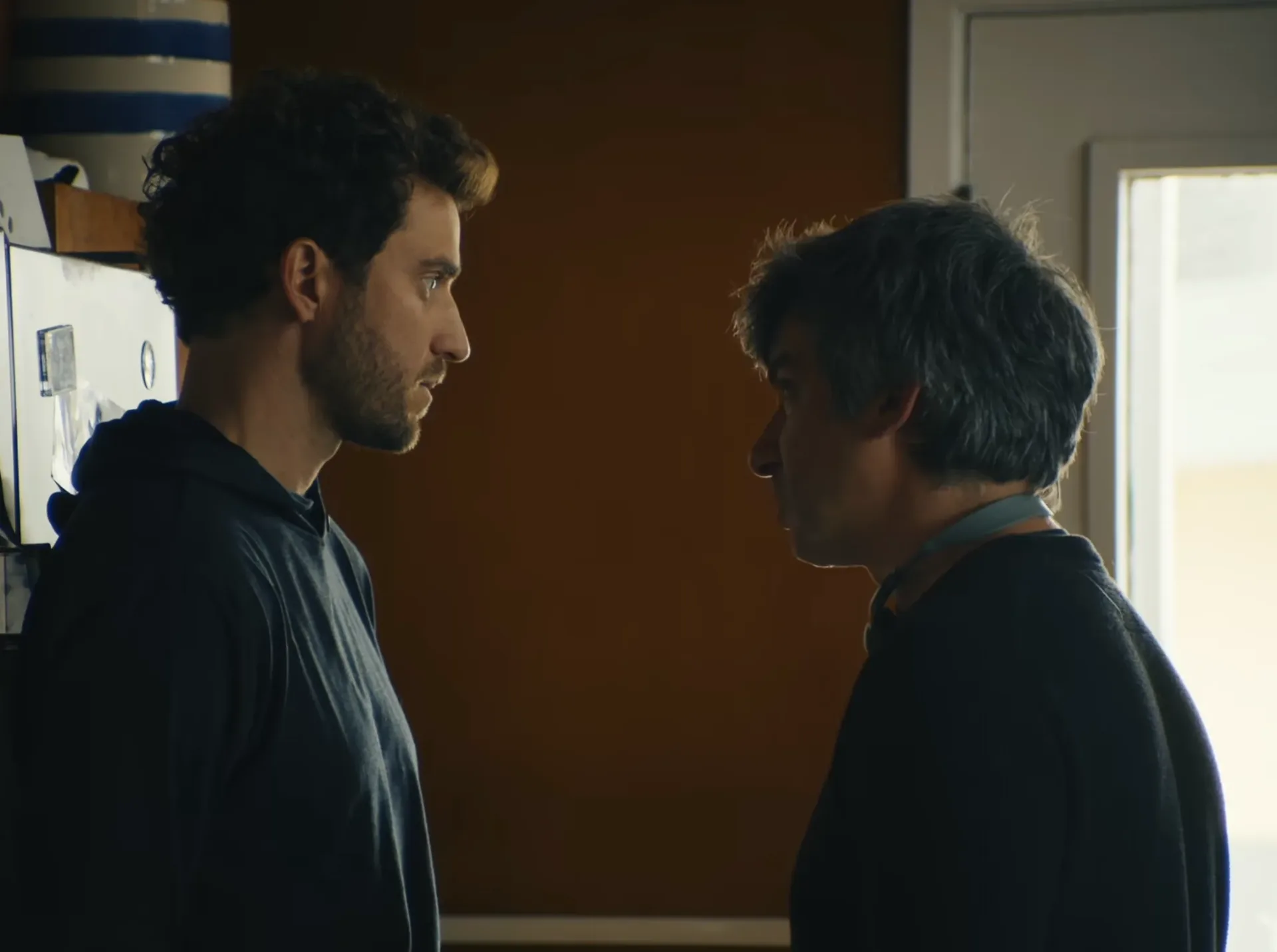
You Can See Everything has prompted plenty of discussion for its close look at Elizabeth Holmes shortly before she began her prison sentence. One of the documentary’s most unexpected talking points, however, is a shower scene involving Holmes’ partner, Billy Evans.
Co-director Lance Oppenheim has described the moment as Evans’ own suggestion rather than something the filmmaking team pushed for. Oppenheim said the production had been returning from a gym when he offered Evans time to shower. Evans then asked whether the filmmakers wanted to film it.
Oppenheim said he offered an alternative approach that would have avoided showing Evans’ genitals, but Evans did not object to appearing nude. The director was candid that he cannot say exactly why Evans was comfortable with that degree of access.
What Oppenheim says happened
The sequence was not captured by a single hidden or accidental angle. Oppenheim described a setup involving a camera in the bathroom, one focused on fellow co-director Nathan Fielder, and another positioned outside the bathroom. He also pointed to a subsequent on-camera interaction in which Evans looks toward the camera and smiles after leaving the room.
Those details matter because they distinguish a deliberately filmed documentary scene from a spontaneous image that happened to be caught in the background. They do not, however, establish Evans’ personal motivation beyond his stated lack of concern about being seen naked. Oppenheim has said he does not know what the scene ultimately meant to Evans.
That uncertainty is worth preserving. Viewers can interpret a participant’s comfort with the camera in different ways, but interpretation should not turn into certainty about intent. The most solid account here is straightforward: Evans initiated the suggestion, the directors offered a more modest framing, and he declined that limitation.
Why the scene has become a focal point
Documentaries often derive their force from access: conversations, routines and personal moments that would usually remain private. “Full access,” as Oppenheim characterized the atmosphere around Evans’ participation, can produce footage that viewers find revealing, surreal or simply startling.
The shower sequence is especially conspicuous because it arrives in a film about a figure already tied to a highly public fraud case. Holmes, the founder of Theranos, was sentenced to 11 years in prison for defrauding investors. The documentary follows her roughly a month before she began serving that sentence. Against that legal and public backdrop, an unusually intimate domestic scene can feel less like ordinary biographical context and more like an abrupt challenge to the audience’s expectations.
Related coverage includes ‘You Can See Everything’ Director Explains Billy Evans Shower Scene.
That reaction does not necessarily mean the scene is there to provide a definitive answer about Holmes, Evans or their relationship. In nonfiction filmmaking, access is not the same thing as explanation. A camera can record behavior; it cannot automatically explain what a participant intended, felt or understood about how viewers would respond.
Access is a filmmaking term, not a verdict
In documentary terms, access means the filmmakers’ ability to be present around subjects and events. It can include permission to record private spaces, everyday activities and conversations. Access is valuable because it gives a film material unavailable to an outside observer. Yet it also creates an editorial responsibility: filmmakers decide which recorded moments make the finished cut and how those moments relate to the larger story.
Oppenheim’s account suggests that Evans was aware cameras were present and receptive to the scene being filmed. Still, a participant’s consent to recording does not eliminate the gap between taking part in a documentary and seeing its final form with an audience.
Evans himself said before the film’s release that he had not watched it. During an appearance on the All-In podcast, he said he might conclude that participating was a very bad decision after seeing the completed documentary. He also reacted to the trailer by saying Holmes looked “insane.” Those remarks make clear that Evans’ involvement and his view of the completed movie are separate questions.
A long-running project with a major theatrical response
Fielder and Oppenheim worked on You Can See Everything for more than three years before its theatrical debut on October 16. The scale of that development period is a useful reminder that documentaries are assembled over time: filmmakers gather footage, determine a narrative structure, edit scenes together and eventually decide what remains outside the final version.
The film’s theatrical results have been striking. It opened to $15.6 million from 855 theaters, described as the strongest opening for a nonmusical documentary in two decades. In its second outing, it added $19.5 million after expanding to 2,655 venues.
Expansion refers to a release moving into more theaters after an initial run. It is a practical measure of distribution reach rather than a critical judgment on its own, but the increase from 855 to 2,655 locations indicates that the film was made available to a much broader theatrical audience in its second weekend. Its combined first two reported weekends total $35.1 million.
For viewers who encounter discussion of the shower scene before they see the documentary, that attention could shape expectations in a misleadingly narrow way. The film is fundamentally positioned around Holmes in the period before her imprisonment, while this sequence has become a standout anecdote about the unusual circumstances of the production. Both can be true: a single scene may dominate online chatter while occupying a different role within the complete film.
Its commercial performance also places it among a broader group of recent theatrical documentaries able to draw audiences beyond the most dedicated nonfiction crowd. In this case, the subject’s public profile, the directors’ involvement and the promise of behind-the-scenes proximity may all be part of why curiosity has remained high. Those are reasonable considerations, but the reported ticket sales alone do not identify a single cause.
Awards positioning goes well beyond documentary feature
You Can See Everything is eligible for best documentary feature at the 99th Academy Awards. It is also being submitted for consideration in a broad range of other categories: best picture, director, production design, cinematography, costume design, film editing, makeup and hairstyling, sound and original score.
An awards submission is not a nomination. It means the film is being put forward for consideration under the relevant rules. The unusually wide list reflects an effort to frame the documentary as a work whose craft extends beyond its subject and its headline-making moments.
Several of those categories are directly relevant to how a scene like Evans’ can land with viewers. Cinematography concerns the photographic choices that determine what a camera shows and how it shows it. Film editing is the selection and arrangement of recorded footage into a coherent final work. Sound concerns the audio construction that accompanies images, while original score refers to music composed for the film. None of those elements changes the basic account of how the shower material was filmed, but all can influence pacing, tone and the audience’s understanding of any individual sequence.
For an adjacent look at how theatrical momentum can shape conversation around a provocative release, see this report on Clayface’s early worldwide box office.
The clearest takeaway: permission does not erase ambiguity
Oppenheim’s explanation answers the practical production question: Evans suggested filming the shower, was offered a way to avoid explicit nudity, and was filmed by multiple cameras with apparent awareness of their presence. It does not settle the more speculative question of why he wanted that scene included. The director has explicitly declined to claim that he knows.
That restraint is arguably the most important part of the explanation. The footage may invite viewers to draw conclusions about self-presentation, openness or comfort with attention, but those remain readings of a filmed interaction rather than established facts about Evans’ inner reasoning.
As You Can See Everything continues its run, the scene will likely remain part of the conversation because it is so far outside what many people expect from a documentary focused on Theranos and Holmes. The available account, though, leaves no mystery about the immediate decision to roll cameras: the invitation came from Evans, and the directors recorded what he permitted them to record.