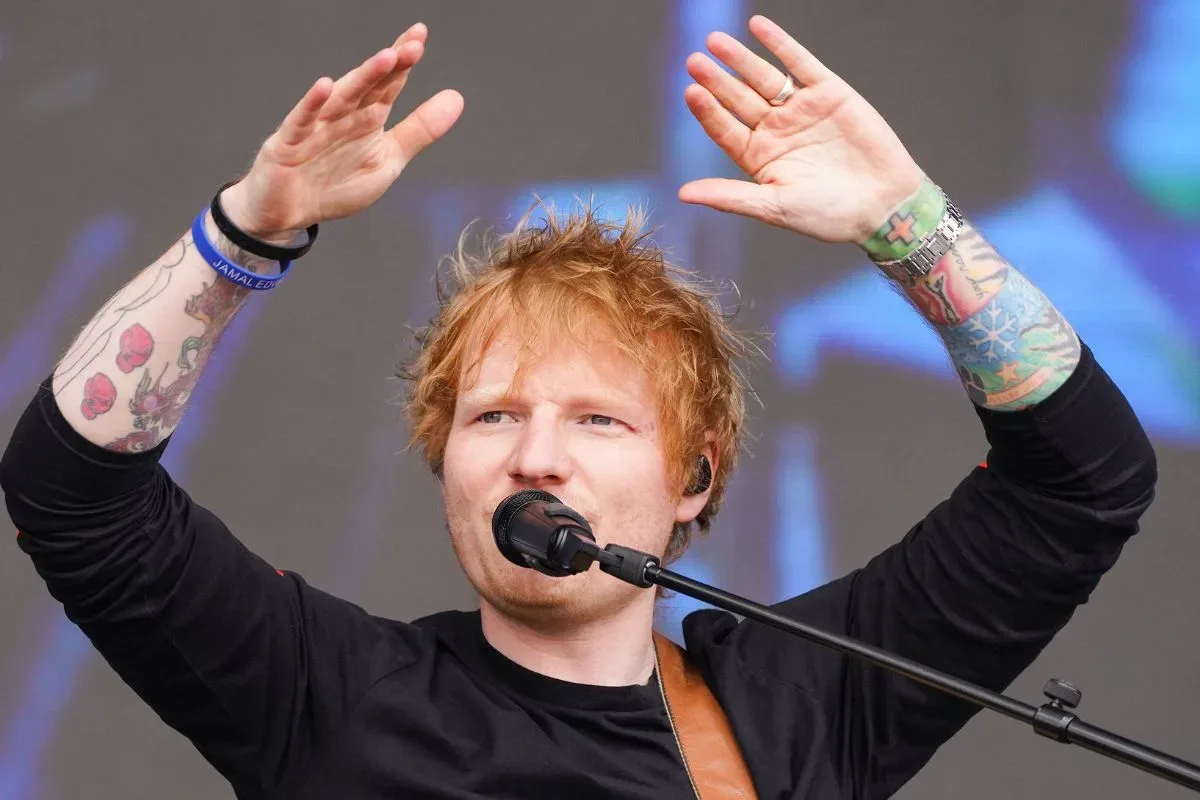
Philadelphia’s upcoming Ed Sheeran stadium date has become the latest focal point in a dispute that began with Macklemore’s onstage support for Palestine and grew into a wider argument about protest, artist choice, venue security and the responsibilities surrounding a major live event.
Reports describe a substantial police presence being planned at Lincoln Financial Field, where pro-Palestine and pro-Israel demonstrators are expected. The reported measures include metal detectors, pat-downs, and officers positioned both inside and outside the venue. Those details matter because they shift the story beyond an argument over a performer’s remarks: they describe a public-safety response to the possibility of competing demonstrations at a stadium concert.
The available reporting should be read with appropriate care. Some central claims, including alleged pressure on Sheeran to remove Macklemore from the tour, have been characterized as allegations rather than independently established facts. What is clear from the reported sequence is that Macklemore was said to have left the tour by mid-September, and that several other performers were reported to have declined the remaining dates in solidarity.
How the dispute reached Philadelphia
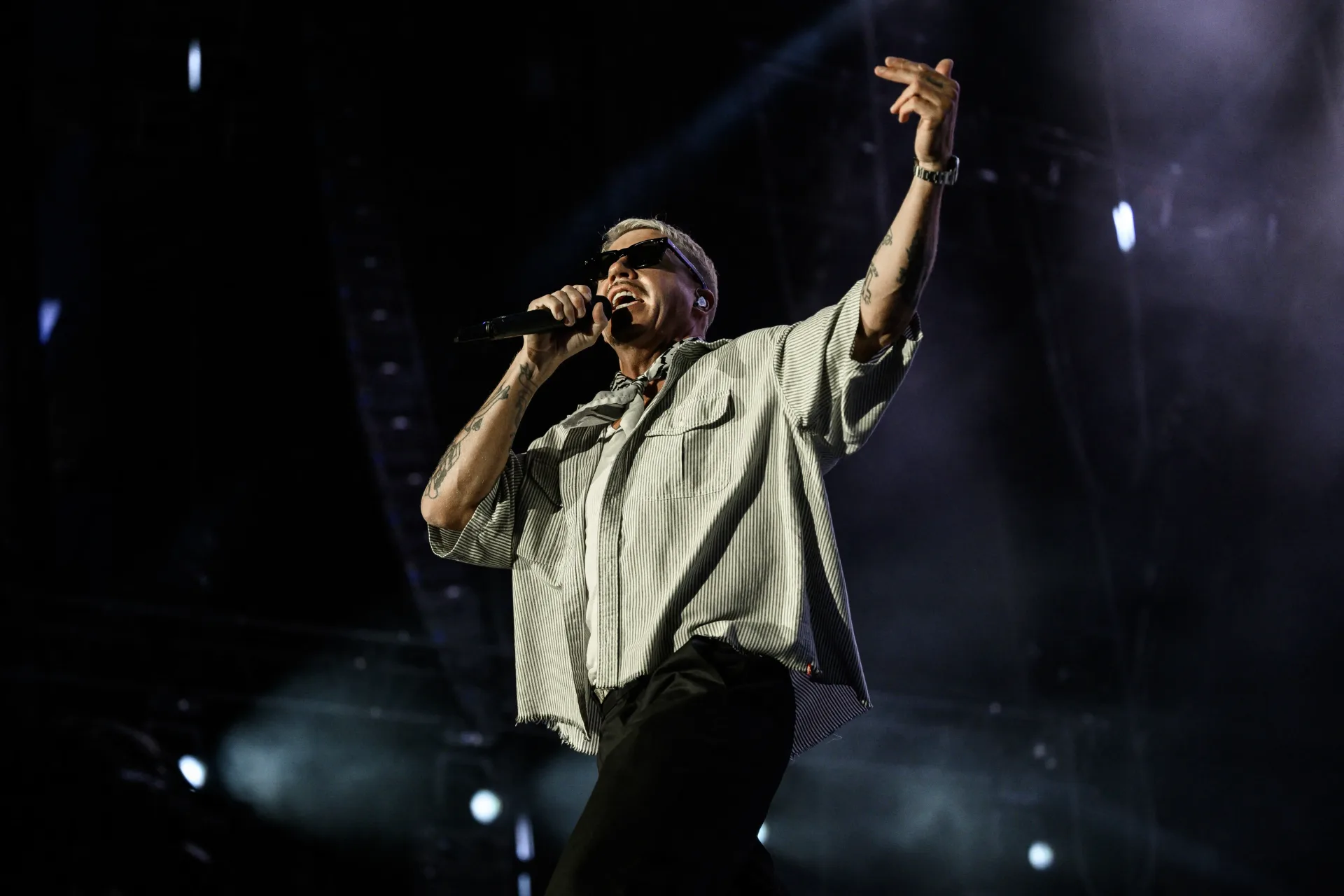
Macklemore reportedly performed at MetLife Stadium on September 4 and September 5, using the stage to say “Free Palestine” and displaying imagery of devastation in Gaza. The response was immediate: pro-Israel groups were reported to have organized petitions objecting to his continued presence on the tour.
Reporting also alleged that Robert Kraft sought support from stadium owners to persuade Sheeran to remove Macklemore. That allegation is significant to the story, but it remains an allegation in the material available here and should not be treated as a settled account of how the decision was reached.
By mid-September, Macklemore was reported to be off the tour. The next development turned what might otherwise have remained a dispute about a single opening slot into a broader tour-wide issue. Finneas, Aaron Rowe, Lukas Graham and Beoga were reported to have withdrawn in support of Macklemore, declining to perform on the remaining dates without him.
That pattern makes the Philadelphia event unusually charged. A live tour normally distributes attention among the headliner, support acts and the show itself. Here, the lineup changes and the underlying political dispute are now part of the public conversation around the date. Demonstrations expected outside the venue add another layer that neither the performer nor ordinary ticket holders can entirely avoid.
What enhanced concert security means
“Enhanced security” can be a broad phrase, so the reported measures are worth separating into their practical functions. Metal detectors are screening points intended to identify certain prohibited metal objects before attendees enter controlled areas. Pat-downs are physical screening measures that may be used as part of entry procedures. Officers stationed inside and outside a venue create separate areas of coverage: one for activity on the grounds and within the building, another for crowds, demonstrations and movement around the perimeter.
None of that inherently says that an incident will occur. Security planning is preventive by nature. When organizers and police expect large crowds with opposing political messages, the goal is generally to preserve access for ticket holders, keep demonstration activity from spilling into entrances or concourses, and respond quickly if tensions rise.
For attendees, the practical implication is straightforward: arrive with extra time and expect standard stadium entry to take longer if additional screening is in place. It is also sensible to follow venue and local-official guidance on permitted items, entrances and travel routes rather than relying on social-media speculation. That is not an assumption that concertgoers are involved in the demonstrations; it is a basic consequence of a major event operating amid heightened security.
For demonstrators, the distinction between protest activity and access to a ticketed event is likely to be central. The reporting indicates that both pro-Palestine and pro-Israel groups may be present, while the security plan is designed around the possibility that those groups converge near the same site. In this context, a large police deployment is about crowd management as much as it is about screening people entering the stadium.
Speech, solidarity and the limits of a tour slot
The conflict also illustrates the difference between an artist having a platform and an artist being guaranteed a particular commercial platform. Macklemore’s reported performance statement placed a political message before a very large audience. The subsequent backlash, reported removal from the bill and solidarity departures from other musicians show how swiftly that message became entwined with the business decisions around the tour.
That distinction does not settle the debate. Supporters can view an artist’s political statement as an exercise of expression, while critics can oppose that statement and advocate for a promoter or headliner to change a lineup. Both reactions can occur at once, and the surrounding dispute can become more consequential when it involves stadiums, nationally visible artists and a conflict with global significance.
Representative Alexandria Ocasio-Cortez and Roger Waters were reported to have spoken in support of Macklemore’s ability to speak out. Their involvement emphasizes that this is no longer only a question of one artist’s role on one tour. It has been framed publicly as part of a larger discussion about whether performers should face professional consequences for taking explicit positions on Israel and Palestine.
At the same time, the reported exits by Finneas, Aaron Rowe, Lukas Graham and Beoga are a different kind of speech: professional solidarity. Rather than simply commenting on the decision, those artists were reported to have tied their own participation to Macklemore’s. Such action can change the practical stakes for a tour because it affects the bill, the audience expectation and the logistics of upcoming dates.
Why a stadium show can become a civic pressure point
A stadium is not merely a performance room. It is a major public gathering place with lines, checkpoints, transport flows, staff, vendors, ticket holders and nearby public space. When demonstrations are anticipated, all of those elements become relevant. The reported plan for officers within and outside Lincoln Financial Field acknowledges that the event has both an interior audience experience and an exterior public dimension.
There is also an important difference between a protest aimed at a performer and a protest happening around an event. Once a show becomes a highly visible gathering point, it can draw participants who are not there for the music at all. That does not erase the concert’s purpose, but it can force law enforcement and venue staff to account for multiple crowds with different expectations and different reasons for being present.
The Philadelphia date therefore represents a difficult overlap: a scheduled entertainment event, a prominent political dispute, reported changes to the lineup and planned public demonstrations. The most responsible reading is not that every attendee will encounter danger or confrontation. It is that organizers are reportedly preparing for an environment where routine concert operations may be affected by a dispute that has expanded far beyond the stage.
What remains uncertain
Several details remain unclear from the available information. There is no reported account here of the exact scale of the planned police deployment, the precise demonstration locations, how long any added screening could take, or whether the security posture will affect every entrance in the same way. There is also no detailed explanation of the decision-making that resulted in Macklemore’s reported departure from the tour.
Those unknowns are important. In a fast-moving story, public reaction can make incomplete accounts sound more definite than they are. The support-act departures, expected protests and planned security measures are the key reported developments; claims about private pressure campaigns deserve continued qualification unless further substantiated information emerges.
For now, the Philadelphia concert stands as an example of how a political statement at a live show can produce consequences that extend well beyond the set list. The issue has touched performers, fans, venue operations and public safety planning, with competing groups expected to make their views visible around a major cultural event. It also arrives during a period when entertainment audiences increasingly expect artists and organizations to engage with public issues rather than operate apart from them, a tension reflected in broader conversations about fandom as a more active relationship.