Pete Townshend: Behind Blue Eyes arrives with the ingredients for an essential rock documentary: an 81-year-old songwriter willing to discuss the pressures and damage around his career, Roger Daltrey looking back on the rise and fractures of the Who, and a stash of archival material that has not been widely seen. Directors Frank Marshall and Nigel Sinclair also have a subject whose music, visual style and contradictions helped define the idea of the rock auteur.
The resulting 102-minute film, which screened at the Telluride Film Festival on September 4, 2026, appears most energized when it puts the Who in motion. Townshend’s famous windmill guitar stroke is more than a recognizable pose in this context. That circling arm, ending in a punishing chord, expresses the aggression that made the band feel so volatile in its early years. It is a physical image of a musician who wanted rock to be forceful, but also wanted it to carry ideas larger than the usual pop-song container.
That tension gives the documentary its most promising throughline. Townshend was a Mod, an art-school product and an exceptionally analytical figure in a loud band. The film traces how his exposure to avant-garde performance shaped the guitar-smashing that became one of the Who’s signatures; he took inspiration from films featuring classical experimentalists destroying pianos. The gesture was theatrical, destructive and instantly legible. But it also matched a bigger belief that rock could be art rather than disposable entertainment.
There is vivid early performance footage, including the Who playing “I Can’t Explain” in 1965. The clip captures the compact, tightly wound energy that helped make the group a major West London draw. These sequences are important because they show the foundation beneath Townshend’s later ambitions: a band with sharp attack, pop instincts and an appetite for spectacle.
Unearthed reels provide the documentary’s best texture
Marshall and Sinclair draw on long-lost 16mm footage shot at Holmhurst Manor in 1972, along with Townshend home movies and outtakes from the Who’s 1970 Isle of Wight performance. That archival find is a substantial attraction. Rather than simply illustrating familiar milestones with familiar photographs, the material brings viewers into the band’s uneasy in-between spaces: rehearsals, discussions and the uncomfortable silence that can follow a huge creative breakthrough.
Holmhurst Manor, the Jacobean East Sussex property purchased by Daltrey in 1970, becomes a particularly revealing setting. The Who members are seen considering what should come next after Tommy, and the answer is not immediately apparent to any of them. Their success has not solved the future; it has made the future more intimidating. The atmosphere is confused, fraught and at times openly irritable, especially around Townshend’s role as the group’s primary creative driver.
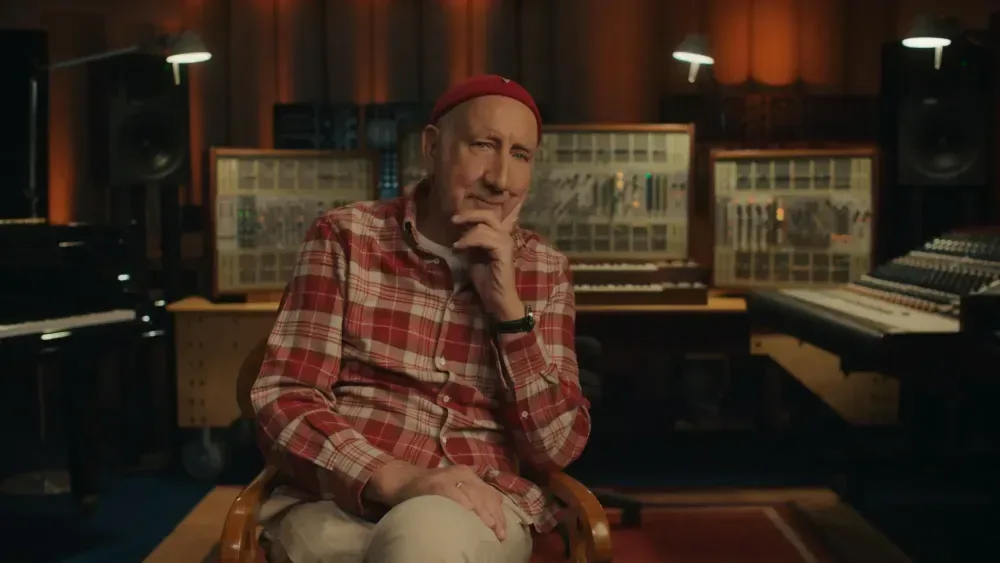
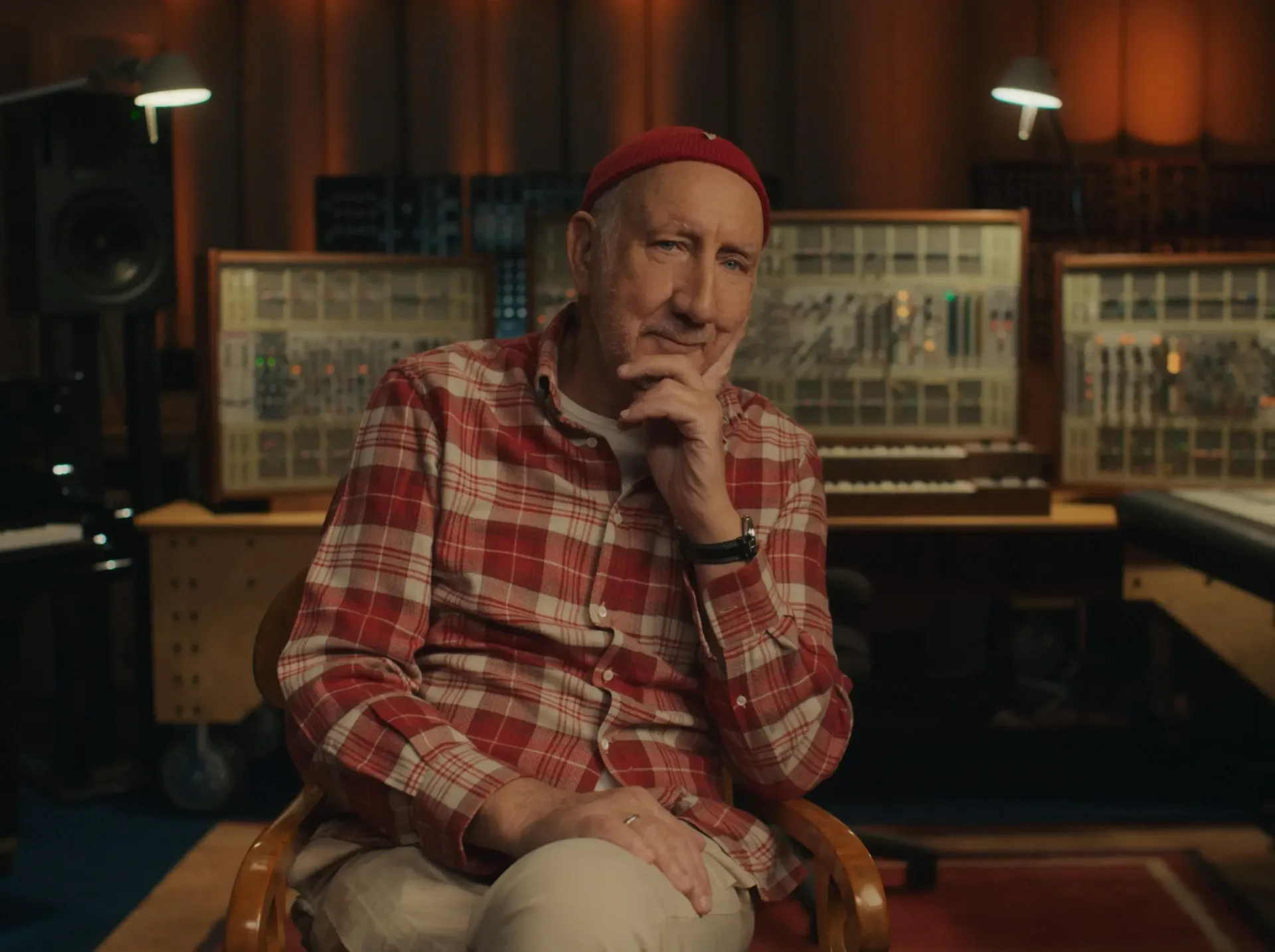
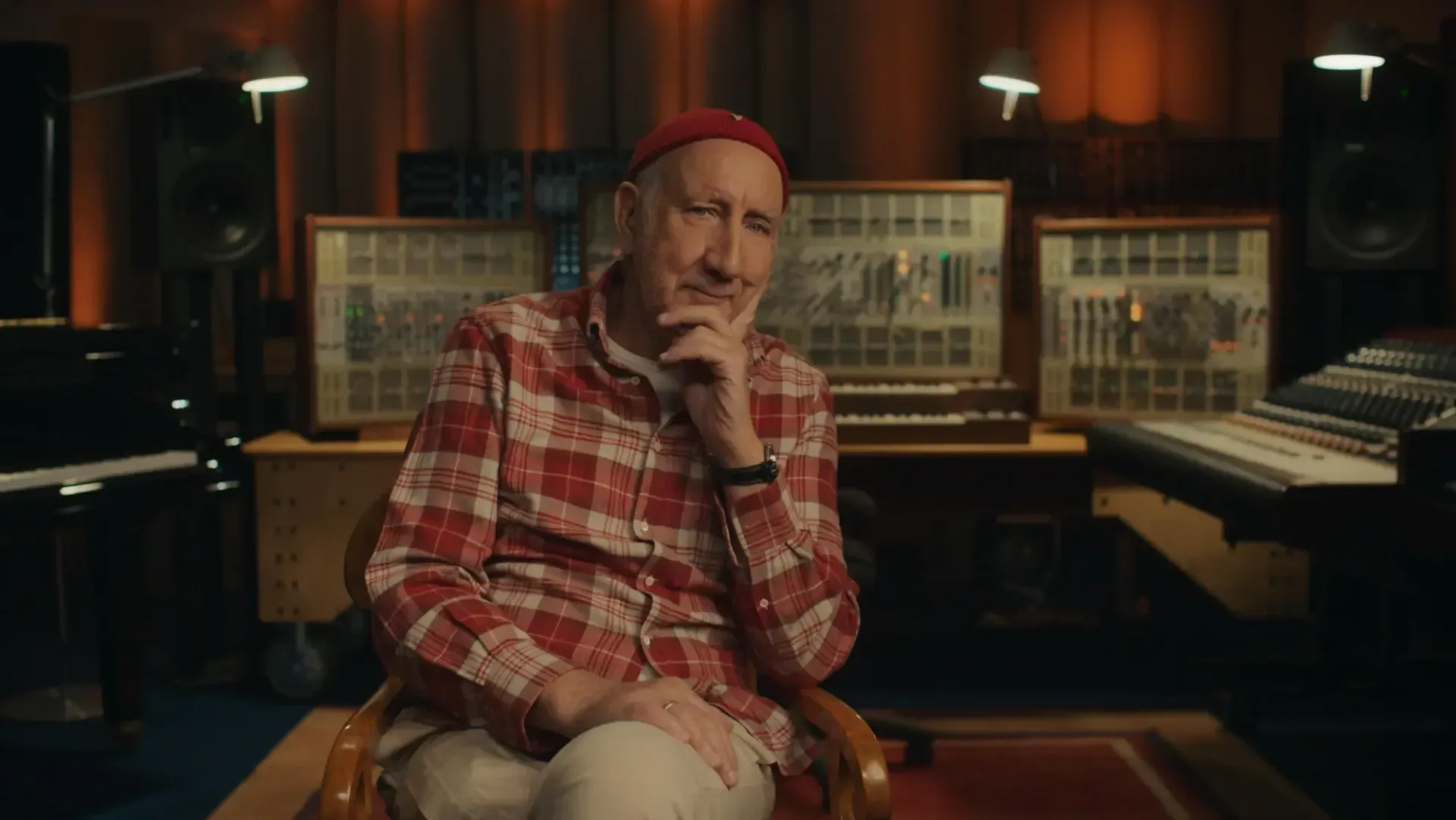
Townshend’s extended present-day interview is reportedly calm and thoughtful, with the musician appearing in a red wool cap. Daltrey also participates. Together, their accounts bring perspective to the band’s peaks and conflicts, treating old feuds as events that still matter without pretending they happened yesterday. The film remains heavily centered on the Who even though it bears Townshend’s name, an understandable choice given how completely his identity and artistic development were bound to the band.
For viewers interested in how archival film changes a music documentary, the value lies in more than rarity. Recovered footage can show body language, creative uncertainty and social dynamics that a later interview may smooth over or reinterpret. That material has a tactile, historically specific presence much like the formats explored in our look at why film formats and projection can change a viewing experience. Here, 16mm images help turn an established rock myth into something less fixed.
Related coverage includes Pete Townshend Doc Finds Great Footage but Leaves Key Questions Open.
Tommy is the central achievement — and central burden
The documentary begins with Townshend confronting the aftermath of Tommy, the rock opera that made the Who’s ambitions seem newly expansive. Its origins are connected to Townshend’s childhood: from age four, he spent roughly two years separated from his parents and living with his grandmother. He has said he was not abused, but describes being so distressed that he psychologically withdrew from the world around him. That experience became an important part of the conceptual foundation for the “deaf, dumb and blind” protagonist.
Townshend built the music for Tommy through home demos before the material was further developed in the studio. Its success transformed the band’s scale, but it also created a brutal artistic question: how does a group follow a work that has changed expectations for what it can do? Archival images reportedly preserve the fear and strain on Townshend’s face as he faces that question.
The film spends significant time on Lifehouse, Townshend’s unfinished science-fiction rock-opera project and an obsession that illustrates both his ambition and his tendency to become overwhelmed by vast concepts. That focus makes sense. Lifehouse is a compelling symbol of a musician who wanted a new form for rock but could not always make the form cohere.
Still, a portrait structured around artistic turmoil needs to be more comprehensive about the landmarks it passes. One striking absence is “My Generation,” the Who song whose challenge, alienation and explosive attitude made it enormously influential on later rock. The documentary addresses the Who’s relationship to punk and Townshend’s unsuccessful attempt to connect with Johnny Rotten, yet leaving out “My Generation” weakens the account of precisely why punk performers and audiences could hear a predecessor in the Who.
The gaps are especially noticeable because the film asks for intimacy
Its omissions matter not because a 102-minute documentary can include every chapter, but because Behind Blue Eyes presents Townshend as a complicated, wounded and searching artist. It wants to move beyond the guitar windmill and toward the person generating the noise. That is a worthy goal. Yet several consequential areas appear to receive limited treatment or none at all.
Keith Moon’s death is addressed as an overdose involving chlomethiazole, a sedative used to ease alcohol-withdrawal symptoms. But the account reportedly does not adequately discuss Moon’s drinking, despite alcohol’s centrality to understanding the drummer’s decline. Similarly, the film says Townshend opposed making a film version of Tommy, while passing over the cultural impact of Ken Russell’s extravagant 1975 adaptation.
The narrowness is even more apparent in Townshend’s personal life. The documentary explores the musician’s addiction period, including his description of drinking three bottles of Cognac a day and becoming dependent on drugs, but it does not go far enough into the reasons behind that descent. His two marriages are not substantially examined. Nor does the film appear to take up interviews Townshend gave in 1980 around “Rough Boys,” when he acknowledged having lived a gay life for a period.
None of these subjects needs to be reduced to tabloid disclosure. In fact, a fuller treatment would serve the documentary’s artistic argument. Townshend’s songs and larger projects repeatedly circle identity, shame, spiritual longing, performance and escape. A film determined to unpack his complexities cannot simply gesture toward the personal circumstances connected to those themes and then retreat.
A lively document rather than the definitive answer
Pete Townshend: Behind Blue Eyes benefits from energetic music, strong performance footage and access to its central figure. It also has a valuable sense of the difficult period after Tommy, when a band at the height of its powers could still appear creatively stranded. The newly surfaced Holmhurst Manor footage alone gives the film a reason to exist for serious Who followers.
But it does not seem positioned to replace The Kids Are Alright, the 1979 documentary that remains a towering screen record of the Who. Marshall and Sinclair have instead made a film that gets close to Townshend’s competing selves — the destructive showman, reflective art student, anxious leader and grand conceptualizer — without joining every part into a sufficiently clear whole.
That may leave audiences with excellent moments, fresh images and a renewed urge to revisit the music. It may also leave them wanting a more searching account of the man who made it. For a documentary named after Townshend’s most famous inward-looking song, that incompleteness is both the feature’s fascination and its central limitation.
Film details
- Directors: Frank Marshall and Nigel Sinclair
- Screenplay: Cassidy Hartmann and Sam Bridger
- Editor: Joe Scoma
- Music: Marius De Vries, Pete Townshend and the Who
- Featuring: Pete Townshend and Roger Daltrey
- Running time: 102 minutes