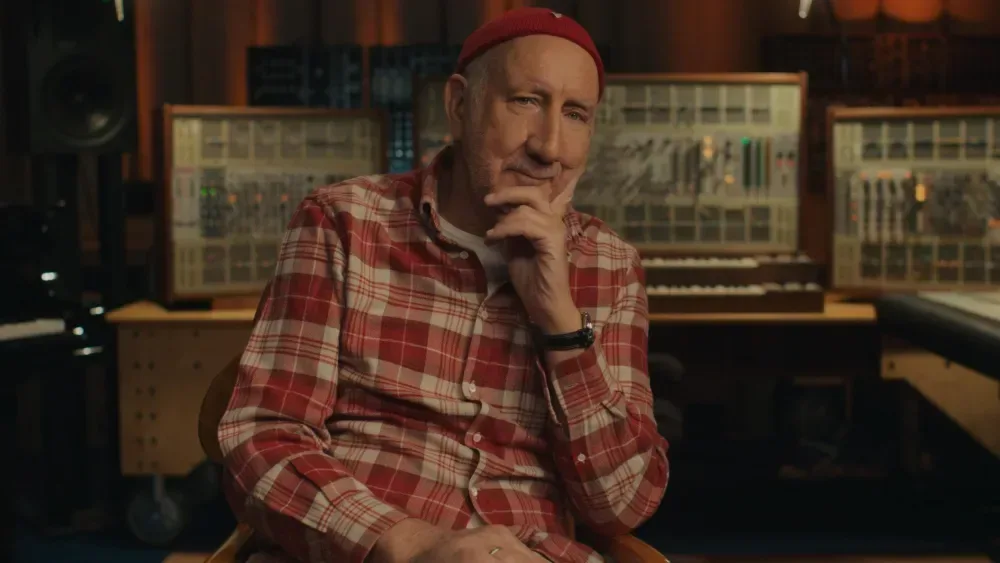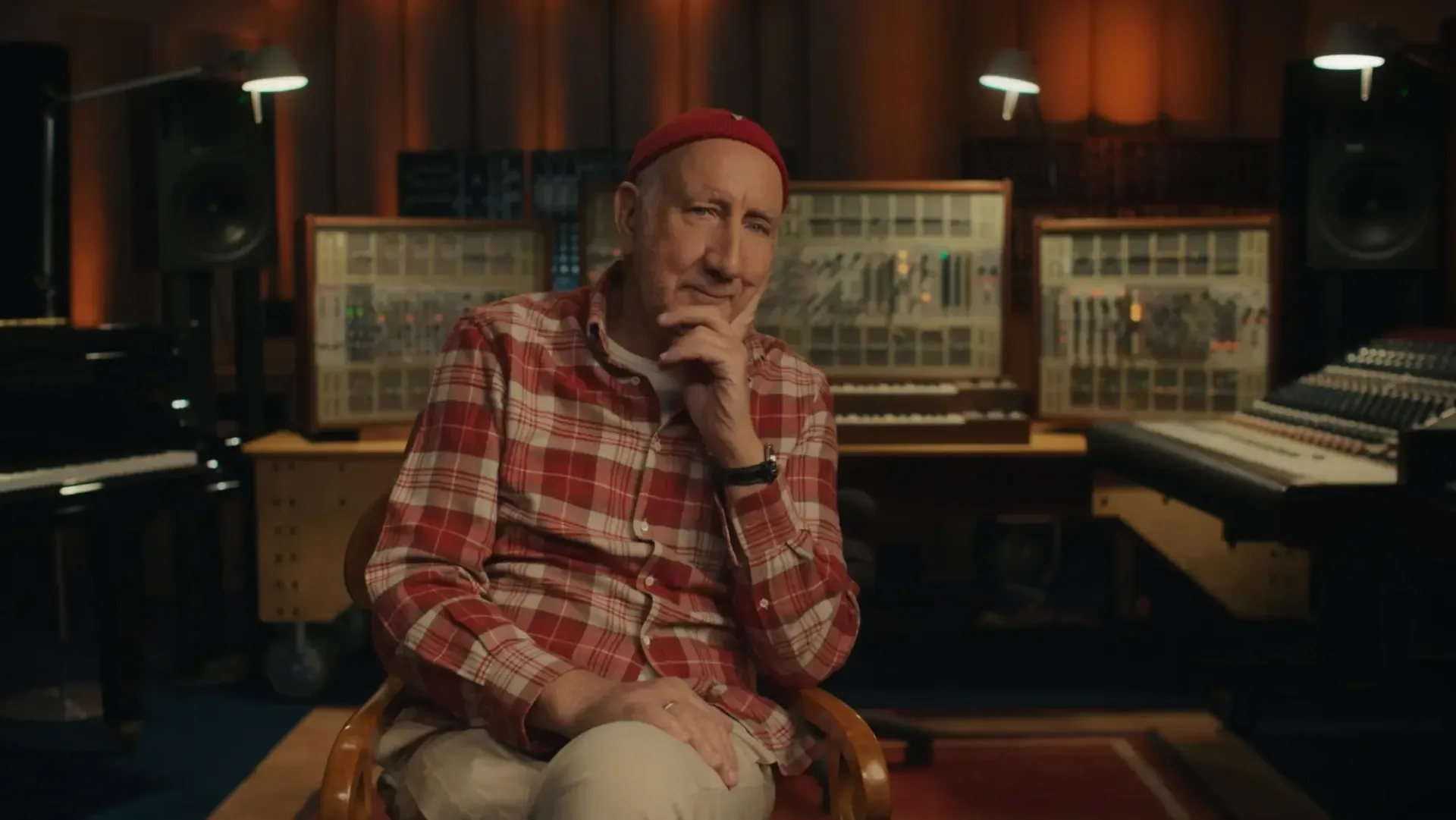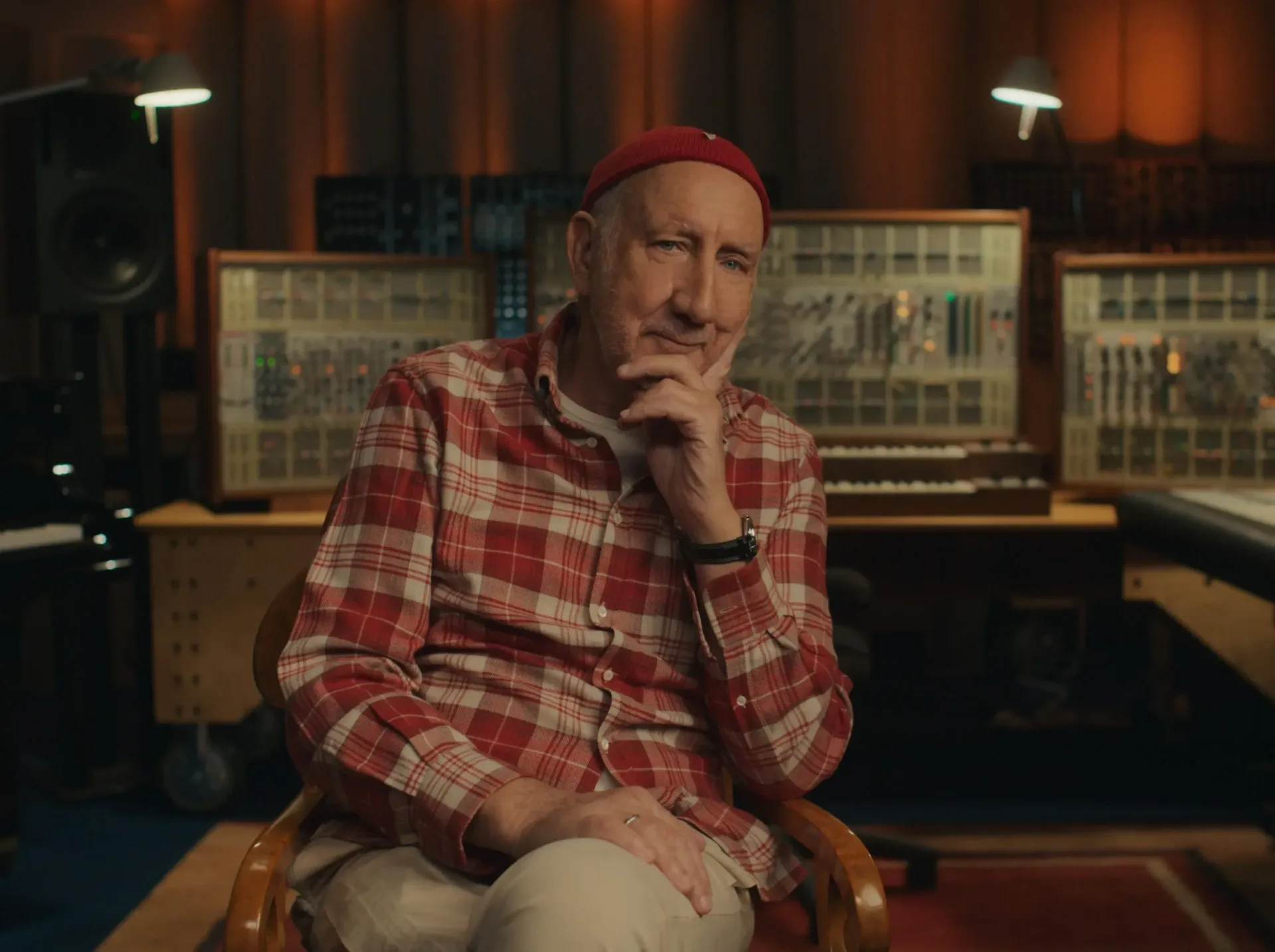
Pete Townshend: Behind Blue Eyes has made its world premiere at the Telluride Film Festival, presenting a fresh documentary portrait of The Who songwriter and guitarist through the long shadow of Lifehouse. Co-directed by Frank Marshall and Nigel Sinclair, with Cassidy Hartmann serving as producer, writer and interviewer, the film grew beyond an account of one famously unrealized project into a roughly 100-minute examination of a musician whose biggest successes have often existed alongside dissatisfaction, reinvention and relentless artistic ambition.
That makes Lifehouse a fitting entry point. Townshend conceived the work after Tommy, with an unusually expansive plan involving a screenplay, music, technology and audience participation. The concept imagined a future shaped by ecological collapse and people connected to a centralized system. In retrospect, its creators see elements that anticipate the modern internet, particularly the idea of a networked audience receiving information and responding to it. But the documentary is not simply making a claim that Townshend predicted everything. Its interest lies in the collision between a grand, difficult idea and the limits of the technology, venues and audience expectations available at the time.
A Story That Could Not Stay Only About Lifehouse
Sinclair was initially approached about making a documentary focused on Lifehouse. Marshall joined the project without the lifelong Who fandom Sinclair brought to it; he has said that learning about the unfinished work was a major part of his own discovery process. Hartmann’s lengthy interview with Townshend helped the team arrive at a crucial conclusion: viewers would need to understand Townshend himself before the stakes of Lifehouse could fully register.
That shift gives the documentary a broader purpose. Instead of treating the abandoned concept as a bit of deluxe rock trivia, Behind Blue Eyes follows it as an expression of the tensions that have long animated Townshend’s work. He entered art school not necessarily expecting a conventional musical career, and he reportedly viewed The Who in its earliest phase as something that might not last. Yet the band’s commercial momentum kept producing another reason to continue. A major hit such as “I Can’t Explain,” then the scale of Tommy, and later the achievement of Who’s Next, repeatedly made departure more complicated.
The documentary team links the failure to realize Lifehouse in its intended form with Townshend’s eventual decision to step away from the group and work as a book editor at Faber & Faber, where he had his own imprint. The film also follows a later period in which he found a more settled relationship with The Who and returned to the ideas that had preoccupied him for years. It is a reminder that “unfinished” does not necessarily mean forgotten; sometimes an incomplete work becomes the organizing riddle of an artist’s life.
Who’s Next Was Not a Consolation Prize
There is an irony at the center of the Lifehouse saga. Though its original multimedia ambitions did not come together, many songs associated with the project emerged on Who’s Next, an album often placed among rock’s most celebrated records. From the outside, that outcome can look like a resounding success. For Townshend, the sense of not having achieved the intended whole apparently remained more complicated.
This is one reason the film’s focus has potential value beyond committed Who collectors. It addresses a familiar creative contradiction: a work may be praised, popular and enduring while still failing to resolve the question its maker was actually trying to answer. The songs did not vanish into an archive. They became foundational. But the wider structure—the narrative, the live interaction, the futuristic mechanism connecting artist and audience—did not arrive as first imagined.
Marshall was especially drawn to the Young Vic phase of the experiment, when Townshend sought direct feedback from attendees. The reality was much messier than the ideal. The concerts were not advertised conventionally because of worries that a huge crowd might arrive, and the people who did attend were not necessarily there to participate in a bold new artistic process. Many simply wanted to hear The Who. That mismatch is both funny and revealing: the audience was being invited into a prototype for a new relationship with music, while it understandably wanted the band to play the songs it already loved.
For a wider look at how recovered footage can reshape a screen portrait of an artist, see this look at long-lost footage and a Derek Jarman documentary portrait.
Archive Material Makes the Past Feel Present
One of the most significant elements described by the filmmakers is previously unseen material from the Young Vic period, found through a collector. The documentary also includes footage of The Who discussing what should happen after Tommy. The latter material, known as the Holmshurst Manor footage, had been preserved from deterioration by freezing film cans at the University of Exeter. Sinclair had attempted to access it for the 2007 documentary Amazing Journey: The Story of the Who, but it was not unfrozen until this newer project.
The footage is said to capture an extended band discussion in which the members struggle with the question of what comes next. Townshend is wrestling with the need to make something different without having a settled answer. Roger Daltrey appears increasingly skeptical, while Keith Moon unexpectedly takes on a more mediating role. For a group whose internal push-and-pull has been documented endlessly in legend and anecdote, material allowing viewers to watch that uncertainty unfold in real time is unusually valuable.
Archival discoveries can do more than provide a novelty reel for veteran fans. In a documentary built around a creative project that never became what it was supposed to be, these fragments give shape to the uncertainty itself. They allow the film to show the debate, rather than merely summarize it decades later after every participant has had time to explain, qualify or reinterpret the past.
Art School, Auto-Destruction and the Guitar
The documentary also appears intent on bridging what can seem like two radically different public versions of Townshend. One is the art-school thinker drawn to elaborate concepts, technology and theories about communication. The other is the explosive rock performer associated with hard-struck guitar chords and smashed instruments. The film frames these sides as connected rather than incompatible.
Townshend’s guitar destruction is addressed through the language of auto-destruction, linking performance to artistic ideas rather than reducing it to a visual stunt. The filmmakers interviewed Roy Ascott, Townshend’s former art-school teacher, whose influence helped reinforce an important premise: art could be an attitude, not merely a technical accomplishment. This context does not make Townshend’s work less immediate or less loud. It suggests that the aggression, precision and theatricality of The Who’s performances were part of a deeper effort to turn ideas into action.
That framework also helps explain why Lifehouse mattered so much. It was not only a prospective sequel to Tommy, nor merely a collection of songs. It was an attempt to unite Townshend’s competing identities—rock musician, conceptual artist, writer and technological dreamer—inside one immense project.
The Daltrey Relationship at the Center
For all its attention to systems, concepts and archives, the film reportedly finds its emotional core in the relationship between Townshend and Daltrey. Hartmann has described Daltrey’s interview as notably combative when questions strayed beyond Lifehouse, but that energy ultimately seems to serve the film. Daltrey becomes both a skeptical counterweight to Townshend’s intellectual intensity and a representative of an audience trying to understand it.
The pair’s connection is portrayed as sibling-like: deeply loyal, occasionally exasperated and defined by an argument that never entirely ends. Their differences are hardly incidental to The Who’s history. Townshend’s searching, often abstract drive required a performer who could make those ideas physical, human and direct. The documentary’s central realization is that Townshend’s desire to connect with an audience may have been achieved most powerfully through Daltrey all along.
Pete Townshend: Behind Blue Eyes therefore arrives as more than a career overview or a salvage mission for Lifehouse. It is a film about how a massive creative disappointment can yield extraordinary music, how unreleased material can add texture without changing history, and how an artist’s most productive friction may come from the person standing beside him onstage.