Celebrity-branded products can often feel like logo placement with a checkout button. Richard Christiansen’s account of Flamingo Estate’s work with Pamela Anderson points to a more particular model: start with a collaborator’s actual interest, make a tangible product around it, and direct the proceeds toward a nonprofit.
In Anderson’s case, that meant pickles—not honey. Flamingo Estate had already become associated with limited celebrity honey collaborations, but Anderson arrived with a different proposal: pickles based on her aunt’s recipe. The resulting jars sold for $38 and raised $500,000 for the California Wildlife Center.
That distinction matters. A celebrity collaboration is simply a product created with, or carrying the name of, a public figure. The facts available here suggest Flamingo Estate’s approach is more narrowly rooted in personal associations: Anderson’s gardening and family recipe, Julianne Moore’s garden in Montauk, and hives placed at locations connected to LeBron James and artist Ed Ruscha. The product is still commercial, but its premise is not interchangeable from one celebrity to the next.
Why Pamela Anderson’s pickles were the right collaboration
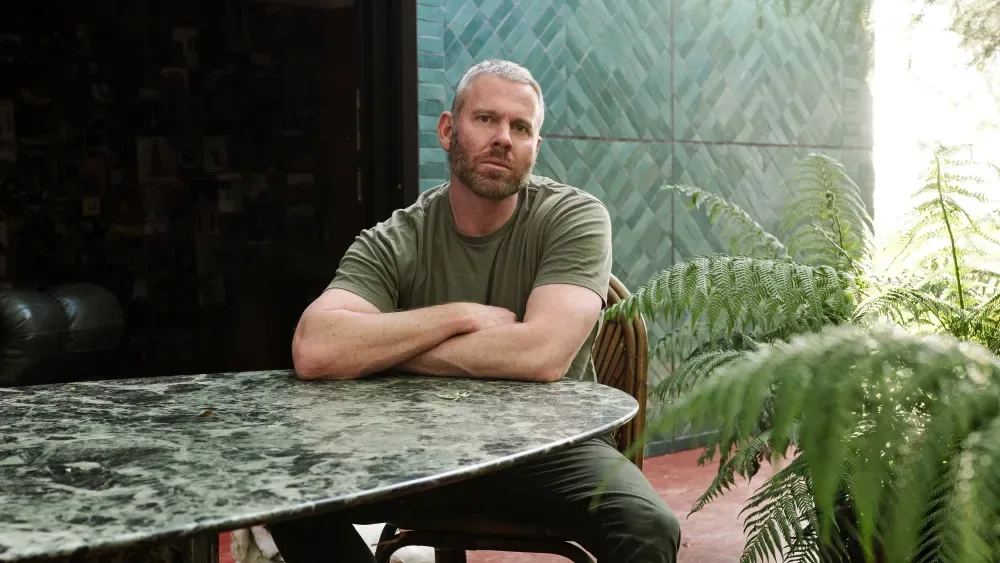
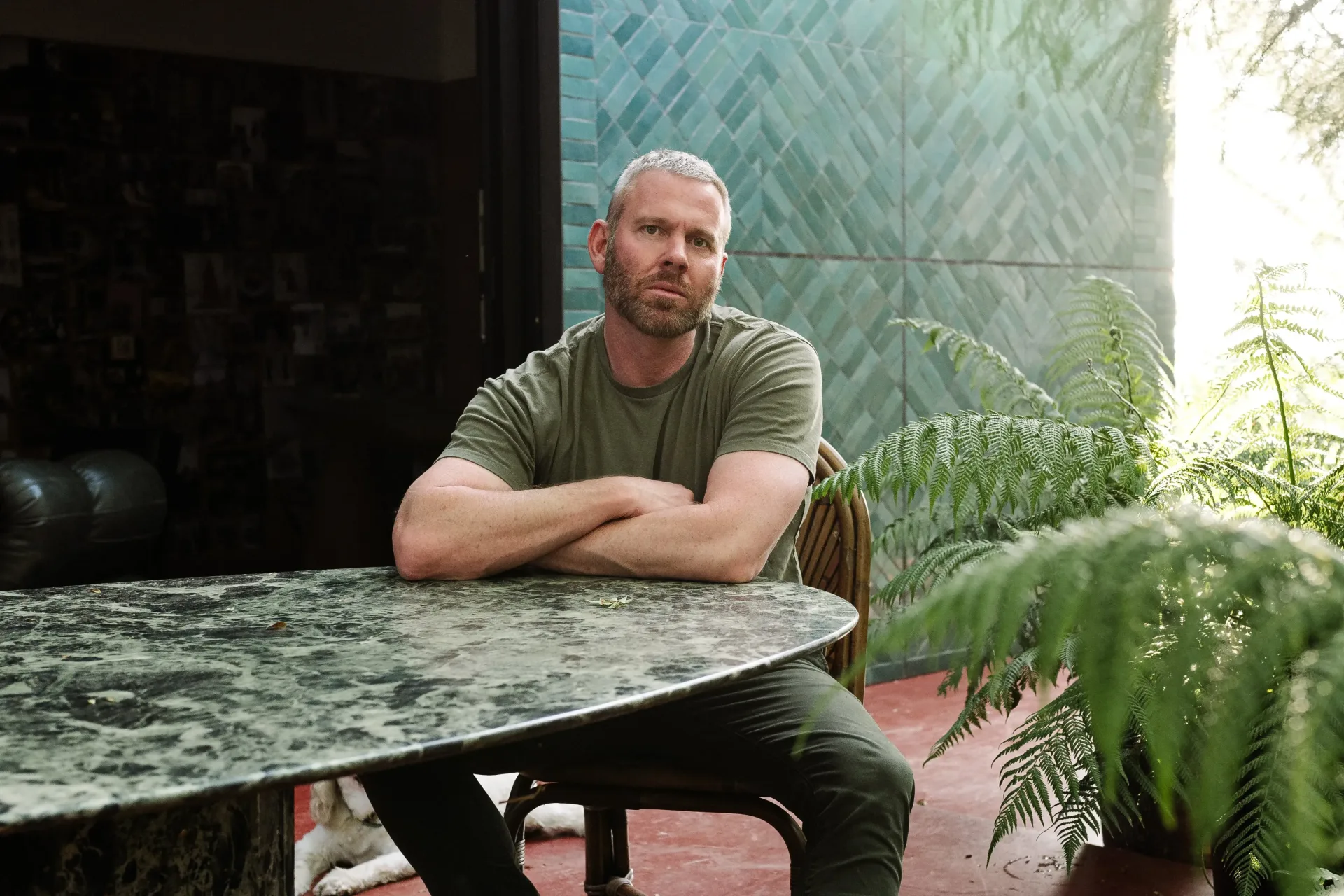
Christiansen, who grew up on a bee farm in Australia, initially suggested honey when Anderson came in for a meeting. It was a familiar format for Flamingo Estate. He described honey as comparatively straightforward for the brand to produce, including projects where hives were taken to a collaborator’s home or workspace.
Anderson declined that route in favor of pickles. Her choice gave the product an immediate point of view: it was connected to an aunt’s recipe rather than a generic celebrity flavor or a packaging exercise. The available details do not establish the recipe’s ingredients, production method, jar count, or whether the product remains available, so those are not grounds for assumption. What is clear is that the choice shifted the partnership from a repeatable house format into something specific to Anderson.
There is a useful practical lesson for anyone following limited products as cultural objects. The memorable part of a collaboration is frequently its provenance—the story of why this person made this item—rather than scarcity alone. Provenance, in this context, means the documented origin and connection behind an object. For an entertainment tie-in, that can include a personal recipe, a real location, an artistic contribution, or a cause the collaborator supports. Anderson’s pickles had all the ingredients for an unusually legible story: gardening, family, a physical product and a named beneficiary.
The charitable outcome also provides a concrete measure beyond attention. Flamingo Estate says its celebrity partnerships benefit not-for-profits and that the celebrities do not receive payment for their work. In this instance, the California Wildlife Center received $500,000 from the $38 pickle jars. That total is meaningful, but it should not be used to infer sales volume, production costs, or the exact share of each purchase that went to the organization; none of those figures are provided.
Honey remained the house language
Although Anderson’s project took a detour into pickles, honey appears to be central to Flamingo Estate’s celebrity work. Christiansen cited collaborations with Moore and James, as well as a more recent project with Ed Ruscha. He described placing hives on James’ roof and in Ruscha’s studio. Moore’s honey came from her Montauk garden, and Christiansen characterized it as dark, molasses-like and reminiscent of whisky.
Related coverage includes Pamela Anderson’s Pickles, Flamingo Estate’s ‘Practical Magic 2’ Box and the Dolly Parton Coffee That Never Happened.
These are not merely decorative details. Honey is a product whose taste and color can vary with forage and place, making it well suited to site-specific storytelling. A hive at a garden, roof or studio gives a collaboration a visible setting. Still, the information available does not establish a formal scientific comparison of the honeys or guarantee that a location alone determines their flavor. It establishes the creative framing used for these releases.
For Flamingo Estate, then, the recurring honey format seems less like a rigid template than a starting point. Anderson’s request shows the limits of a template can also be an advantage. A collaborator who changes the product can make the result more distinctive—and, in this case, channel substantial funds toward a wildlife nonprofit.
A garden almanac built from short observations
Christiansen’s new book, Pleasure Principles: An Almanac from the Garden, extends the same broad mix of domestic life, design and pop culture. The 408-page book includes recipes, do-it-yourself projects and brief pieces spanning subjects such as the cinematic history of the moon and celebrity restaurants in Los Angeles.
He has explained that he rides a bicycle rather than drives and dictates notes into his phone while traveling around. He connects that habit to the book’s short-form entries. That method helps explain why an almanac is an apt description. Rather than being presented solely as a conventional cookbook or a garden manual, the book collects different kinds of observations and practical material around a shared sensibility.
“DIY” means do it yourself: projects intended for readers to make or carry out themselves rather than simply purchase. The supplied information does not detail individual projects or recipes, so readers should not assume the book offers a particular gardening technique, preservation recipe or product guide. Its known scope is broader: a designed collection of recipes, projects and musings.
The book’s range also helps put Flamingo Estate’s celebrity work in perspective. The brand’s universe, as described here, joins food, gardens, objects, design and entertainment references. That makes a pickle jar, a candle or a bottle of olive oil more than a standalone consumer good in its storytelling. It becomes a small entry point into a lifestyle world shaped by cultivation and visual presentation.
From pantry goods to Practical Magic 2
Flamingo Estate’s latest Hollywood collaboration marks a first for Christiansen: a movie tie-in for Practical Magic 2. Several Flamingo Estate items, including olive oil bottles and Green Goddess candles, appear in the film. Christiansen has also curated a gift box inspired by the sequel, which is associated here with Nicole Kidman and Sandra Bullock.
Product placement and a themed box are related but different forms of tie-in. Product placement is the appearance of a branded item within a screen work. A curated gift box, by contrast, is merchandise assembled outside the film itself to evoke its mood or setting. The first puts objects into the movie’s visual world; the second invites audiences to bring a version of that world home.
Neither detail confirms the size of the products’ roles, the contents of the box, its price, its release date, or whether it is a limited edition. Those specifics have not been supplied. But the collaboration does show a logical extension of Flamingo Estate’s existing approach: its olive oil and candles are already physical, designed goods with a pronounced atmosphere, so they can be incorporated into a film-linked presentation without requiring a wholly new product category.
Screen-related merchandise remains a broad pop-culture space, ranging from apparel and replicas to more atmospheric lifestyle goods. Flamingo Estate’s Practical Magic 2 project lands in the latter group. It uses products associated with kitchens and homes to build a connection with a story’s aesthetic rather than positioning a prop replica as the central attraction. For a separate look at how screen-project news can remain tentative until formal details arrive, see this update on a possible Dark Tower television adaptation.
The Dolly Parton coffee that did not happen
Christiansen also identified an unrealized Dolly Parton collaboration as the opportunity that got away. The proposed coffee was to be called “8 to 6,” a play on Parton’s “9 to 5.” He said there were conversations about the idea, but Flamingo Estate was too young at the time and its distribution could not have handled the scale of her reach.
Distribution is the system through which a product is delivered and made available to customers. Christiansen’s explanation is a reminder that a strong creative concept does not automatically become a viable release. A celebrity’s audience can create demand that outpaces a small company’s ability to manufacture, ship or otherwise support a launch. In this case, the coffee remained an idea rather than a product.
That restraint is notable beside the completed projects. The known Flamingo Estate collaborations are not presented as an endless list of celebrity names. They depend on whether the product has a credible personal connection, a workable format and the operational capacity to meet interest. Anderson’s pickles met those conditions and generated a documented charitable result. The proposed Parton coffee, despite its immediately recognizable title, did not proceed.
Taken together, the projects outline a clear creative pattern: honeys tied to places, pickles tied to a family recipe, household products placed in a film, and a coffee concept abandoned before launch. The common thread is not celebrity endorsement for its own sake. It is the attempt to make an item feel connected to a person, a location or a fictional atmosphere—while recognizing that the best idea still has to be practical enough to make and distribute.