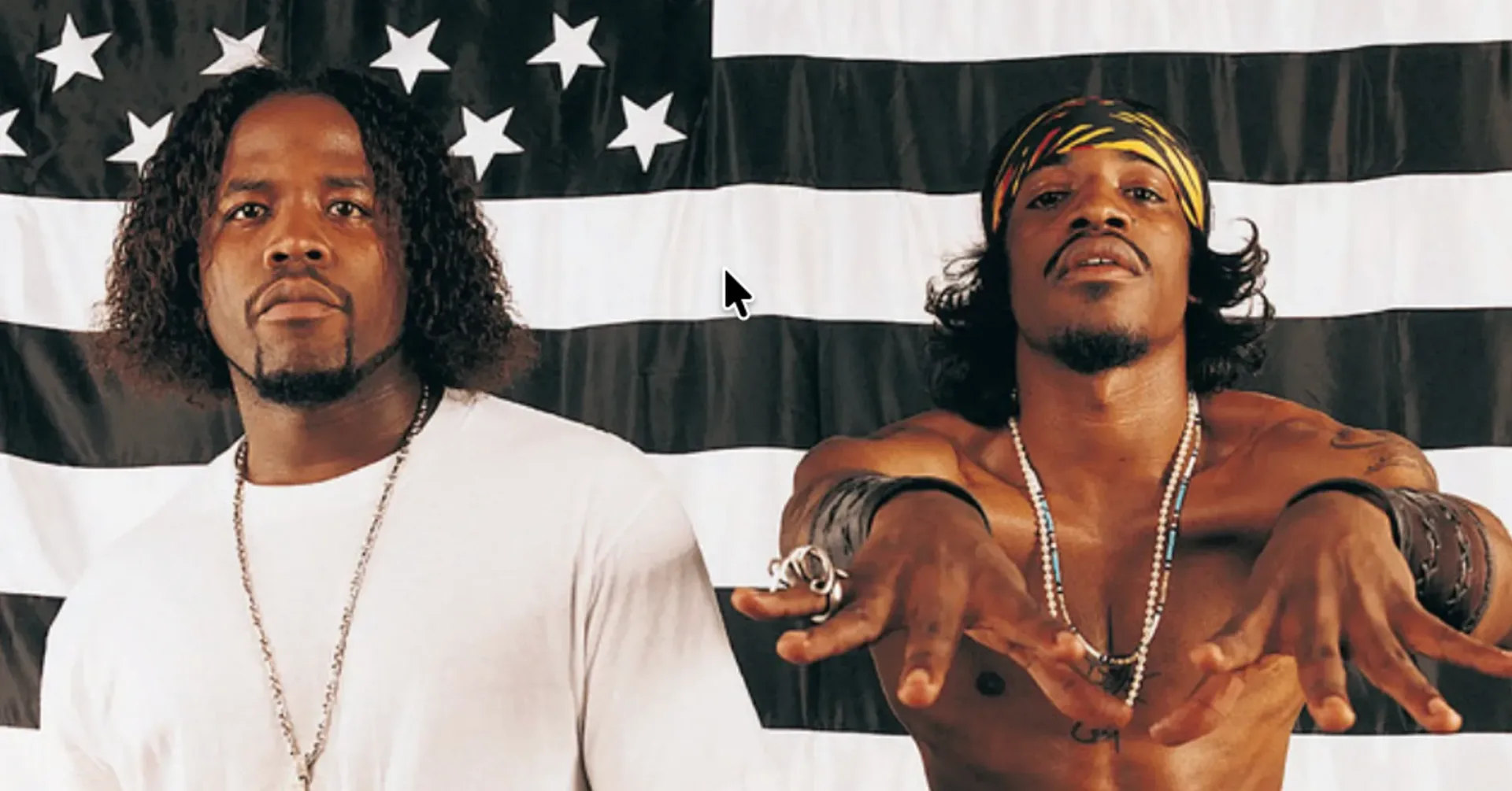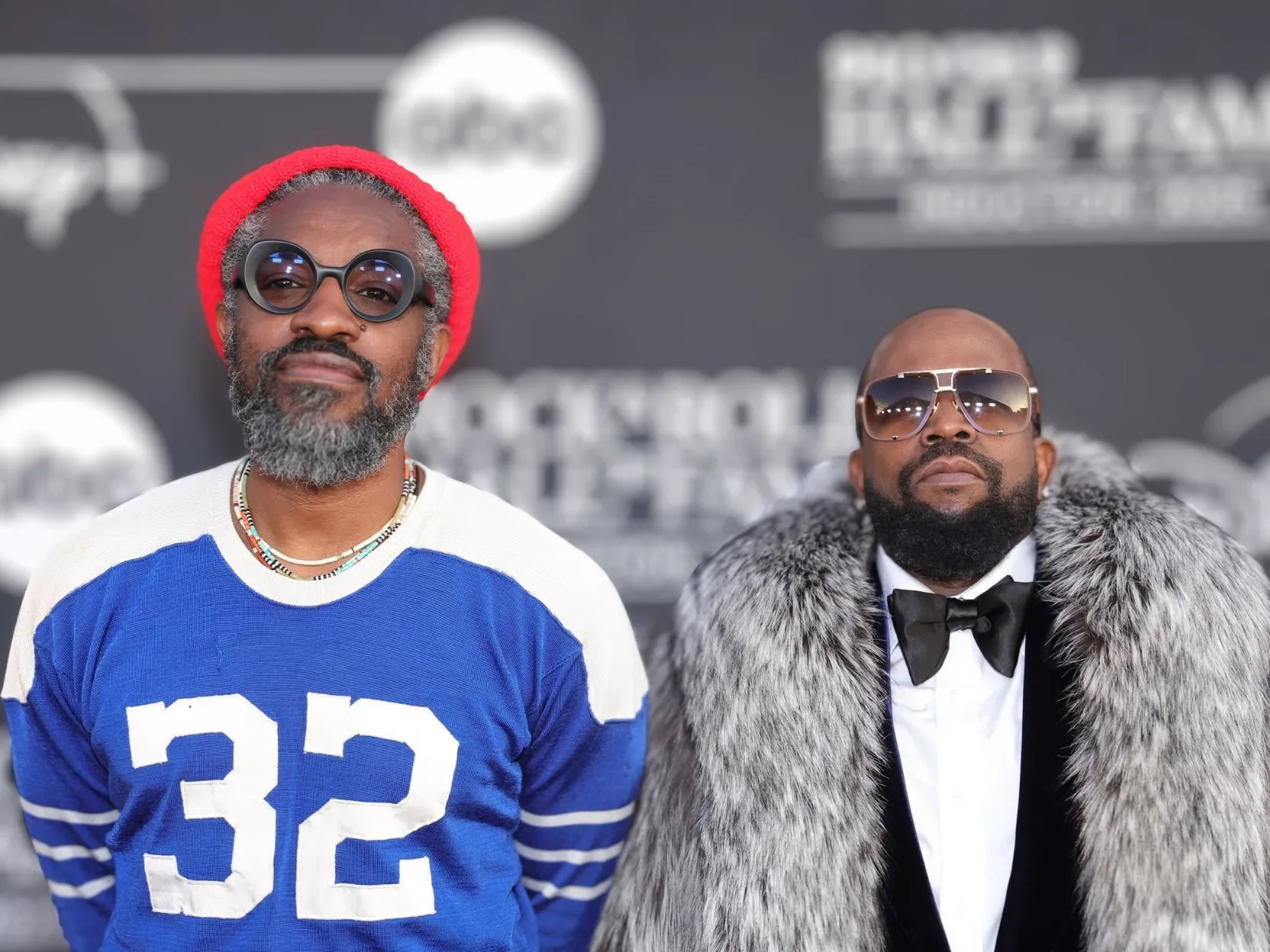
A trademark dispute involving Outkast’s business entity and Oakland rapper-producer Ovrkast has become about more than two closely spelled artist names. The case has also focused attention on how an artist’s own interview can later be used as legal evidence, what “consumer confusion” means in a trademark fight, and why a rebrand can be a major undertaking for an independent musician.
High Schoolers LLC, the trademark company controlled by Big Boi and André 3000, filed suit against Ovrkast in federal court in Georgia on September 16. The company alleges that Ovrkast’s name infringes on Outkast’s trademark rights. It is seeking damages, an order barring use of the disputed name, and destruction of branded materials.
Ovrkast has denied copying the celebrated duo’s name. In a September statement, he said he developed his artist identity independently, expressed respect for Outkast, and said he hoped for an outcome that would allow him to continue his career.
The disagreement is a useful reminder that a stage name is not merely a line on an album cover. For a working artist, it can be the identifier attached to music releases, social accounts, websites, merchandise, audience recognition and professional relationships. Changing it may sound simple in the abstract; in practice, it can mean rebuilding an entire public-facing system.
Why an interview is now part of the dispute
A July 2025 interview has become one of the central factual points described in the complaint. During that conversation, Ovrkast reportedly discussed people reading or interpreting his name as Outkast. High Schoolers LLC has pointed to that account as support for its argument that listeners may confuse the two names.
The journalist who conducted the interview, Andre Gee, has criticized the use of that discussion in litigation. Gee said the conversation had been intended to cover Ovrkast’s growth as an independent artist, not to create material for a court case. His objection reflects a broader discomfort around informal cultural reporting being repurposed in a legal conflict involving a better-resourced rights holder and a newer artist.
That reaction does not decide the legal issue. Interviews, public statements and other materials can be relevant when parties disagree about what audiences understand or how a name has been used. But it does illustrate the unusual tension here: a candid account of an artist navigating misreadings of a name may be treated either as a description of an annoying recurring mix-up or as evidence that the mix-up is legally significant.
Those are not automatically the same thing. A person can notice that readers, listeners or industry contacts make an association without agreeing that the association was intended, widespread, commercially meaningful or enough to establish infringement. The case turns on the legal arguments and evidence presented by the parties, rather than on any single line from an interview alone.
Related coverage includes Outkast’s Ovrkast Trademark Case Raises Questions About Rebranding and Artist Identity.
Trademark confusion, explained
At the core of this conflict is the concept commonly described as likelihood of confusion. In straightforward terms, the question is whether consumers may wrongly believe that one artist, product or service is connected with, approved by or affiliated with another trademark owner.
It is not necessarily limited to someone thinking two names look alike on a page. Confusion can concern spelling, sound, visual presentation, the goods or services involved, the respective audiences, and the context in which people encounter the names. In this case, the names Ovrkast and Outkast plainly invite a dispute over their apparent resemblance, but resemblance itself is not the full analysis.
Trademark attorney Dayna Thomas offered an important qualification while discussing the controversy: a trademark owner has reason to enforce its rights, but similar sound or meaning alone does not settle infringement. That distinction matters. An owner’s decision to protect a mark can be understandable as brand stewardship, while the actual scope of that protection remains a question for the legal process.
Another attorney, Lee Morin, took the view that Ovrkast’s reported acknowledgment of people confusing the names could aid Outkast’s position. If a court gives that evidence weight, it could become one piece of a wider argument about real-world interpretation. Ovrkast’s position, meanwhile, is that his name was independently created and not an attempt to trade on the duo’s identity.
This is also distinct from a copyright dispute. Copyright generally concerns original creative works, while trademark law is concerned with identifiers of source and the risk of marketplace confusion. Music-industry legal conflicts can involve either or both areas; for another example of a dispute centered on creative attribution rather than artist-name branding, see this report on the copyright suit involving Drake, OVO Sound and UMG.
Ovrkast’s account of the name’s origin
Ovrkast had publicly described a separate inspiration for his stage name years before the current case. In a 2022 profile, he connected it to rain, time spent inside drawing and discovering music, and the quiet creative atmosphere he associated with Oakland’s hoodie weather.
That explanation goes to artistic intent and personal identity. It does not, by itself, resolve the trademark claim. Intent and marketplace effect can be separate questions: an artist may sincerely explain a personal origin for a name while a rights holder still argues that the name creates confusion in use. Conversely, a documented independent inspiration can be central to the artist’s defense against an allegation of deliberate imitation.
The important point is that the dispute contains competing narratives that need not be treated as mutually exclusive at the level of basic facts. Ovrkast says his name came from an experience and feeling he wanted to preserve. High Schoolers LLC says the name causes unacceptable confusion with Outkast. The litigation will determine whether the latter claim supports the requested remedies.
The alleged Overkxst agreement
High Schoolers LLC also alleges that Ovrkast agreed to adopt the name Overkxst by July 15 and did not complete the transition. The company acknowledges that no proposed settlement was signed, but contends that the lawyers’ negotiations nonetheless produced a binding agreement.
That is a separate and consequential issue from whether Ovrkast’s existing name infringes the Outkast mark. The first issue asks whether the disputed name can legally continue to be used. The second asks whether the parties already made an enforceable deal to resolve that fight. A court could need to consider what was communicated in negotiations, whether the parties intended to be bound before signing formal documents, and whether the claimed terms were sufficiently settled. The supplied reporting does not establish how the court will view those questions.
The proposed replacement itself underscores how difficult a partial name change can be. Moving from Ovrkast to Overkxst preserves some of the original visual and phonetic identity, but it would still require an artist to manage an awkward transition in public. Audiences may search using the old spelling; catalog pages and past coverage may retain it; and merchandise, usernames and website addresses may not all be immediately available or easy to alter.
Why rebranding weighs heavily on smaller artists
Journalist Yoh Phillips emphasized the practical imbalance behind a forced rebrand. The expense is not confined to choosing another word or updating a profile picture. A musician may need to revise a website, social handles, merchandise, promotional materials and the many places where audiences expect to find their work.
There is also a recognition cost that is harder to quantify. Independent artists typically build awareness incrementally. A name becomes a searchable path to songs, videos, collaborations and live opportunities. If that path changes, fans may not make the jump, while old and new references can coexist in confusing ways. A rebrand may therefore create precisely the discoverability problems that an artist has spent years trying to avoid.
None of that eliminates the right of a trademark owner to bring a claim. Rather, it explains why the requested remedy matters so much. A ban on a name and destruction of branded material would not function as a minor correction for the person using that identity; it could alter the continuity of a developing career.
Gee’s response places that burden in a cultural frame. Hip-hop has long valued self-definition, independent movement and names that convey place, personality and creative intent. A legal challenge to a younger artist’s chosen name can consequently feel larger than ordinary brand administration, especially when that artist’s public explanation is folded into the case against him.
What remains unresolved
The available information establishes allegations and opposing positions, not a final legal outcome. High Schoolers LLC maintains that Ovrkast’s name produces confusion with Outkast and that a binding renaming agreement was reached. Ovrkast disputes copying and says his identity was built independently. The requested relief is substantial, but a request in a complaint is not a ruling.
For artists, managers and labels, the case highlights several practical lessons without presuming how this particular dispute should end: document the origin of a name, consider existing marks before investing deeply in branding, and treat public comments about name confusion with care. For journalists and audiences, it is a reminder that a conversational explanation can take on a different meaning once lawyers argue over it in court.
Most of all, the Outkast-Ovrkast conflict shows why artist-name disputes can be emotionally and economically charged. A stage name may look like a short string of letters. Behind it sit reputation, audience memory, creative authorship and a livelihood that can be far more difficult to rename than to spell differently.