Norm Macdonald built a comedy persona around the idea that a joke should never take the easy exit. He could make a punchline feel delayed, misplaced or practically abandoned, then use that apparent drift to pull an audience somewhere stranger. Norm: The Tale of Norm Macdonald, directed by Judd Apatow, approaches that unmistakable talent as both a gift and a complication. The resulting 126-minute documentary is affectionate without treating its subject as uncomplicated, and haunted without reducing him to tragedy.
The film’s central achievement is recognizing that Macdonald’s deadpan was not simply an emotionless delivery style. It was a form of misdirection. In comedy, misdirection steers an audience toward one expected conclusion before the performer redirects them to the actual joke. Macdonald’s version often began even earlier: with his relaxed, halting cadence, he made listeners question whether a story had a destination at all. That uncertainty became part of the laugh. An audience was not merely waiting for a punchline; it was negotiating whether the man telling the story was sincere, confused, provocative, or laying a trap.
That explains why the documentary can make a career-spanning collection of clips feel like more than a greatest-hits package. Apatow and editor Jake Hostetter assemble appearances from television, stand-up and Norm Macdonald Live into a portrait of a comedian who turned the ordinary act of speaking into a live-wire performance. The film also gives that persona friction: Macdonald could be disarming and charming while gravitating toward material designed to make a room uneasy.
A deadpan built on instability
The documentary returns to Macdonald’s first network television appearance, on Late Night with David Letterman on May 9, 1990. His material is dark from the outset, involving a supposed command from the devil and a gruesome crime that is ultimately revealed as a friend’s joke. The premise itself is less important than the early evidence of his method. Macdonald already had the hesitant, conversational delivery that would become his signature, a manner that made the audience feel as though it had been admitted into the strange logic unfolding in his head.
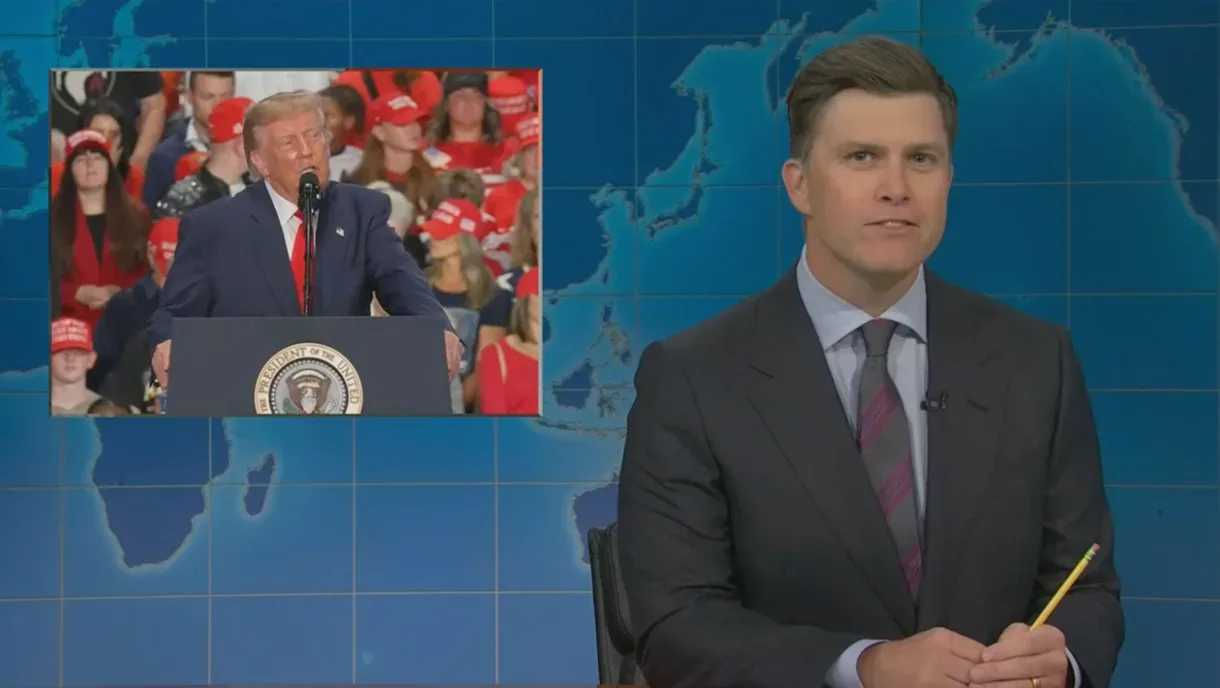
His years on Saturday Night Live made that logic nationally recognizable. Beginning in 1993, Macdonald spent four seasons behind the Weekend Update desk, where he repeatedly returned to O.J. Simpson. The film frames the recurring jokes as Macdonald’s refusal to let a sensational and disturbing story become routine television material. His insistence that Simpson was guilty became inseparable from the tension of hearing such a blunt assertion inside a joke format.
The documentary recounts that Macdonald’s fixation on Simpson contributed to his removal from SNL, identifying then-NBC West Coast president Don Ohlmeyer—described as Simpson’s close friend—as the executive responsible. Whether the audience agreed with every joke is almost beside the point of the film’s argument: Macdonald viewed retreat from the bit as a defeat. He could make comedy sound like a stubborn personal obligation.
That attitude is why “comic’s comic” is a useful, if incomplete, label. The phrase generally describes a performer admired intensely by other comics for craft, originality or willingness to pursue a difficult idea, even when broad popularity is uncertain. Macdonald certainly inspired that sort of admiration, but his appeal was not limited to fellow comedians. His late-night appearances became especially durable because a short guest segment could become an arena for a long, alarming story, an absurd claim, or a put-on delivered with just enough conviction to scramble the rules of the conversation.
The person inside the bit remains deliberately hard to reach
The documentary’s most compelling complication is Macdonald’s relationship to truth. It presents him as a habitual liar in both performance and private life, someone who could turn basic biographical information into a shifting routine. Accounts of whether he attended high school or college are contradicted by other accounts; he told an audience just before the pandemic that he was a “young 68” while he was actually 60. In an interview with Larry King, he called himself deeply closeted, then twisted the expected meaning of the phrase until the statement became another comic maze.
Related coverage includes ‘Norm: The Tale of Norm Macdonald’ Examines Comedy’s Most Elusive Truth-Teller.
Those moments do not simply establish that Macdonald liked to troll interviewers. They clarify why his best work had unusual tension. A conventional anecdotal comic asks an audience to accept a story long enough for the punchline to land. Macdonald frequently made the status of the story itself the source of suspense. Was the claim true? Was it an exaggerated confession? Was it a carefully engineered digression? By the time the audience could decide, he had often moved on.
The film suggests that this evasiveness had a cost. Following his exit from SNL, Macdonald remained visible but struggled to settle into the kind of polished entertainment-industry path that can turn a television breakthrough into long-term stardom. The portrait offered here is of a performer caught between sincerity, insecurity and self-sabotage. He could not comfortably package himself, but he also seemed reluctant to let a public persona become too stable. That instability gave his comedy energy; it could also make the person behind it difficult to know.
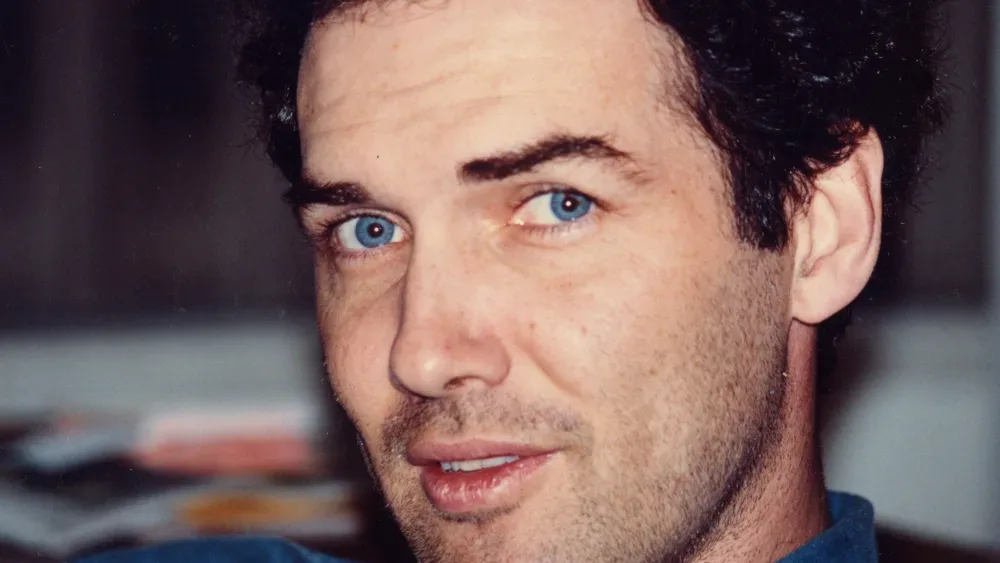
Macdonald’s screen presence helped make the contradiction easier to watch. In his early years, he had the polished looks of a conventional television star: an easy smile, curly hair, dimples and an approachable manner. Yet the pleasant surface did not soften his willingness to say something confrontational. Rather, it made the collision sharper. He was not presented as a snarling outsider; he appeared more like a friendly guest who had suddenly decided to test the room’s tolerance for discomfort.
Clips show a performer who could turn conversation into material
Apatow’s film draws on footage involving Letterman, Jerry Seinfeld, Conan O’Brien and Dave Chappelle, among others. These clips support a simple point: Macdonald did not need the formal structure of a stand-up set to be funny. A talk-show chair, a podcast conversation or an impression could be enough. His Bob Dole on SNL and his Quentin Tarantino impression are highlighted as examples of a performer whose skills extended beyond the deadpan monologue.
Norm Macdonald Live also matters because it shows how flexible that approach could be. In a conversation with Jane Fonda, the documentary finds Macdonald generating comedy from the exchange itself rather than merely arriving with rehearsed material. This was not improvisation in the narrow sense of making everything up on the spot. It was a willingness to let an interaction become unstable, then exploit the instability before anyone else could restore normal conversational order.
The film’s use of these moments makes a persuasive case that Macdonald’s legacy is not confined to a single Weekend Update era or a list of famous jokes. His material rewards revisiting because the route to the joke is often as memorable as the joke. A sentence may appear to be rambling until its peculiar phrasing becomes the mechanism that makes the final turn work. That is a demanding form of comic construction, especially on television, where speed and clarity are usually prized.
For readers drawn to artists whose careers do not fit cleanly into a prestige template, there is a useful parallel in the wider entertainment conversation around craft and authenticity. Nas’s call to reject trend-chasing and remember music’s foundations similarly considers the tension between an artist’s underlying principles and an industry that favors easy replication. Macdonald’s work was hardly solemn, but it was grounded in a comparable aversion to doing the obvious thing simply because it was expected.
The documentary does not erase the damage
That respect for Macdonald’s ability is not the same as a blanket defense of his choices. The film includes episodes where his appetite for transgression appears less illuminating than reckless. On The View, Macdonald said Bill Clinton was guilty of murder and later characterized the remark as a bit, even though the claim echoed right-wing conspiracy theories. The documentary also addresses his defense of Roseanne Barr after her 2018 racist tweet. Macdonald’s loyalty to Barr, for whom he had once written, is presented as a loyalty expressed in a notably tone-deaf way.
These incidents matter because they prevent the documentary from collapsing “offensive” and “brave” into the same idea. Comedy can challenge convention, puncture self-importance and force an audience to confront an uncomfortable thought. It can also amplify a harmful falsehood or trivialize racism. Macdonald’s career contained both the thrill of boundary testing and examples of what can happen when the impulse to defy a room is treated as its own justification.
That distinction makes the documentary more useful than a simple celebration. It asks viewers to hold two thoughts at once: Macdonald was a singular comic intelligence, and singular intelligence does not make every provocation meaningful. The sharper question is not whether a comedian is “allowed” to say something, but what the comedian is doing with the statement—where the joke points, what assumptions it relies on, and who bears the weight of its fallout.
A private illness changes the frame without defining it
The film also reveals that Macdonald spent his final nine years privately fighting leukemia. He died in 2021. The disclosure gives later footage a new emotional register, particularly as his appearance changes across the years, but Apatow does not make illness the sole key to interpreting the man or the work. The comedy remains central. The diagnosis explains a concealed part of his life; it does not suddenly turn every bit into an encrypted farewell.
That restraint is valuable. A documentary about a beloved comedian who died can easily become a tribute designed to sand down every contradiction. Norm: The Tale of Norm Macdonald instead treats contradiction as essential to its subject. Macdonald was warm and antagonistic, candid and deceptive, devoted to craft and often resistant to career management. He could seem to be inviting viewers into his confidence while simultaneously making their confidence in him impossible.
By the end, the film’s most persuasive insight is that Macdonald’s comedy derived power from that unresolved quality. Laughter, in his hands, was not only release. It was the sensation of an idea arriving sideways—too late, too early, or from a direction the audience had not bothered to guard. Apatow’s documentary captures the pleasure of that surprise while acknowledging the mess around it. It is an engaging and unusually clear-eyed account of a performer whose greatest routine may have been convincing everyone that he was just casually talking.
Film details
- Title: Norm: The Tale of Norm Macdonald
- Director: Judd Apatow
- Editor: Jake Hostetter
- Music: Jeff Morrow
- Running time: 126 minutes
- Rating: R
- Release: Netflix