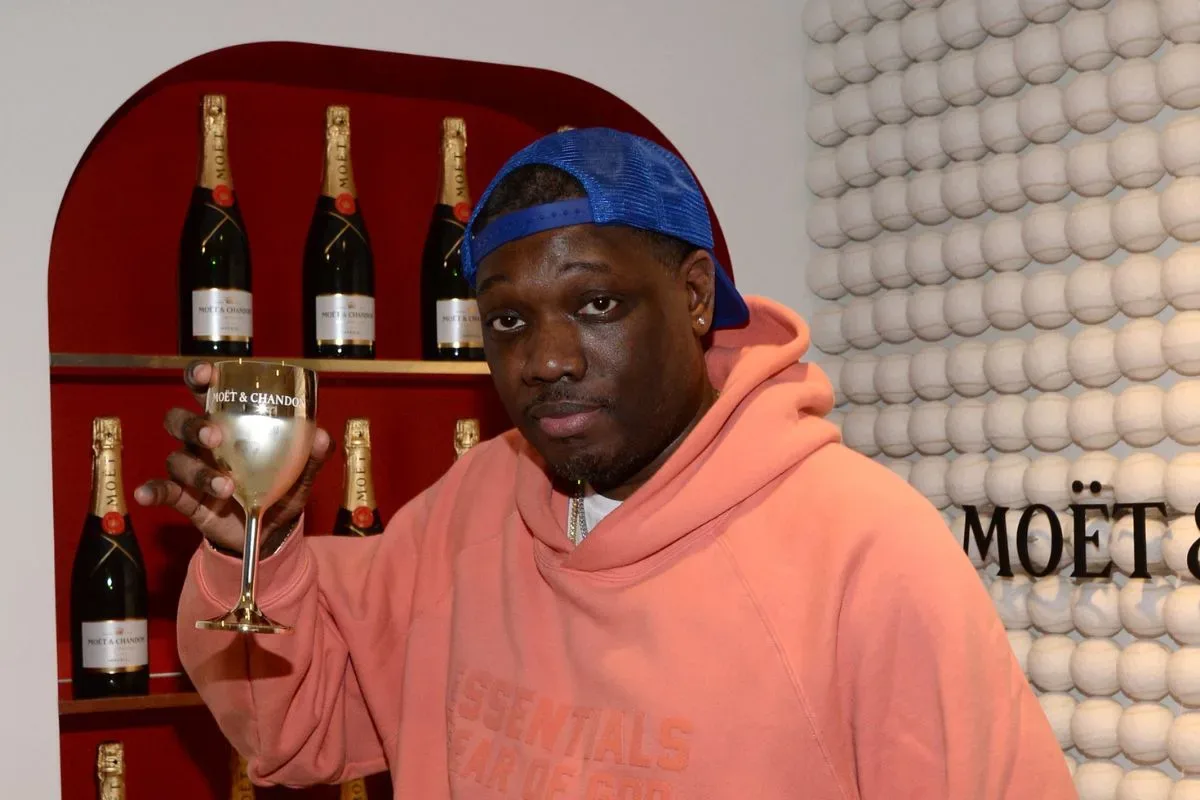
Michael Che has explained why his Netflix comedy special Michael Che: Shot in Minnesota does not identify people killed in Minnesota by name. His reasoning is not that the events are incidental. Instead, Che said he wanted to address his frustration with violence and its wider context without turning individual victims into material for a joke.
The special arrived October 13 after being taped across four August performances at First Avenue in Minneapolis. Its title points toward a broad, fraught subject, one connected in the supplied background to George Floyd’s 2020 death and the fatal shootings of Renee Good and Alex Pretti by federal agents earlier this year. Che’s explanation draws a firm line between acknowledging that setting and using the particulars of individual tragedies as punchline machinery.
Why Che kept names out of the routine
Che said the special was not “necessarily about those people individually.” In his view, directly invoking names while telling jokes could derail the atmosphere required for a comedy hour and, more importantly, risk treating victims too casually. The target of his material, as he described it, is the accumulated frustration around what has happened rather than a comprehensive recounting of each event.
That distinction matters. A comedy special has a different form from a news report, documentary or public statement. Comedy relies on timing, framing and an agreement with an audience that the performer is building toward an observation, a release of tension or a surprise. When the underlying subject involves deaths and violence, the choice of detail can radically change what an audience believes the joke is asking them to laugh at.
Che’s approach, based on his explanation, is to keep the material at the level of social frustration rather than attach it to named people whose deaths carry a specific personal and public weight. That does not make the backdrop less serious. It establishes a boundary around what he considers usable in a performance designed to remain a comedy special.
“I didn’t want to invoke those names in a joking way,” Che said, explaining that his focus was on the frustration of what is happening rather than the detailed mechanics of every event.
Comedy, context and the problem of specificity
There is no universal formula for discussing tragedy in stand-up. Some performers use detailed personal testimony; others take on political systems, media language or public hypocrisy; still others avoid a subject completely. Che’s stated choice falls into a fourth lane: retain the subject’s emotional and civic context, but remove the individual names that could make the act of joking feel too direct.
Specificity can be powerful, but it can also create a different ethical burden. Naming a victim brings an audience immediately toward a real person, rather than an abstract issue. In a comic routine, that can be viewed as an attempt at seriousness, but it can also cause a joke’s energy to land on the person or their death rather than on the larger conditions the comedian means to criticize. Che’s comments suggest he saw that risk as too high.
Related coverage includes Michael Che Explains Why ‘Shot in Minnesota’ Does Not Name Victims.
His wording also clarifies that the title should not necessarily be read as a promise of a case-by-case account. It is a broader signal of place, tension and exasperation. For viewers, that is a useful expectation to set: the special’s engagement with Minnesota’s recent traumatic history is presented through Che’s comedic perspective, not as a factual chronology or a work intended to resolve every part of that history.
What “keeping the mood up” means in a comedy hour
Che referred to the need to keep the mood up for a special. That does not mean a routine must be frivolous, nor does it mean serious topics are off limits. It means a comedian must manage the audience’s emotional path. A long-form special has pacing: sections build, release and redirect attention. If material becomes too close to a particular person’s death, the emotional center of the room may shift away from the comedian’s broader point and toward grief, discomfort or the expectation of a more solemn treatment.
That is the practical challenge Che is describing. He is not presenting a claim that comedy can settle the underlying violence. Rather, he is explaining how he approached the responsibility of choosing what to say—and what not to say—within a form meant to be funny.
A perspective shaped by his work at Saturday Night Live
Che’s comments on the special arrive alongside his reflections on being a Black comedian working in high-profile television. He recalled joining Saturday Night Live in 2013 as its only Black writer, describing the adjustment as difficult. He said Kenan Thompson and Jay Pharoah helped him find his footing at the show.
In 2014, Che became the first Black co-anchor of Weekend Update. That role is relevant to the way he describes comedy’s pressures because Weekend Update is built around topical material: it asks writers and performers to react to current events in front of a live audience. A stand-up special is structurally different—pre-taped, longer and centered on one performer’s voice—but both formats require judgment about tone when current events are painful or politically charged.
Che has also rejected the expectation that Black comedians must represent every Black audience member or persuade every possible viewer. His position is that comics can speak to their audiences without being assigned the impossible job of speaking for everyone. That belief helps explain the emphasis in his comments on personal perspective. Shot in Minnesota is not offered as an exhaustive statement on each killing referenced by its backdrop; it is Che’s attempt to translate a feeling of frustration into his own comic framework.
Why the platform still matters to Che
Che has said that Saturday Night Live remains valuable to him despite the difficulties he encountered there. He pointed to the chance to perform for a live audience on 20 Saturdays a year and create moments that viewers remember. He also stressed that the job has left space for his other work, including specials as well as writing and producing.
His explanation carries a practical dimension, too. Che said he comes from poverty and does not treat leaving a job lightly. That comment is not merely about career stability. It places his decisions about a large television platform in the context of opportunity: a recurring national venue can coexist with independent creative projects rather than prevent them.
The result is a career split across formats with distinct demands. Live topical television calls for rapid response. A Netflix hour permits a more sustained line of thought. A roast, meanwhile, carries its own expectations of aggressive jokes and personal targets—one reason Che said that travel around his SNL responsibilities, along with the prospect of jokes about friends, made participation in Kevin Hart’s Netflix roast less appealing after he had initially considered joining.
Those differences are useful context for Che’s Minnesota remarks. The question is not simply whether comedy may touch difficult subjects. It is what kind of comedic setting is involved, who may be caught in the joke’s orbit, and whether the performer can make a point without placing an individual victim at the center of the bit.
The larger takeaway from Che’s explanation
Che’s account does not ask audiences to ignore the named events behind the special’s setting. It says that naming the victims within a comic structure was a line he chose not to cross. His goal was to make room for a broader expression of anger and exhaustion while avoiding a treatment that could reduce real people to a device in the act.
For audiences watching politically or socially charged comedy, that is a meaningful distinction. The title may be provocative, but Che’s stated intent is not to turn individual losses into a string of references. It is to address a climate of frustration while preserving the form and tone of stand-up. Whether viewers feel that balance succeeds is, inevitably, subjective. What is clear from Che’s own explanation is the boundary he set: the special engages the feeling surrounding violence, not the personal details of every tragedy connected to it.
For more entertainment coverage involving major performers and public cultural moments, see Missy Elliott’s upcoming Gala of the Stars Icon Award.