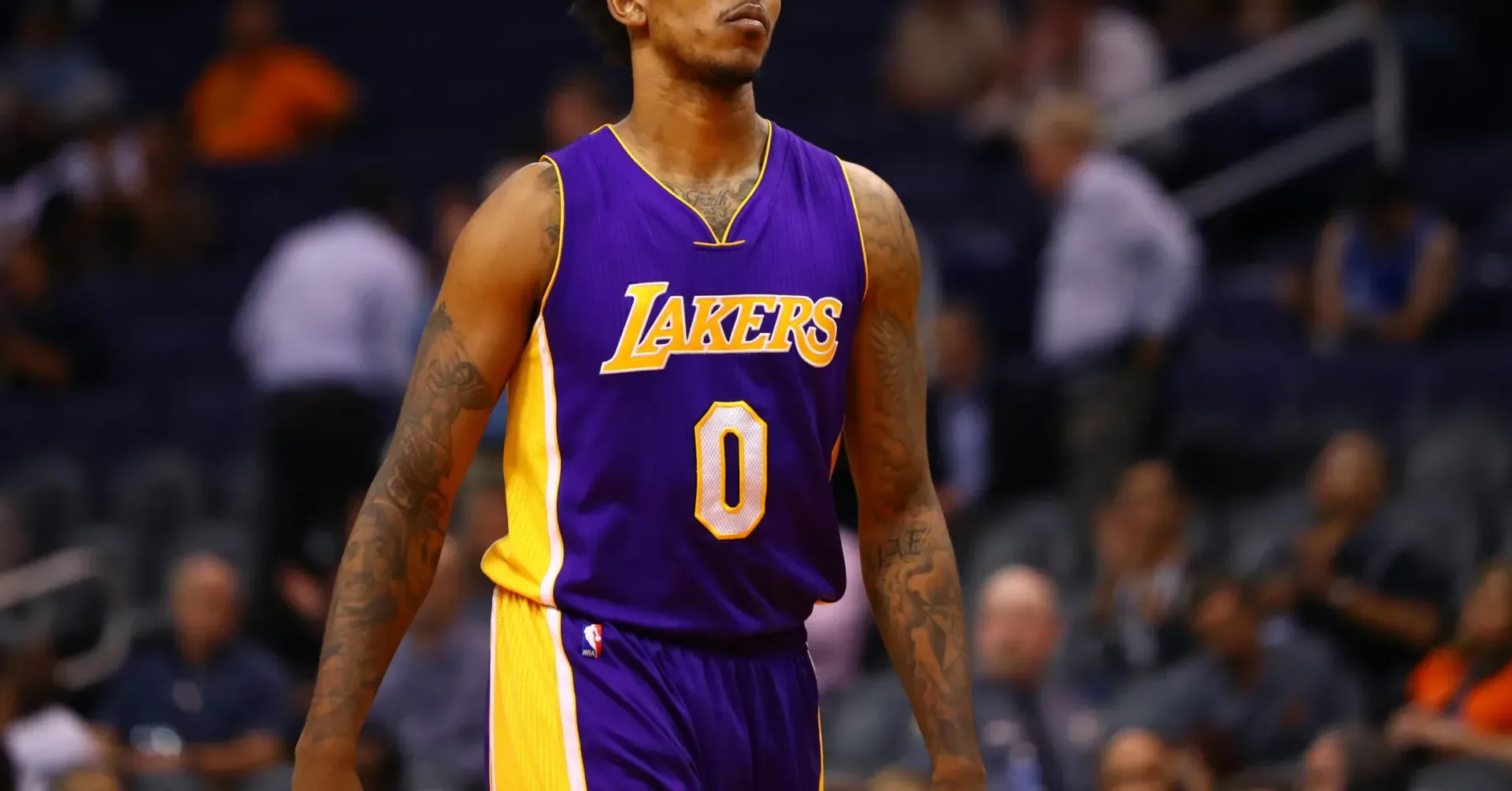
Nick Young has added a family member’s perspective to the long-running Kendrick Lamar and Drake conversation. Appearing on Club Shay Shay with Shannon Sharpe, the former NBA player discussed both his connection to Lamar and his view that Lamar should answer what Young considers Drake’s recent subliminal shots.
The connection is not just a loose celebrity-world association: Young’s father is the brother of Lamar’s mother, making Young and Lamar cousins. That relationship naturally gives Young’s comments an extra layer of interest for fans, even if it does not turn them into an official statement from Lamar or a preview of the rapper’s plans.
Young was direct about where he stands. He said he does not listen to Drake, criticized the dynamic he characterized as a “20v1,” and said he told Lamar to go after Drake again. In Young’s view, the apparent subliminals tied to ICEMAN are enough to justify another response.
“Kendrick, you got to get him again!”
That is an emphatic opinion, but the important distinction is straightforward: Young is advocating for a reply, not reporting that one exists. There is no confirmation here that Lamar has recorded a new diss track, plans an album, or intends to reopen a conflict that many listeners believe already had a clear outcome.
Why Nick Young’s Comments Land Differently
In rap feuds, outside commentary is routine. Friends, collaborators, rivals, fans, producers, athletes, podcasters, and people only loosely attached to either artist can all turn a lyric into a new day of discourse. A cousin speaking publicly does not settle what the artist will do, but it does make the discussion more personal than the usual reaction-video cycle.
Young’s stance is also unmistakably partisan. He framed Drake’s approach as an unfavorable numerical pile-on and dismissed the idea that he should be listening to Drake at all. That means his comments should be read as support for Lamar rather than neutral analysis of the feud. He is expressing what he wants to happen, not laying out a verified schedule of events.
That distinction matters because celebrity conversations often blur three very different things:
- A reaction: Somebody hears or notices an apparent reference and shares an opinion.
- An interpretation: Listeners decide whether a line is actually aimed at someone, and what it means if it is.
- A confirmed action: The artist releases music, makes a public statement, or explicitly confirms an intention.
Young’s appearance belongs in the first category. His assessment relies on the second. Nothing presented establishes the third.
What a Subliminal Is — and Why It Keeps the Conversation Moving
A subliminal is an indirect reference rather than a plainly named target. In rap, it can be a lyric, a phrase, a theme, a coded callback, or another detail that listeners connect to a specific artist. Its power comes from ambiguity. Supporters may treat the implication as obvious, while skeptics can argue that it was never an actual diss in the first place.
That ambiguity is especially useful for keeping a rivalry alive without committing to another full escalation. Fans can debate a potential target line by line; commentators can ask for a response; and both artists can remain central to the larger conversation even when neither provides a definitive clarification.
Young believes the references on ICEMAN are pointed enough that Lamar ought to answer. But a perceived subliminal does not automatically require a record. It can invite a response, make one commercially tempting, or satisfy fans looking for another chapter, but those are separate matters from whether Lamar sees a reason to engage.
Lamar Has No Confirmed Next Move
The available picture is one of uncertainty. Lamar is described as having maintained a relatively low profile after a huge 2024 and early 2025. There is speculation that another album could be coming, but no confirmation has been provided. Likewise, there is no verified indication that Lamar wants to respond directly to Drake at this point.
That uncertainty is worth preserving because fans often treat silence as a clue with only one possible meaning. Silence can be read as disengagement, preparation, indifference, strategic restraint, or simply the absence of a planned public move. Without Lamar explaining his position, none of those readings is established fact.
Young’s intervention therefore creates conversation rather than resolution. It reintroduces the question of whether a response would be desirable, but it does not answer whether one is likely.
Why a Reply Is Not a Foregone Conclusion
One reason Lamar may not feel compelled to act is the perception that he had already won the prior battle. That view is explicitly part of the discussion around this renewed speculation. If an artist believes the decisive exchange has already happened, another response could feel unnecessary rather than urgent.
There is also a difference between winning a public narrative and entering a new musical contest. The former is about how audiences interpret an existing run of music and moments. The latter requires a conscious decision to create and release something new. An artist can benefit from a reputation for having prevailed while choosing not to restart the exchange.
Young clearly favors the other approach: he sees the recent material as reason for Lamar to strike again. His position reflects a portion of the audience that wants rap competition to remain active whenever indirect references appear. But the lack of a confirmed Lamar response leaves the practical outcome unchanged.
The Entertainment Value of an Unresolved Rivalry
This kind of open question is a familiar engine for modern entertainment coverage. A brief comment from a connected public figure can revive attention around a feud, especially when fans are already scanning music for hidden meaning. It is similar to the way a livestream remark can turn into a broader celebrity argument, as seen when a public dispute spills outward from one media moment.
The difference here is that Young’s role is familial and that his advice is aimed at an artist who has not publicly shown his hand. Young did not claim Lamar agreed with him, and he did not suggest he was speaking on Lamar’s behalf. He offered encouragement as a cousin and a fan of Lamar’s side of the rivalry.
For now, that is the story: Nick Young wants Kendrick Lamar to answer Drake, and he has said so loudly. Whether Lamar shares that appetite—or believes there is anything left to prove—remains unknown.