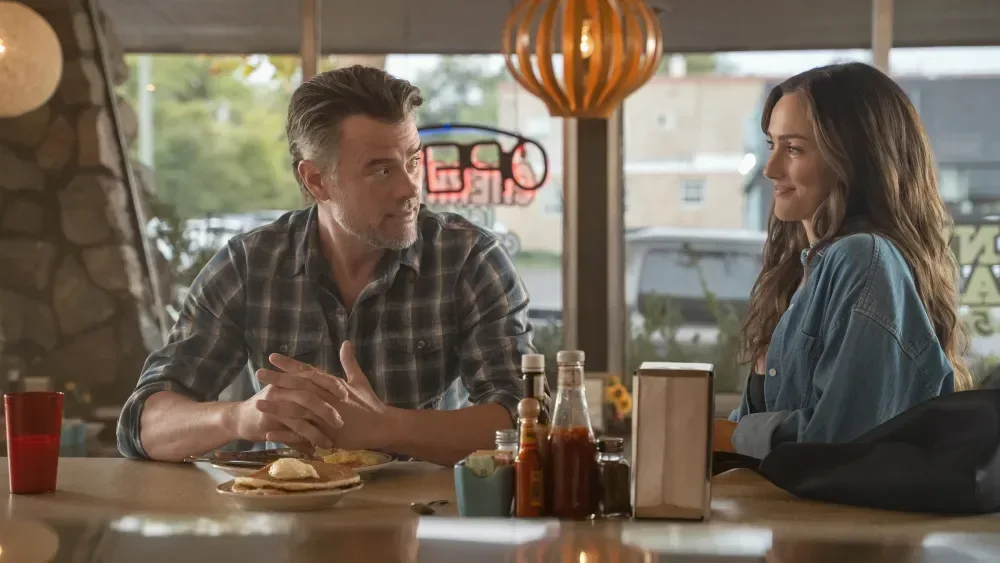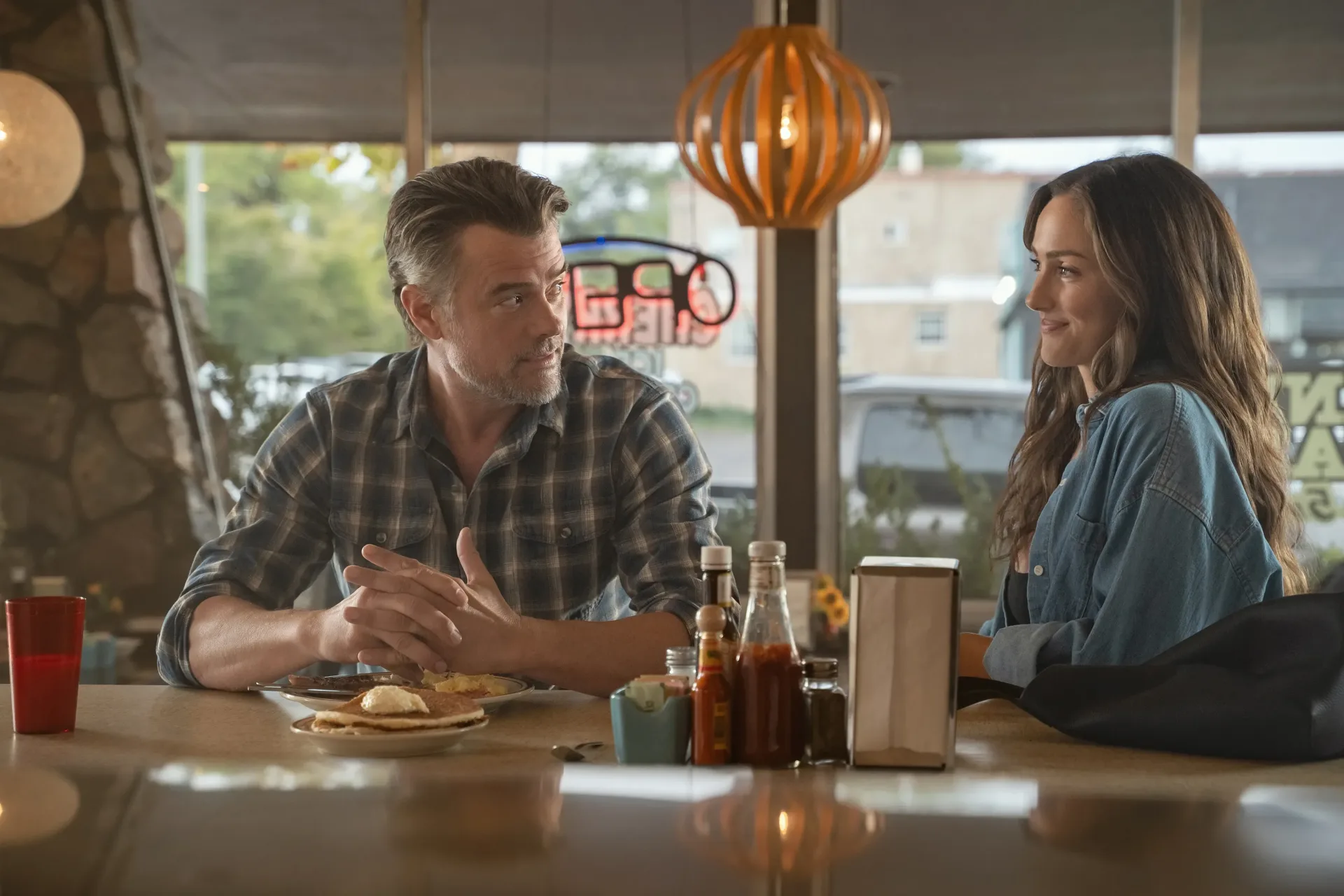
Ransom Canyon will not return for a third season. Netflix has canceled the romantic drama after two seasons, bringing its Texas Hill Country story of ranches, rival interests, family history and complicated romance to an end.
The series arrived with a setup built for long-running small-town drama: people with entrenched relationships, private conflicts that become community business, and a setting where land, legacy and love all carry weight. It was created by April Blair and adapted from the book series by Jodi Thomas. Season 1 premiered in April 2025, while Season 2 followed in July 2026.
For viewers who spent time with the show, the cancellation means there will be no further screen chapters for rancher Staten Kirkland and musician Quinn O’Grady after the second season. The series positioned their personal choices against the pressures of a close-knit Texas community, where family standing and old wounds could be as consequential as a relationship.
A two-season run for the Texas-set romance
Ransom Canyon centered on intersecting lives in a town defined by long-established families and the unavoidable intimacy of a place where everybody is aware of everybody else’s affairs. That foundation placed the series in the broad tradition of community-driven romantic dramas, using a rural setting and generational connections as engines for its conflict.
Josh Duhamel played Staten Kirkland, a rancher whose Season 2 story involved attempting to take back his legacy after losing his position as trustee of the Double K Ranch, his family’s property. Minka Kelly played Quinn O’Grady, a musician forced to reckon with a defining question: whether her future belonged in the small town she previously tried to leave behind or in New York City’s faster-moving world.
Those parallel struggles gave the second season a clear emotional frame. Staten’s plot was tied to responsibility, status and family land. Quinn’s was about belonging, ambition and the possibility that the place one escapes can still exert a powerful pull. The cancellation leaves that pair as the central faces of a show whose identity rested heavily on the friction between home-town roots and the desire to create a life elsewhere.
The ensemble behind the canyon
Duhamel and Kelly led a cast that also included Lizzy Greene, Garrett Wareing, Marianly Tejada, Jack Schumacher and Casey W. Johnson. Season 1 additionally featured Eoin Macken, Andrew Liner and James Brolin.
That mix of performers mattered to the premise. Stories set in communities like Ransom Canyon do not operate solely through one romance or one inheritance dispute; they depend on a web of relatives, friends, neighbors and rivals whose decisions overlap. The show’s official setup emphasized exactly that kind of interconnection, making the wider ensemble an important part of how its drama could unfold.
The end after two seasons also draws a line under a relatively compact streaming run. There were 10 episodes in the first season. Rather than extending into the multi-year lifespan once common for broadcast dramas, Ransom Canyon now stands as a two-season adaptation with its television story contained within the 2025 and 2026 releases.
What the viewership and review picture showed
The first season spent five weeks in Netflix’s Top 10. Its critical response was mixed, and it holds a 48% score on Rotten Tomatoes. Coverage of the show often recognized the appeal of its romantic, community-focused format while also noting that many of its plot directions felt readily foreseeable.
Season 2 saw a similar overall critical reception. It appeared in Netflix’s Top 10 for three weeks, a shorter run than Season 1’s five weeks. Those placements show that the series reached the service’s rankings during both of its seasons, while the available reception was neither a clear critical breakthrough nor enough to secure another installment.
It is important not to turn those visible measures into a complete explanation for a streaming cancellation. Netflix has not provided a reason in the information available here. Top 10 time and aggregate review scores offer context around the show’s run, but they do not establish the internal calculations behind the decision. Viewing measures, completion, production considerations and broader programming strategy can all be relevant in the streaming business, and no specific cause has been stated for Ransom Canyon.
An adaptation with more story beyond the show
Because Ransom Canyon began as Jodi Thomas’ book series, the cancellation of the Netflix production does not erase the wider fictional foundation on which it was built. The television adaptation was one interpretation of that material, shaped by April Blair and the show’s cast. Its conclusion after two seasons simply means any future continuation of these characters on this particular screen version is no longer planned.
Adaptations can occupy an unusual position for audiences. Readers may approach them with prior knowledge of a world and its characters, while viewers new to the material meet that world through the choices of the series. In this case, the Netflix version assembled a recognizable ensemble and made Staten and Quinn’s competing claims on love, place and purpose the key dramatic thread of its later season.
The rural-romance angle was also a meaningful part of the show’s identity. Texas Hill Country was more than a backdrop: the Double K Ranch, the town’s social pressures and the contrast with New York City gave the series its central tensions. Staten’s fight over ranch stewardship could not be separated from the question of inherited legacy. Quinn’s decision could not be separated from the different futures represented by a familiar hometown and a major city.
Why the premise fit a recognizable TV tradition
Ransom Canyon’s basic ingredients are familiar for a reason. Small-town series can turn proximity into dramatic leverage. A disagreement is not merely between two people; it can ripple through families, workplaces and friendships. A romance is not simply private, because the people around it have history, loyalties and opinions. A fight over property carries emotional force because the property also represents identity and continuity.
Here, the show paired those conventions with a Texas ranch setting. Staten’s position at the Double K Ranch supplied a concrete focus for conflict over authority and heritage. Quinn’s music career and New York City possibility widened the show’s scope beyond the town, presenting a familiar but durable dilemma: does fulfillment mean recommitting to one’s roots, or does it require leaving them behind?
That framework helps explain why the show could find an audience despite a mixed critical response. Romantic dramas frequently invite viewers to invest in atmosphere, character pairings and ongoing emotional questions as much as surprise-driven plotting. The appeal can be the return to a particular social world—the ranch, the town, the familiar faces and the tangled relationships—not just the uncertainty of where every storyline will end.
For pop-culture viewers keeping track of television’s quick-changing renewal landscape, this is another example of a series ending while its setting and premise still leave room for imagined future stories. It also arrives amid a busy moment for screen culture; for another recent look at story worlds crossing identity, art and community, see our coverage of Julián’s hand-drawn family and identity story.
The final status of Staten and Quinn’s story
With Netflix’s decision, Ransom Canyon finishes as a two-season romantic drama. Season 1 introduced the Texas Hill Country community in April 2025 and remained in the Netflix Top 10 for five weeks. Season 2, released in July 2026, put Staten’s ranch legacy and Quinn’s choice between town and city at the forefront, then spent three weeks in the Top 10.
The series leaves behind the work of Blair, Thomas and an ensemble led by Duhamel and Kelly: a modern ranch-country drama centered on the obligations of home, the pull of reinvention and the messy reality that in a small town, personal history rarely stays personal for long.