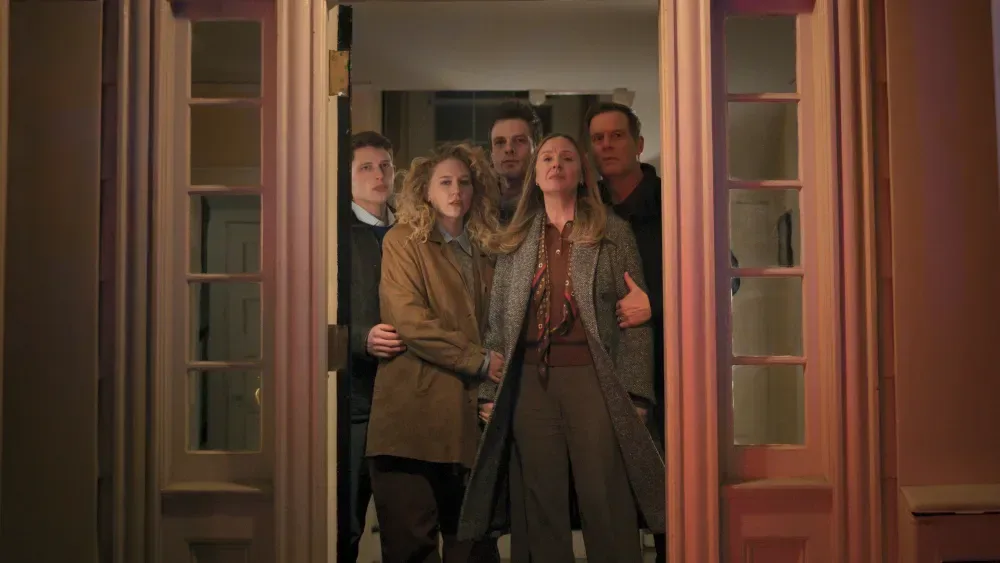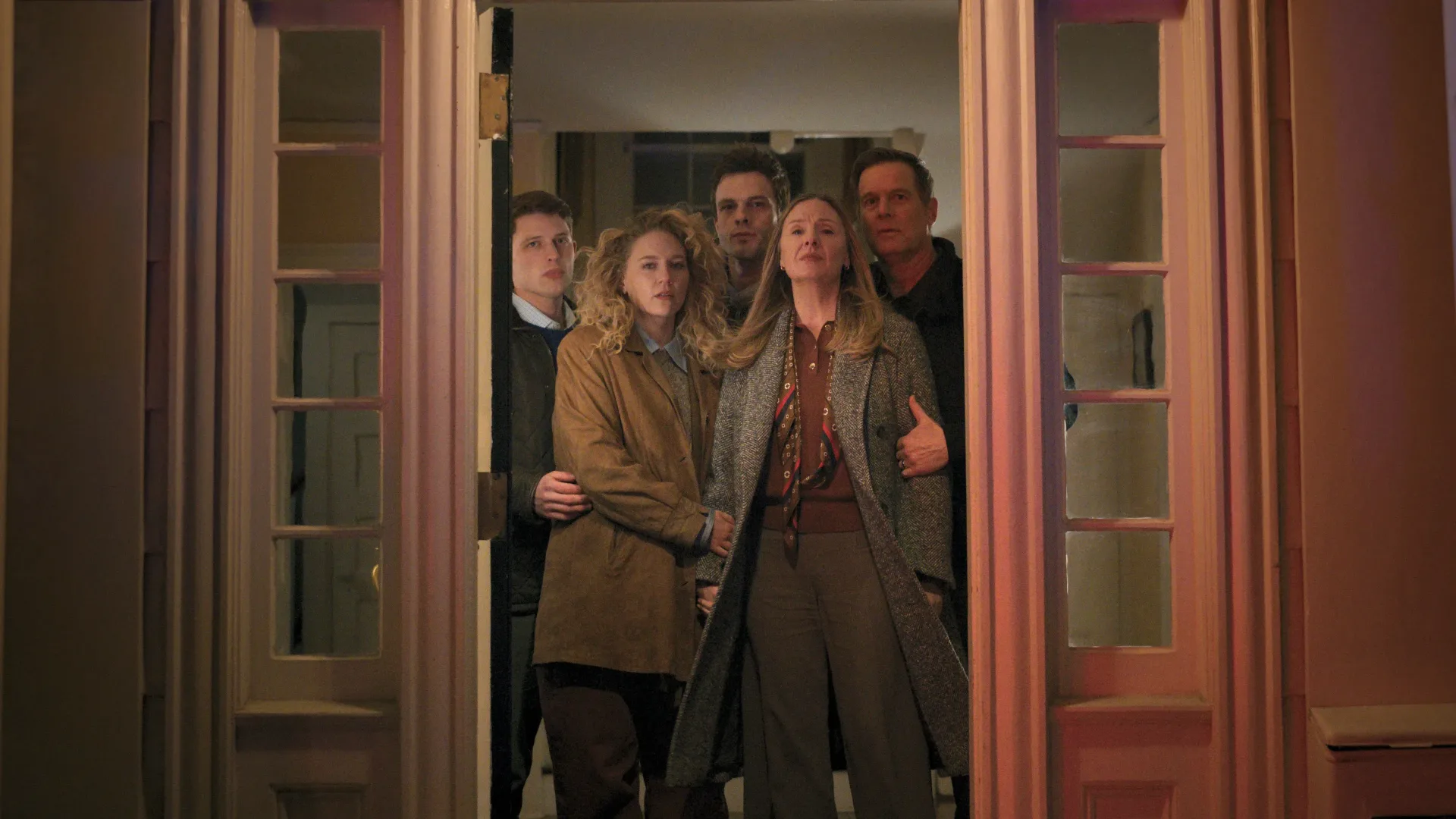
NBC has given Line of Fire a full 18-episode first season, expanding the freshman action thriller beyond its original 13-episode plan. The additional five episodes mean the series will continue into 2027.
That is a meaningful vote of confidence for a new broadcast drama. The network had previously ordered five additional scripts while weighing a larger extension, and it has now converted that possibility into an official 18-episode season. The decision follows sustained viewing and a particularly strong increase in audience after the show’s initial airing window.
Line of Fire airs Mondays at 10 p.m. and becomes available to stream on Peacock the following day.
What NBC’s 18-episode order means
An 18-episode order is not merely a symbolic renewal-style gesture. It changes the scale of the first season. Rather than wrapping its initial story in the 13 episodes originally planned, the production has five more installments in which to develop its central conspiracy, broaden its cases and give its ensemble more room to establish the personal conflicts built into the premise.
There is an important distinction between the steps that led here:
- Original order: NBC initially planned 13 episodes.
- Additional script order: The network then commissioned five more scripts as it considered extending the season.
- Full season total: The show is now officially set for 18 episodes.
In television production, ordering scripts is not always identical to committing to completed episodes. Scripts provide a practical runway for a network and studio if performance supports expansion, while the eventual episode order confirms that the additional material will form part of the season. For viewers, the immediate result is straightforward: Season 1 has a longer path ahead than first expected.
The extension also means that the show’s ongoing plot will not need to sprint toward a conclusion simply because the originally ordered episode count is approaching. That does not guarantee any specific storytelling choice, but it creates more flexibility for the creative team to balance weekly cases with the larger deadly-conspiracy thread at the center of the series.
A law-enforcement family caught in one conspiracy
Line of Fire follows a family whose members work across different parts of federal law enforcement. Its core group brings together agents connected to the FBI, U.S. Marshals, Secret Service and Department of Justice. A case that appears relatively clear-cut develops into a far more dangerous conspiracy, forcing the family to confront both an external killer and tensions within their own professional and personal relationships.
Related coverage includes NBC Expands ‘Line of Fire’ Season 1 to 18 Episodes.
The premise is built around overlap: these characters have related duties but not identical responsibilities, and their personal connection complicates the work. The show’s stated setup has them crossing professional lines as they investigate cases, use their collective experience protecting civilians and public officials, and attempt to protect one another. The pressure point is particularly clear in the threat that pursuing justice could require them to violate, or betray, the codes they have sworn to uphold.
That framework places Line of Fire in the broad procedural tradition, while giving it a serialized engine. A procedural is a drama commonly structured around cases, investigations or institutional work that can provide a distinct problem from episode to episode. A serialized story, by contrast, carries major plot developments across multiple episodes. Here, the weekly law-enforcement activity is paired with one continuing conspiracy, and the family relationship supplies a third layer of tension.
For an 18-episode season, that blend matters. More episodes can support standalone investigations, but a conspiracy narrative also needs its major clues, reversals and character decisions to accumulate without losing shape. The expanded order gives the series a longer canvas; it also raises the importance of how it parcels out answers and consequences.
Delayed viewing was central to the decision
The show has been described as one of the breakout performers of the fall season, with NBC’s strongest delayed-viewing lift in more than three years. That phrase is worth unpacking because it describes a different measurement from the audience that watches live at the moment an episode first airs.
Delayed viewing refers to people who watch after the original broadcast rather than during its initial linear-TV slot. Depending on the measurement being discussed, that can include viewing through recordings or later platform access. The key point in this case is that Line of Fire has grown substantially after its first airing, not just during the Monday 10 p.m. broadcast.
For a series that streams on Peacock the day after broadcast, delayed lift is especially relevant. It indicates that the program’s audience is not confined to a single appointment-viewing window. Some people may be finding episodes later, catching up after missing the live airing or choosing the streaming option as their normal way to watch. The supplied performance detail does not break down those viewers by platform or provide total-audience figures, so it would be inappropriate to assume exactly where every delayed viewer is watching. It does, however, establish that the show’s post-broadcast growth has been unusually strong for NBC in recent years.
That makes the order a useful reminder that a new series can make its case through momentum, not simply its first-night audience. In an environment where viewers divide their time among live broadcasts and later streaming, the audience arriving after an episode’s premiere can materially shape a network’s assessment of a show.
The cast and creative team
Peter Krause leads the cast, joined by Hope Davis, Kat Cunning, Tommy O’Brien, Taylor Bloom and Charlie Barnett. Joshua Safran created and writes the series, and serves as an executive producer alongside Jenna Bush Hager and Ben Spector.
The series comes from Universal Television, which is part of Universal Studio Group. With the season extending into 2027, the cast and producers now have a confirmed 18-episode opening run rather than a shorter first-season assignment.
Early critical response has also been favorable, with one review arguing that the drama has the ingredients of a lasting, audience-friendly police procedural. That assessment is opinion rather than a guarantee of the show’s future, but it aligns with the ingredients NBC is backing: a recognizable investigative format, a high-stakes overarching mystery and an ensemble tied together by family as well as work.
Why the extra episodes could change the experience for viewers
The additional five episodes should be understood as added runway, not a promise of a specific twist, new character or altered ending. No plot details for the extension have been announced. Still, the increase has practical implications for anyone following the series.
- More time with the central mystery: The conspiracy can unfold over a longer stretch of the season.
- More space for the ensemble: A larger episode count can accommodate more attention to the agents’ clashing loyalties and institutional roles.
- A longer weekly schedule: The season’s run now reaches into 2027.
- More ways to catch up: Episodes continue to air Monday nights and stream the next day on Peacock.
There is also a programming benefit in a show built around a family of federal agents. Its various agencies give the premise several possible professional perspectives, while the family connection means that the consequences of any case need not end when an investigation does. The show can return to questions of trust, duty and personal responsibility even as individual cases change.
That does not automatically make a longer season easier to manage. An extended order asks a serialized thriller to sustain its urgency over more hours. The most useful test for viewers will be whether the procedural cases remain satisfying in their own right while the larger conspiracy continues to feel purposeful. The stated premise already supplies a natural source of conflict: people who are supposed to protect the public and uphold distinct institutional rules may find those obligations colliding with the need to protect their own family.
Where ‘Line of Fire’ fits in the current screen landscape
The order arrives during a busy period for screen programming and entertainment news. For another example of how film, television and adjacent creative industries are being brought together for audiences, see the Infinity Festival’s announced 2026 Los Angeles program.
For Line of Fire, though, the immediate story is more focused: NBC saw enough sustained interest, including an exceptional delayed-viewing increase, to move from a 13-episode plan to an 18-episode Season 1. The action thriller will remain on Mondays at 10 p.m., with next-day Peacock streaming, as its federal-agent family navigates the conspiracy that turned one apparently simple case into something much larger.