NAZA, the Gaza-focused documentary co-directed by Yuval Abraham and Rachel Szor, made its North American premiere at the New York Film Festival with a lengthy audience ovation and an immediate political flashpoint.
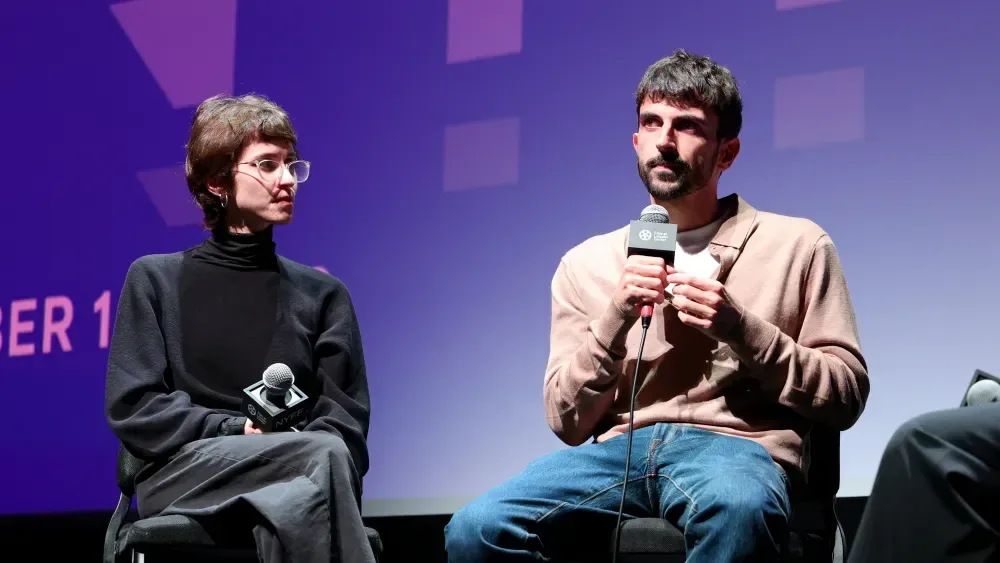
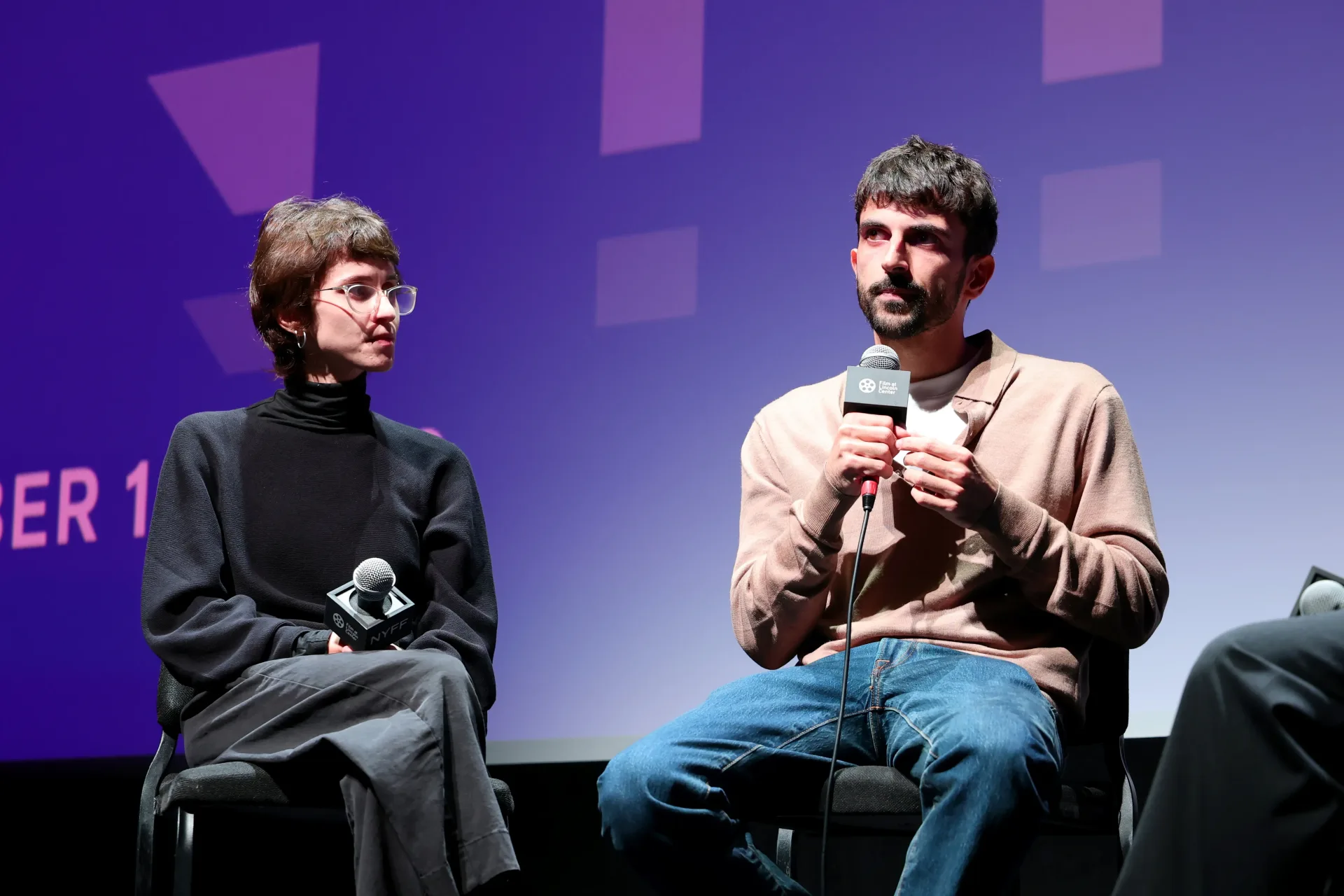
Following the screening, Abraham joined Szor for a brief onstage discussion with festival director Dennis Lim. Abraham argued that showing the film in the United States carried particular importance because of U.S. funding and military assistance to Israel, which he said is being used against Palestinians. His remarks were met with audience cheers.
“This is what your country is supporting and funding,” Abraham told attendees, adding that one purpose of the film is to make denial of events in Gaza harder.
The exchange frames NAZA as more than a documentary arriving on the festival circuit. Its filmmakers are presenting it as an intervention in an argument over responsibility, public knowledge and the way images of war circulate. That intent has also made the film the focus of public opposition, including a protest outside the New York screening.
A film built around nighttime rooftop footage
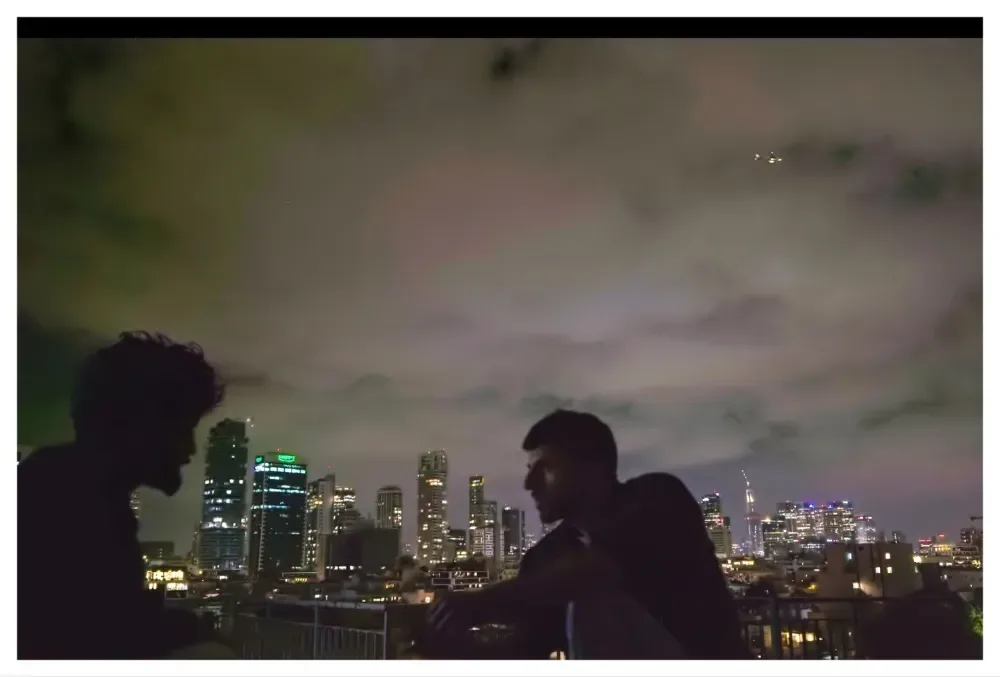
NAZA was filmed at night from rooftops in Tel Aviv. The documentary says it depicts the systems behind what the filmmakers characterize as Israel’s calculated mass killing of Palestinian civilians in Gaza. That is the filmmakers’ stated account and framing of the events shown; it is also a characterization sharply contested by opponents of the film.
The approach described for the documentary is significant. Rooftop footage is necessarily observational: it places viewers at a distance from events while still asking them to confront visible destruction. In this context, the night setting and elevated vantage point appear central to the film’s argument about witnessing. The film does not simply present Gaza as an abstraction in policy debate; its stated goal is to make the physical consequences of military action more difficult to ignore.
For audiences, that raises a difficult distinction worth keeping clear. A documentary can advance a forceful perspective through its selection, framing and editing while still putting consequential images before viewers. NAZA is explicitly not presenting itself as detached from the political stakes. Abraham’s comments make clear that the directors see the work as a challenge to denial and to the policies they believe enable the destruction shown.
That political purpose helps explain why the film’s screening became an event in itself. Festival premieres often function as cultural showcases, but a documentary dealing directly with an ongoing conflict can also become a site where competing interpretations meet in public: the filmmakers’ account, viewers’ reaction, official condemnation and organized protest all become part of the story around the work.
What Abraham said at the Q&A
Abraham’s remarks centered on U.S. involvement. He said it was important for American attendees to see the documentary while discussions of taxpayer-funded support continue, describing the United States as funding Israel by billions of dollars and providing military aid. He connected that support to the violence the film depicts.
He also addressed the October 7 massacre, calling it completely unjustified, while rejecting the idea that it could justify the scale of civilian death and destruction he said viewers had seen in Gaza. The statement placed two points side by side: condemnation of the October 7 killings and condemnation of Israel’s military campaign as portrayed by the filmmakers.
That distinction is central to the directors’ stated position. It is not an attempt to sidestep October 7; Abraham directly acknowledged it. Rather, he argued that recognizing that atrocity does not settle the moral or political questions raised by the subsequent war and its effects on civilians in Gaza.
In practical terms, the Q&A indicates what the filmmakers want audiences to carry beyond the screening. The film is designed to prompt viewers to consider the connection Abraham draws between government decisions, military aid and scenes of destruction. Whether an audience accepts that analysis, rejects it, or sees the film as one part of a wider record, the directors are plainly asking for an active response rather than passive consumption.
Venice recognition and a broad release plan
Before New York, NAZA premiered at the Venice Film Festival earlier in September. It received a special jury prize there and a reported 24.5-minute standing ovation. Those reactions gave the documentary a high-profile launch before its North American debut.
The film is set for release in more than 50 territories. It is also planned to stream free on The Guardian’s website. A free streaming plan is notable for a work whose creators stress public witnessing: removing a direct viewing charge can broaden access beyond festival audiences, though the supplied information does not specify a streaming date.
Festival awards and applause do not resolve the disputes around a documentary’s claims. They do, however, help determine reach. The Venice prize, strong audience response and multi-territory rollout position NAZA to be seen in many places where the conflict is already a subject of intense political debate.
For viewers approaching the film, the most useful starting point may be to separate several layers that are often blended together: what footage shows; the filmmakers’ interpretation of why and how events happened; the policy claims Abraham made in New York; and the objections raised by critics. Those categories can overlap, but they are not identical. Keeping them distinct is essential when a film’s images and its political argument are both so emotionally charged.
Official criticism and the protest outside
The directors have faced criticism from Israeli officials since the Venice premiere. Benjamin Netanyahu, Israel’s prime minister, called for a law that would revoke the citizenship of anyone who slanders Israel Defense Forces soldiers following the film’s debut. Israel’s culture minister also threatened to revoke Abraham’s Israeli citizenship.
Outside the New York Film Festival screening, the Israeli-American Council organized a protest with more than 50 people. The group described NAZA as anti-Israel and argued that it makes serious allegations about IDF conduct in Gaza while leaving out findings and information that, in the group’s view, contradict those allegations.
Protesters gathered near LED trucks displaying October 7 footage and portraits of people killed that day. The choice of imagery underscored the central disagreement surrounding the film: not whether October 7 was traumatic and consequential, but whether and how that event should shape interpretation of Israel’s subsequent military actions in Gaza.
The opposition’s criticism is important context for any account of the premiere. It shows that the film’s account is disputed, particularly its presentation of IDF conduct and the systems it says it exposes. The supplied information does not detail the allegedly contradictory findings referenced by protesters, so those specific counterclaims cannot be evaluated here. What is clear is that the protest rejected the film’s framing and sought to place October 7 at the center of the public conversation around it.
Why the confrontation around the film matters
Documentaries are often discussed as though they either deliver pure fact or pure opinion. In reality, nonfiction film is a form of constructed argument: filmmakers decide where to point a camera, what material to include, what context to provide and how to arrange it. That does not make documentary images meaningless. It means viewers should recognize both the evidentiary force of recorded footage and the editorial choices that give it a particular argument.
NAZA enters that space with an unusually direct claim. Its creators say it reveals a system behind civilian death in Gaza, and Abraham says the U.S. bears responsibility through its financial and military support. Critics outside the premiere say the project is anti-Israel and omits information that would challenge its allegations. The clash is therefore not merely about whether viewers find the film affecting; it is about accountability, historical record and which facts or frames audiences believe have been excluded from broader coverage.
For a festival audience, the standing ovation and the protest are both meaningful signals, but neither is a substitute for engaging with the film itself. Applause registers response. Protest registers dissent. Each can intensify attention, yet the central questions remain the ones the work puts before its viewers: what is shown, what it establishes, what claims go beyond the visible footage, and what responsibility follows from accepting or challenging those claims.
With an international release planned and free streaming to follow, NAZA is likely to reach viewers well beyond its first festival crowds. Its arrival will continue to invite fierce disagreement. Abraham and Szor have made a film intended to resist looking away; its critics are contesting the account it advances. That conflict over visibility and interpretation is now inseparable from the documentary’s public life.
For more film coverage, read our look at Pablo Larraín’s My Sad Dead.